Front seats
 Introduction
The following information describes the various options for adjusting the front seats. Always make sure the seats are adjusted to the correct position ⇒ Introduction.
 WARNING
Adjust the front seats correctly each time before driving and make sure all passengers have their safety belts fastened correctly.
-
Move the front passenger seat all the way back.
-
Adjust the driver seat so that there is a distance of at least 10 inches (25 cm) between your chest and the center of the steering wheel. Adjust the forward/back position of the driver seat so that you can fully press the pedals while your legs are slightly bent and there are at least 4 inches (10 cm) of space between the instrument panel and your knees. If body characteristics mean that this is not possible, see an authorized Volkswagen dealer or authorized Volkswagen Service Facility to have special modifications made. Volkswagen recommends contacting an authorized Volkswagen dealer or authorized Volkswagen Service Facility.
-
Never drive with the backrest angled back far. The farther back the backrest is angled, the greater the risk of injury due to incorrect routing of the safety belt and an incorrect seating position.
-
Never drive with the backrest angled sharply forward. If the front airbag deploys, it could push the backrest back and injure passengers in the rear seat.
-
Always sit upright, with your back against the backrest and the front seats adjusted correctly. Never position any part of your body close to or directly on the location where the airbag is installed.
WARNING
Adjusting the seats incorrectly can cause accidents and serious injuries.
-
Only adjust the seats when the vehicle is stationary. Otherwise, the position of the seats could change unexpectedly while driving and you could lose control of the vehicle. You could also put yourself in an incorrect seating position.
-
Only adjust the height, angle, and forward/back position of the front seats when there is no one within the seat’s range of movement.
-
Do not restrict the movement of the seats by placing objects within their range of movement.
-
Only adjust the forward/back position and angle of the rear seats when there is no one within the seat’s range of movement.
-
The adjusting and locking areas of the seats must not be dirty.
WARNING
Using seat covers or protective covers incorrectly can result in unintentionally operating the seat adjusters, and the front seats could move unexpectedly while driving. This could cause you to lose control of the vehicle. This can cause accidents and injuries. The electrical components in the front seats could also be damaged.
-
Never install or secure seat covers and protective covers on the electrical controls.
-
Only use seat covers or protective covers that are specifically approved for use in your vehicle.
WARNING
Lighters in the vehicle can become damaged or ignite unintentionally. This can cause severe burns and vehicle damage.
-
Before adjusting any seat, always make sure that there are no cigarette lighters near the moving parts of the seat.
 NOTICE
Objects with sharp edges can damage the seats.
-
Never touch the seats with sharp-edged objects. Sharp-edged objects, such as zippers, rivets on clothing, or belts, can cause surface damage. Open hook and loop fasteners can also cause damage.
Manually adjusting front seats
Please read the introductory information and heed the Warnings and Notice ⇒  and
and Introduction.
The information that follows describes all possible controls. Depending on the seat version, the number of controls may vary.
The controls on the front passenger seat are a mirror image of those for the driver seat.
A seat may have both manual and power controls.

Fig. 70 On the driver seat: Controls (variant 1).
 Operate lever to adjust lumbar support.
 To adjust the backrest, turn the handwheel with nothing resting on the backrest.
 If necessary, move the lever multiple times upward or downward to adjust the height of the seat.
 Pull the lever to slide the front seat forward or backward. The front seat must lock into place after the lever is released.
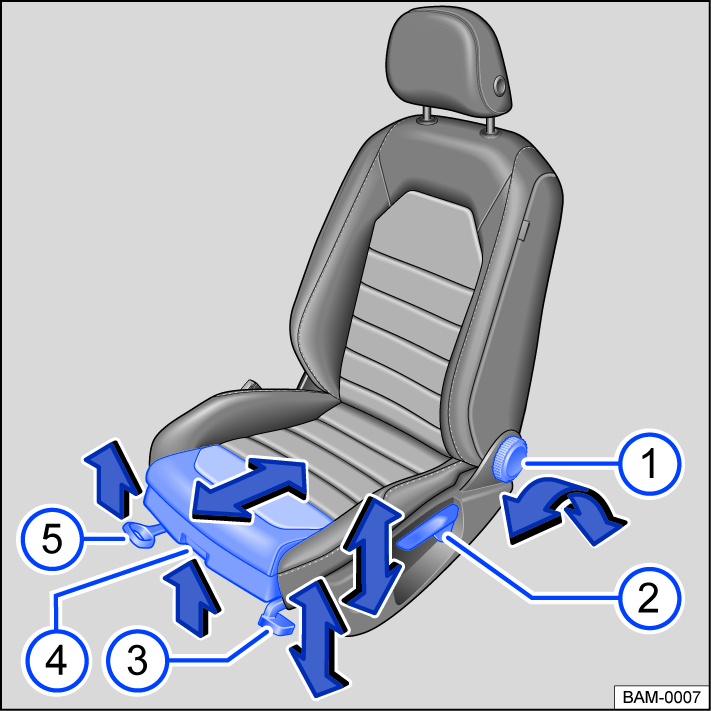
Fig. 71 On the driver seat: Controls (variant 2).
- To adjust the backrest, turn the handwheel with nothing resting on the backrest.
- If necessary, move the lever multiple times upward or downward to adjust the height of the seat.
- Pull or push the lever several times if necessary to adjust the seat cushion angle.
- Lift the grip to move the seat cushion forward or backwards.
 Pull the lever to slide the front seat forward or backward. The front seat must lock into place after the lever is released.

Fig. 72 On the driver seat: Controls (variant 3).
- Pull the lever to slide the front seat forward or backward. The front seat must lock into place after the lever is released.
- Press and hold the lever to adjust the backrest angle, and release it once the seat backrest is in the preferred position. Release the lever to secure the backrest. The seat backrest must lock into place after the lever is released.
- If necessary, move the lever multiple times upward or downward to adjust the height of the seat.
Adjusting power front seats
Please read the introductory information and heed the Warnings and Notice ⇒ andIntroduction.
The controls on the front passenger seat are a mirror image of those for the driver seat.
A seat may have both manual and power controls.
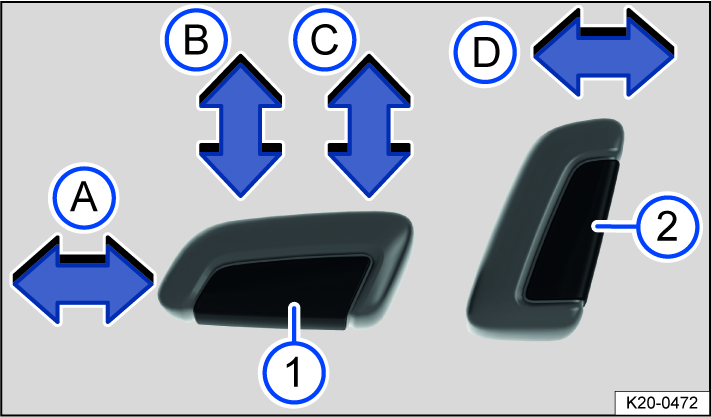
Fig. 73 Switch on the driver seat: Adjusting the front seat forward/back, the height and angle of the seat surface, and the front seat backrest.
Press the switch in the direction of the arrow:
 Slide the seat forward or backward.
 Adjust the angle of the seat surface.
 Adjust the height of the seat.
 Adjust the angle of the backrest.
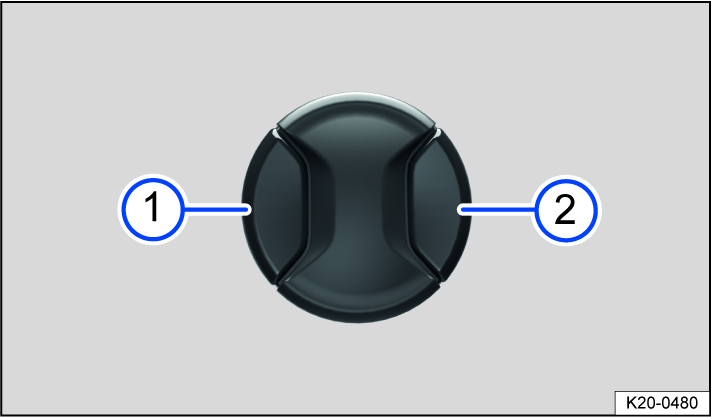
Fig. 74 Switch on the driver seat: Adjusting the lumbar support.
Press the switch in the direction you would like the lumbar support to move.
- Move the curvature of the lumbar support forward.
- Move the curvature of the lumbar support backward.
WARNING
Careless or unintended use of the power front seats can cause serious injuries.
-
The power front seats can also be adjusted when the ignition is switched off. Never leave children or people requiring assistance in the vehicle.
-
In case of an emergency, interrupt the power adjustment by pressing another switch.
NOTICE
To reduce the risk of damage to the electrical components in the front seats, never kneel on the front seats or seat cushions. Do not exert pressure on the backrest with sharp or pointed objects.
 If the 12 V vehicle battery charge level is too low, the seat may not be able to be adjusted with the power controls.
A seat adjustment may be canceled while the engine is starting.
Folding the front passenger backrest forwards
Please read the introductory information and heed the Warnings and Notice ⇒ andIntroduction.
The front passenger seat backrest can be folded down and locked in a horizontal position.
If objects are transported on the folded front passenger seat, the front passenger airbag must be deactivated.
Folding the front passenger backrest forwards

Fig. 75 Front passenger seat: Fold backrest forwards.
-
Remove objects from the front passenger seat ⇒
. -
Set the front passenger seat as low as possible.
-
Move the front passenger seat as far back as possible.
-
Move the head restraints all the way down.
-
Unlock the front passenger backrest in the direction of the arrows fig. 75.
-
Fold the front passenger backrest forwards in the direction of the arrows fig. 75 into the horizontal position.
The front passenger backrest must engage securely in the folded down position.
Unfolding the front passenger backrest
Do not have any objects or body parts near the hinge when unfolding.
-
To unfold the front passenger backrest unlock it again fig. 75.
-
Fold the front passenger backrest backwards into the upright position.
The front passenger backrest must engage securely in the vertically folded position.
WARNING
Folding and unfolding the front passenger backrest in an uncontrolled or careless manner can cause severe injury.
-
Only fold or unfold the front passenger backrest when the vehicle is stationary.
-
Always ensure that no people or animals are in the way of the backrest when folding down the front passenger backrest.
-
As long as the front passenger backrest is folded down, the front airbag must be switched off and the PASSENGER AIR BAG
 indicator light must be illuminated.
 -
Keep hands, fingers, feet, and other parts of the body out of the range of operation of the seat hinges and seat locking mechanism when folding the backrest forward and back.
-
Floor mats or other objects can get caught in the front passenger backrest hinges. This can lead to the front passenger backrest not being securely locked when unfolded to the upright position.
-
The front passenger backrest must be securely locked when being unfolded to the upright position. A front passenger backrest which is not securely locked can move unexpectedly and cause severe injury.
WARNING
The uncovered seat mountings or hinges can lead to severe injury during a braking maneuver or accident when the front passenger backrest is folded down.
-
Never transport adults or children on the front passenger seat when the front passenger backrest is folded down.
-
Only the seat behind the driver seat on the rear bench seat may be used when the front passenger backrest is folded down. This also applies to child seats.
WARNING
Objects that are not secured or are secured incorrectly can cause serious injuries in the event of sudden driving and braking maneuvers or a collision. This is especially true if the airbags deploy and strike objects, causing them to fly through the vehicle interior. To reduce the risk of damage, note the following:
-
Store all objects securely in the vehicle. Follow the legal regulations whilst doing so.
-
As long as the front passenger backrest is folded down, the front airbag must be switched off and the PASSENGER AIR BAG
indicator light must be illuminated.
Download Manual