Ride Control Systems
The vehicle has a Traction Control System (TCS) and StabiliTrak/ Electronic Stability Control (ESC). These systems help limit wheel slip and assist the driver in maintaining control, especially on slippery road conditions.
TCS activates if it senses that any of the drive wheels are spinning or beginning to lose traction. When this happens, TCS applies the brakes to the spinning wheels and reduces engine power to limit wheel spin.
StabiliTrak/ESC activates when the vehicle senses a difference between the intended path and the direction the vehicle is actually traveling.
StabiliTrak/ESC selectively applies braking pressure to any one of the
vehicle wheel brakes to assist the driver in keeping the vehicle on the intended path.
If cruise control is being used and traction control or StabiliTrak/ESC begins to limit wheel spin, cruise control will disengage. Cruise control may be turned back on when road conditions allow.
Both systems come on automatically when the vehicle is started and begins to move. The systems may be heard or felt while they are operating or while performing diagnostic checks. This is normal and does not mean there is a problem with the vehicle.
It is recommended to leave both systems on for normal driving conditions, but it may be necessary to turn TCS off if the vehicle gets stuck in sand, mud, ice, or snow.
See If the Vehicle Is Stuck 0 169 and “Turning the Systems Off and On” later in this section.
The indicator light for both systems is in the instrument cluster. This light will:
If either system fails to turn on or to activate, a message displays in the Driver Information Center (DIC), and
d comes on and stays on to
indicate that the system is inactive and is not assisting the driver in maintaining control. The vehicle is safe to drive, but driving should be adjusted accordingly.
If d comes on and stays on:
Drive the vehicle. If d comes on and stays on, the vehicle may need more time to diagnose the problem. If the condition persists, see your dealer.
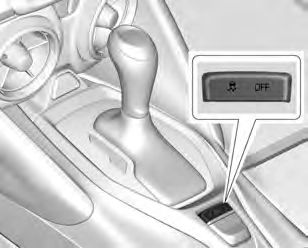
 To turn off only TCS, press and release . The traction off light i displays in the instrument cluster.
To turn TCS on again, press  . The traction off light i displayed in the instrument cluster will turn off.
If TCS is limiting wheel spin when  is pressed, the system will not turn off until the wheels stop spinning.
To turn off both TCS and StabiliTrak/ ESC, press and hold  until the
traction off light i and StabiliTrak/
ESC OFF light  come on and stay on in the instrument cluster.
To turn TCS and StabiliTrak/ESC on again, press  . The traction off
light i and StabiliTrak/ESC OFF
light  in the instrument cluster turn off.
Adding accessories can affect the vehicle performance. See Accessories and Modifications
0 221.
EDC improves vehicle stability by sensing if there is a difference in speed between the free rolling front wheels and the rear drive wheels that often occurs when the driver takes their foot off the accelerator pedal on slippery surfaces (snow, ice, etc.). When this is detected, EDC sends more torque to the rear wheels to make sure all four wheels are spinning at similar speeds, making the vehicle more stable.
Driver Mode Control adds a sportier feel, provide a more comfortable ride, or assist in different weather
conditions or terrain. This system simultaneously changes the software calibration of various sub-systems to optimize driving performance. Depending on the
option package, available features, and mode selected, the exhaust, suspension, steering, and powertrain will change calibrations to achieve the desired mode characteristics. If the vehicle is equipped with Magnetic Ride Control, selecting the various Driver Modes adjusts the ride of the vehicle to enhance the ride performance for the road conditions and the selected mode.
While in the Sport and/or Track Modes, the vehicle monitors driving behavior and automatically enables Performance Shift Features in the automatic transmission when spirited driving is detected. These features maintain lower transmission gears to increase available engine braking and improve acceleration response. The vehicle will exit these features and
return to normal operation after a short period when no spirited driving is detected.
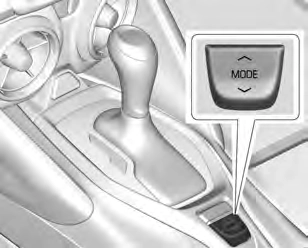
Driver Mode Control Switch
The Driver Mode Control has three or four modes: Tour, Sport, Snow/ Ice, and Track. Press y or z on the MODE switch on the center
console to make a mode selection. Pressing the switch will display the moding menu in the instrument cluster with all available ride modes. Every switch press will select and activate the next available mode.
When Sport, Snow/Ice, or Track
Mode is selected, a unique and persistent indicator will be displayed in the instrument cluster.
Use for normal city and highway driving to provide a smooth, soft ride. This setting provides a balanced setting between comfort and handling. This is the standard mode.
Use where road conditions or personal preference demand a more controlled response.
When Sport Mode is selected, the transmission may downshift to a lower gear for better performance. The transmission will continue to shift automatically but can hold a lower gear longer than it would in the Tour Mode based on braking, throttle input, and vehicle lateral acceleration. See Automatic Transmission 0 183. The steering will change to provide more precise control. If the vehicle has Magnetic Ride Control, the suspension will
change to provide better cornering performance. If the vehicle is equipped with Active Exhaust, the exhaust valves will open earlier and more often. Competitive Driving Mode can be accessed through this
mode by pressing  on the console twice.
This Competitive Driving Mode is only on SS, 1LE, and ZL1 vehicles. For example, a vehicle with a
V6 engine and automatic transmission will have Sport Mode, but will not be able to access Competitive Driving Mode.
If equipped, use when more traction is needed during slippery conditions. The automatic transmission will upshift normally when the vehicle is moving. The acceleration will adjust to help provide a smoother launch. The automatic transmission will also shift differently to assist in maintaining traction.
This feature is not intended for use when the vehicle is stuck in sand, mud, ice, snow, or gravel. If the vehicle becomes stuck, see If the Vehicle Is Stuck 0 169.
If equipped, use when maximum vehicle handling is desired.
When Track Mode is selected, the transmission may downshift to a lower gear for better performance. The automatic transmission and steering will function similar to Sport Mode.
The accelerator pedal is adjusted to give maximum control during the highest level of spirited driving. The Magnetic Ride Control will be set to the optimum level for vehicle responsiveness. If the vehicle is equipped with Active Exhaust, the exhaust valves will open.
Performance Traction Management (PTM) can be accessed through this
mode by pressing  on the console twice.
There are attributes that vary by mode shown below. Not all vehicles have all features, depending on the vehicle options.
|
Modes: |
SNOW/ICE |
TOUR Default |
SPORT |
TRACK |
|
Throttle Progression |
Weather |
Normal |
Normal |
Track |
|
Transmission Shift Mode (Automatic Only) |
Normal |
Normal |
Sport |
Track |
|
Engine Sound Management (if equipped) |
Stealth |
Tour |
Sport |
Track |
|
Steering |
Tour |
Tour |
Sport |
Track |
|
StabiliTrak/Electronic Stability Control (ESC) - Competitive Driving Mode/PTM (if equipped) |
N/A |
N/A |
Competitive Driving Mode Available |
PTM Available |
|
Magnetic Ride Control (if equipped) |
Tour |
Tour |
Sport |
Track |
|
Launch Control (when in Competitive Driving Mode) |
N/A |
N/A |
Available |
Available |
Throttle Progression
Adjusts throttle sensitivity by selecting how quickly or slowly the throttle reacts to input.
Automatic Transmission Shift Mode (if equipped)
Adjusts from normal operation to Sport or Track shifting features.
Engine Sound Management (if equipped)
Changes when variable exhaust valves open or close.
Engine Sound Enhancement (turbo 4)
Allows the ability to turn Engine Sound Enhancement off.
Steering
Adjusts from a lighter steering feel in Tour Mode to reduced assist for more steering feel.
StabiliTrak/ESC - Competitive Driving Mode (if equipped)
Available in Sport and Track Modes.
Magnetic Ride Control (if equipped)
Adjusts the shock damping firmness based on driving conditions to improve comfort and performance.
Launch Control (when in Competitive Driving Mode)
Available only in Sport and Track Modes for maximum “off-the-line” acceleration when in Competitive Driving Mode.
For more information, see Track Events and Competitive Driving 0 157.
Models Only)
Competitive Driving Mode and Launch Control are systems designed to allow increased performance while accelerating and/ or cornering. This is accomplished by regulating and optimizing the engine, brakes, and suspension performance. These modes are for use at a closed course race track
and are not intended for use on public roads. They will not compensate for a driver’s inexperience or lack of familiarity with the race track. Drivers who prefer to allow the system to have more control of the engine, brakes, and suspension are advised to turn the normal TCS and StabiliTrak/ Electronic Stability Control (ESC) systems on.
Competitive Driving Mode allows full engine power while the StabiliTrak/ ESC system helps maintain directional control of the vehicle by selective brake application. In this
mode, TCS is off and Launch Control is available. Adjust your driving style to account for the available engine power. See “Launch Control” later in this section.

These lights are on when the vehicle is in the Competitive Driving Mode.
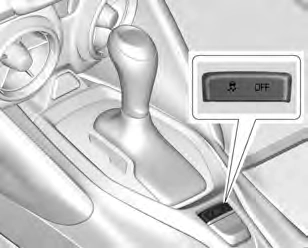
This optional handling mode can be selected by pressing the TCS/ StabiliTrak/ESC button on the console two times. The appropriate message displays in the Driver Information Center (DIC).
When the TCS/StabiliTrak/ESC button is pressed again, the TCS and StabiliTrak/ESC systems are on. The appropriate message displays briefly in the DIC.
If the vehicle has the LT1 10 speed transmission, see Track Events and Competitive Driving 0 157 for custom launch control information.
A Launch Control feature is available, within Competitive Driving Mode, to allow the driver to achieve high levels of vehicle acceleration in a straight line. Launch Control is a form of traction control that manages tire spin while launching the vehicle. This feature is intended for use during closed course race events where consistent zero to sixty and quarter mile times are desirable.
Launch Control is only available when the following criteria are met:
Manual Transmissions
1 (First) gear.
The Launch Control feature will initially limit engine speed as the driver rapidly applies the accelerator pedal to wide open throttle. Allow the engine rpm to stabilize.
A smooth, quick release of the clutch, while maintaining the fully pressed accelerator pedal, will manage wheel slip. Complete shifts are described in Manual Transmission 0 188.
Automatic Transmissions
After the vehicle is launched, the system continues in Competitive Driving Mode.
Competitive Driving Mode and Launch Control are systems designed for a closed course race track and not intended for use on public roads. The systems are not intended to compensate for lack of driver experience or familiarity with the race track.
Vehicles with a limited-slip rear axle can give more traction on snow, mud, ice, sand, or gravel. When traction is low, this feature allows the drive wheel with the most traction to move the vehicle. The limited-slip rear axle also gives the driver enhanced control when cornering hard or completing a maneuver, such as a lane change. For vehicles with limited-slip differential, driven under severe conditions, the rear axle fluid should be changed. See Competitive Driving Mode (SS, ZL1 and 1LE Models Only) 0 200 and
Maintenance Schedule 0 306.
Download Manual