Instrument cluster
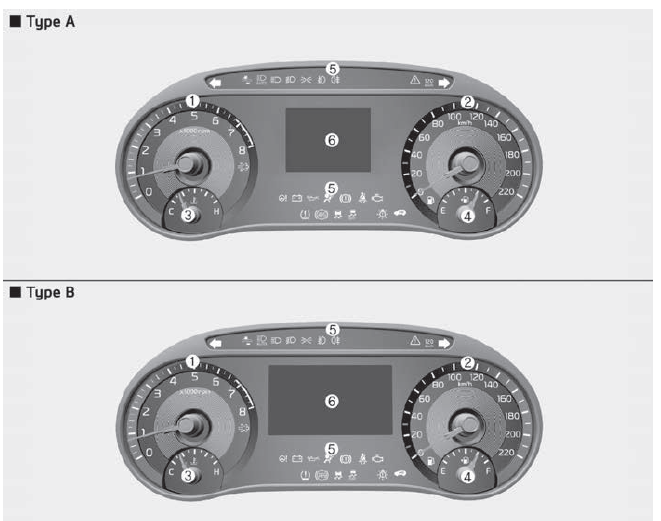
1. Tachometer
2. Speedometer
3. Engine coolant temperature gauge
4. Fuel gauge
5. Warning and indicator lights
6. LCD display
Instrument cluster control
Adjusting instrument cluster illumination
WARNING
Never adjust the instrument cluster while driving. This could result in loss of control and lead to an accident that may cause death, serious injury, or property damage.
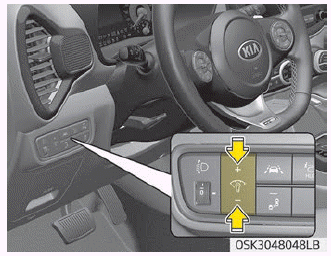
The brightness of the instrument panel illumination is changed by pressing the illumination control button (“+” or “-”) when the ignition switch or Engine Start/Stop button is ON, or the tail lights are turned on.
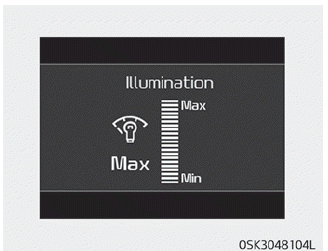
- If you hold the illumination control button (“+” or “-”), the brightness will be changed continuously.
- If the brightness reaches to the maximum or minimum level, an alarm will sound.
LCD Display Control
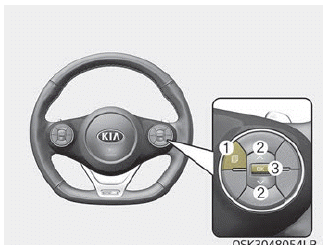
The LCD Display modes can be changed by using the control buttons on the steering wheel.
1.  : MODE button for change the LCD MODES
2. : MOVE scroll switch for select the items
3. OK : SET/REST button for set the items or reset the items
❈ For the LCD modes, refer to “LCD Display” on page 4-51.
Gauges
Speedometer
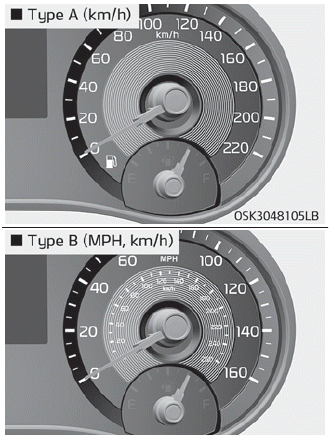
The speedometer indicates the speed of the vehicle and is calibrated in miles per hour (mph) and/or kilometers per hour (km/h).
Tachometer
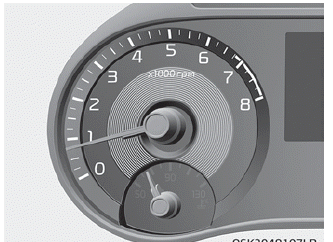
The tachometer indicates the approximate number of engine revolutions per minute (rpm).
Use the tachometer to select the correct shift points and to prevent lugging and/or over-revving the engine.
CAUTION
Do not operate the engine within the tachometer's RED ZONE. This may cause severe engine damage.
Engine coolant temperature gauge
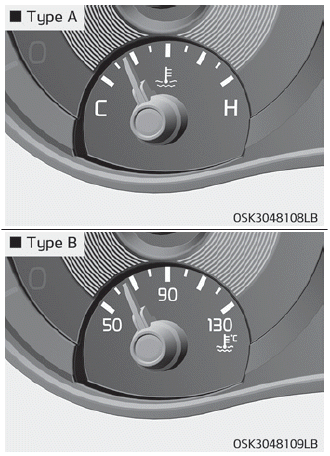
This gauge indicates the temperature of the engine coolant when the ignition switch or Engine Start/Stop button is ON.
CAUTION
If the gauge pointer moves beyond the normal range area toward the “H or 130” position, it indicates overheating that may damage the engine.
Do not continue driving with an overheated engine. If your vehicle overheats, refer to “If the Engine Overheats” on page 7-07.
WARNING
Never remove the radiator cap when the engine is hot. The engine coolant is under pressure and could severely burn. Wait until the engine is cool before adding coolant to the reservoir.
Fuel gauge
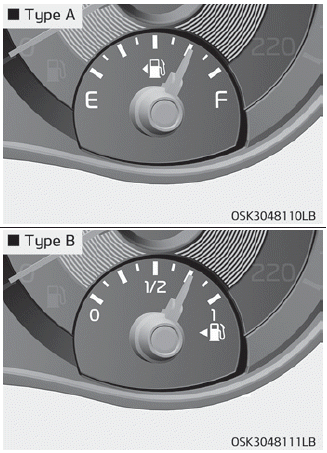
This gauge indicates the approximate amount of fuel remaining in the fuel tank.
NOTICE
- The fuel tank capacity is given in “Recommended lubricants and capacities” on page 9-11.
- The fuel gauge is supplemented by a low fuel warning light, which will illuminate when the fuel tank is nearly empty.
- On inclines or curves, the fuel gauge pointer may fluctuate or the low fuel warning light may come on earlier than usual due to the movement of fuel in the tank.
WARNING
Fuel Gauge
Running out of fuel can expose vehicle occupants to danger.
You must stop and obtain additional fuel as soon as possible after the warning light comes on or when the gauge indicator comes close to the “ E or 0” level.
CAUTION
Avoid driving with a extremely low fuel level. Running out of fuel could cause the engine to misfire damaging the catalytic converter.
Odometer
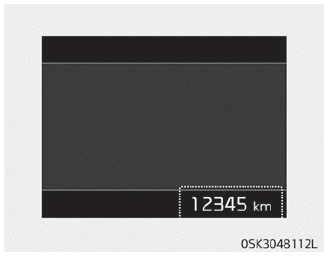
The odometer Indicates the total distance that the vehicle has been driven and should be used to determine when periodic maintenance should be performed.
- Odometer range : 0 ~ 1,599,999 km or 999,999 miles.
Outside temperature gauge
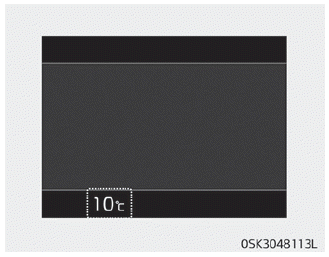
This gauge indicates the current outside air temperatures by 1°C (1°F).
- Temperature range : -40°C ~ 85°C (-40°F ~ 211°F)
The outside temperature on the display may not change immediately like a general thermometer to prevent the driver from being inattentive.
To change the temperature unit (from °C to °F or from °F to °C)
The temperature unit can be changed by using the “User Settings” mode of the LCD Display.
❈ For more details, refer to “LCD Display” on page 4-51.
Download Manual