Adjusting the Seats
Front Seats
Adjust the driver’s seat as far back as possible while allowing you to maintain full control of the vehicle. You should be able to sit upright, well back in the seat and be able to adequately press the pedals without leaning forward, and grip the steering wheel comfortably. The passenger’s seat should be adjusted in a similar manner, so that it is as far back from the front airbag in the dashboard as possible.
* Not available on all models
Continued
211
uuAdjusting the SeatsuFront Seats
Press the bottom: To move the lumbar support down.
Press the front: To increase the entire lumbar support.
Press the rear: To decrease the entire lumbar support.
212
* Not available on all models
uuAdjusting the SeatsuFront Seats
Height Adjustment
(Driver side only)
Pull up or push down the lever to raise or lower the seat.
Horizontal Position Adjustment
Pull up on the bar to move the seat, then release the bar.
Driver’s seat is shown.
Seat-back Angle Adjustment
Pull up the lever to change the angle.
Continued 213
uuAdjusting the SeatsuFront Seats
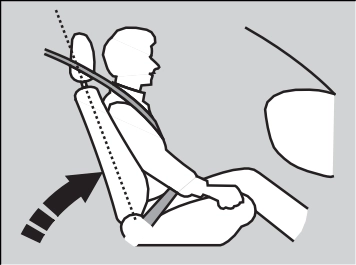 Adjust the driver’s seat-back to a comfortable, upright position, leaving ample space between your chest and the airbag cover in the center of the steering wheel.
The front seat passenger should also adjust their seat-back to a comfortable, upright position.
Reclining a seat-back so that the shoulder part of the belt no longer rests against the occupant’s chest reduces the protective capability of the belt. It also increases the chance of sliding under the belt in a crash and being seriously injured. The farther a seat-back is reclined, the greater the risk of injury.
uuAdjusting the SeatsuRear Seats
215
uuAdjusting the SeatsuMaintain a Proper Sitting Position
After all occupants have adjusted their seats and head restraints, and put on their seat belts, it is very important that they continue to sit upright, well back in their seats, with their feet on the floor, until the vehicle is safely parked and the power mode is off.
Sitting improperly can increase the chance of injury during a crash. For example, if an occupant slouches, lies down, turns sideways, sits forward, leans forward or sideways, or puts one or both feet up, the chance of injury during a crash is greatly increased.
In addition, an occupant who is out of position in the front seat can be seriously or fatally injured in a crash by striking interior parts of the vehicle or being struck by an inflating front airbag.
uuAdjusting the SeatsuHead Restraints
Your vehicle is equipped with head restraints in all seating positions.
Head restraints are most effective for protection against whiplash and other rear- impact crash injuries when the center of the back of the occupant’s head rests against the center of the restraint. The tops of the occupant’s ears should be level with the center height of the restraint.
* Not available on all models
Continued
217
uuAdjusting the SeatsuHead Restraints
To raise the head restraint: Pull it upward. To lower the head restraint: Push it down while pressing the release button.
uuAdjusting the SeatsuHead Restraints
■ Removing and Reinstalling the Head Restraints
Head restraints can be removed for cleaning or repair.
Pull the restraint up as far as it will go. Then push the release button, and pull the restraint up and out.
Insert the legs back in place, then adjust the head restraint to an appropriate height while pressing the release button. Pull up on the restraint to make sure it is locked in position.
219
uuAdjusting the SeatsuArmrest
The console lid can be used as an armrest.
uuAdjusting the SeatsuArmrest
Pull down the armrest in the center backrest.
Download Manual