Towing the Vehicle
GM recommends a flatbed tow truck to transport a disabled vehicle. Use ramps to help reduce approach angles, if necessary.
A towed vehicle should have its drive wheels off the ground. Contact Roadside Assistance or a professional towing service if the disabled vehicle must be towed.
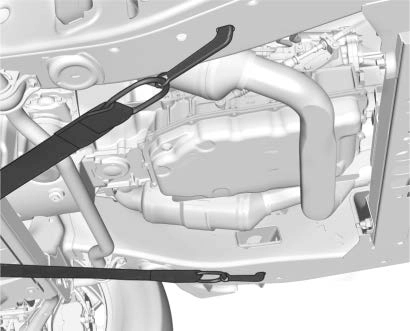
The vehicle is equipped with specific attachment points to be used to pull the vehicle onto a flatbed car carrier from a flat road surface. Do not use these attachment points to pull the vehicle from snow, mud or sand.
Recreational Vehicle Towing
Recreational vehicle towing means towing the vehicle behind another vehicle, such as a motor home. The two most common types of recreational vehicle towing are dinghy and dolly towing. Dinghy towing is towing the vehicle with all four wheels on the ground. Dolly towing is towing the vehicle with two wheels on the ground and two wheels on a dolly.
Here are some important things to consider before recreational vehicle towing:
. Whether the vehicle is ready to be towed. Just as preparing the vehicle for a long trip, make sure the vehicle is prepared to be towed.
Follow the tow vehicle manufacturer’s instructions. See your dealer or trailering professional for additional advice and equipment recommendations.
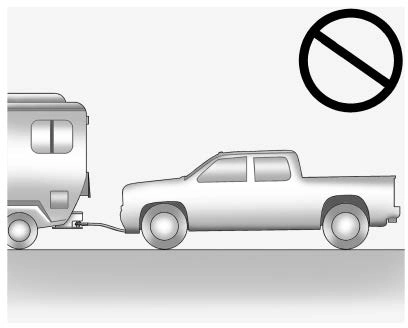
Dinghy Towing (Vehicles with a Two-Speed Transfer Case)
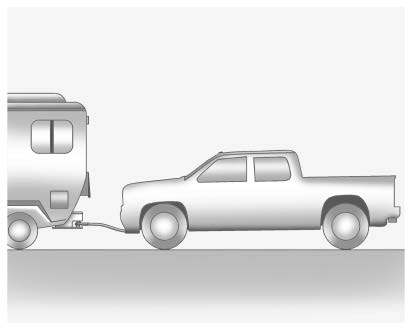
Only dinghy tow four-wheel-drive vehicles with a two-speed transfer case that have an N (Neutral) and a 4 n (Four-Wheel Drive Low) setting.
Two-wheel-drive vehicles and vehicles with a single-speed transfer case should not be towed with all four wheels on the ground.
To dinghy tow:
"Shifting into N (Neutral)" under
Four-Wheel Drive 0 241.
If equipped with Keyless Access, turn the engine off. Disregard the Shift to P (Park) DIC message. See Ignition Positions (Keyless Access) 0 229 or
Ignition Positions (Key Access) 0 228.
Keyless Access, keep the RKE transmitter outside of the vehicle and manually lock the doors. Access the vehicle by using the key in the door lock. See Door Locks 0 21.
Disconnecting the Towed Vehicle
Before disconnecting from the tow vehicle:
Battery - North America 0 341.
five seconds until the green light comes on in the button. See Ignition Positions (Keyless Access) 0 229 or
Ignition Positions (Key Access) 0 228.
(Two-Wheel Drive High) is complete, the
light in the instrument cluster will stop flashing and stay lit. See
Four-Wheel-Drive Light 0 117.
R (Reverse). There should be movement of the vehicle while shifting.
The outside temperature display will default to 0 °C (32 °F) but will reset with normal usage.
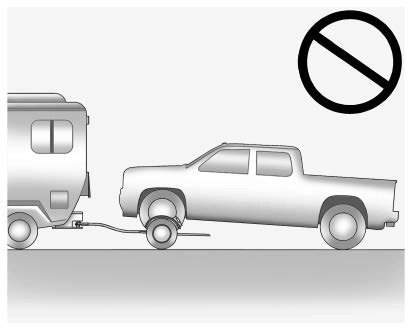
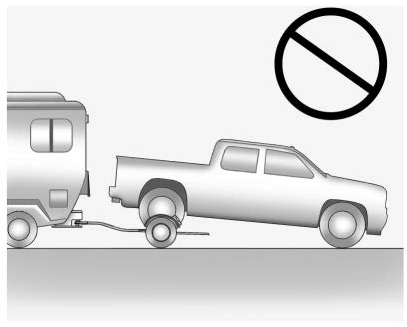
Dolly towing this vehicle is not allowed with either the front or the rear tires on the ground for two-wheel drive or four-wheel drive, regardless of transfer case.
Download Manual