Engine compartment
Components
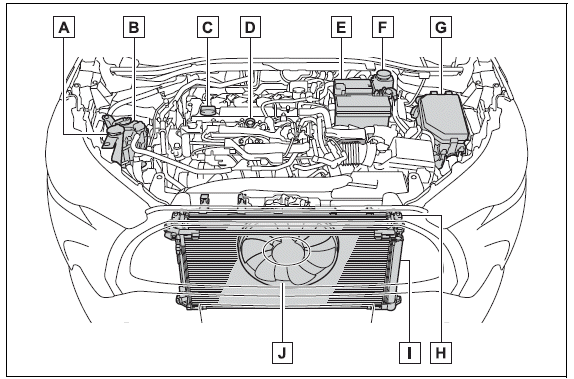
- Washer fluid tank
- Engine coolant reservoir
- Engine oil filler cap
- Engine oil level dipstick
- Battery
- Brake fluid reservoir
- Fuse boxes
- Radiator
- Condenser
- Electric cooling fan
Checking and adding the engine oil
With the engine at operating temperature and turned off, check the oil level on the dipstick.
■ Checking the engine oil
1. Park the vehicle on level ground. After warming up the engine and turning it off, wait more than 5 minutes for the oil to drain back into the bottom of the engine.
2. Holding a rag under the end, pull the dipstick out.
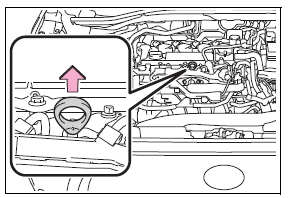
3. Wipe the dipstick clean.
4. Reinsert the dipstick fully.
5. Holding a rag under the end, pull the dipstick out and check the oil level.
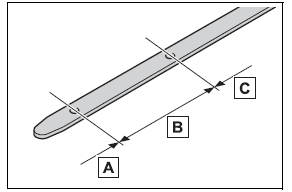
- Low
- Normal
- Excessive
The shape of the dipstick may differ depending on the type of vehicle or engine.
6. Wipe the dipstick and reinsert it fully.
Adding engine oil
■ Checking the oil type and preparing the item needed
Make sure to check the oil type and prepare the items needed before adding oil.
- Engine oil selection
- Oil quantity (Low → Full)
1.6 qt. (1.5 L, 1.3 Imp. qt.) - Item
Clean funnel
■ Adding engine oil
If the oil level is below or near the low level mark, add engine oil of the same type as that already in the engine.
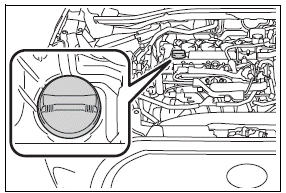
1. Remove the oil filler cap by turning it counterclockwise.
2. Add engine oil slowly, checking the dipstick.
3. Install the oil filler cap by turning it clockwise.
■Engine oil consumption
A certain amount of engine oil will be consumed while driving. In the following situations, oil consumption may increase, and engine oil may need to be refilled in between oil maintenance intervals.
- When the engine is new, for example directly after purchasing the vehicle or after replacing the engine
- If low quality oil or oil of an inappropriate viscosity is used
- When driving at high engine speeds or with a heavy load, when towing, or when driving while accelerating or decelerating frequently
- When leaving the engine idling for a long time, or when driving frequently through heavy traffic
WARNING
■Used engine oil
- Used engine oil contains potentially harmful contaminants which may cause skin disorders such as inflammation and skin cancer, so care should be taken to avoid prolonged and repeated contact. To remove used engine oil from your skin, wash thoroughly with soap and water.
- Dispose of used oil and filters only in a safe and acceptable manner. Do not dispose of used oil and filters in household trash, in sewers or onto the ground.
Call your Toyota dealer, service station or auto parts store for information concerning recycling or disposal.
- Do not leave used engine oil within the reach of children.
NOTICE
■To prevent serious engine damage
Check the oil level on a regular basis.
■When replacing the engine oil
- Be careful not to spill engine oil on the vehicle components.
- Avoid overfilling, or the engine could be damaged.
- Check the oil level on the dipstick every time you refill the vehicle.
- Be sure the engine oil filler cap is properly tightened.
Checking the engine coolant
The coolant level is satisfactory if it is between the "MAX" and "MIN" lines on the reservoir when the engine is cold.
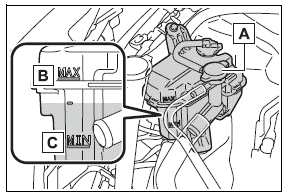
- Reservoir
- "MAX" line
- "MIN" line
If the level is on or below the "MIN" line, add coolant up to the "MAX" line.
■Coolant selection
Only use "Toyota Super Long Life Coolant" or a similar high quality ethylene glycol based non-silicate, non-amine, non-nitrite, and non-borate coolant with long-life hybrid organic acid technology.
U.S.A.:
"Toyota Super Long Life Coolant" is a mixture of 50% coolant and 50% deionized water. (Minimum temperature: -31ºF [-35ºC] )
Canada:
"Toyota Super Long Life Coolant" is a mixture of 55% coolant and 45% deionized water. (Minimum temperature: -44ºF [-42ºC] ) For more details about coolant, contact your Toyota dealer.
■If the coolant level drops within a short time of replenishing
Visually check the radiator, hoses, engine coolant reservoir caps, drain cock and water pump.
If you cannot find a leak, have your Toyota dealer test the cap and check for leaks in the cooling system.
WARNING
■When the engine is hot
Do not remove the engine coolant reservoir cap.
The cooling system may be under pressure and may spray hot coolant if the cap is removed, causing serious injuries, such as burns.
NOTICE
■When adding coolant
Coolant is neither plain water nor straight antifreeze. The correct mixture of water and antifreeze must be used to provide proper lubrication, corrosion protection and cooling. Be sure to read the antifreeze or coolant label.
■If you spill coolant
Be sure to wash it off with water to prevent it from damaging parts or paint.
Checking the radiator and condenser
Check the radiator and condenser and clear away any foreign objects. If either of the above parts is extremely dirty or you are not sure of their condition, have your vehicle inspected by your Toyota dealer.
WARNING
■When the engine is hot
Do not touch the radiator or condenser as they may be hot and cause serious injuries, such as burns.
Checking and adding the brake fluid
■ Checking fluid level
The brake fluid level should be between the "MAX" and "MIN" lines on the tank.
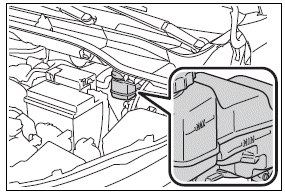
■ Adding fluid
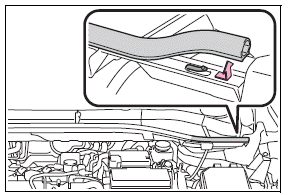
1. Slide and lift up the rubber strip to partly remove it as shown.
2. Disconnect the claws and remove the service cover.
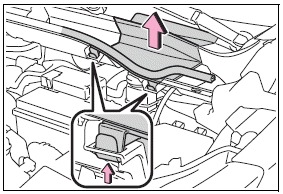
3. Remove the reservoir cap.
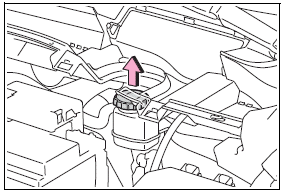
4. Add brake fluid slowly while checking the fluid level.
Make sure to check the fluid type and prepare the necessary item.
- Fluid type
FMVSS No.116 DOT 3 or SAE J1703 brake fluid
FMVSS No.116 DOT 4 or SAE J1704 brake fluid
- Item
Clean funnel
■Brake fluid can absorb moisture from the air
Excess moisture in the brake fluid can cause a dangerous loss of braking efficiency. Use only newly opened brake fluid.
WARNING
■When filling the reservoir
Take care as brake fluid can harm your hands and eyes and damage painted surfaces.
If fluid gets on your hands or in your eyes, flush the affected area with clean water immediately.
If you still experience discomfort, see a doctor.
NOTICE
■If the fluid level is low or high
It is normal for the brake fluid level to go down slightly as the brake pads wear out or when the fluid level in the accumulator is high.
If the reservoir needs frequent refilling, there may be a serious problem.
Download Manual