Automatic Transmission
If equipped, there is an electronic shift lever position indicator within the instrument cluster. This display comes on when the ignition is in ACC/ACCESSORY, on or
service mode.
There are several different positions for the shift lever.
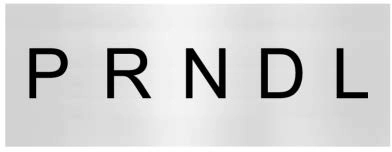
See Driver Mode Control 0 234 and “Range Selection Mode” under Manual Mode 0 220.
P : This position locks the rear wheels. Use P (Park) when starting the engine because the vehicle cannot move easily.
When parked on a hill, especially when the vehicle has a heavy load, you might notice an increase in the
effort to shift out of P (Park). See “Torque Lock” under Shifting Into Park 0 213.
To rock the vehicle back and forth to get out of snow, ice, or sand without damaging the transmission, see If the Vehicle Is Stuck 0 196.
N : In this position, the engine does not connect with the wheels. To restart the engine when the vehicle is already moving, use
N (Neutral) only.
Also, use N (Neutral) when the vehicle is being towed.
R : Use this gear to back up.
D : This position is for normal driving. It provides the best fuel economy. If more power is needed for passing, press the accelerator pedal down.
By doing this, the vehicle shifts down to the next gear and has more power.
Use D (Drive) and Tow/Haul Mode when towing a trailer, carrying a heavy load, driving on steep hills, or driving off-road. Shift the transmission to a lower gear if the transmission shifts too often.
Downshifting the transmission in slippery road conditions could result in skidding. See “Skidding” under Loss of Control 0 187.
The vehicle has a shift stabilization feature that adjusts the transmission shifting to the current driving conditions in order to reduce rapid upshifts and downshifts. This shift stabilization feature is designed to determine, before making an upshift, if the engine is able to maintain vehicle speed by analyzing things such as vehicle speed, throttle position, and vehicle load.
If the shift stabilization feature determines that a current vehicle speed cannot be maintained, the transmission does not upshift and instead holds the current gear.
In some cases, this could appear to be a delayed shift, however the transmission is operating normally.
If the engine or transmission detects an impending hot fluid condition, the transmission may upshift to limit temperatures. Downshifts may also be prevented. Normal operation may continue unless the display indicates there is a hot condition and engine should be idled.
The transmission uses adaptive shift controls. The adaptive shift control process continually compares key shift parameters to pre-programmed ideal shifts stored in the transmission’s computer. The transmission constantly makes adjustments to improve vehicle performance according to how the vehicle is being used, such as with a heavy load or when the temperature changes. During this adaptive shift control process, shifting might feel different as the transmission determines the best settings.
When temperatures are very cold, the transmission's gear shifting could be delayed providing more stable shifts until the engine warms up. Shifts could be more noticeable with a cold transmission. This difference in shifting is normal.
If equipped with the 2.7L L4 engine, engine speeds may be increased while driving at highway speeds while the engine is still warming up.
L : This position allows selection of a range of gears appropriate for current driving conditions.
If equipped, see “Range Selection Mode” under Manual Mode 0 220.
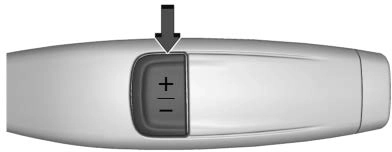
Range Selection Mode helps control the vehicle's transmission and vehicle speed while driving downhill or towing a trailer by letting you select a desired range of gears.
To use this feature:
When the shift lever is moved from D (Drive) to L (Manual Mode), a number displays next to the L, indicating the current transmission range.
This number is the highest gear that the transmission will command while operating in L (Manual Mode). All gears below that number are available. As driving conditions change, the transmission can automatically shift to lower gears.
For example, when L5 is selected, 1 (First) through 5 (Fifth) gears are automatically shifted by the transmission, but 6 (Sixth) cannot be used until the plus/minus button on the shift lever is used to change to the range.
When the shift lever is moved from D (Drive) to L (Manual Mode), a downshift may occur. The gear that the transmission is operating in when the shift lever is moved from D (Drive) to L (Manual Mode) determines if a downshift occurs. See the following charts.
6-Speed Automatic Transmission
|
Gear before shifting from D (Drive) to L (Manual Mode) |
6th |
5th |
4th |
3rd |
2nd |
1st |
|
Range after shifting from D (Drive) to L (Manual Mode) |
L4 |
L4 |
L3 |
L2 |
L2 |
L1 |
8-Speed Automatic Transmission
10-Speed Automatic Transmission
|
Gear before shifting from D (Drive) to L (Manual Mode) |
10th |
9th |
8th |
7th |
6th |
5th |
4th |
3rd |
2nd |
1st |
|
Range after shifting from D (Drive) to L (Manual Mode) - Tow/Haul not engaged |
L7 |
L7 |
L7 |
L6 |
L5 |
L4 |
L3 |
L3 |
L2 |
L1 |
|
Range after shifting from D (Drive) to L (Manual Mode) - Tow/Haul engaged |
L7 |
L7 |
L6 |
L5 |
L4 |
L3 |
L3 |
L3 |
L2 |
L1 |
Grade Braking is not available when Range Selection Mode is active.
See Tow/Haul Mode 0 223.
While using Range Selection Mode, cruise control and the Tow/Haul Mode can be used.
If the vehicle has an exhaust brake, it can also be used, but will not automatically downshift the transmission. See “Exhaust Brake” in the Duramax diesel supplement.
If equipped, Low Traction Mode assists in vehicle acceleration when road conditions are slippery, such as with ice or snow. While the vehicle is at a stop, select L2 using Range Selection Mode. This will limit torque to the wheels and help prevent the tires from spinning.
The Tow/Haul Mode adjusts the transmission shift pattern to reduce shift cycling. This provides increased performance, vehicle control, and enhanced transmission and engine cooling when driving down steep hills or mountain grades, when towing, or when hauling heavy loads. See Driver Mode Control 0 234 to activate Tow/ Haul Mode.
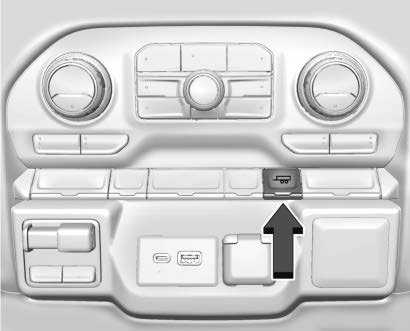
For vehicles without Driver Mode Control, press the Tow/Haul button on the center stack.
If equipped, the Stop/Start system will become unavailable when Tow/ Haul Mode is active.
Tow/Haul Mode Grade Braking is only enabled while the Tow/Haul Mode is selected and the vehicle is not in the Range Selection Mode. See Manual Mode 0 220. Tow/Haul Mode Grade Braking assists in maintaining desired vehicle speeds when driving on downhill grades by using the engine and transmission to slow the vehicle.
See Towing Equipment 0 292.
Download Manual