Maintenance
|
|
 WARNING: Switch the ignition off and apply the parking brake.
 WARNING: Do not touch the electronic ignition system parts after you have switched the ignition on or when the engine is running. The system operates at high voltage. Failure to adhere to this warning could result in serious personal injury or death.
 WARNING: Keep your hands and clothing clear of the engine cooling fan.
Make sure that you fit filler caps securely after carrying out maintenance checks.
Have your vehicle serviced regularly to help maintain its roadworthiness and resale value. Authorized repairers are best qualified to service your vehicle properly and expertly, with a wide range of highly specialized tools.
In addition to regular servicing, we recommend that you carry out the following checks.
• Exterior lamps.
• Interior lamps.
• Warning lamps and indicators.
• Brake fluid level. See Brake Fluid Check (page 262).
• Washer fluid level. See Washer Fluid Check (page 263).
• Tire pressures. See Technical Specifications (page 314).
• Tire condition. See Wheels and Tires
(page 281).
• Engine oil level. See Engine Oil Check
(page 259).
• Engine coolant level. See Engine Coolant Check (page 260).
• Pipes, hoses and reservoirs for leaks.
• Air conditioning operation.
• Parking brake operation.
• Horn operation.
• Tightness of lug nuts.
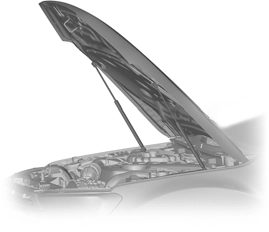
1. Pull the hood release lever. See
Instrument Panel (page 18).
256
E201861
Note: Make sure that the hood is correctly closed.
257
A Engine coolant reservoir. See Engine Coolant Check (page 260). B Engine oil dipstick. See Engine Oil Dipstick (page 259).
C Engine oil filler cap. See Engine Oil Check (page 259). D Brake fluid reservoir. See Brake Fluid Check (page 262).
E Engine compartment fuse box. See Changing a Fuse (page 254). F Battery. See Changing the 12V Battery (page 264).
G Windshield washer fluid reservoir. See Washer Fluid Check (page 263). H Air filter assembly. See Changing the Engine Air Filter (page 272).
258
E161560
Note: Do not remove the dipstick when the engine is running.
Note: If the oil level is between the maximum and minimum marks, the oil level is acceptable. Do not add oil.
Note: The oil consumption of new engines reaches its normal level after approximately
3,000 mi (5,000 km).
To check the engine oil level consistently and accurately, do the following:
|
|
 WARNING: Do not remove the filler cap when the engine is running.
Do not use supplemental engine oil additives because they are unnecessary and could lead to engine damage that may not be covered by the vehicle Warranty.

E142732
259
Only use oils certified for gasoline engines by the American Petroleum Institute (API). An oil with this trademark symbol conforms to the current engine and emission system protection standards and fuel economy requirements of the International Lubricants Specification Advisory Committee (ILSAC).
To top up the engine oil level do the following:
Note: Do not add oil further than the maximum mark. Oil levels above the maximum mark may cause engine damage.
Note: Make sure you install the oil filler cap correctly.
Note: Soak up any spillage with an absorbent cloth immediately.
Use the information display controls on the steering wheel to reset the oil change indicator.
|
Message |
Action and description |
|
Settings |
Press the right arrow button, then from this menu scroll to the following message. |
|
Vehicle |
Press the right arrow button, then from this menu scroll to the following message. |
|
Oil Life |
Press the right arrow button, then from this menu scroll to the following message. |
|
Hold OK to Reset |
Press and hold the OK button until the instrument cluster displays the following message. Reset Successful |
|
When the oil change indic- ator resets the instrument cluster displays 100%. Remaining Life {00}% |
|
|
If the instrument cluster displays one of the following messages, repeat the process. Not Reset Reset Cancelled |

260
|
|
 WARNING: Do not put coolant in the windshield washer reservoir. If sprayed on the windshield, coolant could make it difficult to see through the windshield.
E170684
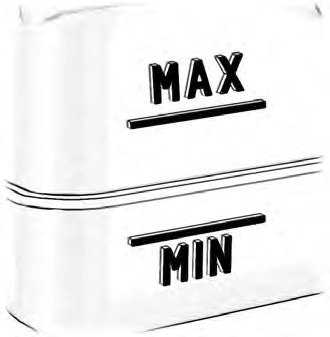
Make sure that the coolant level is between the MIN and MAX marks on the coolant reservoir at ambient temperature. If the coolant level is at or below the minimum mark, immediately add coolant.
The coolant concentration should be maintained within 48% to 50%, which equates to a freeze point between -29°F (-34°C) and -35°F (-37°C).
Note: Coolant expands when it is hot. The level may extend beyond the MAX mark.
Note: Do not use stop leak pellets, cooling system sealants, or non-specified additives as they can cause damage to the engine cooling or heating systems.
Adding Coolant
|
|
 WARNING: Do not remove the coolant reservoir cap when the engine is on or the cooling system is hot. Wait 10 minutes for the cooling system to cool down. Cover the coolant reservoir cap with a thick cloth to prevent the possibility of scalding and slowly remove the cap. Failure to follow this instruction could result in personal injury.
 WARNING: Do not allow the fluid to touch your skin or eyes. If this happens, rinse the affected areas immediately with plenty of water and contact your physician.
 WARNING: Undiluted coolant is flammable and may ignite if spilled on a hot exhaust.
We do not recommend the use of recycled engine coolant since a Ford-approved recycling process is not yet available.
Do not mix different colors or types of coolant in your vehicle.
Note: Add a 50/50 mixture of antifreeze and water or prediluted engine coolant that meets the correct specification.
Note: Use fluids which meet the specifications or requirements defined. Use of other fluids may lead to damage which is not covered by the vehicle Warranty. See Capacities and Specifications (page 316).
To top up the coolant level do the following:
261
In case of emergency, you can add water without engine coolant in order to reach a vehicle service location.
Note: Prolonged use of an incorrect dilution of coolant can cause damage, for example corrosion, overheating or freezing.
Note: Transmission fluid should be checked by an authorized dealer. If required, fluid should be added by an authorized dealer.
Have an authorized dealer check and change the transmission fluid at the correct service interval. See Maintenance (page 256). Your transmission does not consume fluid. However, the fluid level should be checked if the transmission is not working properly, (i.e., if the transmission slips or shifts slowly) or if you notice some sign of fluid leakage.
Do not use supplemental transmission fluid additives, treatments or cleaning agents. The use of these materials may affect transmission operation and result in damage to internal transmission components.

|
|
 WARNING: Only use brake fluid from a sealed container. Contamination with dirt, water, petroleum products or other materials may result in brake system damage or failure. Failure to adhere to this warning could result in the loss of vehicle control, serious personal injury or death.
 WARNING: Do not allow the fluid to touch your skin or eyes. If this happens, rinse the affected areas immediately with plenty of water and contact your physician.
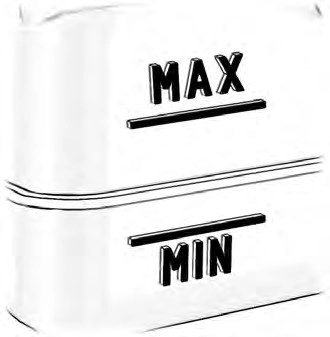
 WARNING: A fluid level between the MAX and MIN lines is within the normal operating range and there is no need to add fluid. A fluid level not in the normal operating range could compromise the performance of the system. Have your vehicle checked immediately.
E170684
262
To avoid fluid contamination, the reservoir cap must remain in place and fully tight, unless you are adding fluid.
Only use fluid that meets Ford specifications. See Capacities and Specifications (page 316).
Your vehicle is equipped with an electric power steering (EPS) system. There is no fluid reservoir to check or fill.
|
|
 WARNING: If you operate your vehicle in temperatures below 40°F (5°C), use washer fluid with antifreeze protection. Failure to use washer fluid with antifreeze protection in cold weather could result in impaired windshield vision and increase the risk of injury or accident.
Add fluid to fill the reservoir if the level is low. Only use a washer fluid that meets Ford specifications. See Capacities and Specifications (page 316).
State or local regulations on volatile organic compounds may restrict the use of methanol, a common windshield washer antifreeze additive. Washer fluids containing non-methanol antifreeze agents should be used only if they provide cold weather protection without damaging the vehicle’s paint finish, wiper blades or washer system.
Battery Management System (If Equipped)
The battery management system monitors battery conditions and takes actions to extend battery life. If excessive battery drain is detected, the system may temporarily disable certain electrical features to protect the battery. Those electrical accessories affected include the rear defrost, heated/cooled seats, climate control fan, heated steering wheel, audio and navigation system. A message may be shown in the information displays to alert the driver that battery protection actions are active. These messages are only for notification that an action is taking place, and not intended to indicate an electrical problem or that the battery requires replacement.
Note: Charging and replacing the battery requires the driver power window to be
re-initialized. See Windows and Mirrors
(page 77).
To ensure proper operation of the Battery Management System, any electrical devices that are added to your vehicle should not have their ground connection made directly at the negative battery post.
A connection at the negative battery terminal can cause inaccurate measurements of the battery condition and potential incorrect system operation.
When a battery replacement is required, you must use a recommended replacement battery that matches the electrical requirements of the vehicle.
263
After battery replacement, or in some cases after charging the battery with the external charger, the Battery Management System requires eight hours of vehicle sleep time (key off with doors closed) to relearn the new battery state of charge.
Prior to relearning the state of charge, the Battery Management System may disable electrical features (to protect the battery) earlier than normal.


|
Failure to do so may cause serious personal injury or property damage.
|
 WARNING: Battery posts, terminals and related accessories contain lead and lead compounds. Wash hands after handling.
 WARNING: This vehicle may have more than one battery. Removing the battery cables from only one battery does not disconnect your vehicle electrical system. Make sure you disconnect the battery cables from all batteries when disconnecting power.
 WARNING: For vehicles with Auto-Start-Stop the battery requirement is different. You must replace the battery with one of exactly the same specification.
The battery is located in the engine compartment. See Under Hood Overview (page 258).
Your vehicle has a maintenance-free battery. It does not require additional water during service.
If your vehicle battery has a cover, make sure you correctly install it after cleaning or replacing the battery.
For longer, trouble-free operation, keep the top of the battery clean and dry and the battery cables tightly fastened to the battery terminals. If any corrosion is present on the battery or terminals, remove the cables from the terminals and clean with a wire brush. You can neutralize the acid with a solution of baking soda and water.
We recommend that you disconnect the negative battery cable terminal from the battery if you plan to store your vehicle for an extended period.
264
To maintain correct operation of the battery management system, if you add any electrical devices to your vehicle, do not connect the ground connection directly to the negative battery terminal. A connection at the negative battery terminal can cause inaccurate measurements of the battery condition and potential incorrect system operation.
Note: Electrical accessories or components added to your vehicle by you or an authorized dealer, may adversely affect battery performance, durability and the performance of other electrical systems on your vehicle.
If a replacement battery is required, we recommend you use a Ford replacement battery that matches the electrical requirements of your vehicle.
If you disconnect or replace the battery and your vehicle has an automatic transmission, transmission must relearn its adaptive strategy. Because of this, the transmission may shift firmly when first driven. This is normal operation while the transmission fully updates its operation to optimum shift feel.
To disconnect or remove the battery, do the following:
Note: The engine management system has a power hold function and remains powered for a period after you switch the ignition off. This is to allow diagnostic and adaptive tables to be stored. Disconnecting the battery without waiting can cause damage not covered by the vehicle Warranty.
Note: Before reconnecting the battery, make sure the ignition remains switched off.
Note: If you only disconnect the negative battery cable terminal, make sure it is isolated or placed away from the battery terminal to avoid un-intended connection or arcing.
Note: Make sure the battery cable terminals are fully tightened.
Note: If you disconnect or replace the battery, you must reset the clock and the pre-set radio stations once the battery is reconnected.
Make sure that you dispose of old batteries in an environmentally friendly way.
Seek advice from your local authority about recycling old batteries.
265
E222238
Run the tip of your fingers over the edge of the blade to check for roughness.
Clean the wiper blades with isopropyl alcohol or windscreen washer concentrate.
Note: The windshield wiper blades are different in length.
Note: If you install wiper blades of the wrong length, the wiper blades can clash damaging the wiper system.
E279825
Note: Make sure that the wiper blade locks into place.
If your vehicle has been involved in a crash, have the aim of the headlamp beam checked by an authorized dealer.
266
E142592
A B
C D
8 ft (2.4 m)
Ground to the center of the headlamp high beam bulb
25 ft (7.6 m)
Horizontal reference line
E142465
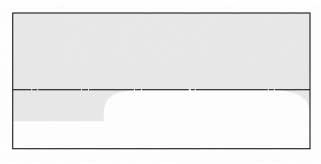
4. On the wall or screen you will observe a flat zone of high intensity light located at the top of the beam pattern. If the top edge of the flat zone of high intensity light is not on the horizontal reference line, adjust the aim of the headlamp beam.
Note: There may be an identifying mark on the lens to help you locate the center line of the headlamp high beam bulb. Refer to the graphic below step 4.
Note: To see a clearer light pattern for adjusting, you may want to block the light from one headlamp while adjusting the other.
E284602
267
Contact an authorized dealer.
Note: Do not touch the bulb glass.
E284568
Headlamp assembly:
E284569
E284581
268
5. Install the new bulb in reverse order.
All bulbs in this assembly except for the direction indicator bulb are LED. If an LED fails have your vehicle checked as soon as
Approach Lamp and Side Direction Indicator (If Equipped)
A Side direction indicator. B Approach lamp.
possible. Contact an authorized dealer.
If an LED fails have your vehicle checked as soon as possible. Contact an authorized dealer.
Note: You cannot separate the bulb from the bulb holder.
269
Replacing LED Fog Lamp Bulbs (If Equipped)
If an LED fails have your vehicle checked as soon as possible. Contact an authorized dealer.
Tail, Brake, Reversing, and Direction Indicator
270
If an LED fails have your vehicle checked as soon as possible. Contact an authorized dealer.
Tail, Brake, Reversing Lamp and Direction Indicator
License Plate Lamp
E187290
271
If an LED fails have your vehicle checked as soon as possible. Contact an authorized dealer.
|
|
 WARNING: To reduce the risk of vehicle damage and personal burn injuries, do not start your engine with the air cleaner removed and do not remove it while the engine is running.
When changing the engine air filter, do not allow debris or foreign material to enter the air induction system. Engine components are susceptible to damage not covered by the vehicle Warranty.
Change the air filter element at the correct interval. See Scheduled Maintenance (page 437).
Incorrect component use can cause damage not covered by the vehicle Warranty. See Motorcraft Parts (page 317).
To replace the air filter element do the following:
272
Download Manual