Maintenance
Have your vehicle serviced regularly to help maintain its roadworthiness and resale value. There is a large network of authorized dealers that are there to help you with their professional servicing expertise. We believe that their specially trained technicians are best qualified to service your vehicle properly and expertly. They are supported by a wide range of highly specialized tools developed specifically for servicing your vehicle.
If your vehicle requires professional service, an authorized dealer can provide the necessary parts and service. Check your warranty information to find out which parts and services are covered.
Use only recommended fuels, lubricants, fluids and service parts conforming to specifications. Motorcraft® parts are designed and built to provide the best performance in your vehicle.
• Do not work on a hot engine.
• Make sure that nothing gets caught in moving parts.
• Do not work on a vehicle with the engine running in an enclosed space, unless you are sure you have enough ventilation.
• Keep all open flames and other burning material (such as cigarettes) away from the battery and all fuel related parts.
|
|
 WARNING: To reduce the risk of vehicle damage and personal burn injuries, do not start your engine with the air cleaner removed and do not remove it while the engine is running.
350
351
352
353
354
355
E161560
a clean, lint-free cloth. See Under Hood Overview (page 351).
E249448
Engine Oil Dipstick (page 356).
Note: Do not remove the dipstick when the engine is running.
Note: If the oil level is between the maximum and minimum marks, the oil level
To check the engine oil level consistently and accurately, do the following:
is acceptable. Do not add oil.
Note: The oil consumption of new engines reaches its normal level after approximately 3,000 mi (5,000 km).
|
|
 WARNING: Do not remove the filler cap when the engine is running.
356
Do not use supplemental engine oil additives because they are unnecessary and could lead to engine damage that may not be covered by the vehicle Warranty.
E142732
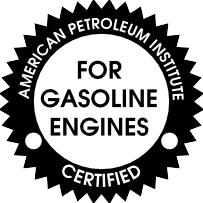
Only use oils certified for gasoline engines by the American Petroleum Institute (API). An oil with this trademark symbol conforms to the current engine and emission system protection standards and fuel economy requirements of the International Lubricants Specification Advisory Committee (ILSAC).
To top up the engine oil level do the following:
Note: Do not add oil further than the maximum mark. Oil levels above the maximum mark may cause engine damage.
Note: Make sure you install the oil filler cap correctly.
Note: Soak up any spillage with an absorbent cloth immediately.
To check the engine oil level consistently and accurately, do the following:
Note: Do not remove the dipstick when the engine is running.
357
Note: If the oil level is between the full and minimum marks, the oil level is acceptable. Do not add oil.
Note: The oil consumption of new engines reaches its normal level after approximately 3,000 mi (5,000 km).
|
|
 WARNING: Do not remove the filler cap when the engine is running.
Do not use supplemental engine oil additives because they are unnecessary and could lead to engine damage that may not be covered by the vehicle Warranty.
E258300 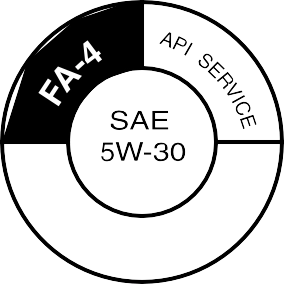
The American Petroleum Institute (API) service symbol is used to identify the proper engine oil for your engine. The API service symbol will be displayed on the oil container you purchase. The API symbol displays the oil performance category in the top half of the symbol and the viscosity grade in the center of the symbol.
To top up the engine oil level do the following:
358
Note: Do not add oil further than the maximum mark. Oil levels above the maximum mark may cause engine damage.
Note: Make sure you install the oil filler cap correctly.
Note: Soak up any spillage with an absorbent cloth immediately.
Use the information display controls on the steering wheel to reset the oil change indicator.
|
Message |
Action and description |
|
Remaining Life |
|
|
{00}% |
|
|
If the instrument cluster displays one of the following messages, repeat the process. |
|
|
Not Reset |
|
|
Reset Cancelled |
ENGINE COOLANT CHECK
|
|
 WARNING: Do not remove the coolant reservoir cap when the engine is on or the cooling system is hot. Wait 10 minutes for the cooling system to cool down. Cover the coolant reservoir cap with a thick cloth to prevent the possibility of scalding and slowly remove the cap. Failure to follow this instruction could result in personal injury.
 WARNING: Do not put coolant in the windshield washer reservoir. If sprayed on the windshield, coolant could make it difficult to see through the windshield.
 WARNING: To reduce the risk of personal injury, make sure the engine is cool before unscrewing the coolant pressure relief cap. The cooling system is under pressure. Steam and hot liquid can come out forcefully when you loosen the cap slightly.
 WARNING: Do not add coolant further than the MAX mark.
359
When the engine is cold, check the concentration and level of the coolant at the intervals listed in the scheduled maintenance information. See Scheduled Maintenance (page 562).
Note: Make sure that the coolant level is between the MIN and MAX marks on the coolant reservoir.
Note: Coolant expands when it is hot. The level may extend beyond the MAX mark.
Maintain coolant concentration within 48% to 50%, which equates to a freeze point between -29°F (-34°C) and -35°F (-37°C). Coolant concentration should be checked using a refractometer. We do not recommend the use of hydrometers or coolant test strips for measuring coolant concentration.
Adding Coolant
|
|
 WARNING: Do not add engine coolant when the engine is hot. Failure to follow this instruction could result in personal injury.
 WARNING: Do not remove the coolant reservoir cap when the engine is on or the cooling system is hot. Wait 10 minutes for the cooling system to cool down. Cover the coolant reservoir cap with a thick cloth to prevent the possibility of scalding and slowly remove the cap. Failure to follow this instruction could result in personal injury.
 WARNING: Do not put coolant in the windshield washer reservoir. If sprayed on the windshield, coolant could make it difficult to see through the windshield.
Note: Do not use stop leak pellets, cooling system sealants, or non-specified additives as they can cause damage to the engine cooling or heating systems. Resulting component damage may not be covered by the vehicle Warranty.
Note: Automotive fluids are not interchangeable.
It is very important to use prediluted coolant approved to the correct specification in order to avoid plugging the small passageways in the engine cooling system. See Capacities and Specifications (page 419). Do not mix different colors or types of coolant in your vehicle. Mixing of engine coolants or using an incorrect coolant may harm the engine or cooling system components and may not be covered by the vehicle Warranty.
Note: If prediluted coolant is not available, use the approved concentrated coolant diluting it to 50/50 with distilled water. See Capacities and Specifications (page 419). Using water that has not been deionised may contribute to deposit formation, corrosion and plugging of the small cooling system passageways.
Note: Coolants marketed for all makes and models may not be approved to our specifications and may cause damage to the cooling system. Resulting component damage may not be covered by the vehicle Warranty.
If the coolant level is at or below the minimum mark, add prediluted coolant immediately.
To top up the coolant level do the following:
If you have to add more than 1.1 qt (1 L) of engine coolant per month, have your vehicle checked as soon as possible.
Operating an engine with a low level of coolant can result in engine overheating and possible engine damage.
In case of emergency, you can add a large amount of water without engine coolant in order to reach a vehicle service location. In this instance, qualified personnel:
Water alone, without engine coolant, can cause engine damage from corrosion, overheating or freezing.
Do not use the following as a coolant substitute:
Alcohol and other liquids can cause engine damage from overheating or freezing.
Do not add extra inhibitors or additives to the coolant. These can be harmful and compromise the corrosion protection of the coolant.
360
We do not recommend the use of recycled coolant as an approved recycling process is not yet available.
Note: Dispose of used coolant in the appropriate manner.
Follow your community's regulations and standards for recycling and disposing of automotive fluids.
If you drive in extremely cold climates:
If you drive in extremely hot climates:
Vehicles driven year-round in non-extreme climates should use prediluted coolant for optimum cooling system and engine protection.
At specific mileage intervals, as listed in the scheduled maintenance information, the coolant should be changed. Add prediluted coolant approved to the correct specification. See Capacities and Specifications (page 419).
Your vehicle may have an engine driven cooling fan drive also called a fan clutch. This fan drive changes the fan speed to match the vehicle’s changing cooling air flow requirements. Fan speed, fan noise level and fuel consumption all will increase based on the driving conditions that include trailer towing, hill climbing, heavy loads, high speed and high ambient temperature, individually or in combination.
The fan drive provides the minimum fan speed resulting in minimum fan noise and fuel consumption required to meet the ever-changing vehicle cooling air flow requirements. You can hear the amount of fan noise increasing and decreasing as the engine power requirements and vehicle driving conditions change as you drive. This is normal to the operation of your vehicle. You may also hear high levels of fan noise when the engine first starts, and normally decreases after driving for a short time.
Fail-safe cooling allows you to temporarily drive your vehicle before any incremental component damage occurs. The fail-safe distance depends on ambient temperature, vehicle load and terrain.
If the engine begins to overheat, the coolant temperature gauge moves toward the red zone:
A warning lamp illuminates and a message may appear in the information display.
If the engine reaches a preset
over-temperature condition, the engine automatically switches to alternating cylinder operation. Each disabled cylinder acts as an air pump and cools the engine.
361
When this occurs, your vehicle still operates, however:
Continued operation increases the engine temperature, causing the engine to completely shut down. Your steering and braking effort increases in this situation.
When the engine temperature cools, you can re-start the engine. Have your vehicle checked as soon as possible to minimize engine damage.
|
completely shut down without warning, potentially losing engine power, power steering assist, and power brake assist, which may increase the possibility of a crash resulting in serious injury.
|
 WARNING: Fail-safe mode is for use during emergencies only. Operate your vehicle in fail-safe mode only as long as necessary to bring your vehicle to rest in a safe location and seek immediate repairs. When in fail-safe mode, your vehicle will have limited power, will not be able to maintain high-speed operation, and may
 WARNING: Do not remove the coolant reservoir cap when the engine is on or the cooling system is hot. Wait 10 minutes for the cooling system to cool down. Cover the coolant reservoir cap with a thick cloth to prevent the possibility of scalding and slowly remove the cap. Failure to follow this instruction could result in personal injury.
Your vehicle has limited engine power when in the fail-safe mode, drive your vehicle with caution. Your vehicle does not maintain high-speed operation and the engine may operate poorly.
Remember that the engine is capable of automatically shutting down to prevent engine damage. In this situation:
Note: Driving your vehicle without repair increases the chance of engine damage.
Engine Coolant Temperature Management (If Equipped)
|
|
 WARNING: To reduce the risk of crash and injury, be prepared that the vehicle speed may reduce and the vehicle may not be able to accelerate with full power until the coolant temperature reduces.
If you tow a trailer with your vehicle, the engine may temporarily reach a higher temperature during severe operating conditions, for example ascending a long or steep grade in high ambient temperatures.
At this time, you may notice the coolant temperature gauge moves toward the red zone and a message may appear in the information display.
362
You may notice a reduction in vehicle speed caused by reduced engine power in order to manage the engine coolant temperature. Your vehicle may enter this mode if certain high-temperature and high-load conditions take place. The amount of speed reduction depends on vehicle loading, grade and ambient temperature. If this occurs, there is no need to stop your vehicle. You can continue to drive.
The air conditioning may automatically turn on and off during severe operating conditions to protect the engine from overheating. When the coolant temperature decreases to the normal operating temperature, the air conditioning turns on.
If the coolant temperature gauge moves fully into the red zone, or if the coolant temperature warning or service engine soon messages appear in your information display, do the following:
If required, have an authorized dealer check and change the transmission fluid at the correct service interval. See Scheduled Maintenance (page 562).
The automatic transmission does not have a transmission fluid dipstick.
Refer to your scheduled maintenance information for scheduled intervals for fluid checks and changes. Your transmission does not consume fluid. However, if the transmission slips, shifts slowly or if you notice a sign of leaking fluid, contact an authorized dealer.
Do not use supplemental transmission fluid additives, treatments or cleaning agents. The use of these materials may affect transmission operation and result in damage to internal transmission components.
363
E170444
Use only fluid that meets Ford specifications. See Capacities and Specifications (page 419).
|
|
 WARNING: Do not use any fluid other than the recommended brake fluid as this will reduce brake efficiency. Use of incorrect fluid could result in the loss of vehicle control, serious personal injury or death.
 WARNING: Only use brake fluid from a sealed container. Contamination with dirt, water, petroleum products or other materials may result in brake system damage or failure. Failure to adhere to this warning could result in the loss of vehicle control, serious personal injury or death.
 WARNING: Do not allow the fluid to touch your skin or eyes. If this happens, rinse the affected areas immediately with plenty of water and contact your physician.
 WARNING: A fluid level between the MAX and MIN lines is within the normal operating range and there is no need to add fluid. A fluid level not in the normal operating range could compromise the performance of the system. Have your vehicle checked immediately.
To avoid fluid contamination, the reservoir cap must remain in place and fully tight, unless you are adding fluid.
Only use fluid that meets Ford specifications. See Capacities and Specifications (page 419).
364
Your vehicle is equipped with an electric power steering (EPS) system. There is no fluid reservoir to check or fill.
Note: The in-tank pump will turn off automatically after approximately 30 seconds.
The fuel water trap is above the frame rail under the driver side of the vehicle.

A Front of Vehicle.
Add fluid to fill the reservoir if the level is low. Only use a washer fluid that meets Ford specifications. See Capacities and Specifications (page 419).
State or local regulations on volatile organic compounds may restrict the use of methanol, a common windshield washer antifreeze additive. Washer fluids containing non-methanol antifreeze agents should be used only if they provide cold weather protection without damaging the vehicle’s paint finish, wiper blades or washer system.
|
|
 WARNING: Do not dispose of fuel in the household refuse or the public sewage system. Use an authorized waste disposal facility.
Note: Only add fuel that meets the Ford specification. See Fuel Quality (page 191).
Note: The water-in-fuel indicator lamp will go out after approximately 2 seconds, with the engine running.
Your fuel filters must be changed at the correct service interval or when you see the low fuel pressure message appear. See Scheduled Maintenance (page 562).
365
Your vehicle is equipped with a lifetime fuel filter that is integrated with the fuel tank. Regular maintenance or replacement is not needed.


|
Failure to do so may cause serious personal injury or property damage. |
 WARNING: Battery posts, terminals and related accessories contain lead and lead compounds, chemicals known to the State of California to cause cancer and reproductive harm. Wash your hands after handling.
 WARNING: This vehicle may have more than one battery. Removing the battery cables from only one battery does not disconnect your vehicle electrical system. Make sure you disconnect the battery cables from all batteries when disconnecting power.
Your vehicle is fitted with a Motorcraft maintenance-free battery which normally does not require additional water.
When a battery replacement is required, you must use a recommended replacement battery that matches the electrical requirements of the vehicle.
Note: After cleaning or replacing the battery, make sure you reinstall the battery vent tube, battery cover or shield.
For longer, trouble-free operation, keep the top of the battery clean and dry.
If you see any corrosion on the battery or terminals, remove the cables from the terminals and clean with a wire brush. You can neutralize the acid with a solution of baking soda and water.
366
Because your vehicle’s engine is electronically controlled by a computer, some control conditions are maintained by power from the battery. When the battery is disconnected or a new battery is installed, the engine must relearn its idle and fuel trim strategy for optimum driveability and performance. Flexible fuel vehicles (FFV) must also relearn the ethanol content of the fuel for optimum driveability and performance.
To restore the settings, do the following:
Note: If you do not allow the engine to relearn the idle and fuel trim strategy, the idle quality of your vehicle may be adversely affected until the engine computer eventually relearns the idle trim and fuel trim strategy.
Note: For flexible fuel vehicles, if you are operating on E85, you may experience poor starts or an inability to start the engine and driveability problems until the fuel trim and ethanol content have been relearned.
Make sure that you dispose of old batteries in an environmentally friendly way. Seek advice from your local authority about recycling old batteries.
If storing your vehicle for more than 30 days without recharging the battery, we recommend that you disconnect the negative battery cable to maintain battery charge for quick starting.
Battery Management System (If Equipped)
The battery management system monitors battery conditions and takes actions to extend battery life. If excessive battery drain is detected, the system temporarily disables some electrical systems to protect the battery.
Systems included are:
A message may appear in the information displays to alert you that battery protection actions are active. These messages are only for notification that an action is taking place, and not intended to indicate an electrical problem or that the battery requires replacement.
After battery replacement, or in some cases after charging the battery with an external charger, the battery management system requires eight hours of vehicle sleep time to relearn the battery state of charge. During this time your vehicle must remain fully locked with the ignition switched off.
Note: Prior to relearning the battery state of charge, the battery management system may temporarily disable some electrical systems.
367
To make sure the battery management system works correctly, do not connect an electrical device ground connection directly to the battery negative post. This can cause inaccurate measurements of the battery condition and potential incorrect system operation.
Note: If you add electrical accessories or components to the vehicle, it may adversely affect battery performance and durability. This may also affect the performance of other electrical systems in the vehicle.
E142463
Run the tip of your fingers over the edge of the blade to check for roughness.
Clean the wiper blades with washer fluid or water applied with a soft sponge or cloth.
Note: Do not hold the wiper blade when lifting the wiper arm.
E295620
Note: Make sure that the wiper arm does not spring back against the glass when the wiper blade is not attached.
368
Note: Make sure that the wiper blade locks into place.
The headlamps on your vehicle are properly aimed at the assembly plant. If your vehicle has been in an accident, contact an authorized dealer to check and realign your headlamps.
Note: To see a clearer light pattern for adjusting, you may want to block the light from one headlamp while adjusting the other.
E142592
A B C D
8 feet (2.4 meters).
Center height of lamp to ground. 25 feet (7.6 meters).
Horizontal reference line.
E167358
1. Park your vehicle directly in front of a wall or screen on a level surface, approximately 25 ft (7.6 m) away.
reference line.
369
Horizontal aim is not required for this vehicle and is not adjustable.

Note: Handle a halogen headlamp bulb carefully and keep out of children’s reach. Grasp the bulb only by its plastic base and do not touch the glass. The oil from your hand could cause the bulb to break the next time the headlamps are operated.
Note: If the bulb is accidentally touched, clean it with rubbing alcohol before installing it.
E183762
3. Pull the wheel liner back towards the tire to gain access to the bulbs.
370
E183500
A.
B.
C.
Low beam headlamp bulb. Direction indicator bulb.
High beam headlamp bulb.
E183763
371
E163826
Replacing LED Headlamp Bulbs (If Equipped)
These lamps have LED bulbs. Contact an authorized dealer.
Replacing LED Fog lamp Bulbs (If Equipped)
These lamps have LED bulbs. Contact an authorized dealer.
These lamps have LED bulbs. Contact an authorized dealer.
372
E187289
A.
B.
Brake, rear and direction indicator bulb.
Reverse lamp bulb.
E187290
These lamps have LED bulbs. Contact an authorized dealer.
These lamps have LED bulbs. Contact an authorized dealer.
Note: The license plate bulbs are behind the rear bumper.
373
These lamps have LED bulbs. Contact an authorized dealer.
|
|
 WARNING: To reduce the risk of vehicle damage and personal burn injuries, do not start your engine with the air cleaner removed and do not remove it while the engine is running.
Note: Failure to use the correct air filter element may result in severe engine damage. Resulting component damage may not be covered by the vehicle Warranty.
Note: When servicing the air cleaner, do not allow foreign material to enter the air induction system. The engine is susceptible to damage from even small particles.
When changing the air filter element, use only the air filter element listed. See Capacities and Specifications (page 419).
Change the air filter element at the proper intervals. See Scheduled Maintenance (page 562).
|
|
 WARNING: To reduce the risk of vehicle damage and personal burn injuries, do not start your engine with the air cleaner removed and do not remove it while the engine is running.
Use the correct specification air filter element. See Motorcraft Parts (page 425).
374
Note: Failure to use the correct air filter Air Filter Restriction Gauge
element may result in severe engine damage. Resulting component damage
may not be covered by the vehicle Warranty.
Change the air filter element at the correct service interval. See Scheduled Maintenance (page 562).
The air filter restriction gauge is in the upper housing of the air filter assembly.
Check the air filter restriction gauge whenever you open the hood to carry out general engine maintenance or at least every 7,500 mi (12,000 km). If you operate your vehicle in extremely dusty conditions, check the gauge at least every 500 mi (800 km) or two weeks, whichever occurs first. Change the air filter element when the restriction gauge reads near the change filter line and the gauge is yellow. Allowing the restriction gauge to reach maximum affects engine performance and fuel economy.
375
Operating your vehicle in heavy snowfall or extreme rain conditions may allow excessive amounts of snow or water into the air intake system. This could restrict air flow and cause the engine to lose power or shut down.
After installing a new air filter element, you must reset the gauge by pressing the reset button.
After operating your vehicle during heavy snowfall or extreme rain, do the following:
• Snow: At the earliest opportunity, open the hood and clear any snow and ice from the air filter housing inlet and reset the air filter restriction gauge.
• Extreme rain: The air filter element dries out after approximately 15–30 minutes of driving at highway speeds. At the earliest opportunity, open the hood and reset the air filter restriction gauge.
376
Download Manual