Disclaimer: Not affiliated with or endorsed by Ford Motor Company. For informational purposes only. Full Disclaimer
Ford Ranger Terrain Management System Fault
Updated:
Owning a Ford Ranger is an invitation to explore more than just smooth asphalt roads. This rugged vehicle is built to conquer rough terrains, and it comes equipped with various features to support your off-road adventures. One key system for this purpose is the Terrain Management System.
The Terrain Management System is a crucial component of the Ranger's capabilities. When it has problems, though, it can be really annoying. We will examine potential issues that might harm the Terrain Management System in this post, along with various do-it-yourself fixes.
What is the Terrain Management System in a Ford Ranger?

The Terrain Management System in your Ford Ranger dynamically adapts your driving experience based on the type of terrain you encounter. It carefully monitors your commands, including throttle input, vehicle speed, and steering angle.
In an instant, it adjusts torque distribution between the front and rear wheels, and side to side, to enhance traction. Furthermore, it can automatically adjust the AdvanceTrac settings using predefined modes, which are selected based on the current road conditions.
The system can seamlessly switch between 4-wheel drive and 2-wheel drive as required. It also fine-tunes throttle response and transmission shift points across different Terrain Management System modes.
Operating the Ford Terrain Management System is user-friendly and effective. You can select from various surface conditions by simply rotating the lever on your center console.
Shop From Amazon


The Terrain Management System typically starts in the standard mode, suitable for everyday road and highway driving conditions. It optimizes the engine, transmission, and brakes to match the specific surface conditions.
To utilize the Terrain Management System in your Ford, follow these steps: locate the control lever on your center console and cycle through the available drive modes.
As you turn the dial, your vehicle's touchscreen display will show a corresponding animation for each setting.
Once you have chosen your desired driving mode, your vehicle will automatically adjust to optimize performance on the selected terrain.
Terrain Management System Goes Dead

This fault is not extremely rare and can occur due to various factors. Typically, it might arise after a battery disconnection, but it can also be the outcome of servicing or cleaning the Terrain Management System.
Fixing the Wrench Sign Turning On
The appearance of the wrench symbol in a Ford truck typically indicates the detection of an issue in the vehicle's engine or powertrain. This could happen for various reasons, including a malfunction in the Terrain Management System.
In conjunction with the wrench symbol, you may also experience a power loss as the truck's computer aims to safeguard it from further damage.
This power loss could be attributed to a throttle body issue, which is interconnected with the Terrain Management System. Therefore, one of the initial checks should be the throttle body itself.
In the event of a malfunctioning or faulty throttle body, replacement may be necessary to clear the wrench error code. If you opt to replace the throttle body, it is advisable to have the cylinders balanced at the same time.
Another potential source of the issue could be linked to the Terrain Management System. In such cases, utilizing an error code scanner will reveal a U code fault, often stemming from a glitch that may not require immediate repair.
To resolve the problem, you will need to disconnect and reconnect the battery to reset the system and clear the code that is inhibiting the vehicle's operation. Following this reset, you will also need to perform the idle relearning procedure as outlined in your owner's manual.
Fixing a Pop-Up Warning

Vehicle sensors are delicate components that can break or degrade over time, leading to inaccurate readings and the triggering of warning signals. Some of these sensors are integral to the Terrain Management System, and their failure can result in issues within that system.
When you receive an error code indicating misread or unrecorded data, it is crucial to inspect the relevant sensor. You might find that it is faulty or damaged and requires replacement.
Shop From Amazon
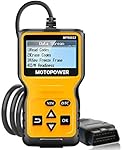


The problem could stem from a single sensor or involve multiple sensors. If you possess a diagnostic scanning tool, gather as much information as possible about the error codes. A malfunctioning sensor has the potential to cause damage to more critical vehicle components.
If you have the necessary skills, you can attempt to replace sensors yourself. Although, it might be advisable to enlist the services of a professional.
Keep in mind that some sensors can cost up to $150 each to replace, so be prepared for potential expenses if multiple sensor issues arise.
Dealing with Software Bugs
Explorers with low mileage commonly experience software issues in earlier models predating 2014. A straightforward update of the ABS software could rectify the problem.
However, in more recent Explorer models, these early issues have been addressed, and they can be easily resolved by ensuring that your Terrain Management System has the most up-to-date software installed.
Can I Fix the Terrain Management System in My Ford?

The Terrain Management System in a Ford may be controlled by a single dial for initiation, but it is still a complex system with numerous preset settings. This complexity requires an intelligent system to manage various terrain requests.
The system is prone to errors due to its sophisticated nature. However, some of these may be readily fixed. But, there are a lot of problems that are outside the purview of do-it-yourself solutions and are not addressed here.
A mechanic must devote a great deal of time to mastering their trade, and certain jobs are still difficult for people who lack the requisite knowledge.
Generally speaking, you should undertake a certain repair if you feel comfortable doing so. Nevertheless, always be aware that certain DIY actions may void your vehicle's warranty if it is still under protection.
If you lack the confidence or knowledge to diagnose or repair the problem, it is wiser to entrust someone with the required experience to take over.
Basic car maintenance and repair skills are valuable, but there are limitations to what can be tackled without professional expertise.

Nick Marchenko, PhD
Industrial Engineer & Automotive Content Specialist
Nick writes in-depth guides on car clubs, engine specs, vehicle ownership, and modifications, combining engineering knowledge with automotive passion.
Full profile → LinkedIn →You May Also Like
How To Install Roof Racks on Ford Ranger?
2 years agoSetting out for an adventure often means packing heavy. And no matter how roomy your Ford Ranger might be, there are times when you need that extra space for gear such as skis, surfboards, or camping...
Ford Ranger TBC Fault
2 years agoFord has consistently been a beloved choice for heavy-duty pickup trucks. However, like all automobile brands, it faces its own set of issues. Are you seeing the TBC fault code illuminated on your...
How to Fix Power Steering Assist Fault Ford Ranger
2 years agoPower steering is often taken for granted as a modern automotive marvel. However, as this highly intricate system ages, its imperfections become more apparent. If you have noticed a power steering...
Ford Ranger VIN Decoder: Free And Easy
2 years agoYour Ford Ranger, just like every other car or truck, has its own "ID badge" called the VIN (Vehicle Identification Number). It's kinda like the unique tag you find under the hood of you...
How To Change the Coolant in Ford Ranger?
2 years agoRefueling and changing the oil or brake fluid are usual rituals in the life of every Ford Ranger driver. Less often arises the question of how often the coolant needs to be changed. Replacing this...
How To Sell Your Junk Ford Ranger?
2 years agoWith the right attention, your Ford Ranger can be a reliable partner for countless adventures. Yet, even with diligent upkeep, every vehicle has its lifespan. As time marches on, the Ford Ranger ma...