Disclaimer: Not affiliated with or endorsed by Ford Motor Company. For informational purposes only. Full Disclaimer
Ford F150 Shift System Fault
Updated:
Tired of consistently encountering the notification that reads, "Shift system fault, service required," but unclear about its meaning, origin, and how to address the issue?
Keep reading to gain a comprehensive understanding of what steps to take and to familiarize yourself with other notifications related to this matter.
Why Does My Ford F150 Say Shift System Fault?
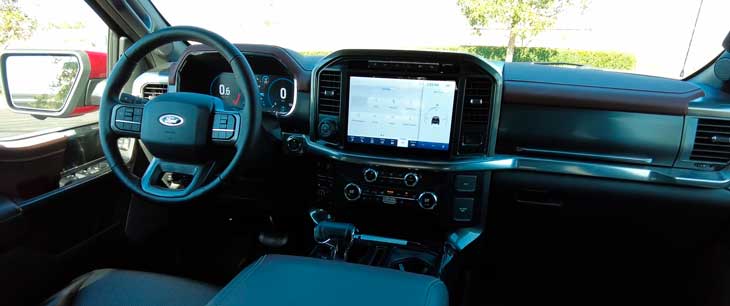
When the shift system fault message and check engine light appear, it signifies that the Powertrain Control Module (PCM) has identified a fault in the transmission system.
Upon illumination of this light, a specific code is stored in the PCM memory, indicating the reason for the light and providing insights into the necessary steps to address the issue.
Your Ford vehicle has reported codes P0756 and P0766, associated with the transmission performance of shift solenoids C and D. This suggests that the PCM is not detecting the shifts as expected when these solenoids are engaged.
Possible causes for this issue include a low fluid level, a malfunctioning solenoid, problems with the valve body, or internal transmission issues.
While there are no current technical service advisories for this problem, there is a recall, 20B34, related to a potential transmission cooler failure.
Ford will replace the transmission cooler at no cost. If the cooler fails and leads to low transmission fluid, it could be the root cause of your troubles.
If the cooler is determined not to be the cause of the problem, it is essential to have your transmission thoroughly evaluated to pinpoint and address the underlying issue.
Why Shifting Problems Occur

Several factors can contribute to issues with shifting gears. If the catalytic converter or exhaust becomes blocked, the engine may experience back pressure, creating difficulty for the gearbox in shifting gears. This can trigger the shift system to display a warning. Other potential causes of shifting problems include.
Interlock switch failure
An error in the interlock switch may require using the brake pedal to transition from park to drive or reverse. Difficulty in shifting from park could indicate a malfunctioning interlock.
Shift cables and linkages
Rust, heavy grease, or contaminants like moisture, oil, or dirt can affect shift cables and linkages, leading to difficulty in shifting. This is more likely when the engine and heat box have not been adequately warmed up, as the contaminants tend to soften after sufficient engine warm-up.
Shop From Amazon


Low transmission fluid
Inadequate transmission fluid levels may result in sluggishness and difficulty in shifting gears. Transmission fluid plays a crucial role in keeping transmission components cool and well-lubricated. Regular transmission fluid flushing is essential for the longevity of your transmission.
Internal computer issues
Malfunctions in the internal computer of your car can contribute to shifting errors. The vehicle's internal computer communicates with the transmission system, overseeing shifts from park to drive or reverse, as well as natural shifting during driving. Addressing any internal computer issues is vital to maintaining smooth and reliable shifting.
Notification Saying Shift System Fault Service Required

Your Ford vehicle utilizes an electronic shifter to establish communication between the shifter and the transmission computer. The appearance of this warning indicates a malfunction in the shifter component itself.
Potential causes include an internal electrical malfunction or issues with the wiring connected to the shifter. To assess whether the shifter is communicating correctly, the use of a scan tool is necessary.
If communication is found to be deficient, it suggests a possible failure in the shifter assembly or a wiring problem associated with the shifter assembly.
Shop From Amazon


Symptoms of Shift System Fault in Ford F150
If you notice signs of a shift system fault in your Ford F150, such as erratic or delayed gearshifts, difficulty shifting into neutral or park, or an unresponsive gearshift lever, it is crucial to promptly address the problem.
These symptoms can be both inconvenient and indicative of a potential issue within the shift system. It is essential that you have your car inspected by a certified mechanic to preserve a smooth driving experience and prevent future damage.
Their knowledge will allow them to determine the root cause of the problem and recommend appropriate repairs or replacements.
Delaying or neglecting to address these symptoms may result in more severe issues over time. Taking proactive measures ensures the optimal performance and safety of your Ford F150, so do not hesitate to take action.
DIY Troubleshooting Steps for Shift System Fault in Ford F150

If you encounter a shift system fault in your Ford F150, there are several DIY troubleshooting steps you can undertake. Begin by checking the transmission fluid level and its condition, as low or contaminated fluid may lead to shifting issues.
Proceed to inspect and clean the shift solenoids responsible for controlling the transmission's shifting patterns. If these initial steps do not resolve the problem, consider resetting the Transmission Control Module (TCM).
This action may clear fault codes and restore normal operation. Although it is essential to note that these measures serve as general guidelines and may not address all shift system faults.
Should uncertainty persist, or if the issue persists, it is advisable to seek assistance from a professional mechanic for a thorough diagnosis and appropriate solutions.
Shop From Amazon


When to Seek Professional Help for Ford F150 Shift System Fault
Encountering persistent and significant gearshift problems in your F150 can be concerning, especially if the check engine light is on and DIY troubleshooting has proven unsuccessful.
In such cases, it is advisable not to panic and instead seek professional assistance. Attempting to address complex shift system faults independently may result in further complications.
Consulting with a qualified mechanic ensures a proper diagnosis of the root cause and effective resolution of the issue. Professional assistance is essential for identifying any underlying mechanical or electrical issues that could be impacting the gearshift system.
When faced with ongoing and troublesome gearshift problems in your Ford F150, it is prudent not to delay and instead promptly seek expert help.
Cost of Repairing Shift System Fault in Ford F150
The expenses associated with rectifying shift system faults in a Ford F150 can fluctuate based on the nature of the issue. For the replacement of a shift solenoid, the average cost typically falls within the range of $200 to $500, encompassing labor charges.
In cases where the problem pertains to transmission fluid, a fluid change may incur costs ranging from $100 to $200. If the shift system failure concerns the Transmission Control Module (TCM), the replacement cost might range between $500 and $900.
It is critical to remember that these costs are estimations and may vary depending on location and service provider. Engaging in regular maintenance practices and addressing issues promptly can contribute to averting more expensive shift system faults in the long term.

Nick Marchenko, PhD
Industrial Engineer & Automotive Content Specialist
Nick writes in-depth guides on car clubs, engine specs, vehicle ownership, and modifications, combining engineering knowledge with automotive passion.
Full profile → LinkedIn →You May Also Like
Ford F150 Terrain Management System Fault
2 years agoOwning a Ford F150 implies more than just cruising on smooth roads; this robust vehicle is tailored for rugged terrains, equipped with features like the terrain management system. When this system...
Ford F-150 Starting System Fault
2 years agoFew things are more exasperating for a car owner than attempting to start their vehicle only to discover that it will not respond to the turn of the key. While the starting system of a Ford F-150 is g...
Keeping Your F150 Engine Coolant at the Right Temperature: A Guide to Preventing Overheating
2 years agoYour engine's coolant isn't just about preventing freezing in the winter; it's crucial for preventing overheating and keeping your engine at the optimal temperature year-round. Overheating...
How to Fix Power Steering Assist Fault in Ford F150
2 years agoAre you receiving a "Steering Assist Fault - Service Required" notification on your F150? This article discusses the reasons behind it and outlines the steps you should take. If you own a...
Ford F150 Tire Pressure Sensor Fault
2 years agoTire pressure monitoring systems (TPMS) have been made compulsory in all American vehicles as a government-mandated measure aimed at bolstering road safety. The primary purpose of TPMS is to monito...
Ford F-150 Transmission Fault Service
2 years agoWhile cruising in your Ford F-150, a sudden warning message appears: "Transmission fault, service now." What steps should you take when faced with this problem? We have delved into the issue...