Disclaimer: Not affiliated with or endorsed by Ford Motor Company. For informational purposes only. Full Disclaimer
Ford 4.6 V8 Firing Order
Updated: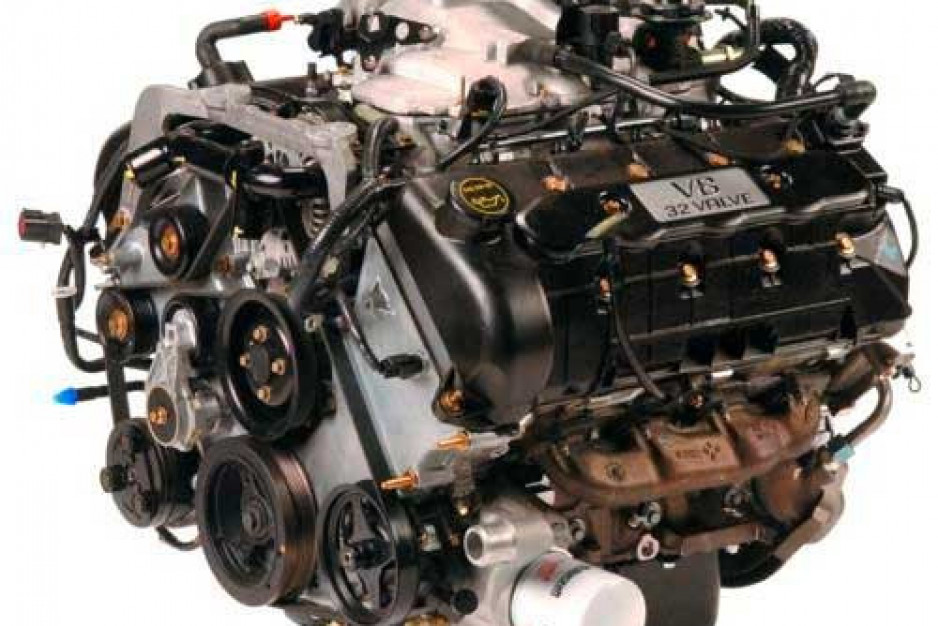
Mechanics understand the significance of a vehicle's firing order, as it plays a crucial role in reducing or even eliminating engine vibrations. So, what precisely constitutes the firing order of a Ford 4.6 engine?
The firing order for the Ford 4.6 engine is 1-3-7-2-6-5-4-8. Adhering to this precise sequence is paramount for ensuring the engine operates smoothly.
Furthermore, it significantly impacts the engine's efficiency and reliability, particularly in Ford F-150 pickup trucks and other medium-duty trucks within the F series.
Continue reading to delve deeper into the Ford 4.6 firing order, exploring its importance, its operational mechanics, and its correlation with cylinder numbering.
How does the firing order for a 4.6 Ford work?
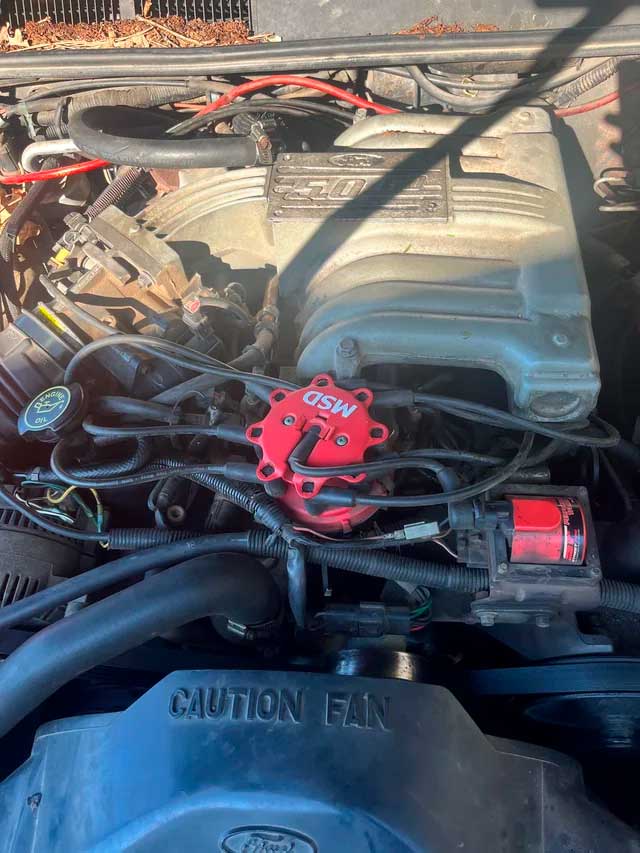
Let's delve into the two distinct ignition control systems associated with Ford 4.6 modular engine designs:
Waste spark ignition system
In earlier versions of the Ford 4.6 engine, the waste spark ignition system was employed, with its operation controlled by the engine control module (ECM).
This system utilizes two coil packs, each comprising four wires intricately connected to their respective spark plugs on the cylinder banks.
Remarkably, the ECM simultaneously dispatches a signal to two cylinders, even when only one cylinder necessitates ignition. This is because the other cylinder is in the exhaust stroke, causing the spark energy to dissipate.
Hence, the name "waste spark ignition system" aptly describes this setup. Consequently, you will observe four signal wires emanating from the ECM and leading to the coil packs.
Coil on plug system
The coil on plug ignition system made its debut with the 1999 Ford Mustang, ushering in a new approach. In this design, each spark plug has its dedicated coil, and the ECM directly controls each of these coils, eliminating the need for a central distributor coil.
8 wires extend from the control module to each spark plug across all cylinders in the coil on plug system. This system is often referred to as the distributorless ignition system due to the absence of a distributor coil.
A sensor positioned on either the camshaft or crankshaft detects the engine's piston position, identifying which one is approaching top dead center (TDC) and requires ignition.
The ignition module within the ECM receives signals from this sensor. Subsequently, the ECM activates the coil corresponding to the spark plug that needs ignition, initiating the spark. This process is repeated in a predetermined sequence stored in the ECM memory.
Shop From Amazon


Ford 4.6 firing order

The Ford 4.6 V8 engines operate with a firing order of 1-3-7-2-6-5-4-8. Cylinder number one, positioned on the driver's side at the front of the engine, serves as the starting point for the numerical assignment of cylinders by the Ford Motor Company.
The engines, from front to back, are consecutively followed by each of these steps. Cylinders 1 through 4 are located on the driver's side, and cylinders 5 through 8 are located on the passenger side.
Belonging to Ford Motor Company's modular engine series, this 4.6 engine, despite its smaller displacement compared to Ford Windsor engines, delivers greater power. Moreover, the modular series phased out Ford's Windsor engines by offering increased power within a more compact engine package.
The Ford 4.6 engine found its application in various Ford vehicles, including cars, vans, and trucks bearing the moniker "Triton" within the modular engine family.
Additionally, Ford introduced a DOHC (dual overhead cam) version of this modular engine featured in Lincoln vehicles. It is important to remember that this engine is no longer being produced.
The usage of Dupont nylon intake manifolds, which are prone to breaking and causing coolant leaks, is one of the significant problems with the modular engine series. Another challenge lies in the complexity of spark plug removal, compounded by the absence of threads on the spark plugs.
Do all Ford vehicles with 4.6 engines have the same firing order?

Ford vehicles with 4.6-liter V8 engines, from pickup trucks to cars, all have the same firing order for spark plugs. This feature ensures smoother, noiseless operation and maximum power extraction from the engine.
All newer Ford V8 engines in the modular family also have the same firing order, regardless of their displacement, except for the 5-liter Coyote engine.
What causes the incorrect firing order in Ford 4.6?

Ford 4.6 engines can have a weird firing order for several reasons. The main components responsible for the proper sequence of spark plug activation are the spark plug coils, signal wiring from the computer, distributor connections, crankshaft/camshaft position sensor, and spark plugs.
Faulty spark plug wiring
The engine computer sends signals to the spark plug coils through distributors or direct connection, depending on the ignition system.
A spark plug may burn when it should not if the wiring is defective, preventing the signal from being properly received. For instance, when the spark plug fires, the piston may be in the exhaust position, or the valve could be closed.
Damaged crankshaft position sensor
The engine computer is informed of the location of the first spark plug to be ignited via the crankshaft/camshaft position sensor. If the sensor is damaged or sends an incorrect signal, the computer will start firing the wrong spark plug, and the entire firing order will be disturbed.
Faulty spark plug
A faulty spark plug can cause a misfire, which can disrupt the firing order.
ECM malfunction
The engine computer (ECM) controls all spark plugs with the help of sensors, spark coils, and pre-programmed patterns in its memory.
If the ECM is faulty, it may not send the correct signals to the spark plug coils, resulting in a weird firing order. Symptoms of a weird firing order in a Ford 4.6 engine include vibrations, noisy operation, failure to start the vehicle, reduced fuel economy, and increased emissions.
If you suspect that your Ford 4.6 engine has a weird firing order, it is important to have it diagnosed and repaired by a qualified mechanic as soon as possible.
Shop From Amazon


Why is the firing order important?
The correct firing order holds immense significance, as a mix-up in spark plug wires can lead to the engine failing to start, causing potential backfires, and at best, resulting in poor and erratic engine performance.
In instances where two consecutive spark plugs ignite in rapid succession, it is vital to ensure that the spark plug wires are not arranged closely alongside each other for an extended length.
This proximity can induce crossfire between the plugs, where the magnetic field generated by one spark prematurely triggers the next plug, causing the engine to run unevenly and experience misfires. To avert this issue, it is advisable to criss-cross the wires of these adjacent plugs, neutralizing the magnetic interference.
For engines equipped with distributorless ignition systems or coil on plug ignition systems, the firing order is under the control of the ignition module or the engine's computer.
The computer receives input signals from the crankshaft position sensor and, on certain engines, the camshaft position sensor, to ascertain the piston nearing top dead center on its compression stroke. Subsequently, it activates the corresponding spark plug and proceeds in accordance with the prescribed firing sequence.
FAQs
What is the standard firing order for the Ford 4.6L V8 engine?
The Ford 4.6L V8 follows the firing order 1–3–7–2–6–5–4–8. This sequence is consistent across most SOHC and DOHC modular V8 engines.
Does the 4.6 Triton V8 use the same firing order as the Mustang GT?
Yes, both use the 1–3–7–2–6–5–4–8 firing pattern. However, the intake and ignition timing may differ slightly between truck and performance variants.
Where is cylinder 1 located on a Ford 4.6 V8?
Cylinder 1 is the front cylinder on the passenger side. Ford numbers cylinders 1–4 on the passenger bank and 5–8 on the driver side.
How are the cylinder banks arranged on the 4.6 engine?
The right-hand (passenger) side is Bank 1, containing cylinders 1–4. The left-hand (driver) side is Bank 2 with cylinders 5–8.
What is the coil pack firing sequence for a 1997 Ford F-150 4.6L?
Shop From Amazon


It uses two coil packs firing paired cylinders – 1-6, 3-5, 7-4, and 2-8. The base firing order remains 1–3–7–2–6–5–4–8.
Did the 4.6 3-valve engine change its firing order?
No, the 3V version kept the same firing order as the earlier 2V and DOHC versions. Ford kept it uniform for diagnostic consistency.
What’s the spark plug order for the Ford 4.6L V8?
The spark plug firing sequence matches the cylinder firing order. Start from cylinder 1 on the passenger side and follow 1–3–7–2–6–5–4–8.
Which side of the engine is Bank 1 on a 4.6 Ford?
Bank 1 is always the passenger side, containing cylinder 1. This is consistent across all Ford modular V8 engines.
What firing order is used on the 2008 Ford F-150 4.6?
The 2008 model uses the standard 1–3–7–2–6–5–4–8 sequence. Verify plug wiring if you’re replacing coils or doing ignition work.
Does the Lincoln Town Car 4.6 have a different firing order?
No, the Town Car 4.6 uses the same modular layout and firing order as the F-150 and Mustang. Only ignition components differ slightly.
Where is cylinder 2 located on the Ford 4.6 V8?
Cylinder 2 sits directly behind cylinder 1 on the passenger side bank. The sequence continues rearward along the block.
What’s the difference between the 2V and 3V 4.6 engines in firing setup?
Both share the same firing order, but the 3V adds variable cam timing and coil-on-plug ignition. Wiring layout differs due to COP design.
What is the firing order for a 2010 Ford F-150 with the 4.6 3-valve?
The 2010 F-150 4.6 3V engine follows 1–3–7–2–6–5–4–8. Cylinder numbering remains standard for modular V8s.
How can I check for misfire order on a Ford 4.6?
Use an OBD-II scanner to read misfire codes. Each code (P0301–P0308) corresponds directly to the cylinder number firing incorrectly.
Do all Ford Modular V8s share the same firing order?
Most do, including the 4.6, 5.4, and 6.8 V10. Only some performance variants like the GT500 or Cobra R used different cam configurations.
Is the firing order the same on 1997 and 2008 F-150 4.6 models?
Yes, Ford kept the same ignition sequence throughout production. Coil and PCM updates didn’t affect the core firing order.
Shop From Amazon


What’s the correct firing direction on the distributorless 4.6 ignition system?
The PCM controls the ignition sequence electronically. The system follows the 1–3–7–2–6–5–4–8 order via coil-on-plug signals.
How do I identify which coil belongs to which cylinder?
Each coil sits directly above its spark plug on COP engines. On early coil-pack models, follow the harness labels or diagram on the intake cover.
Where is cylinder 5 located on a Ford 4.6?
Cylinder 5 is the front cylinder on the driver side bank. It starts the left-side numbering sequence (5–6–7–8).
Does the 4.6 SOHC and DOHC have identical cylinder numbering?
Yes, all 4.6 modular V8s use the same numbering layout. Only the head design and valve timing differ.
What is the firing order diagram for a 2005 F-150 4.6L?
The correct order is 1–3–7–2–6–5–4–8. Bank 1 (passenger) contains cylinders 1–4, Bank 2 (driver) 5–8.
Where is cylinder 7 on a Ford 4.6 engine?
Shop From Amazon


Cylinder 7 is the third cylinder back on the driver side bank. It sits between cylinders 6 and 8.
What is the coil firing sequence on a 1998 F-150 4.6L?
It uses paired coil packs – 1/6, 3/5, 7/4, and 2/8. The sequence is synchronized to the 1–3–7–2–6–5–4–8 order.
Does the 4.6 V8 Expedition share the same firing order?
Yes, the Expedition’s 4.6 V8 uses the same modular sequence. Always double-check cylinder numbering before replacing plug wires.
Can incorrect firing order cause backfiring on a 4.6L?
Absolutely. Wrong coil wiring or swapped plug leads can cause popping through the intake or exhaust, often misdiagnosed as timing failure.

Nick Marchenko, PhD
Industrial Engineer & Automotive Content Specialist
Nick writes in-depth guides on car clubs, engine specs, vehicle ownership, and modifications, combining engineering knowledge with automotive passion.
Full profile → LinkedIn →You May Also Like
How To Find A Coolant Leak In Ford F-150 - You Don't Need A Pressure Tester
2 years agoThe lifeblood of your Ford F-150's engine? That's the coolant, mate. This nifty fluid doesn’t just swish around in the cooling system; it plays an active role in ensuring your engine doe...
How To Choose Tires For Ford F-150
2 years agoThink of tires as the ultimate footwear for your motor. Just as you wouldn't skimp on a decent pair of shoes, you shouldn't scrimp on tires. We all know the grief of a bad pair of shoes: sore...
What Size Camper Can an F-150 Pull
2 years agoThere are numerous ways to embrace the RV lifestyle without investing in a traditional motorhome. Many individuals view travel trailers and truck campers as excellent alternatives since they allow you...
Windsor Firing Order
2 years agoThe 351 Windsor engine has a specific firing order: 1-3-7-2-6-5-4-8, ensuring efficient combustion in all cylinders. Different engines may have distinct firing orders, so it is vital to know your engi...
Ford 3.5 Eco Boost Firing Order
2 years agoThe F-150, Expedition, and Explorer are just a few of Ford's models that come with the legendary V6 Ford 3.5 EcoBoost engine. Its longevity, dependability, and fuel economy are well known. The...
Decoding the Ford F-150 4.2 Engine's Firing Order
2 years agoThe firing order is a small but significant factor in the world of internal combustion engines that controls the rhythm of power production. It's a symphony of engine cylinders firing in perfec...