Disclaimer: Not affiliated with or endorsed by Dodge Motor Company. For informational purposes only. Full Disclaimer
How to Diagnose and Fix Acceleration Issues in Your Dodge Durango
Updated:
Imagine yourself driving your dependable Dodge Durango, prepared to take on the road with strength and agility. But as you step on the pedal, there's a startling lack of reaction.
There are several causes for a Dodge Durango's unwillingness to accelerate, and the frustration is genuine. In this talk, we'll examine some typical problems that might be impeding the acceleration of your Durango and look at workable fixes to get you back behind the wheel with assurance.
Air Filter Maintenance for Better Acceleration

If your Dodge Durango won't accelerate, one of the main culprits might be a malfunctioning or clogged air filter. To ensure that pure air enters the engine for combustion, the air filter is essential. Its airflow is restricted if it fills with dirt and debris, which impacts the air-fuel mixture and, in turn, the acceleration.
A straightforward yet efficient fix for this issue is to routinely inspect and replace the air filter, particularly if you drive in difficult or dusty conditions. A clean air filter ensures that your Durango's engine runs as efficiently as possible by allowing for smooth breathing.
Shop From Amazon


Fuel Delivery System Check
Next on the list of possible culprits is the fuel delivery system, especially the fuel injectors. It is up to these parts to carefully distribute fuel into the combustion chamber.
The fuel-air mixture may be disturbed by dirty or broken fuel injectors, which might result in a delay when accelerating. Your Durango's acceleration may be regained by paying attention to the fuel delivery system if you observe a decline in power and responsiveness.
Throttle Position Sensor (TPS) Troubleshooting

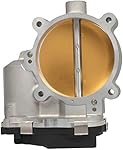
Additionally, the cause of your Durango's acceleration issues may be a malfunctioning throttle position sensor (TPS). The throttle position sensor (TPS) exchanges data with the engine control unit (ECU) through communication. Your car may respond slowly when you press the gas pedal if the TPS is broken or sending out the wrong signals.
Restoring correct communication between the throttle and the ECU may require adjusting or replacing the TPS. Maintaining the dynamic driving experience that a Dodge Durango is renowned for starts with making sure the TPS is in good working order.
Transmission System Maintenance

Additionally, a major factor in your Durango's acceleration performance is the transmission system. The smooth acceleration of the car can be greatly impacted by a slipping or broken transmission.
Maintaining the transmission's health requires routinely checking and changing the transmission fluid, as advised by the manufacturer.
Shop From Amazon
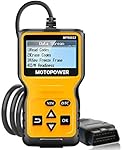


To stop further harm, you must take immediate action if you encounter erratic or delayed shifts. For a comprehensive transmission examination and any repairs, it is best to seek professional assistance to preserve the acceleration capabilities of your Durango.
Electronic Control Module (ECM) Evaluation

Finally, problems with your Durango's electronic control module (ECM) may be a factor in your acceleration problems. Frequently referred to as the vehicle's "brain," the ECM regulates several engine operations, such as ignition timing and fuel injection. The ECM may perform poorly and be unresponsive if it has outdated software or malfunctions.
Acceleration problems may be resolved by updating the ECM software or, in certain situations, replacing the module. To fully utilize the engine of your Durango, it is essential to ensure the ECM is performing at its peak.
Conclusion
In conclusion, there are several reasons why a Dodge Durango won't accelerate, from gearbox and electronic control module faults to problems with fuel and air delivery.
Preventing these issues requires routine maintenance, which includes checking the transmission fluid, cleaning the fuel injectors, and changing the air filter.
A methodical approach to troubleshooting, which involves examining the electronic control module and throttle position sensor, can assist in locating and resolving the core reasons for acceleration issues.
By keeping these parts in excellent shape, you can ensure that your Dodge Durango will always have the strength and performance you need.

Nick Marchenko, PhD
Industrial Engineer & Automotive Content Specialist
Nick writes in-depth guides on car clubs, engine specs, vehicle ownership, and modifications, combining engineering knowledge with automotive passion.
Full profile → LinkedIn →You May Also Like
What Size Camper Can a Dodge Durango Tow
2 years agoAs you may know, embarking on journeys and adventures usually demands a faithful towing companion, right? So, the 2022 Dodge Durango shines as a top purchase among other mid-size SUVs. And the reas...
What Does p1564 Dodge Durango Mean?
2 years agoThe P1564 OBD II trouble code can be a headache, but this time we're chatting about its occurrence in the Dodge Durango. When this little code pops up, it’s usually pointing fingers at an is...
How to Replace 2014 Dodge Durango Tail Light
2 years agoAh, the 2014 Dodge Durango – a beast in its own right, with LED taillights that are as stylish as they are functional. But alas, when they decide to go on strike, you're left with no choice...
How to Fix Dodge Durango Brake Light Fail - Complete Guide
2 years agoMaintaining the safety features of your vehicle, such as the brake lights, is crucial for both your safety and that of others on the road. If you own a Dodge Durango and are experiencing issues with y...
Dodge Durango VIN Decoder - What Information You Can Extract From Your VIN Code
2 years agoEach Dodge Durango comes with its unique identifier, known as a Vehicle Identification Number, or VIN for short. This alphanumeric sequence carries a wealth of critical information about the SUV, enca...
Dodge Durango: A Comprehensive Trim Level Analysis
2 years agoThe 2022 Dodge Durango, the beefy SUV that's been turning heads since 1999, continues to impress with its blend of power, versatility, and style. With prices ranging from $35,475 to $66,275, it&rs...