Disclaimer: Not affiliated with or endorsed by Chevrolet Motor Company. For informational purposes only. Full Disclaimer
Is GM 3.6 Liter V6 a Good Engine? Problems, Life Expectancy & Specs
Updated:Before you start researching parts and pricing, check whether the swap you have in mind actually fits — and whether it's worth doing.
Check My Engine SwapBuckle up and prepare to be blown away by the GM 3.6 Liter V6 engine. This beast of an engine has captivated car enthusiasts and speed fans alike with its impressive performance and relentless spirit.
Regarding automotive engineering, General Motors (GM) has always been at the forefront, consistently delivering impressive powertrain options for discerning drivers. One such powerhouse is the GM 3.6 Liter V6 engine, an engineering marvel that strikes a perfect balance between performance, efficiency, and reliability. Today, we delve into the specifications and key features of this exceptional engine without holding back on the excitement.
GM 3.6 Liter V6 Engine Specs & Horsepower
If you're someone who appreciates raw power, the GM 3.6 Liter V6 engine is likely on your radar. Today, we dive into the details of this mighty power plant that has left a mark on GM applications from 2008 to 2014.
The GM 3.6 Liter V6 engine, also known as the LLT engine, takes the direct injection technology to new heights. Building upon its predecessor, the LY7, this engine boasts a 15% increase in power output thanks to its direct injection design. Prepare to be captivated as this beast roars to life.
Now that we've covered the challenges let's focus on the exhilarating performance delivered by the GM 3.6 Liter V6 engine. This power plant finds its home in various GM applications and has been known to electrify drivers with its impressive capabilities. While the specific figures may vary based on the application, you can expect to experience a surge of power that will leave you breathless.
The GM 3.6 Liter V6 engine puffs an impressive compression ratio of 11.3:1. This ratio signifies the relationship between the volume of the combustion chamber at its largest and smallest capacities. With this high compression ratio, the engine maximizes power output while maintaining optimal fuel efficiency.
GM 3.6 Liter V6 Engine Specifications
|
Specification |
Details |
|
Type |
3.6L V6 |
|
Displacement |
3564cc (217 ci) |
|
Engine Orientation |
Longitudinal or Transverse |
|
Compression Ratio |
11.3:1 |
|
Valve Configuration |
Dual overhead camshafts |
|
Valves per Cylinder |
4 |
|
Assembly Sites |
St. Catharines, Ontario |
|
Flint Engine South, Flint, Michigan, USA |
|
|
Ramos Arizpe, Mexico |
|
|
Melbourne, Australia |
|
|
Valve Lifters |
Roller follower with hydraulic lash adjusters |
|
Firing Order |
1-2-3-4-5-6 |
|
Bore x Stroke |
94 x 85.6 mm |
|
Bore Center (mm) |
103 |
|
Bore Area (cm2) |
416.39 (total engine bore area) |
|
Fuel System |
DI (Direct Injection) |
|
Fuel Type |
Regular Unleaded |
|
Maximum Engine Speed |
6700 rpm |
|
Engine Mass (kg/lbs) |
164 / 361 (estimate) |
|
Emissions Controls |
Evaporative system |
|
Dual catalytic converters |
|
|
Positive crankcase ventilation |
|
|
Materials |
Block: Sand cast aluminum (319) with cast iron bore liners |
|
Cylinder head: Cast aluminum (319 semi-permanent molds) |
|
|
Intake manifold: Aluminum (319 Upper and Lower) |
|
|
Exhaust manifold: High-silicon moly cast iron |
|
|
Main bearing caps: Sintered steel (CU infiltrated) |
|
|
Crankshaft: Forged steel (1038 V) |
|
|
Camshaft: Cast nodular iron |
|
|
Connecting rods: Sinter-forged steel |
Possible Problems with Сhevy 3.6 VVT Engine
As with any legendary engine, there are a few bumps in the road. One of the main challenges faced by the GM 3.6 Liter V6 engine is the timing chain. When this crucial component fails, it can lead to significant damage, resulting in an expensive repair. To avoid such a headache, experts recommend replacing the engine with a remanufactured long block. It's a small price to pay for the remarkable performance that awaits you.
The Timing Chain Issue
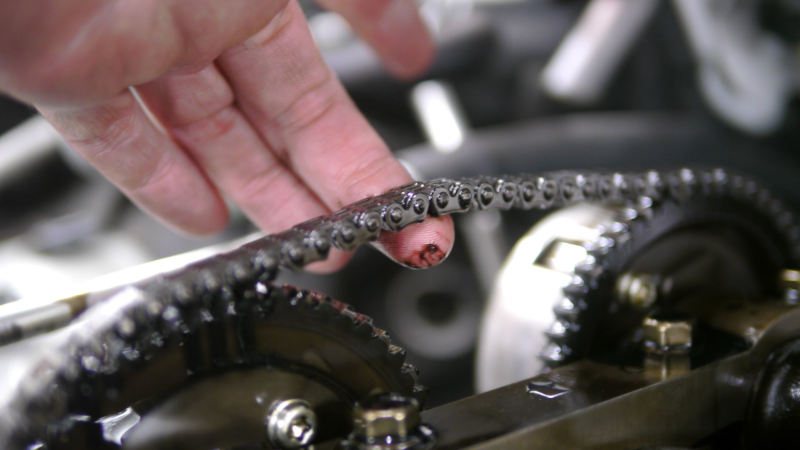
As with any legendary engine, there are a few bumps. One of the main challenges faced by the GM 3.6 Liter V6 engine is the timing chain. When this crucial component fails, it can lead to significant damage, resulting in an expensive repair. To avoid such a headache, experts recommend replacing the engine with a remanufactured long block. It's a small price to pay for the remarkable performance that awaits you.
Addressing the Oil Consumption Problem
Another issue that has surfaced with the GM 3.6 Liter V6 engine is its propensity for oil consumption. However, fear not! By diligently adhering to your vehicle's regularly scheduled maintenance and using high-quality oil, you can keep this beast quenched and performing at its best.
Shop From Amazon


The Four Cam Phases and Oil Pump

If you're committed to going the extra mile to safeguard your GM 3.0 or 3.6-liter engine, consider this expert advice: when it's time to replace the timing chain, request that the four cam phases and the oil pump be replaced. This might entail a bit more investment, but it's a prudent move that can save you headaches. The engine's poor ventilation system and susceptibility to sludge make replacing these components crucial for optimal performance and longevity. By addressing these key areas, you'll tackle the root causes of many of the issues these engines face, ensuring they remain in top shape for miles to come.
GM 3.6L V6 Engine Life Expectancy
The GM 3.6L V6 engine has a solid reputation for robustness and durability. With proper care and maintenance, this powerplant can go the distance. These engines have been known to surpass the 200,000-mile mark and beyond, serving as a testament to their solid engineering. However, as with any mechanical marvel, there are certain factors that can impact its longevity. Let's explore these key factors and learn how to maximize the life expectancy of your GM 3.6L V6 engine.
By following a comprehensive maintenance routine, using high-quality fluids, adopting responsible driving habits, and promptly addressing any issues, you can unleash the true potential of this powerhouse and enjoy countless miles of thrilling performance. Remember, the key to a long and prosperous journey lies in treating your engine with the care and respect it deserves.
Enter your vehicle and target engine to see a compatibility verdict, estimated cost, required changes, and whether it's the right move.
Get My Swap Verdict
What Models Use the GM 3.6 Liter V6 Engine?
The GM 3.6 Liter V6 engine has left its indelible mark on numerous models across the automotive landscape. Let's take a closer look at the vehicles graced with the prowess of this exceptional engine, known by its code name, the LLT. From luxury sedans to versatile SUVs, these models harness the raw power and exhilarating performance that the GM 3.6 Liter V6 engine delivers.
Vehicles using LLT engine
|
Model |
Years |
|
2009-2017 |
|
|
2008-2017 |
|
|
2007-2016 |
|
|
2005-2011 |
|
|
Chevrolet Camaro |
2010-2011 |
Is Сhevy 3.6L VVT a Reliable Engine?
The Chevy 3.6L VVT (Variable Valve Timing) engine has generally been regarded as a reliable engine. It has been used in various Chevrolet vehicles and has gained a positive reputation for its performance and durability. However, like any engine, there may be isolated cases of issues or problems depending on maintenance and individual driving conditions.
To ensure that your GM 3.6 Liter V6 engine continues to conquer the road with gusto, regular maintenance is crucial. Follow the manufacturer's guidelines and schedule, paying close attention to oil changes, filter replacements, and overall engine health. By giving your beast the care it deserves, you'll enjoy its unmatched power for years to come.
Shop From Amazon


Stop comparing specs in your head. Enter your vehicle and the engine you want — get a structured verdict with cost, complexity, and a clear recommendation.
See If This Swap FitsFAQ
Is GM 3.6 Liter V6 a Good Engine? Problems, Life Expectancy & Specs – FAQ
1. What is a 3.6L V6 engine?
A 3.6L V6 engine is a six-cylinder gasoline engine arranged in a V configuration with a total displacement of 3.6 liters. GM’s 3.6L family powers many Chevrolet, GMC, Buick, and Cadillac models and typically delivers 280–335 horsepower depending on generation and tune.
2. What does 3.6 liters mean in an engine?
It indicates total displacement – the combined volume the pistons sweep in all six cylinders. 3.6 liters equals about 3,600 cubic centimeters and correlates with potential power and torque when combined with compression, fueling, and valve timing.
3. What does “VVT” mean in the 3.6L V6 engine?
VVT stands for Variable Valve Timing. The system adjusts camshaft phasing to optimize valve opening and closing across RPM and load, improving power, drivability, fuel economy, and emissions.
4. What does DOHC and GDI stand for?
DOHC means Dual Overhead Camshafts – two cams per bank for precise valve control. GDI means Gasoline Direct Injection, where fuel is injected directly into the combustion chamber for better atomization and efficiency.
5. What is the difference between the 3.6L and 3.6 VVT engines?
Both are 3.6 liter engines, but “VVT” identifies versions with Variable Valve Timing. Earlier units like LY7 used fixed timing, while LLT, LFX, and LGX use full VVT for stronger torque and better efficiency.
6. What GM vehicles use the 3.6L V6 engine?
Chevrolet Camaro, Impala, Traverse, Blazer, and Colorado; GMC Acadia, Terrain, and Canyon; Buick Enclave and LaCrosse; Cadillac CTS, ATS, XT5, and XT6 among others.
7. Is the GM 3.6 engine naturally aspirated or turbocharged?
Most mainstream versions are naturally aspirated. Cadillac LF3 and LF4 variants are twin–turbo. Chevy and GMC models typically use the naturally aspirated setup for reliability and simplicity.
8. What is the difference between the LGX, LFX, and LLT engines?
LLT (2008–2011) introduced direct injection but saw timing chain wear; LFX (2012–2015) improved chains and airflow; LGX (2016–present) brought a revised block, higher compression, and output up to 335 hp with better durability.
9. Is the 3.6L V6 the same in Chevy and Cadillac models?
The core architecture is the same. Calibrations, intake, and exhaust differ, giving Cadillac slightly higher output and refinement while Chevy and GMC tune for regular fuel and broad torque.
10. Is the GM 3.6L engine aluminum or cast iron?
It uses an aluminum block and heads with cast–in iron liners. The design reduces weight, improves heat dissipation, and helps the engine rev freely.
Shop From Amazon

11. Is the GM 3.6L V6 engine reliable?
Yes when maintained. Early LLT and LY7 units had timing chain and oiling complaints. Updates in LFX and LGX strengthened timing components and PCV routing. Regular synthetic oil changes keep them reliable long term.
12. What are the best and worst years for the GM 3.6 engine?
Generally worst: 2008–2011 (LLT timing chain and oil consumption issues). Best: 2016–present (LGX) thanks to redesigned hardware and calibration improvements.
13. How long does a GM 3.6L engine last?
Typical life is 250,000–300,000 km with proper service. Some exceed 400,000 km. Oil discipline and cooling system care are the biggest factors.
14. What is the life expectancy of the 3.6L V6?
A realistic 12–15 years of daily use with factory–spec maintenance. Highway use and timely oil changes extend lifespan.
15. How many miles can a 3.6L V6 last before rebuild?
Often beyond 300,000 km before needing internal work if serviced. Warning signs include cold–start chain rattle, rising oil consumption, and loss of compression.
16. When did the GM 3.6 become a reliable engine?
Reliability improved with the LFX in 2012 and became notably strong with the LGX from 2016 onward.
17. Is the 3.6L Cadillac or Chevy version more dependable?
Dependability is similar because hardware is shared. Differences are mostly calibration. Maintenance history matters far more than the badge.
18. Can a 3.6L V6 engine reach 300,000 km or more?
Yes. Many reach 300k–350k km when serviced on time, kept cool, and not run low on oil.
19. Is it worth buying a used car with the 3.6L V6?
Yes if records show regular oil changes. Prefer 2012+ models. Check for cold–start chain noise and scan for cam/crank correlation codes.
20. How can you extend the life of the GM 3.6 engine?
Change oil every 5k–8k km with full synthetic, flush coolant on schedule, inspect PCV and valve covers, use top–tier fuel, and avoid hard driving when cold.
Shop From Amazon

21. What are the most common problems with the GM 3.6L V6?
Premature timing chain wear on early engines, oil consumption from PCV or gasket issues, carbon buildup on intake valves in GDI versions, VVT solenoid or cam phaser faults, and occasional water pump or thermostat failures.
22. Do GM 3.6 engines have timing chain issues?
Early LLT and LY7 engines are most affected. Long oil intervals and degraded oil accelerate chain and guide wear. Later LFX and LGX chains are more robust.
23. What causes timing chain stretch on the 3.6L V6?
Primarily oil breakdown and sludge, extended change intervals, low oil level, and aggressive driving with cold oil. Poor quality filters can also restrict flow to tensioners.
24. How often should the timing chain be replaced?
There is no fixed interval – it is designed for engine life. Replace when symptoms appear: rattle on cold start, correlation codes (P0008–P0017), or verified stretch during service.
25. Why do GM 3.6 engines burn oil?
Common causes include stuck oil control rings from deposits, PCV system imbalance, hardened valve stem seals, and external leaks at valve covers or timing cover.
26. What are symptoms of a bad VVT solenoid?
Rough idle, hesitation, reduced power, poor fuel economy, and check–engine lights for cam timing codes. Sometimes cleaning the solenoid screens helps, but replacement is often the fix.
27. Do 3.6L engines suffer from carbon buildup?
Yes on direct–injection versions because fuel does not wash intake valves. Regular oil changes, top–tier fuel, periodic intake cleaning, and catch cans where appropriate help mitigate deposits.
28. What are the common issues with the 2010–2016 GM 3.6 engines?
Timing chain wear on early LLT, PCV–related oil consumption, occasional high–pressure fuel pump noise, and water pump seepage. Many were improved in LFX updates around 2012.
29. Are there head gasket or cooling problems in the 3.6L?
Head gasket failures are uncommon but overheating can cause them. More typical are water pump leaks or thermostat housing issues. Keep Dex–Cool fresh and address leaks promptly.
30. What are the most expensive repairs on the GM 3.6 engine?
Timing chain service is the costliest, followed by head gasket repair if overheated. Intake valve carbon walnut blasting and rear main seal leaks can also be labor–intensive.
Shop From Amazon

31. How much horsepower does the 3.6L V6 produce?
Approximately 280–335 hp depending on generation and application. LLT around 300 hp, LFX similar with efficiency gains, LGX up to 335 hp.
32. What is the torque rating of the GM 3.6L engine?
About 350–390 Nm (260–285 lb–ft) with a broad mid–range for smooth daily drivability in sedans and SUVs.
33. What is the compression ratio on a 3.6L V6?
Roughly 10.2:1 to 11.5:1 depending on code. LGX commonly uses 11.5:1 thanks to direct injection and efficient combustion.
34. What kind of fuel does the GM 3.6L engine require?
Most variants run on 87 octane regular. Premium can improve response in higher output applications. Twin–turbo LF3–LF4 require premium.
35. What is the fuel economy of the 3.6L V6?
Varies by vehicle: sedans can see 8.5–9.5 L/100 km highway, mid–size SUVs 10–12 L/100 km combined, and Camaro around 9 L/100 km with calm driving.
36. How fast is a Chevy Camaro with the 3.6L V6?
Approximately 0–100 km/h in 5.2–5.4 seconds with the LGX and an 8–speed automatic under ideal conditions.
37. Is the 3.6L engine good for towing?
Yes within class limits. Properly equipped Traverse or Acadia models tow up to about 2,270 kg. Use the correct hitch, cooling package, and tow mode.
38. Can you tune a 3.6L V6 for more power?
Yes. A conservative ECU tune plus intake and cat–back exhaust can add 15–25 hp. Forced induction requires careful tuning and often upgraded internals due to high compression.
39. Does the GM 3.6 support E85 flex fuel?
Some LFX and LFY engines are FlexFuel–capable with ethanol–compatible lines and injectors. Confirm by fuel cap labeling or VIN option codes.
40. What transmission is paired with the 3.6L V6?
Historically 6–speed automatics (6T70–75), later 8–speed, and many SUVs now use 9–speed automatics. Manual options existed in Camaro trims.
Shop From Amazon

41. How often should you change the oil in the GM 3.6L?
Every 5,000–8,000 km with full synthetic, despite longer official intervals. Clean oil protects chains, phasers, and tensioners.
42. What oil type and capacity does the 3.6L engine use?
Dexos1 Gen 3 5W–30 full synthetic. Capacity is roughly 5.7–6.0 quarts with filter depending on model. Always verify in the owner’s manual.
43. Does the GM 3.6L have a timing belt or chain?
It uses a timing chain designed for engine life. Replace only when symptoms or codes indicate wear.
44. What coolant type does the GM 3.6 require?
Dex–Cool extended life coolant mixed 50–50 with distilled water. Replace about every 5 years or 160,000 km.
45. How do you fix oil leaks on a GM 3.6 engine?
Identify the source, then replace the affected gasket or seal – commonly valve covers, timing cover, or rear main seal. Ensure PCV is functioning to prevent crankcase pressure.
46. What’s the cost to replace a GM 3.6 timing chain?
Typically USD $1,500–$2,800 depending on region and parts. Later engines seldom need this if maintained.
47. What’s considered high mileage for a 3.6L V6?
Above 250,000 km is high, but condition matters more. Listen for chain rattle, check oil use, and scan for timing codes.
48. What maintenance schedule keeps the 3.6 running long?
Oil 5k–8k km, air filter 20k km, coolant 5 years or 160k km, spark plugs 100k km, transmission fluid 60k–80k km, PCV check yearly.
49. What are the pros and cons of the 3.6L V6?
Pros: strong power, smoothness, lighter aluminum design, wide parts availability, improved reliability post–2016. Cons: sensitive to oil neglect, early timing chain issues, potential carbon buildup and gasket leaks, repairs can be labor intensive.
50. Overall, is the GM 3.6L V6 a good engine to buy?
Yes. It offers a solid blend of performance and efficiency. Early issues were addressed, and modern LFX and LGX versions are dependable when serviced on schedule.
Shop From Amazon


Nick Marchenko, PhD
Industrial Engineer & Automotive Content Specialist
Nick writes in-depth guides on car clubs, engine specs, vehicle ownership, and modifications, combining engineering knowledge with automotive passion.
Full profile → LinkedIn →You May Also Like
Here Are The 5 Chevrolet Camaro Years to Avoid
3 years agoAre you in the market for a Chevrolet Camaro? Before you make a purchase, it's important to know which years to avoid. From malfunctioning airbags to engine issues, we're breaking down the m...
Chevrolet Camaro Wheel Bearing Noise: Reasons & How to Fix
3 years agoUnsettling noise coming from the Chevrolet Camaro bearing seldom comes alone. As a rule, it is accompanied by other symptoms that we will discuss in this article. Knowing what other indicators to l...
Chevrolet Camaro Clogged Catalytic Converter Problems: How to Diagnose, Symptoms & Fixes
3 years agoOver time, the Chevrolet Camaro catalytic converter may become clogged or damaged, which can lead to a variety of problems. The catalytic converter is an essential component of the Camaro's exhaus...
How To Prepare Chevrolet Camaro For Off Road
2 years agoFor some, tearing up the countryside is a day out at the office, while for others, it's a soul-soothing, heart-pumping jaunt into nature's rugged playground. Whatever side of the fence you'...
What Does p3497 Chevrolet Camaro mean?
2 years agoAlright, folks, let's dive into this technical jargon. In a nutshell, the p3497 diagnostic trouble code is your car telling you there's something fishy with the cylinder deactivation system Ba...
Chevy Radio Turns On But No Sound
2 years agoWe have all been there – you hop into your Chevy, turn on the radio, and expect to be greeted by your favorite tunes, but there's a frustrating silence. You might wonder, "Why is my Che...