Engine coolant
 Introduction
Only perform work on the engine cooling system if you are familiar with the necessary procedures and the general safety precautions, and if the correct equipment, fluids, and suitable tools are available. Work performed incorrectly can result in serious injuries ⇒  . Have all work performed by suitably qualified professionals if necessary. Volkswagen recommends contacting your Volkswagen dealership.
 WARNING
Engine coolant is poisonous!
-
Only store engine coolant in the sealed original container and in a secure place.
-
Never use empty food cans, bottles, or other containers to store engine coolant, because someone could drink the engine coolant by mistake.
-
Store engine coolant out of the reach of children.
-
Make sure that the correct proportion of engine coolant additive is provided based on the lowest ambient temperature in which the vehicle will be operated.
-
In extremely low temperatures, the coolant can freeze and the vehicle could break down. Because the heater will also no longer function in that situation, vehicle occupants could die of exposure if they do not have sufficient warm clothing.

Coolant and coolant additives can pollute the environment. Catch any leaking operating fluids and dispose of them correctly according to environmental regulations.
Engine coolant specifications
Please read the introductory information and heed the Warnings and Notice ⇒ and Safety precautions for working in the engine compartment.
The cooling system is filled at the factory with a mixture of specially prepared water and at least 40% coolant additive G 12 evo (TL-VW 744 L).
To protect the engine cooling system, there must always be at least a 40% proportion of coolant additive. If greater freeze protection is needed due to the climate, the proportion of coolant additive can be increased. However, the proportion of coolant additive must not exceed 55 %, because otherwise the freeze protection will be reduced and the cooling effect will be decreased.
The engine coolant additive can be recognized by its violet color. The mixture of water and coolant additive provides freeze protection down to -13 °F (-25 °C), protects the aluminum alloy parts of the cooling system from corrosion, prevents limescale deposits, and increases the boiling point of the coolant.
If the engine coolant is being topped up, a blend of distilled water and at least 40% of the engine coolant additive G 12 evo must be used to ensure optimum corrosion protection ⇒ .
WARNING
Insufficient freeze protection in the engine cooling system can cause engine malfunctions, which can result in serious injuries.
-
Make sure that the correct proportion of engine coolant additive is provided based on the lowest ambient temperature in which the vehicle will be operated.
-
In extremely low temperatures, the coolant can freeze and the vehicle could break down. Because the heater will also no longer function in that situation, vehicle occupants could die of exposure if they do not have sufficient warm clothing.
 NOTICE
Never mix Genuine Volkswagen coolant additives with coolants that are not approved by Volkswagen.
-
If the fluid in the coolant expansion tank is not violet (the color comes from the mixture of the purple coolant additive with distilled water) but is, for example, brown instead, the suitable engine coolant was mixed with another engine coolant that is not suitable. In this case, have the engine coolant changed immediately. Otherwise, serious malfunctions or damage to the engine and cooling system could occur.
Engine coolant and coolant additives can harm the environment. Catch any leaking operating fluids and dispose of them correctly according to environmental regulations.
Checking and filling engine coolant
Please read the introductory information and heed the Warnings and Notice ⇒ andSafety precautions for working in the engine compartment.
Preparations
-
Parking the vehicle on a level, secure surface.
-
Allow the engine to cool ⇒
. -
Open the hood
 ⇒ Opening and closing the hood.
The coolant expansion tank is identified with the
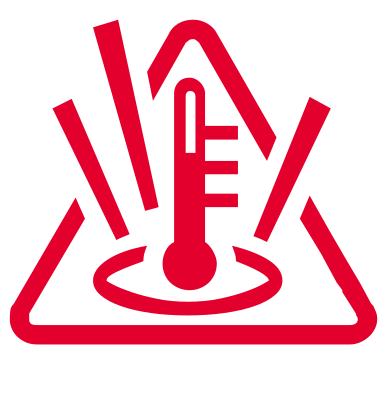 red symbol on the cap fig. 164.

Fig. 164 In the engine compartment: cap on the engine coolant expansion tank.
WARNING
Hot steam and hot engine coolant can cause serious burns.
-
Never open the engine hood if you can see or hear steam or coolant escaping from the engine compartment. Wait until you can no longer see or hear steam or coolant escaping. Hot components can cause burns if touched.
-
The engine cooling system is under pressure when the engine is hot. Never open the cap on the coolant expansion tank when the engine is hot. Engine coolant could spray out and cause serious burns or other injuries.
-
Slowly and very carefully turn the cap counterclockwise while pressing down lightly on the cap.
-
Always protect your face, hands, and arms from hot coolant or steam by placing a large, thick cloth on the coolant expansion tank cap.
-
Warning light
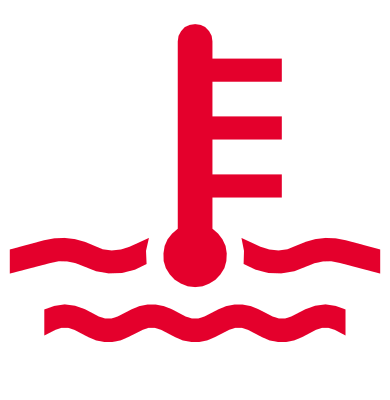 The engine coolant warning light will turn on if the engine coolant level is too low.
-
 Do not continue driving! Stop the vehicle as soon as it is safe to do so.
 -
Contact an authorized Volkswagen dealer or authorized Volkswagen Service Facility immediately for assistance.
Or: if the engine coolant level is too low and it is not possible to contact an authorized Volkswagen dealer or authorized Volkswagen Service Facility, check the engine coolant level and add coolant.
Checking the coolant level
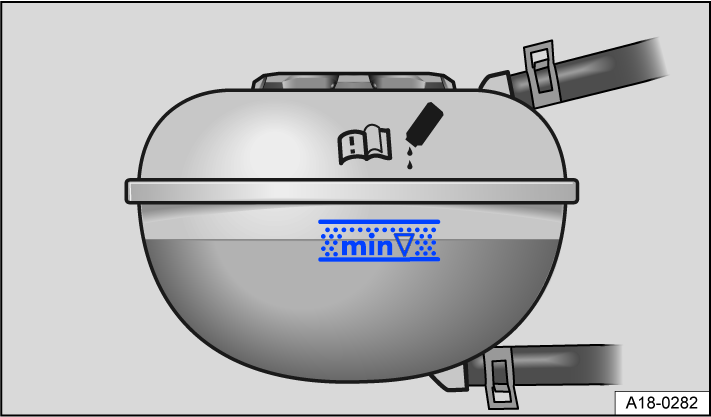
Fig. 165 In the engine compartment: markings on the engine coolant expansion tank.
When “new vehicles” are delivered, the coolant level may be above the marked area. This is normal. The engine coolant does not need to be extracted.
-
When the engine is cold, check the coolant level using the markings on the side of the engine coolant expansion tank fig. 165. The coolant level must be between the markings.
-
If the fluid level in the coolant expansion tank is below the minimum mark (“min”), have coolant added. When the engine is warm, the engine coolant level may be slightly above the upper marking.
-
If no coolant is visible in the coolant expansion tank, do not add coolant ⇒
.
Filling the coolant
-
Carefully unscrew the cap ⇒
. -
Only add new coolant that conforms to the Volkswagen specification ⇒ Engine coolant specifications.
-
Top up the engine coolant to the upper fill level marker.
After topping up the engine coolant, the coolant level must be between the markings on the coolant expansion tank fig. 165.
-
Install the cap securely.
-
Check the coolant level after one day. If the level of the engine coolant tank drops below the “min” minimum marking again, contact an authorized Volkswagen dealer or authorized Volkswagen Service Facility and have the cooling system checked. Volkswagen recommends contacting an authorized Volkswagen dealer or authorized Volkswagen Service Facility.
-
If there is no coolant available that conforms to the specification, do not use any other coolant in an emergency ⇒
.
NOTICE
-
Do not refill the system with engine coolant above the upper edge of the marked area. If there is too much coolant, the engine cooling system will become pressurized when the coolant warms up, which can result in damage.
-
If there is no coolant available that conforms to the required specification, initially only top up with distilled water. Then have the correct mixture ratio using the specified coolant additive restored as soon as possible by an authorized Volkswagen dealer or authorized Volkswagen Service Facility. Volkswagen recommends contacting an authorized Volkswagen dealer or authorized Volkswagen Service Facility.
-
Only use distilled water for refilling the system! The chemical components contained in all other types of water can cause considerable corrosion damage in the engine. This can cause engine malfunctions. If water that is not distilled is added, have the fluid in the cooling system changed immediately by an authorized Volkswagen dealer or authorized Volkswagen Service Facility. Volkswagen recommends contacting an authorized Volkswagen dealer or authorized Volkswagen Service Facility.
-
Do not add any engine coolant if there is no engine coolant left in the coolant expansion tank. Doing so could cause air to enter the cooling system. Do not continue driving, contact an authorized Volkswagen dealer or authorized Volkswagen Service Facility. Otherwise, the engine could be damaged.
-
When topping up fluids, make sure the correct fluids are added to the correct reservoirs. Using incorrect fluids can result in malfunctions and engine damage.
Download Manual