Loading your vehicle
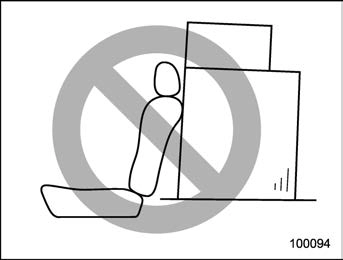
NOTE
& Vehicle capacity weight
Vehicle placard
The load capacity of your vehicle is determined by weight, not by available cargo space. The maximum load you can carry in your vehicle is shown on the vehicle placard attached to the driver’s side door pillar. It includes the total weight of the driver and all passengers and their belongings, any optional equipment such as a trailer hitch, roof rack or bike carrier, etc., and the tongue load of a trailer.
Certification label
The certification label attached to the bottom of driver’s side door pillar shows GVWR (Gross Vehicle Weight Rating) and GAWR (Gross Axle Weight Rating).
The GVW (Gross Vehicle Weight) must never exceed the GVWR. GVW is the combined total of weight of the vehicle, fuel, driver, all passengers, luggage, any optional equipment and trailer tongue load. Therefore, the GVW changes de- pending on the situation. The GVWR equals Curb Weight (actual weight of your vehicle – including standard equipment, fluids, emergency tools and spare tire
assembly) plus the vehicle capacity weight.
In addition, the total weight applied to each axle (GAW) must never exceed the GAWR. The front and rear GAWs can be adjusted by relocating luggage inside the vehicle.
Even if the total weight of your luggage is lower than the vehicle capacity weight, either front or rear GAW may exceed the GAWR, depending on the distribution of the luggage.
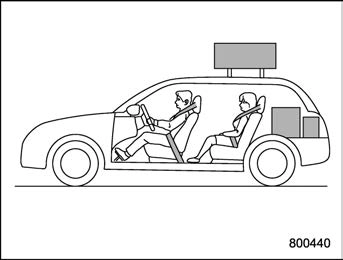
When possible, the load should be evenly distributed throughout the vehicle.
If you carry heavy loads in the vehicle, you should confirm that GVW and front and rear GAWs are within the GVWR and GAWR by putting your vehicle on a vehicle scale, found at a commercial weighing station.
Do not use replacement tires with a lower load range than the originals because they may lower the GVWR and GAWR limita- tions. Replacement tires with a higher load range than the originals do not increase the GVWR and GAWR limitations.
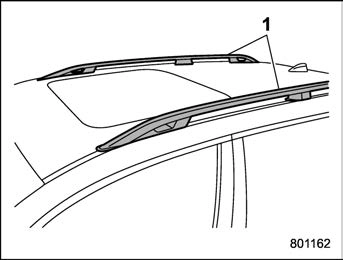
1) Roof rails
Cargo can be carried on the roof after securing the crossbars to the roof rails and installing an appropriate carrying attach- ment. When installing crossbars and a carrying attachment, follow the manufac- turer’s instructions. The roof rail system is designed to carry loads (cargo, crossbars and carrying attachment) of no more than 176 lbs (80 kg). Be sure not to exceed your vehicle’s GVWR and GAWR.
Drive carefully. Avoid rapid starts, hard cornering and abrupt stops. Crosswind
effects will be increased.
& Roof tent (models with roof rails)
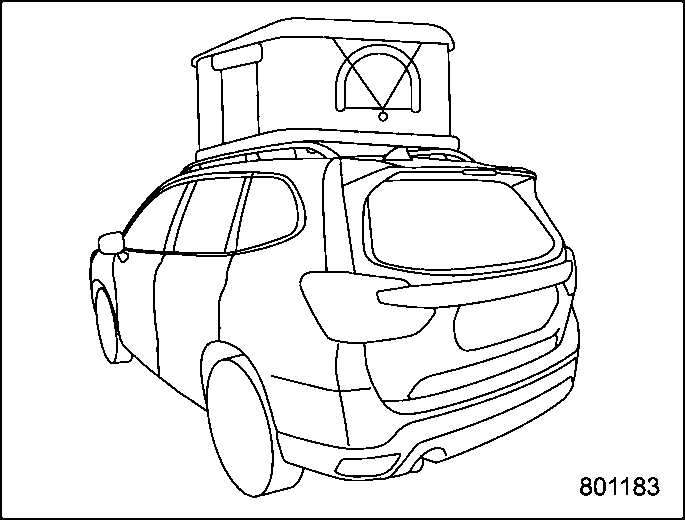
On vehicles equipped with roof rails, roof tents may be used under certain condi- tions at your own risk.
The total weight on the roof rails, including the roof crossbars and roof tent, must not exceed the vehicle’s roof rail load of 176 lbs (80 kg), evenly distributed.
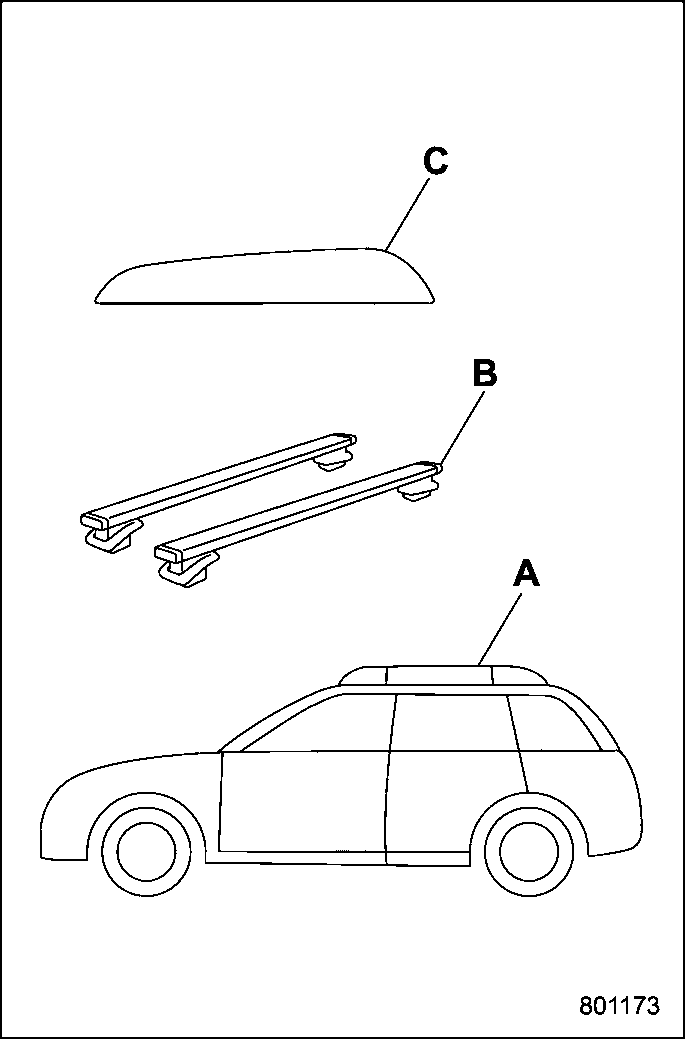
A: Roof rails
B: Roof crossbars C: Roof tent
B + C < 176 lbs (80 kg)
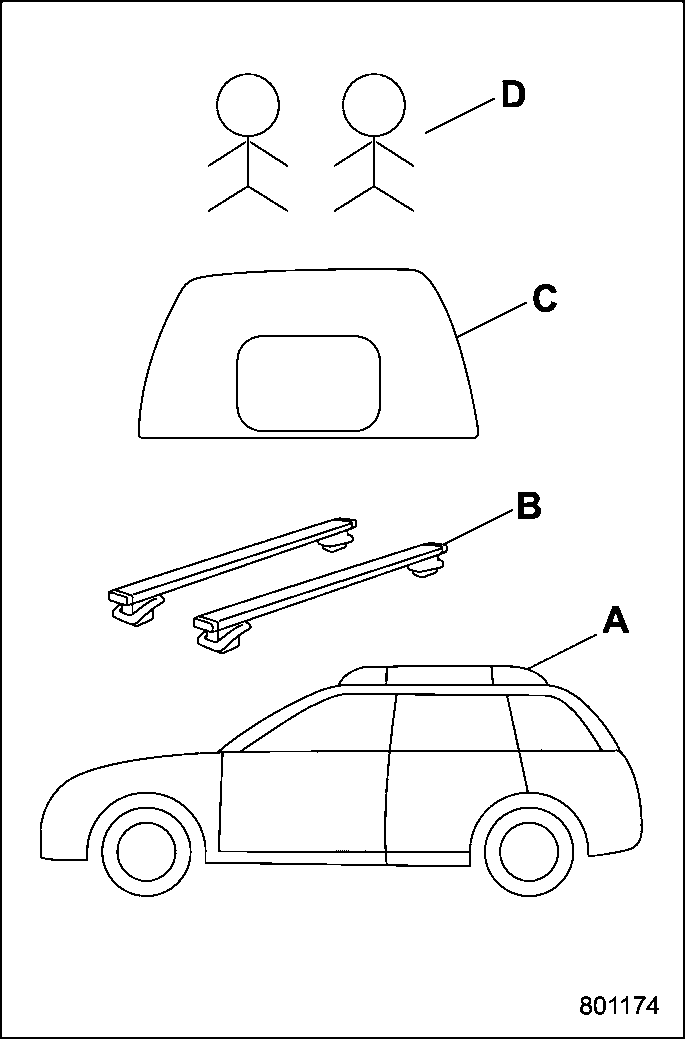
A: Roof rails
B: Roof crossbars C: Roof tent
D: Occupants in the roof tent
The total weight on the roof rails – including the roof crossbars, roof tent, and all occupants and contents in the roof tent – must not exceed either the vehicle’s roof rail load limit (700 lbs (317 kg)), evenly distributed, or the load limit of the roof crossbars, whichever is lower.
Exceeding this load limit could cause damage to the vehicle or racking system. The vehicle must never be driven with occupants in the roof tent. Before the vehicle is driven, occupants and cargo must be removed from the roof tent and the roof rail load must be restored to within the roof rail load limit of 176 lbs (80 kg). Refer to the user manual that accompa- nied the roof tent for important safety information and instructions on the proper installation and use of the tent.
Download Manual