REFUELING THE VEHICLE — DIESEL ENGINE
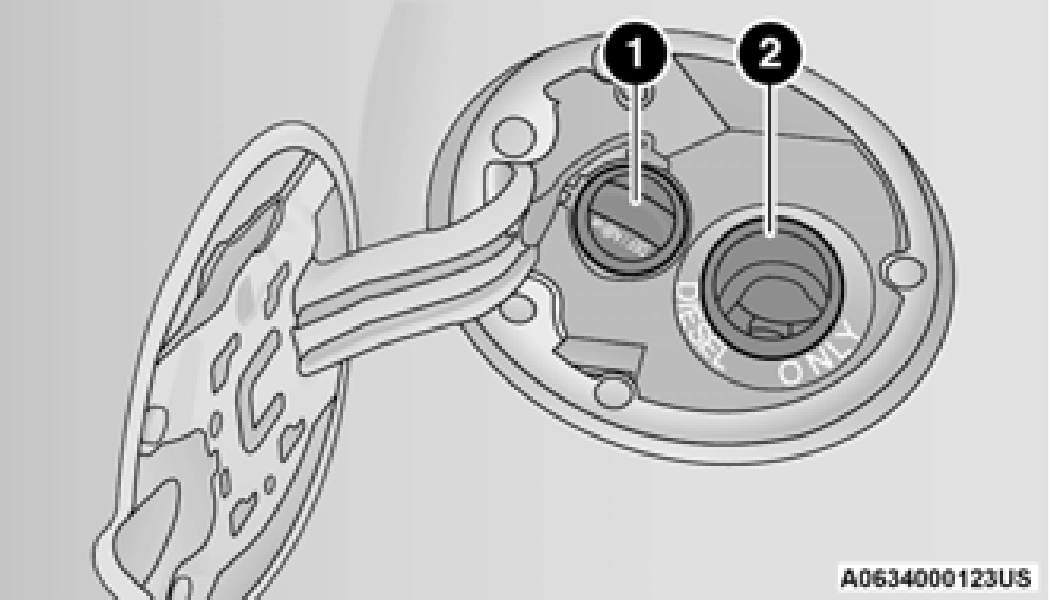
1 — Diesel Exhaust Fluid (DEF) Fill Location 2 — Diesel Fuel Fill Location
There is no fuel filler cap. A flapper door inside the filler pipe seals the system.
In the event that you run the vehicle out of fuel, once refueled, place the ignition in the ON posi- tion for 30 seconds, then turn the ignition OFF and wait 30 seconds. Repeat this procedure three times, prior to cranking the engine.
DIESEL EXHAUST FLUID
Your vehicle is equipped with a Selective Catalytic Reduction (SCR) system to meet the very stringent diesel emissions standards required by the Environmental Protection Agency.
The purpose of the SCR system is to reduce levels of NOx (oxides of nitrogen emitted from engines) that are harmful to our health and the environment to a near-zero level. A small quantity of Diesel Exhaust Fluid (DEF) is injected into the exhaust upstream of a catalyst where, when vaporized, it converts
smog-forming nitrogen oxides (NOx) into harmless nitrogen (N2) and water vapor (H2O), two natural components of the air we breathe. You can operate with the comfort that your vehicle is contributing to a cleaner, healthier world environment for this and generations to come.
System Overview
This vehicle is equipped with a Diesel Exhaust Fluid (DEF) injection system and a Selective Catalytic Reduction (SCR) catalyst to meet the emission requirements.
The DEF injection system consists of the following components:
For system messages and warnings
page 111. NOTE:
Diesel Exhaust Fluid (DEF) is considered a very stable product with a long shelf life. If DEF is kept in temperatures between 10°F and 90°F (-12°C and 32°C), it will last a minimum of one year.
DEF is subject to freezing at the lowest temperatures. For example, DEF may freeze at temperatures at or below 12°F (-11°C). The system has been designed to operate in this environment.
When working with DEF, it is important to know that:
The DEF gauge (located on the instrument cluster) will display the level of DEF remaining in the tank page 111.
4
can affect DEF consumption. In cold condi- tions, 12°F (-11°C) and below, the DEF gauge needle can stay on a fixed position and may not move for extended periods of time. This is a normal function of the system.
For the correct fluid type page 481.
Remove cap from DEF tank (located on drivers side of the vehicle or in fuel door).
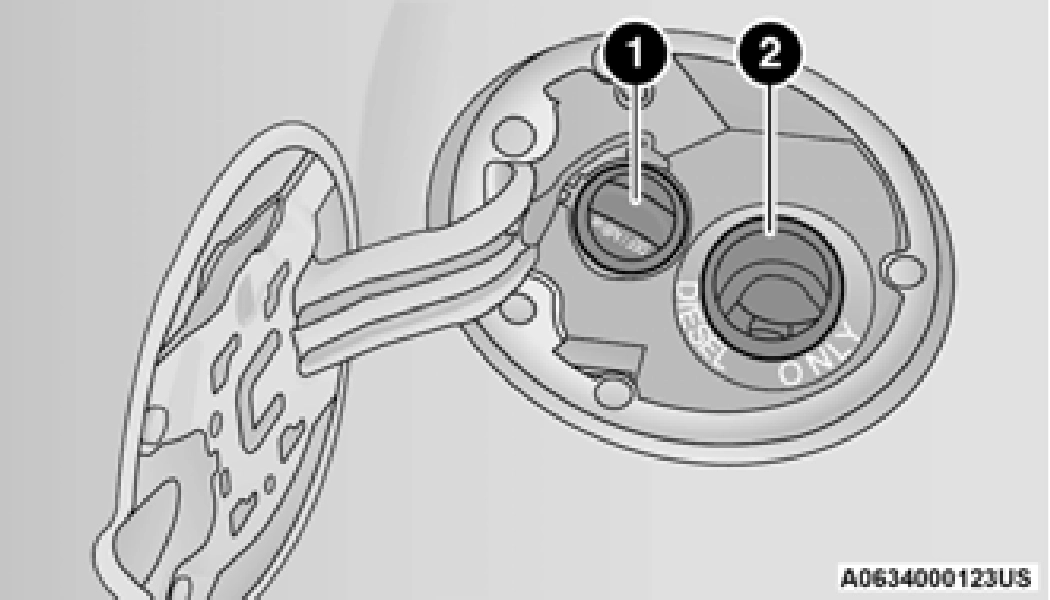
You can fill up at any DEF distributor. Proceed as follows:
Refilling With Containers Proceed as follows:
(Continued)
Stop filling the DEF tank immediately if DEF splashes or wells back in the filler neck.
Reinstall cap onto DEF filler tube.
Since DEF will begin to freeze at 12°F (-11°C), your vehicle is equipped with an automatic DEF heating system. This allows the DEF injection system to operate properly at temperatures below 12°F (-11°C). If your vehicle is not in operation for an extended period of time with temperatures below 12°F (-11°C), the DEF in the tank may freeze. If the tank is overfilled and freezes, it could be damaged. Therefore, do not overfill the DEF tank.
Extra care should be taken when filling with portable containers to avoid overfilling. Note the level of the DEF gauge in your instrument cluster. You may safely add a maximum of
½ full.
Download Manual