Seat Belts
A seat belt is your best protection in all types of collisions. Airbags are designed to supplement seat belts, not replace them. So even though your vehicle is equipped with airbags, make sure you and your passengers always wear your seat belts and wear them properly.
Lap/Shoulder Seat Belts
All five seating positions are equipped with lap/shoulder seat belts with emergency locking retractors. In normal driving, the retractor lets you move freely while keeping some tension on the belt. During a collision or sudden stop, the retractor locks to restrain your body. The rear passenger's seat belts also have a lockable retractor for use with child seats.
The front seats are equipped with automatic seat belt tensioners to enhance safety. The tensioners automatically tighten the front seat belts during a moderate to severe frontal collision, sometimes even if the collision is not severe enough to inflate the front airbags.
Proper Use of Seat Belts
Follow these guidelines for proper use:
- All occupants should sit upright, well back in the seat, and remain in that position for the duration of the trip. Slouching and leaning reduces the effectiveness of the belt and can increase the chance of serious injury in a crash.
- Never place the shoulder part of a lap/shoulder seat belt under your arm or behind your back. This could cause very serious injuries in a crash.
- Two people should never use the same seat belt. If they do, they could be very seriously injured in a crash.
- Do not put any accessories on the seat belts. Devices intended to improve comfort or reposition the shoulder part of a seat belt can reduce the protective capability and increase the chance of serious injury in a crash.
- Regularly check the condition of your seat belts. Check for frays, cuts, burns, and wear, and that the latches work smoothly and the belts retract easily.
- No one should sit in a seat with an inoperative seat belt or one that does not appear to be working correctly. Using a seat belt that is not working properly may not protect the occupant in a crash. Have a dealer check the belt as soon as possible.
Not wearing a seat belt properly increases the chance of a serious injury or death in a crash, even though your vehicle has airbags.
Be sure you and your passengers always wear seat belts and wear them properly.
Seat Belt Inspection
Regularly check the condition of your seat belts as follows:
- Pull each belt out fully, and look for frays, cuts, burns, and wear.
- Check that the latches and buckles work smoothly and the belts retract easily. If a belt does not retract easily, cleaning the belt may correct the problem. Use only mild soap and warm water. Do not use bleach or cleaning solvents. Make sure the belt is completely dry before allowing it to retract.
Any belt that is not in good condition or working properly will not provide proper protection and should be replaced as soon as possible.
A belt that has been worn during a crash may not provide the same level of protection in a subsequent crash. Have your seat belts inspected by a dealer after any collision.
Not checking or maintaining seat belts can result in serious injury or death if the seat belts do not work properly when needed.
Check your seat belts regularly and have any problem corrected as soon as possible.
Fastening a Seat Belt
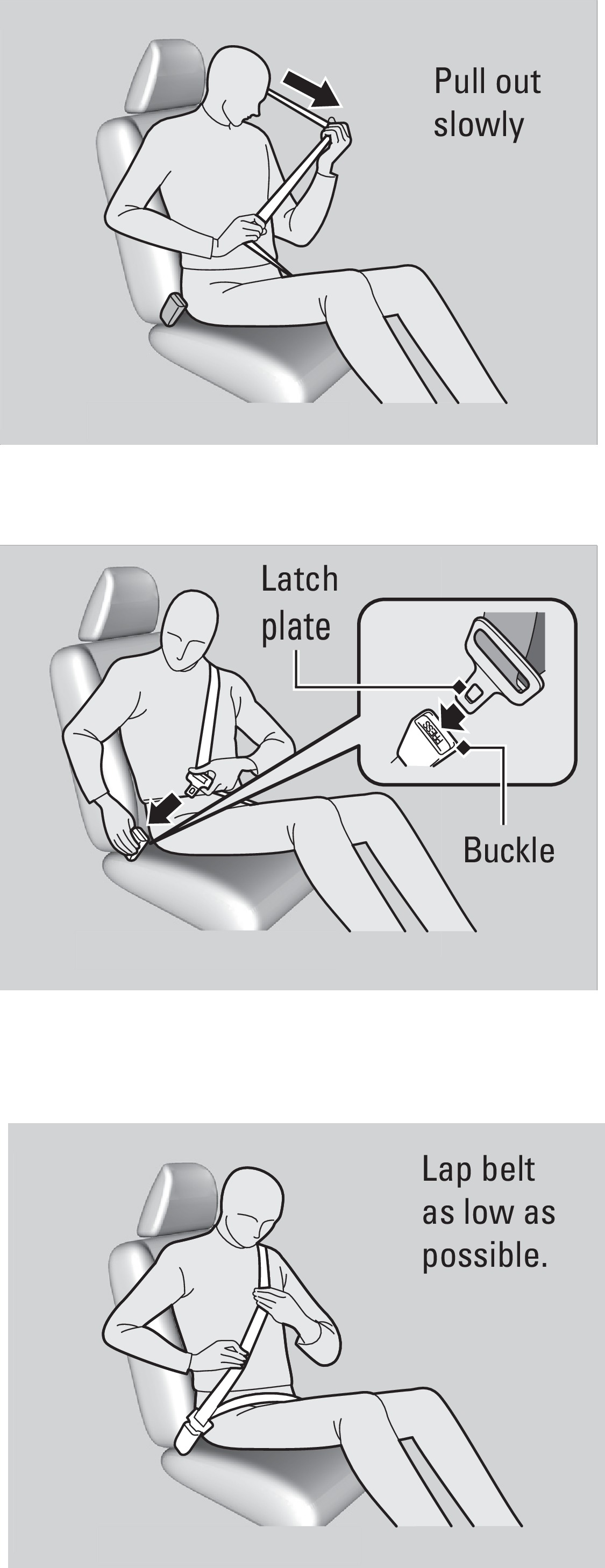
Adjust your seat to the proper position (see), and then follow the steps.
- Pull the seat belt out slowly.
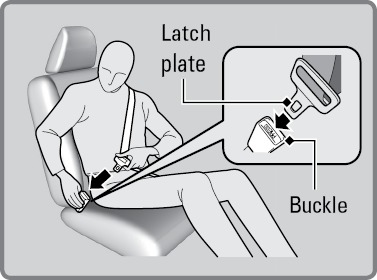
- Insert the latch plate into the buckle, then tug on the belt to
make sure the buckle is secure. Make sure that the belt is not twisted
or caught on anything.
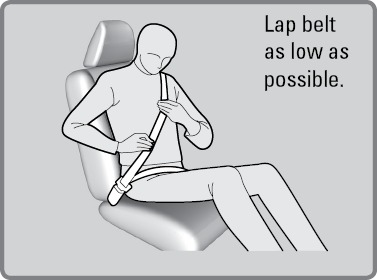
- Position the lap part of the belt as low as possible across your
hips, then pull up on the shoulder part of the belt so the lap part
fits snugly. This lets your strong pelvic bones take the force of
a crash and reduces the chance of internal injuries.
- If necessary, pull up on the belt again to remove any slack, then
make sure that the belt rests across the center of your chest and
over your shoulder. This spreads the forces of a crash over the strongest
bones in your upper body.
To release the belt, push the red PRESS button then guide the belt by hand until it has retracted completely.
Improperly positioning the seat belts can cause serious injury or death in a crash.
Make sure all seat belts are properly positioned before driving.
Adjusting the Shoulder Anchor
The front seats have adjustable shoulder anchors to accommodate taller and shorter occupants.
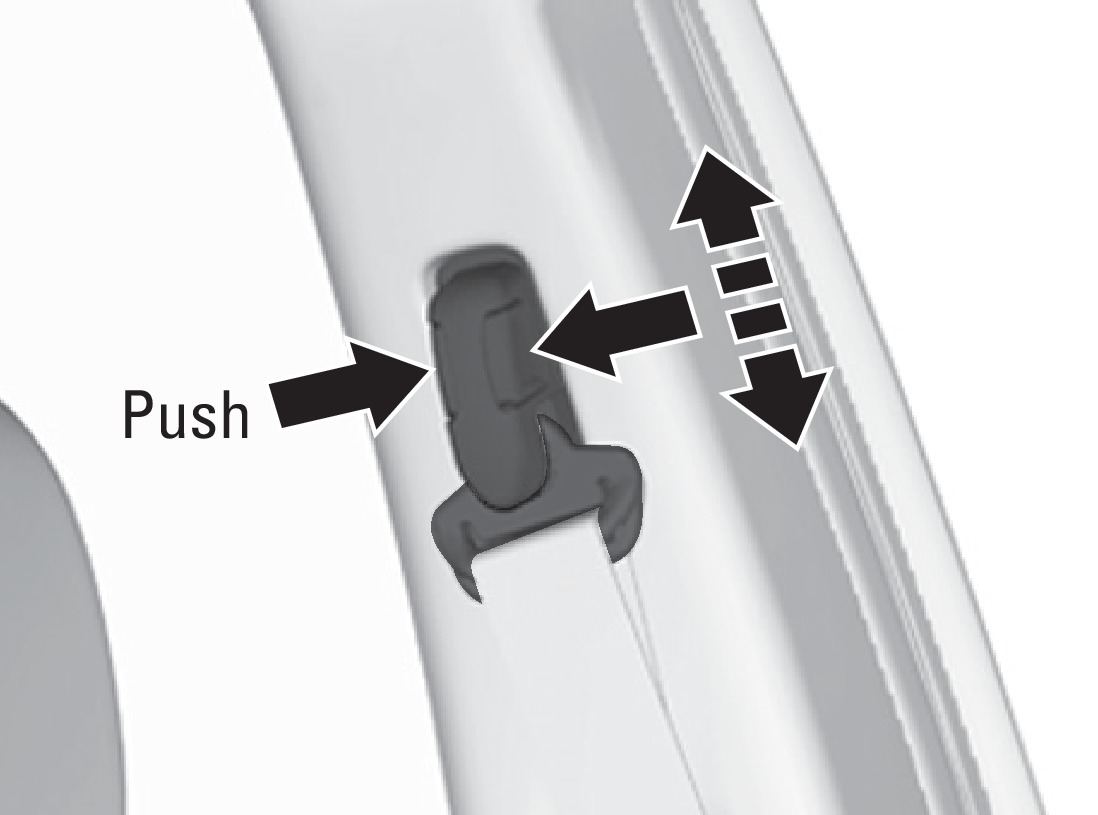
- Move the anchor up and down while holding the release button.
- Position the anchor so that the belt rests across the center of your chest and over your shoulder.
- Child Safety
- Airbags
- Adjusting the Seats
Download Manual