Honda Sensing®
Honda Sensing®
Honda Sensing® is a driver support system which employs the use of two distinctly different kinds of sensors: the sonar sensors located in the front and rear bumpers, and the front grille, and a front wide view camera mounted to the interior side of the windshield, behind the rearview mirror.
Honda Sensing® is a driver support system which employs the use of a front wide view camera mounted to the interior side of the windshield, behind the rearview mirror.
Honda Sensing® has the following functions.
The functions which do not require switch operations to activate
- Collision Mitigation Braking SystemTM (CMBSTM)
- Low Speed Braking Control*
- Road Departure Mitigation System
- Traffic Sign Recognition System
The functions which require switch operations to activate
- Adaptive Cruise Control (ACC) with Low Speed Follow
- Lane Keeping Assist System (LKAS)
- Traffic Jam Assist*
Operation Switches for the Adaptive Cruise Control (ACC) with Low Speed Follow/Lane Keeping Assist System (LKAS)/Traffic Jam Assist*

-
 Button
Press to activate standby mode for ACC with Low Speed Follow.
Or press to cancel the system.LKAS Button
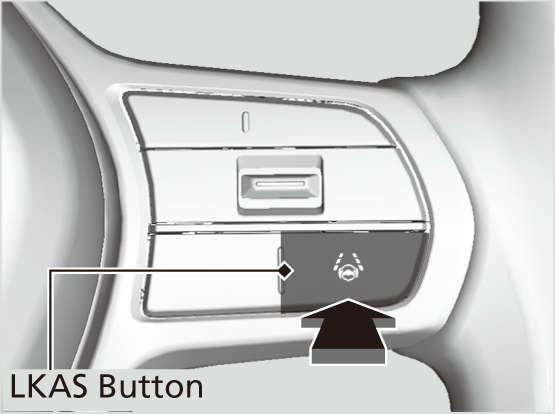
Press to activate standby mode for LKAS and Traffic Jam Assist*.
Or press to cancel these systems.

-
CANCEL Button
Press to cancel ACC with Low Speed Follow.
Interval Button
Press to change the ACC with Low Speed Follow following-interval.
RES/+/SET/− Switch
Press the RES/+/SET/− switch up to set or resume the ACC with Low Speed Follow or increase the vehicle speed. Press the RES/+/SET/− switch down to set the ACC with Low Speed Follow or decrease the vehicle speed.
Gauge Content

-
You can see the current state of Adaptive Cruise Control (ACC) with Low Speed Follow, Lane Keeping Assist System (LKAS) and Traffic Jam Assist*.
- Indicates that ACC with Low Speed Follow is ready to be activated.
- Green: The system is on.
- White: The system is standby.
- Amber: There is a problem with the system.
- Indicates that LKAS or Traffic Jam Assist* is ready to be activated.
- Green: The system is on.
- White: The system is standby.
- Amber: There is a problem with the system.
- Indicates that LKAS or Traffic Jam Assist* is activated and whether or not traffic lane lines are detected.
- Green lines: The system is on.
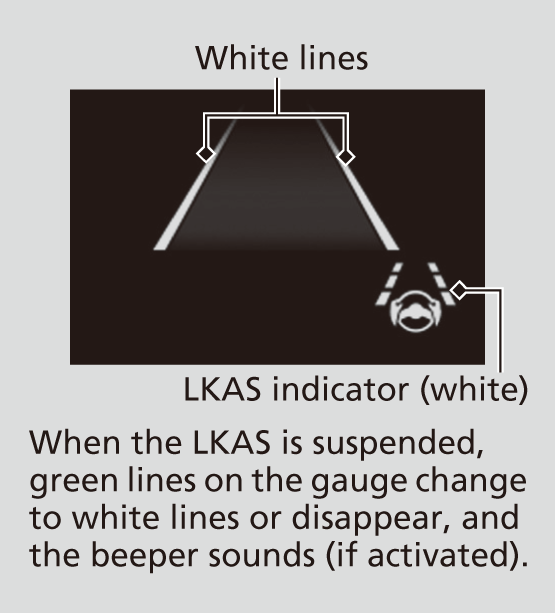
- White lines: Traffic lane lines are detected.
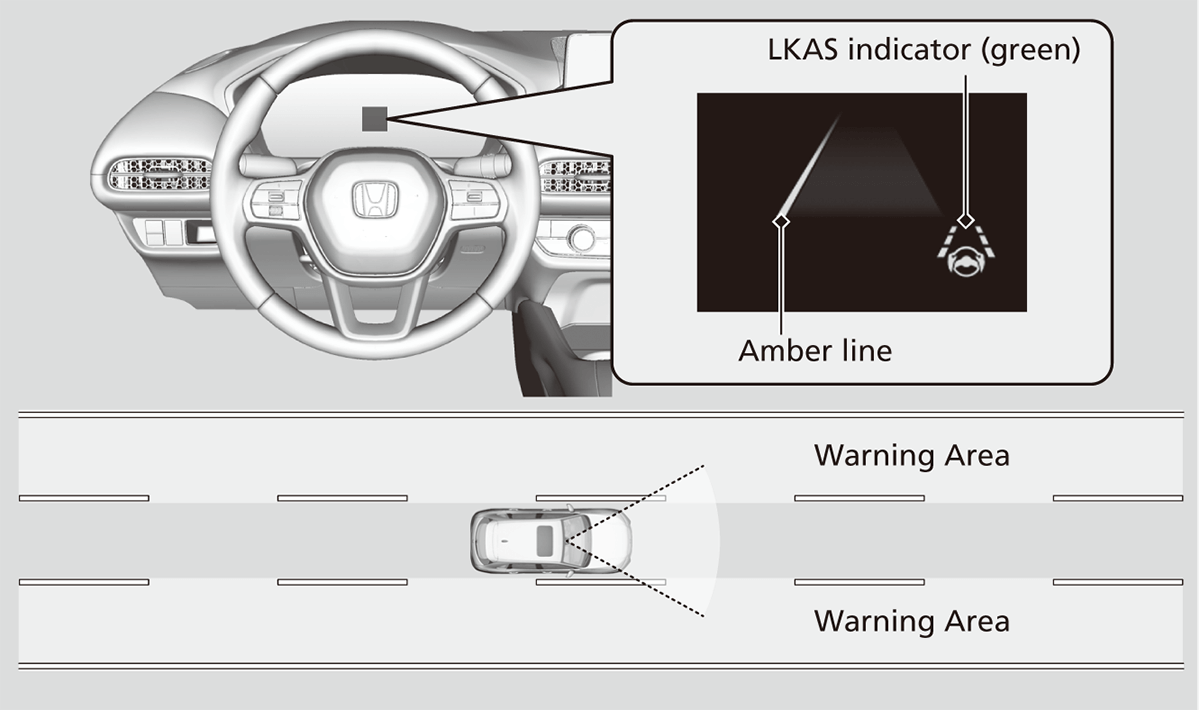
- Amber line: Lane departure is detected.
- Indicates whether or not a vehicle is detected ahead.
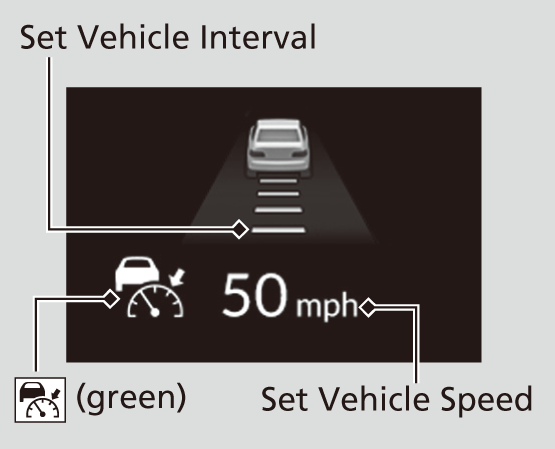
- Indicates that ACC with Low Speed Follow shows the set vehicle speed.
- Indicates that ACC with Low Speed Follow shows the set vehicle interval.
- Indicates that ACC with Low Speed Follow is ready to be activated.
* Not available on all models
Collision Mitigation Braking SystemTM (CMBSTM)
The system can assist you when it determines there is a possibility of your vehicle colliding with a vehicle (including motorcycles) ahead from behind, an oncoming vehicle in front, a pedestrian, or someone riding a bicycle (moving bicycle).
The CMBSTM is designed to alert you when the potential for a collision is determined, as well as assist in reducing speed, avoiding collisions, and reducing collision severity.
CMBSTM Conditions and Limitations
Front Wide View Camera
CMBSTM Conditions and Limitations
Drive a short distance at more than 12 mph (20 km/h).
Each indicator should go off. If any do not, have your vehicle checked by a dealer.
If you use tires of different sizes, types, brands, or degree of wear, the system may not work properly.
- Detail
How the system works
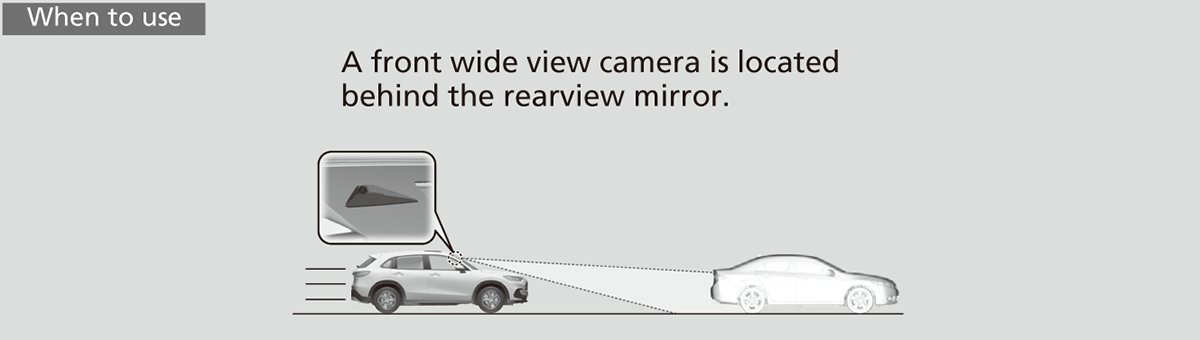
The system starts monitoring the roadway ahead when your vehicle speed is about 3 mph (5 km/h) or above and will search for a vehicle, pedestrian, or moving bicycle in front of you.
The CMBSTM activates when:
- The speed difference between your vehicle and a vehicle, pedestrian, or moving bicycle detected in front of you becomes about 3 mph (5 km/h) and over with a chance of a collision.
- Your vehicle drives at about 18 mph (30 km/h) or less and there is a chance of in frontal collision with a detected oncoming vehicle when you turn left at an intersection.
- Your vehicle speed is about 62 mph (100 km/h) or less and the system determines there is a chance of a collision with:
- An oncoming or stationary vehicle detected in front of you.
- A pedestrian or moving bicycle detected in front of you.
The CMBSTM will be canceled when your vehicle stops or the system determines there no longer is the potential for a collision.
The CMBSTM may also be canceled when a driver operates the steering wheel and the brake or accelerator pedal to avoid a collision.
However, this pedestrian detection feature may not activate or may not detect a pedestrian in front of your vehicle under certain conditions.
Refer to the ones indicating the pedestrian detection limitations from the list.
CMBSTM Conditions and Limitations
- Detail
When the system activates
-
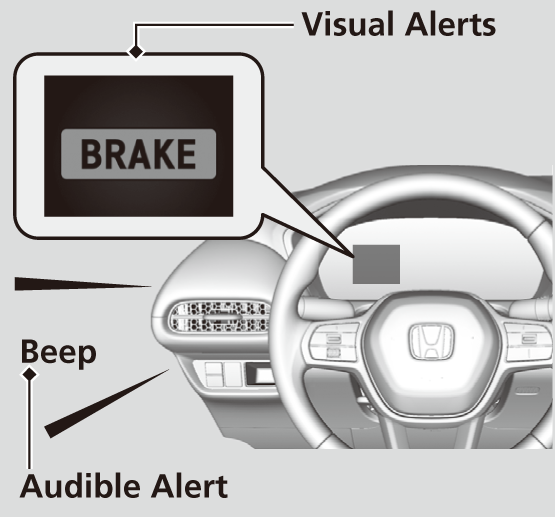
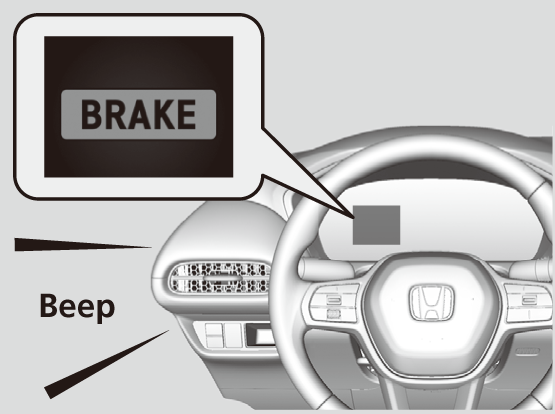
The system provides visual and audible alerts of a possible collision, and stops if the collision is avoided.
- Take appropriate action to prevent a collision (apply the brakes, change lanes, etc.)
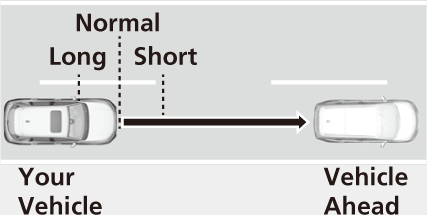
You can change the distance (Long/Normal/Short) between vehicles at which the system’s earliest collision alert will come on.
Settings*
Customized Features Defaulting All the Settings
Collision Alert Stages
The system has three alert stages for a possible collision. However, depending on circumstances, the CMBSTM may not go through all of the stages before initiating the last stage.
|
Distance between vehicles
|
CMBSTM
|
|||
|---|---|---|---|---|
|
The sensors detect a vehicle
|
Audible & Visual WARNINGS
|
Braking
|
||
|
Stage one
|
 |
There is a risk of a collision with the vehicle ahead of you.
|
When in Long, visual and audible alerts come on at a longer distance from a vehicle ahead than in Normal setting, and in Short, at a shorter distance than in Normal.
|
—
|
|
Stage two
|
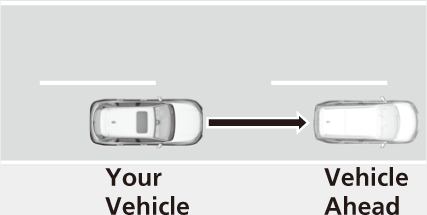 |
The risk of a collision has increased, time to respond is reduced.
|
Visual and audible alerts.
|
Lightly applied
|
|
Stage three
|
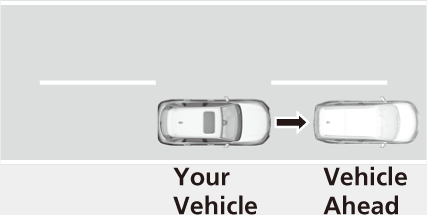 |
The CMBSTM determines that a collision is unavoidable.
|
Forcefully applied
|
CMBSTM On and Off
You can turn the system on and off using the driver information interface.
Switching the Display Safety Support
The CMBSTM is turned on every time you start the engine, even if you turned it off the last time you drove the vehicle.
CMBSTM Conditions and Limitations
The system may automatically shut off and the safety support indicator (amber) will come on under certain conditions. Some examples of these conditions are listed below. Other conditions may reduce some of the CMBSTM functions.
Front Wide View Camera
- Detail
Environmental conditions
- Driving in bad weather (rain, fog, snow, etc.).
- Sudden changes between light and dark, such as the entrance or exit of a tunnel or the shadows of trees, buildings, etc.
- Driving into low sunlight (e.g., at dawn or dusk).
- Strong light is reflected onto vehicles, pedestrians, moving bicycles, or road surfaces.
- Water is sprayed by or snow blown from a vehicle ahead.
- Driving at night or in a dark place such as a tunnel (due to low-light conditions, vehicles, pedestrians, or moving bicycles may not be illuminated).
Roadway conditions
- Driving on curvy, winding, undulating, or sloping roads.
- There is a film of water or puddles on the road surface.
- Driving on rutted roads (snowy or unpaved roads, etc.).
- Your vehicle is strongly shaken on uneven road surfaces.
Vehicle conditions
- The vehicle is tilted due to heavy load in the cargo area or rear seats.
- Tire chains are installed.
- Driving at night or in a dark place (e.g., a tunnel) with the headlights off.
- The front of the camera is covered by dirt, fog, rain, mud, wet snow, seals, accessories, stickers, or film on the windshield.
- There is residue on the windshield from the windshield wipers.
- When lighting is weak due to dirt covering the headlight lenses, or there is poor visibility in a dark place due to the headlights being improperly adjusted.
- An abnormal tire or wheel condition (incorrect sizes, varied sizes or construction, improperly inflated, compact spare tire, etc.).
- The suspension has been modified.
Examples of limitations on the correct detection of the camera due to the condition of the vehicle ahead of you, oncoming vehicles, pedestrians, or moving bicycles
- The distance between your vehicle and the vehicle ahead of you, oncoming vehicle, pedestrian, or moving bicycle ahead of you is too short.
- The vehicle ahead of you, oncoming vehicle, pedestrian, or moving bicycle suddenly cuts in front of or jumps out in front of you.
- The bicycle is stopped.
- The oncoming vehicle or vehicle ahead of you is sideways.
- When the vehicle ahead of you, oncoming vehicle, pedestrian, or moving bicycle blends in with the background, preventing the system from recognizing them.
- When several pedestrians or bicycles are moving ahead of you in a group.
- When a pedestrian or moving bicycle crosses the road too quickly.
- A pedestrian or moving bicycle approaches from the opposite direction.
- The headlights of the vehicle ahead of you or oncoming vehicle are lit on one side or not lit on either side in a dark place.
- When part of a pedestrian (heads, limbs, etc.) is hidden by load.
- When a pedestrian is bent over or squatting, when their hands are raised, or they are running.
- When the pedestrian is shorter than about 3.3 feet (1 meter) or taller than about 6.6 feet (2 meters) in height.
- When the pedestrian is pushing a stroller or bicycle.
Examples of other limitations on detection or system operation
- When the vehicle ahead of you is a small motorcycle, motorcycle with a sidecar, wheelchair, or other specially shaped vehicle.
- When a vehicle is lower in the rear than the front such as trucks that are not carrying a load, or a narrow vehicle.
- When the vehicle ahead of you, oncoming vehicle, pedestrian or moving bicycle is not in front of the vehicle.
- The speed difference between your vehicle and the vehicle ahead of you, oncoming vehicle, pedestrian or moving bicycle is significantly large.
- When the vehicle or moving bicycle in front of you slows suddenly.
- When the driver operates the brake pedal and steering wheel to avoid a collision.
- When you approach the vehicle ahead of you, oncoming vehicle, pedestrians or moving bicycles while accelerating rapidly or operating the steering wheel (except when turning left at an intersection etc.)*1
- When the moving bicycle is a child-sized bicycle, folding bicycle, three-wheeler or other bicycle with small tires, or a long bicycle like a tandem bicycle.
- When the camera cannot correctly identify the shape of the vehicle ahead of you, oncoming vehicle, pedestrian, or moving bicycle.
- When the minimum ground clearance of a vehicle ahead of you is extremely high.
*1: When there is a possibility of a frontal collision with the oncoming vehicle while turning left, the CMBSTM is activated. However, it may not be activated if you suddenly turn the steering wheel.
Automatic shutoff
The CMBSTM may automatically shut itself off and the safety support indicator (amber) comes and stays on when:
- You drive off-road or on a mountain road, or curved and winding road for an extended period.
- Driving in bad weather (rain, fog, snow, etc.).
- Driving with the parking brake applied.
- The camera temperature gets too high.
- The front of the camera is covered by dirt, fog, rain, mud, wet snow, seals, accessories, stickers, or film on the windshield.
- An abnormal tire condition is detected (incorrect tire size, flat tire, etc.).
Once the conditions that caused the CMBSTM to shut off improve or are addressed (e.g., cleaning), the system comes back on.
With Little Chance of a Collision
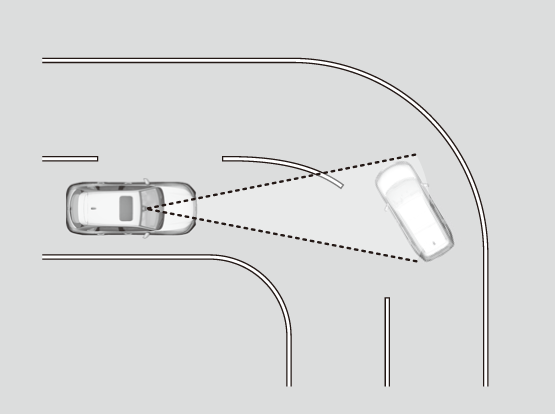
Even if there is little chance of a collision, the CMBSTM may activate under the following conditions:
- Your vehicle approaches or passes another vehicle that is making a left or right turn.
- Your vehicle approaches another vehicle ahead of you and you change lanes to pass.
- Your vehicle approaches another vehicle at an intersection, etc.
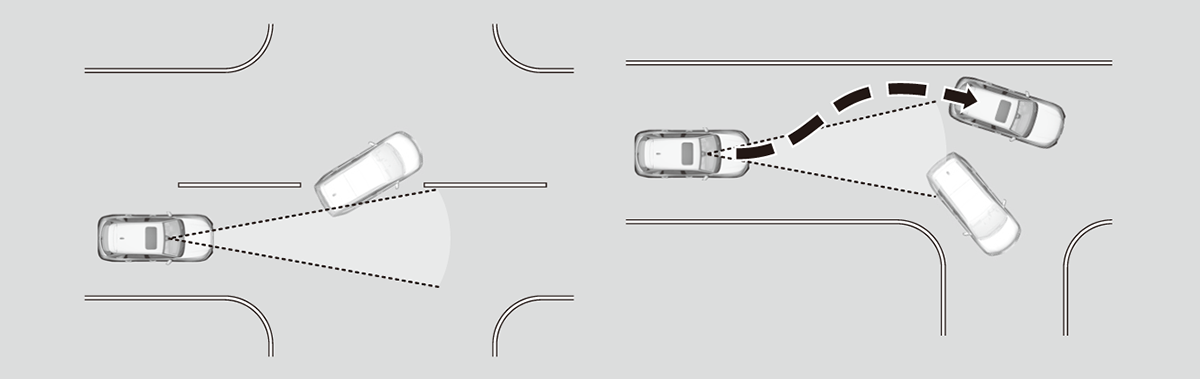
- When passing through a low or narrow gate at a speed well over the speed limit.
- When there are traffic signs or structures such as guard rails are beside the road along a curve.
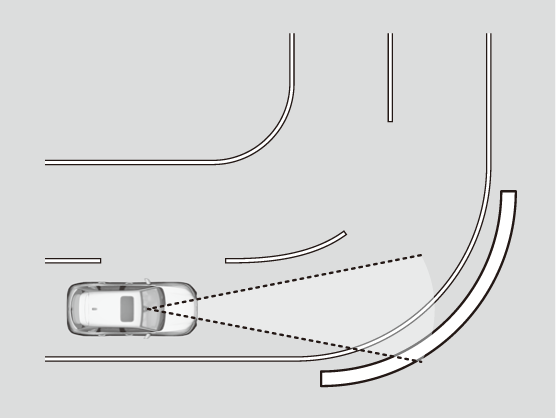
- When driving through curves, your vehicle comes to a point where the oncoming vehicle is right in front of you.
- When approaching stationary vehicles or walls, such as when parking.
* Not available on all models
Low Speed Braking Control*
Using sonar sensors located on the front and rear bumpers, and the front grille, this system can detect if there is danger of a potential collision with a wall or other obstacle during normal driving or when the accelerator pedal is depressed with too much force. The system then assists in avoiding collisions and reducing damage from impact through assistive braking and/or assistive driving power suppression.
The Low Speed Braking Control System cannot avoid all collisions and may not reduce damage in each situation where the accelerator is mistakenly or aggressively pressed. Overreliance on the system may result in a collision with serious injury or death. Always check your surroundings, your shift position, and your pedal use.
Driver remains responsible for safely operating the vehicle.
- WARNING
Sonar Sensors*
- Detail
How the System Works
Assistive braking
Assistive braking provides a visual and audible alert when the vehicle is moving between approximately 1 and 6 mph (2 and 10 km/h) and there is the possibility of a collision with a detected wall or other obstacles, as well as providing assistance with braking.
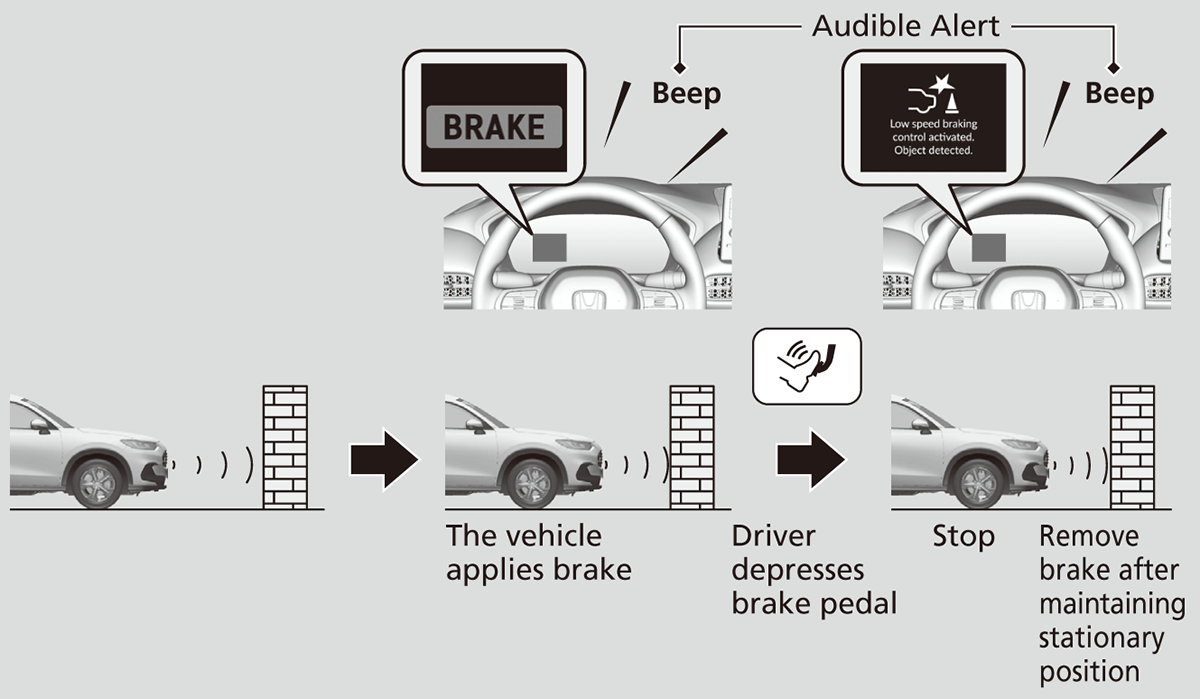
Assistive driving power suppression
When the vehicle is stopped or moving at less than 6 mph (10 km/h) and there is an obstacle such as a wall detected near the front of or back of the vehicle, if the accelerator pedal is depressed more than necessary, the system will inform you with a visual and audible alert. At the same time, the system will prevent sudden forward or backwards movement by limiting the output of the engine, then assistive braking will activate when you get closer to the obstacle.
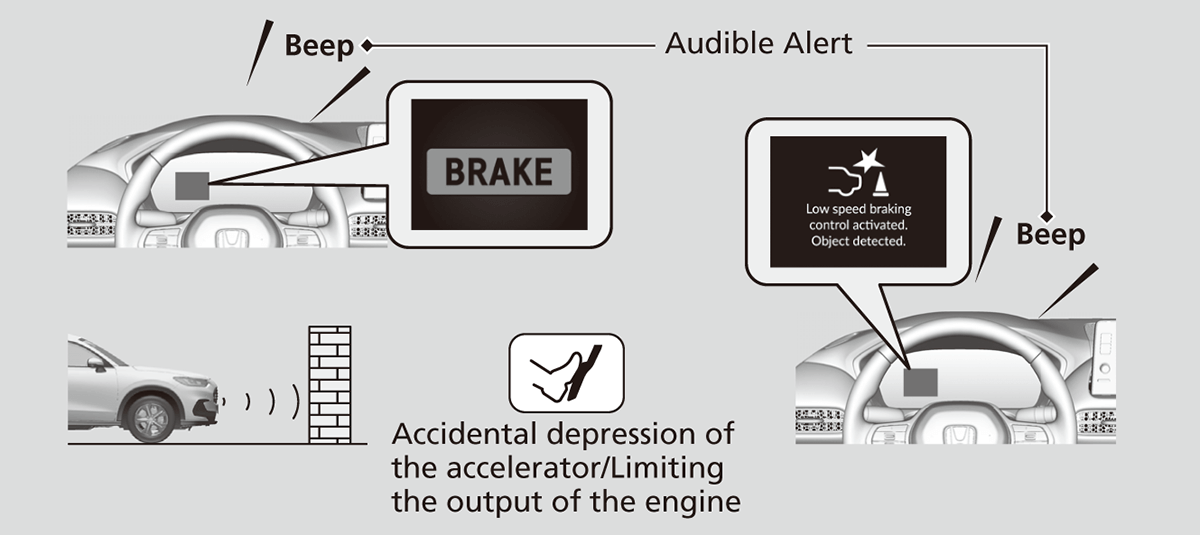
Assistive driving power suppression will not activate in the following situations.
When moving forward:
When on a steep slope or the shift position is in P, R, or N.
When reversing:
When on a steep slope or the shift position is in a position other than R.
System On and Off
You can turn the system on and off using the driver information interface.
Switching the Display Safety Support
The system is turned on every time you start the engine, even if you turned it off the last time you drove the vehicle.
The system will automatically turn ON after the vehicle has been moving at over 12 mph (20 km/h) for some time.
If the system does not turn on, have your vehicle checked by a dealer.
- Detail
Conditions for Cancellation
Conditions for assistive driving power suppression.
- When the accelerator is no longer depressed.
- When the accelerator is depressed for approximately four seconds.
- When the brake pedal is depressed.
Conditions for assistive braking cancellation.
- A certain amount of time has passed since activation.
They can be activated again after driving for a certain distance after last activation.
However, if assistive braking has been activated, in order to activate assistive driving power suppression again, it is necessary to drive for a certain distance to reset the system.
- Detail
Low Speed Braking Control System Conditions and Limitations
The system may not operate correctly in the following conditions:
Examples of obstacles the sonar sensor cannot detect
- Obstacles that do not reflect sound waves well, such as people, snow, cloth, sponges, etc.
- Thin obstacles such as fences, bicycles, sign posts, etc.
- Short or small obstacles.
- Obstacles immediately in front of the bumper.
- Moving objects or obstacles that suddenly enter the road.
- Obstacles that are not perpendicular to the ground.
Examples of situations where the sonar sensor cannot detect obstacles
- The sonar sensor is dirty (covered by snow, water, mud, etc.).
- The vehicle is too hot or cold.
- The steering wheel is turned sharply when approaching the obstacle at an angle.
Examples of other cases where the system may not work correctly
- The vehicle is tilted due to heavy load or suspension modifications.
- An abnormal tire or wheel condition (incorrect sizes, varied sizes or construction, improperly inflated, compact spare tire, etc.).
- Bad weather conditions such as heavy rain, fog, snow, sandstorms, etc.
- The ambient temperature/humidity is too high or low.
- When going down a very steep slope.
- When close to other vehicles with sonar sensors or other objects that emit ultrasonic waves.
Situations where the system may activate even without risk of a collision
- When passing through short or narrow gates.
- When driving on uneven surfaces, grassy areas, or places with steps.
- When a sloped pillar or wall is protruding from a high position.
- When there are obstacles next to the road.
- When driving toward flags, curtains, tree branches, railroad crossing bars, etc.
- When driving on flooded roads.
* Not available on all models
Adaptive Cruise Control (ACC) with Low Speed Follow
Helps maintain a constant vehicle speed and a set following-interval behind a vehicle detected ahead of yours and, if the detected vehicle comes to a stop, can decelerate and stop your vehicle, without you having to keep your foot on the brake or the accelerator.
When ACC with Low Speed Follow slows your vehicle by applying the brakes, your vehicle’s brake lights will illuminate.
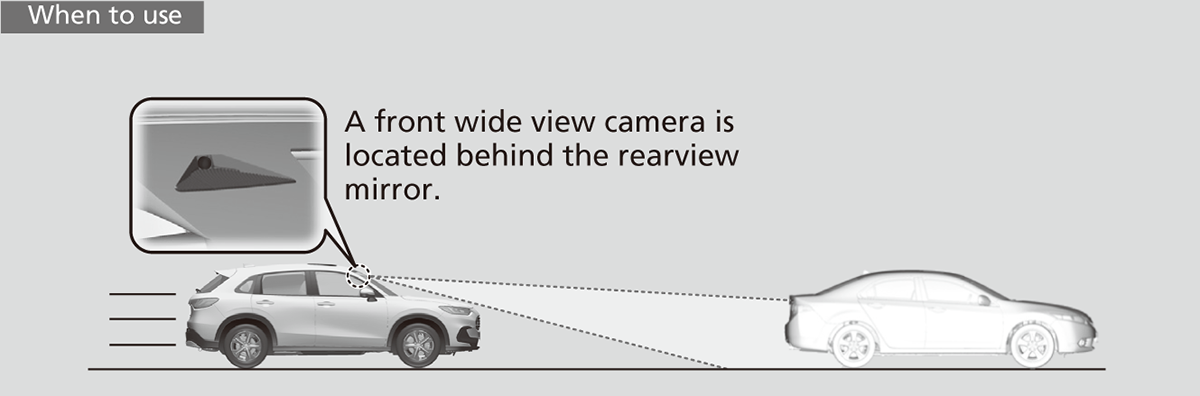
- Vehicle speed for ACC with Low Speed Follow: A vehicle is detected ahead within ACC with Low Speed Follow range – ACC with Low Speed Follow operates at speeds up to 90 mph (145 km/h).
No vehicle is detected within ACC with Low Speed Follow range – ACC with Low Speed Follow operates at the speed of 25 mph (40 km/h) or above. - Shift position for ACC with Low Speed Follow: In D or S.
Improper use of ACC with Low Speed Follow can lead to a crash.
Use ACC with Low Speed Follow only when driving on expressways or freeways and in good road and weather conditions.
- WARNING
ACC with Low Speed Follow has limited braking capability and may not stop your vehicle in time to avoid a collision with a vehicle that quickly stops in front of you.
Always be prepared to apply the brake pedal if the conditions require.
- WARNING
Exiting a vehicle that has been stopped while the ACC with Low Speed Follow system is operating can result in the vehicle moving without operator control.
A vehicle that moves without operator control can cause a crash, resulting in serious injury or death.
Never exit a vehicle when the vehicle is stopped by ACC with Low Speed Follow.
- WARNING
Front Wide View Camera
ACC with Low Speed Follow Conditions and Limitations
button.- On roads with frequent lane change or continuous stop and go traffic, ACC with Low Speed Follow cannot keep an appropriate distance between your vehicle and the vehicle ahead of you.
- On roads with sharp turns.
- On roads with toll collection facilities or other objects between lanes of traffic, or in parking areas, or facilities with drive through access.
- On roads with bad weather (rain, fog, snow, etc.), ACC with Low Speed Follow may not detect the distance between your vehicle and the vehicle ahead of you properly.
- On roads with slippery or icy surfaces. The wheels may spin out and your vehicle may lose the control on the condition.
- On roads with steep uphill or steep downhill slopes.
- On roads with undulating slopes.
- Detail
How to activate the system
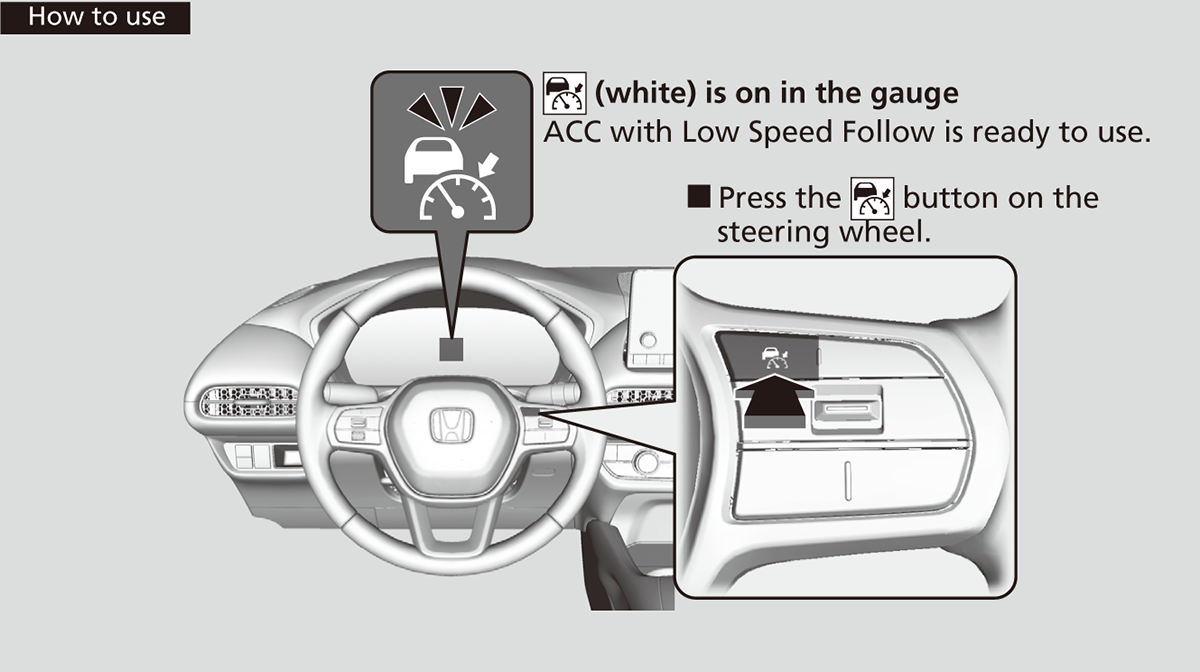
To Set the Vehicle Speed
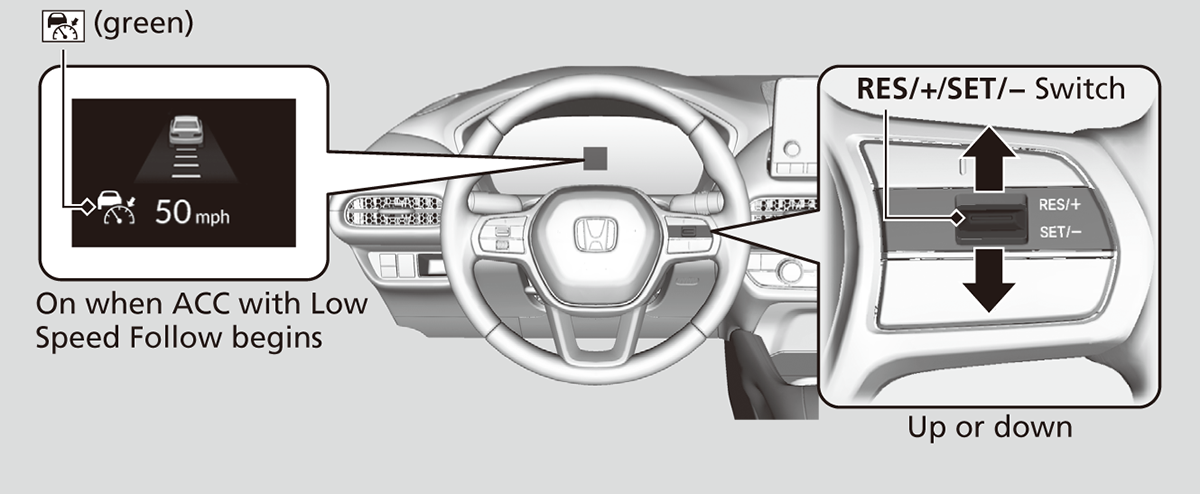
When driving at about 25 mph (40 km/h) or above: Take your foot off the pedal and press the RES/+/SET/− switch up or down when you reach the desired speed. The moment you release the switch, the set speed is fixed, and ACC with Low Speed Follow begins.
When driving slower than about 25 mph (40 km/h): If the vehicle is moving and the brake pedal is not depressed, pressing the switch fixes the set speed to about 25 mph (40 km/h) regardless of current vehicle speed. If your vehicle is stationary, you can set the vehicle speed even with the brake pedal depressed.
-
When ACC with Low Speed Follow starts operating, the vehicle icon, interval bars and set speed appear on the gauge.
When you use ACC with Low Speed Follow, Straight Driving Assist (a feature of the Electric Power Steering system) is activated.
By enabling the steering system to automatically compensate for natural steering pull, Straight Driving Assist makes it easier for you to keep your vehicle in a straight line.
Drive a short distance at more than 12 mph (20 km/h).
Each indicator should go off. If any do not, have your vehicle checked by a dealer.
Settings*
Speed/Distance Units
Customized Features Defaulting All the Settings
- Detail
When in Operation
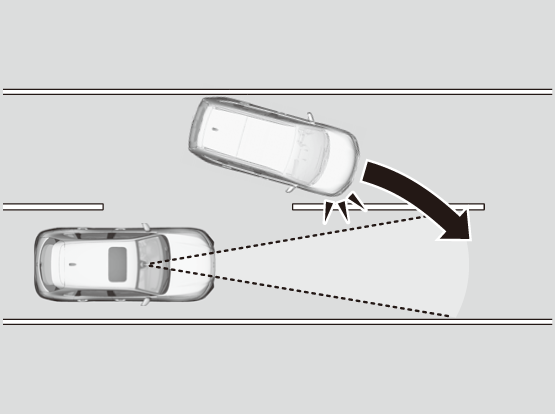
- The vehicle ahead of you is going at almost the same speed as, or faster than, your vehicle.
- A vehicle that cuts in front of you is going faster than your vehicle, gradually increasing the interval between the vehicles.
Settings*
Customized Features Defaulting All the Settings
ACC with Low Speed Follow Conditions and Limitations
- ACC with Low Speed Follow may temporarily control the interval between your vehicle and the vehicle in adjacent lane or surroundings of your vehicle depending on the road conditions (e.g. curves) or vehicle conditions (e.g. operating the steering wheel or the vehicle location in the lane).
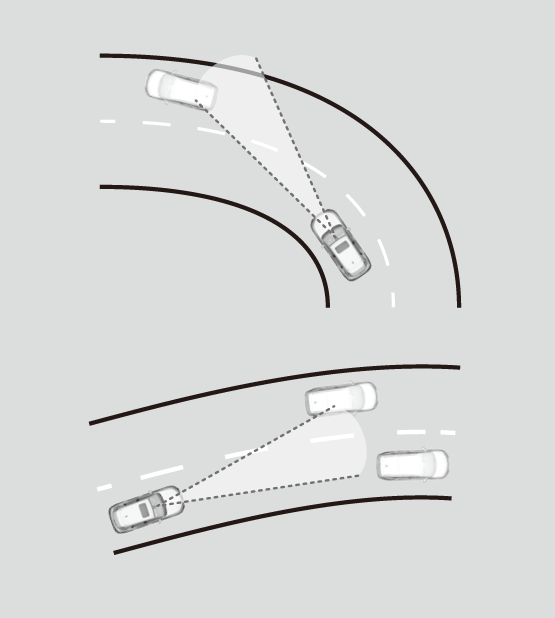
- When the vehicle ahead of you moves away, such as when entering an interchange or rest area, ACC with Low Speed Follow may continue to maintain the set following-interval for a short time.
- Detail
There is a vehicle ahead
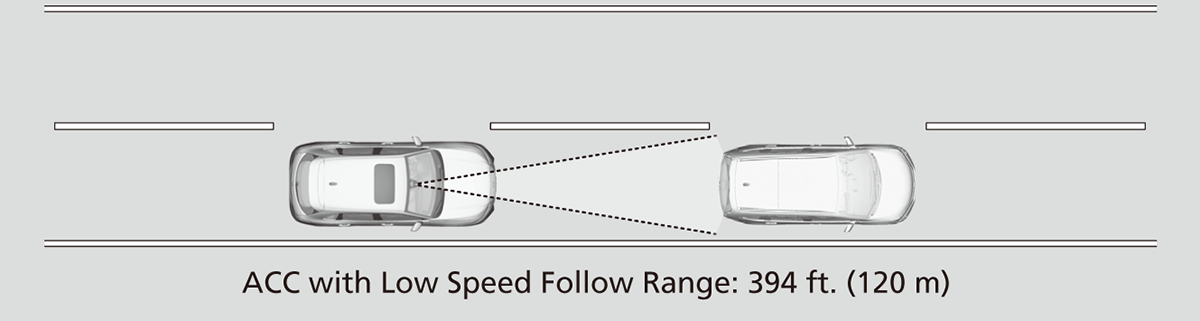
ACC with Low Speed Follow monitors if a vehicle ahead of you enters the ACC with Low Speed Follow range. If a vehicle is detected doing so, the ACC with Low Speed Follow system maintains or decelerates your vehicle’s set speed in order to keep the vehicle’s set following-interval from the vehicle ahead.
To Set or Change Following-interval
-
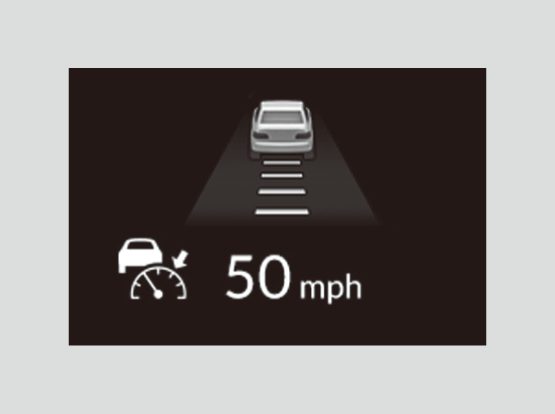
When a vehicle whose speed is slower than your set speed is detected in front of you, your vehicle starts to slow down.
There is no vehicle ahead
-
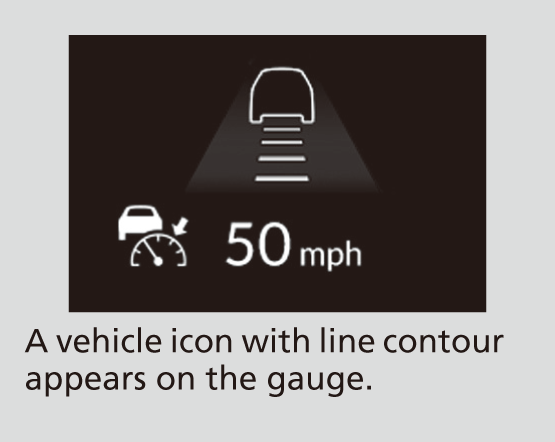
Your vehicle maintains the set speed without having to keep your foot on the brake or accelerator pedal.
If there previously was a vehicle detected ahead that kept your vehicle from traveling at the set speed, ACC with Low Speed Follow accelerates your vehicle to the set speed, and then maintains it.On steep downhill during ACC with Low Speed Follow, it brakes to inhibit excessive acceleration for maintaining the set speed. However, the vehicle speed may become faster than the set speed.
When you depress the accelerator pedal
You can temporarily increase the vehicle speed. In this case, there is no audible or visual alert even if a vehicle is in the ACC with Low Speed Follow range.
ACC with Low Speed Follow stays on unless you cancel it. Once you release the accelerator pedal, the system resumes an appropriate speed for keeping the following-interval while a vehicle ahead is within the ACC with Low Speed Follow range.
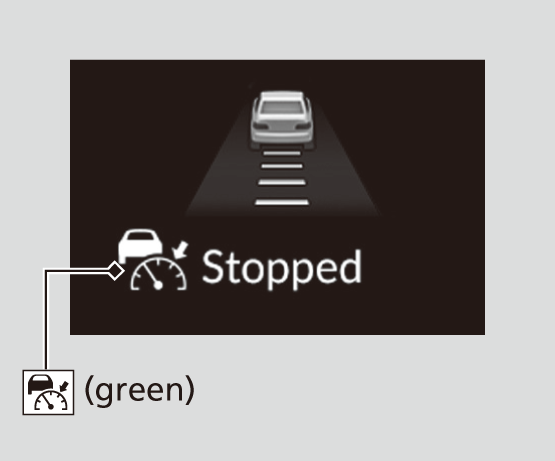
A vehicle detected ahead is within ACC with Low Speed Follow range and slows to a stop
-
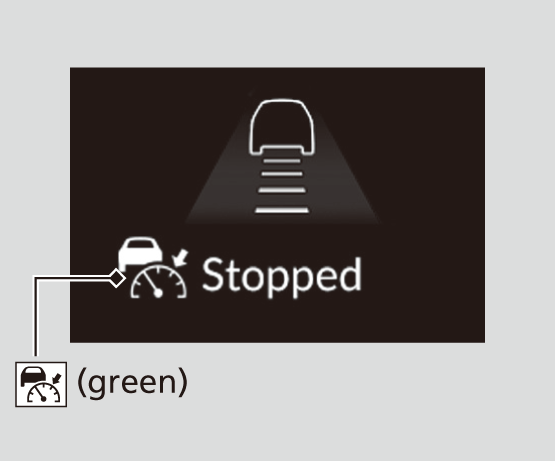
Your vehicle also stops, automatically. The Stopped message appears on the gauge.
When the vehicle ahead of you starts again, the vehicle icon on the gauge blinks. If you press the RES/+/SET/− switch up or down, or depress the accelerator pedal, ACC with Low Speed Follow operates again within the prior set speed.
-
If no vehicle is ahead of you before you resume driving, depress the accelerator pedal and ACC with Low Speed Follow will operate again within the prior set speed.
ACC with Low Speed Follow Conditions and Limitations
The system may automatically shut off under certain conditions. Some examples of these conditions are listed below. Other conditions may reduce some of the ACC with Low Speed Follow functions.
Front Wide View Camera
Environmental conditions
- Driving in bad weather (rain, fog, snow, etc.).
- Sudden changes between light and dark, such as the entrance or exit of a tunnel or the shadows of trees, buildings, etc.
- Strong light is reflected onto vehicles or road surfaces.
- Water is sprayed by or snow blown from a vehicle ahead.
- Driving at night or in a dark place such as a tunnel (due to low-light conditions, the whole vehicle may not be illuminated).
- Driving into low sunlight (e.g., at dawn or dusk).
Roadway conditions
- Driving on curvy, winding, undulating, or sloping roads.
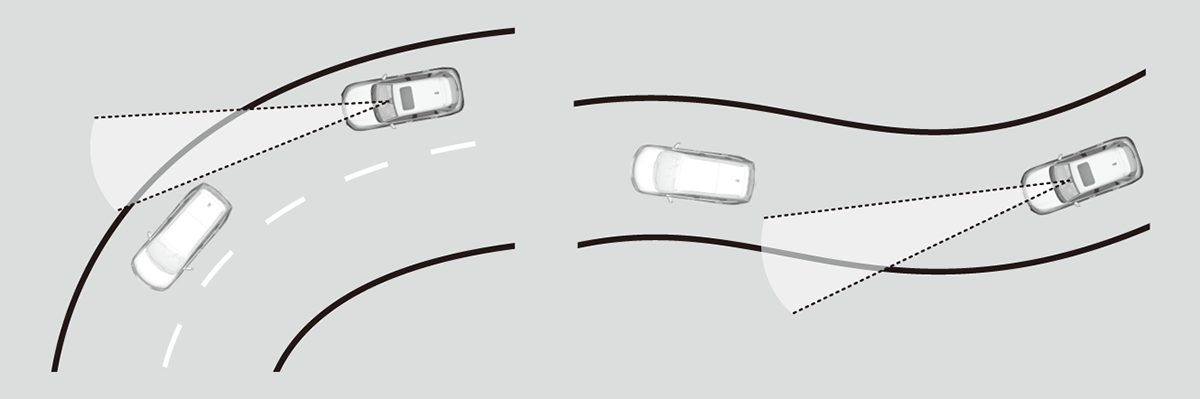
- Driving on rutted roads (snowy or unpaved roads, etc.).
- Puddles or a film of water is on the road surface.
- Your vehicle is strongly shaken on uneven road surfaces.
Vehicle conditions
- The vehicle is tilted due to heavy load in the cargo area or rear seats.
- Tire chains are installed.
- The front of the camera is covered by dirt, fog, rain, mud, wet snow, seals, accessories, stickers, or film of the windshield.
- Driving at night or in a dark place (e.g., a tunnel) with the headlights off.
- There is residue on the windshield from the windshield wipers.
- When lighting is weak due to dirt covering the headlight lenses, or there is poor visibility in a dark place due to the headlights being improperly adjusted.
- An abnormal tire or wheel condition (incorrect sizes, varied sizes or construction, improperly inflated, compact spare tire, etc.).
- The suspension has been modified.
Examples of conditions under which the camera may not correctly detect the vehicle ahead of you
- A vehicle suddenly crosses in front of you.
- The interval between your vehicle and the vehicle ahead of you is too short.
- When the vehicle ahead of you blends in with the background, preventing the system from recognizing it.
- The headlights of the vehicle ahead of you are lit on one side or not lit on either side in a dark place.
Examples of conditions under which the system may not work properly
- A vehicle ahead of you stops and the speed difference between your vehicle and the vehicle ahead of you is significantly large.
- When the vehicle ahead of you slows suddenly.
- When the vehicle ahead of you is a specially-shaped vehicle.
- When a vehicle is lower in the rear than the front such as trucks that are not carrying a load, or a narrow vehicle.
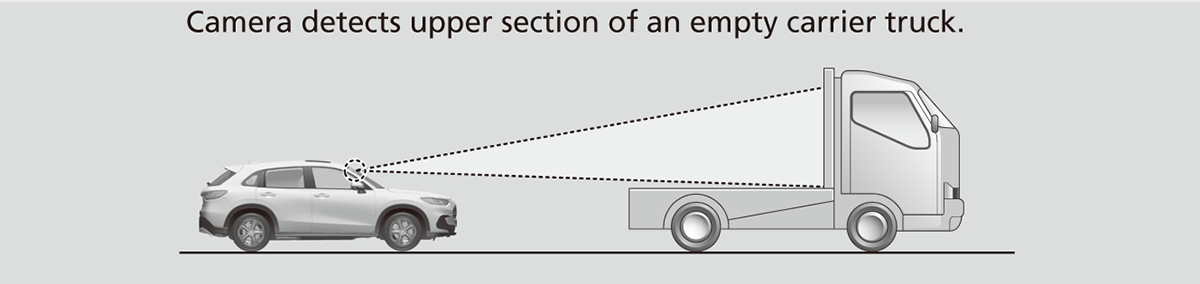
- When your vehicle or the vehicle ahead of you is driving on the edge of the lane.
- When the vehicle ahead of you is a narrow vehicle such as a motorcycle.
- When the minimum ground clearance of a vehicle ahead of you is extremely high.
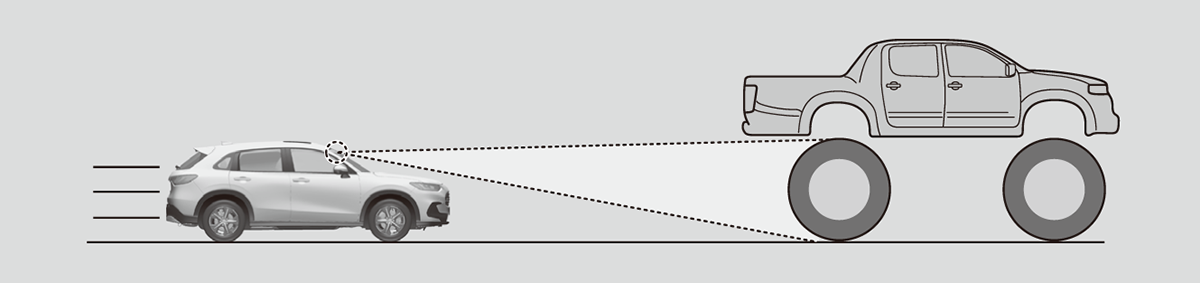
- When the camera cannot correctly identify the shape of the vehicle ahead of you.
To Adjust the Vehicle Speed
Increase or decrease the vehicle speed using the RES/+/SET/−switch on the steering wheel.
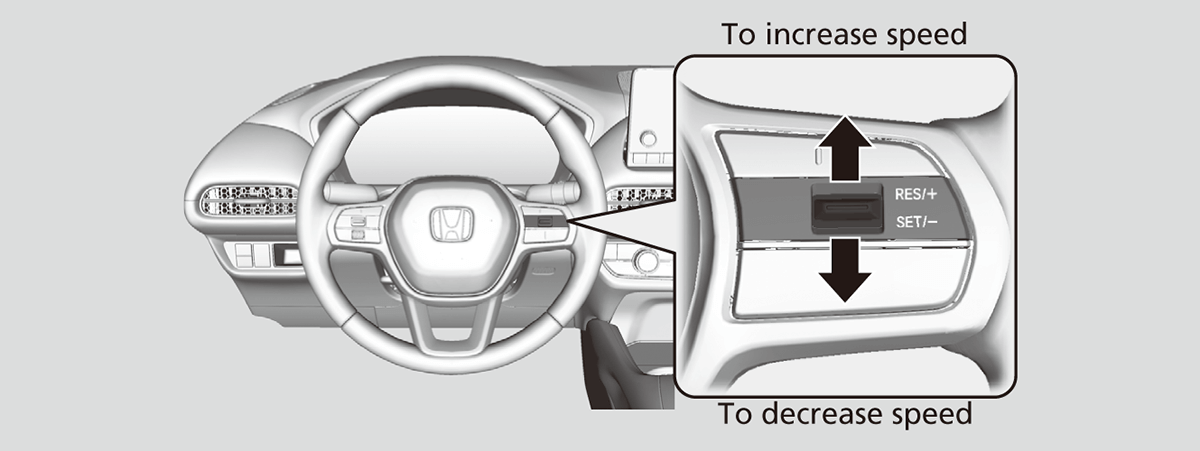
- Each time you press the RES/+/SET/−switch up or down, the vehicle speed is increased or decreased by about 1 mph or 1 km/h accordingly.
- If you keep the RES/+/SET/−switch pressed up or down, the vehicle speed increases or decreases by about 5 mph or 5 km/h accordingly.
- Detail
To Set or Change Following-interval
-
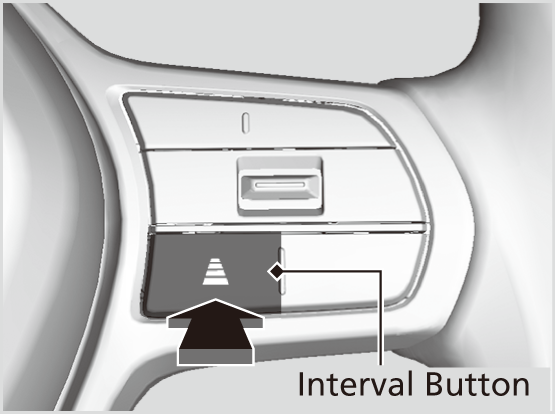
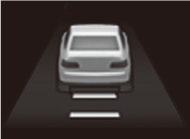
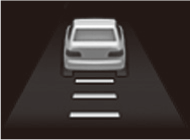
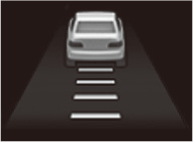
Press the Interval button to change the ACC with Low Speed Follow following-interval.
Each time you press the button, the following-interval (the interval behind a vehicle detected ahead of you) setting cycles through furthest, far, mid, and nearest following-intervals.Determine the most appropriate following-interval setting based on your specific driving conditions. Be sure to adhere to any following-interval requirements set by local regulation.
The higher your vehicle’s following-speed is, the longer the nearest, mid, far or furthest following-interval becomes. See the following examples for your reference.
|
Following-interval
|
When the Set Speed is:
|
||
|---|---|---|---|
|
50 mph (80 km/h)
|
65 mph (104 km/h)
|
||
|
Nearest
|
 |
82.7 feet
25.2 meters
1.1 sec
|
107.1 feet
32.6 meters
1.1 sec
|
|
Mid
|
 |
113.4 feet
34.6 meters
1.6 sec
|
147.2 feet
44.9 meters
1.6 sec
|
|
Far
|
 |
144.2 feet
44.0 meters
2.0 sec
|
187.3 feet
57.1 meters
2.0 sec
|
|
Furthest
|
 |
175.9 feet
53.6 meters
2.4 sec
|
229.6 feet
70.0 meters
2.4 sec
|
When your vehicle stops automatically because a vehicle detected ahead of you has stopped, the interval between the two vehicles will vary based on the ACC with Low Speed Follow interval setting.
To Cancel
-
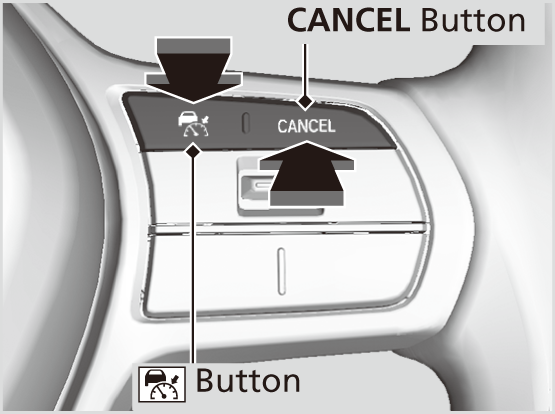
To cancel ACC with Low Speed Follow, do any of the following:
- Press the CANCEL button.
- The indicator (green) on the gauge changes to the indicator (white).
- The
- Press the button.
- indicator (green) goes off.
- Depress the brake pedal while the vehicle is moving forward.
- The indicator (green) on the gauge changes to the indicator (white).
- The
- Press the CANCEL button.
When you turn the ACC with Low Speed Follow off by pressing the CANCEL button or depressing the brake pedal, the prior set speed is displayed on the gauge in gray.
When pressing the RES/+/SET/− switch up, the ACC with Low Speed Follow is activated with displayed speed.
If the
indicator (white) is displayed and you press the RES/+/SET/− switch up, but no prior set speed (in gray) is displayed, the speed will be set to your vehicle's current speed. button. Press the button to activate the system, then set the desired speed.
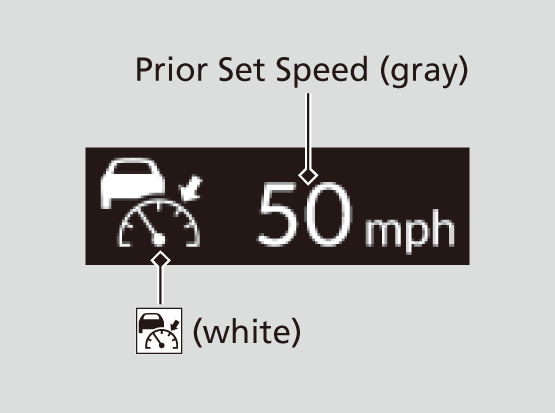
- Detail
Automatic cancellation
The beeper sounds and a message appears on the driver information interface when ACC with Low Speed Follow is automatically canceled. Any of these conditions may cause the ACC with Low Speed Follow to automatically cancel:
- Bad weather (rain, fog, snow, etc.)
- The vehicle ahead of you cannot be detected.
- An abnormal tire condition is detected, or the tires are skidding.
- Driving on a mountainous road, or driving off road for extended periods.
- Abrupt steering wheel movement.
- When the ABS, VSA®, CMBSTM, or Low Speed Braking Control* is activated.
- When the VSA® system indicator comes on.
- When the vehicle is stopped on a very steep slope.
- When you manually apply the parking brake.
- Water is sprayed by or snow blown from a vehicle ahead.
- Driving into low sunlight (e.g., at dawn or dusk).
- When the detected vehicle within the ACC with Low Speed Follow range is too close to your vehicle.
- When accelerating rapidly.
- The front of the camera is covered by dirt, fog, rain, mud, wet snow, seals, accessories, stickers, or film on the windshield.
- The vehicle is loaded heavy load in the cargo area or rear seats.
- When passing through a dark place, such as tunnel.
- When the parking brake and brake system indicator (amber) comes on.
- The vehicle has repeatedly applied the brakes to maintain the set speed (for example, you are descending a long slope).
- When the system doesn't detect any driving actions from the driver for a certain amount of time while the LKAS is also activated.
The ACC with Low Speed Follow automatic cancellation can be also triggered by the following causes. In these cases, the parking brake will be automatically applied.
- The driver’s seat belt is unfastened when the vehicle is stationary.
- The vehicle stops for more than 10 minutes.
- The engine is turned off.
To Switch ACC with Low Speed Follow to Cruise Control
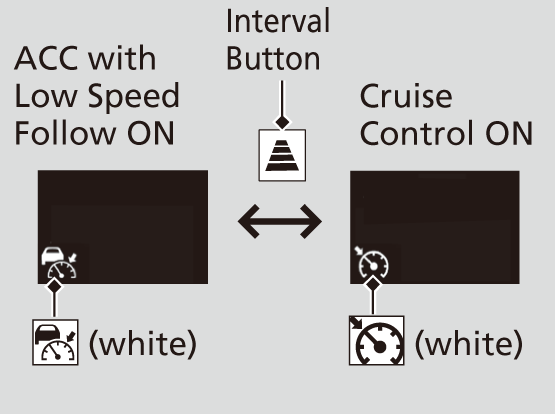
-
Press and hold the Interval button for one second. Cruise mode selected appears on the driver information interface for two seconds, and then the mode switches to Cruise.
The indicator comes on.
- Green: The system is on.
- White: The system is standby.
To switch back to ACC with Low Speed Follow, press and hold the Interval button again for one second.
- When the vehicle speed is set.
- When ACC with Low Speed Follow is not activated.
Settings*
Speed/Distance Units
Customized Features Defaulting All the Settings
- Detail
When to use
Desired speed in a range above roughly 25 mph (40 km/h).
To Set the Vehicle Speed
Take your foot off the pedal and press the RES/+/SET/− switch up or down when you reach the desired speed.
The moment you release the RES/+/SET/− switch, the set speed is fixed, and cruise control begins. The color of indicator changes from white to green.
When you use cruise control, Straight Driving Assist (a feature of the Electric Power Steering system) is activated.
By enabling the steering system to automatically compensate for natural steering pull, Straight Driving Assist makes it easier for you to keep your vehicle in a straight line.
To Adjust the Vehicle Speed
- Each time you press the RES/+/SET/− switch up or down, the vehicle speed is increased or decreased by about 1 mph or 1 km/h accordingly.
- If you keep the RES/+/SET/− switch pressed up or down, the vehicle speed increases or decreases by about 5 mph or 5 km/h accordingly.
To Cancel
To cancel cruise control, do any of the following:
- Press the CANCEL button.
- The indicator (green) on the gauge changes to the indicator (white).
- The
- Press the button.
- The indicator (green) goes off.
- The
- Depress the brake pedal.
- The indicator (green) on the gauge changes to the indicator (white).
- The
When you turn the cruise control off by pressing the CANCEL button or depressing the brake pedal, the prior set speed is displayed on the gauge in gray.
When pressing the RES/+/SET/− switch up, the cruise control is activated with displayed speed.
If the
indicator (white) is displayed and you press the RES/+/SET/− switch up, but no prior set speed (in gray) is displayed, the speed will be set to your vehicle's current speed.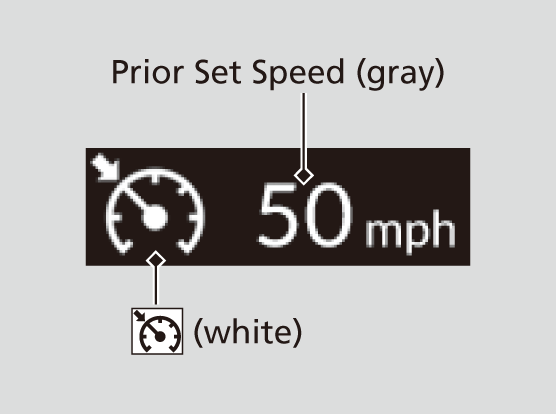
- When vehicle speed is less than 25 mph (40 km/h)
- When cruise control is canceled by pressing the button.
- Detail
* Not available on all models
Lane Keeping Assist System (LKAS)
Provides steering input to help keep the vehicle in the middle of a detected lane and provides tactile and visual alerts if the vehicle is detected drifting out of its lane.
The LKAS is convenient when it is used on expressways or freeways.
It is always your responsibility to safely operate the vehicle and avoid collisions.
LKAS Conditions and Limitations
Front Wide View Camera
- Detail
Steering input assist
The system applies torque to the steering to keep the vehicle between the left and right lane lines. The applied torque becomes stronger as the vehicle gets closer to either of the lane lines.
Tactile and visual alerts
Rapid vibrations on the steering wheel and a warning display alert you that the vehicle is drifting out of a detected lane.
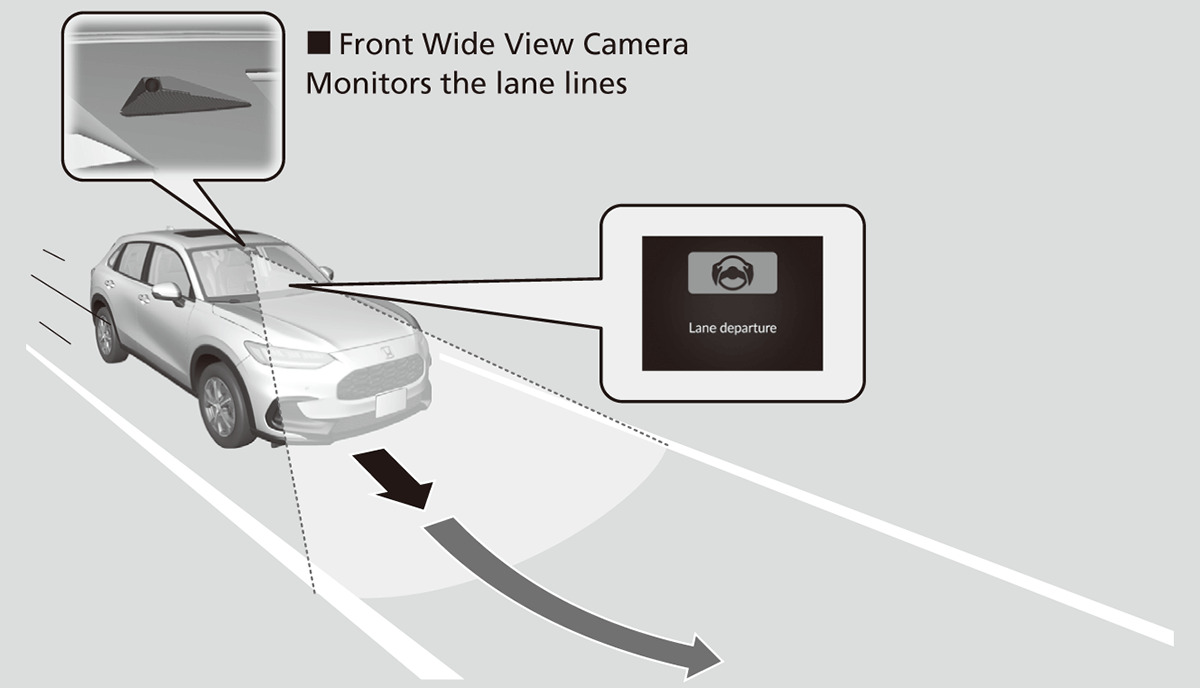
When you operate the turn signals to change lanes, the system is suspended, and resumes after the signals are off.
If you make a lane change without operating the turn signals, the LKAS alerts activate, and torque is applied to the steering.
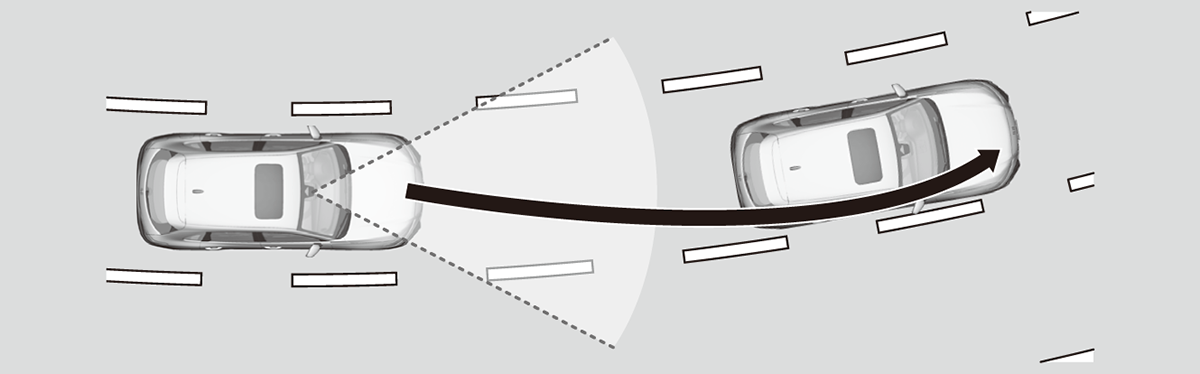
Lane Keep Support Function
Provides assistance to keep the vehicle in the center of the lane. When the vehicle nears a white or yellow line, steering force of the electric power steering will become stronger.
Lane Departure Warning Function
When the vehicle enters the warning area, the LKAS alerts you with slight steering wheel vibration as well as a warning display.
When the System can be Used
The system can be used when the following conditions are met.
- The lane in which you are driving has detectable lane markers on both sides, and your vehicle is in the center of the lane.
- The vehicle is traveling between about 45 and 90 mph (72 and 145 km/h).
- You are driving on a straight or slightly curved road.
- The turn signals are off.
- The brake pedal is not depressed.
- Always keep the windshield around the camera clean.
- When cleaning the windshield, be careful not to apply windshield cleanser to the camera lens.
- Do not touch the camera lens.
- Do not attach a sticker to the area around the camera.
- Detail
How to activate the system
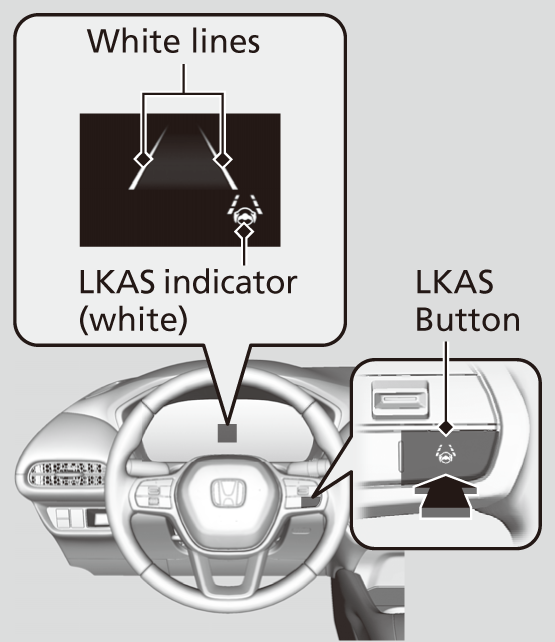
-
- Press the LKAS button.
- LKAS indicator (white) appears on the gauge.
The system is standby. - If traffic lane lines are detected, white lines appear on the gauge.
- LKAS indicator (white) appears on the gauge.
- Press the LKAS button.
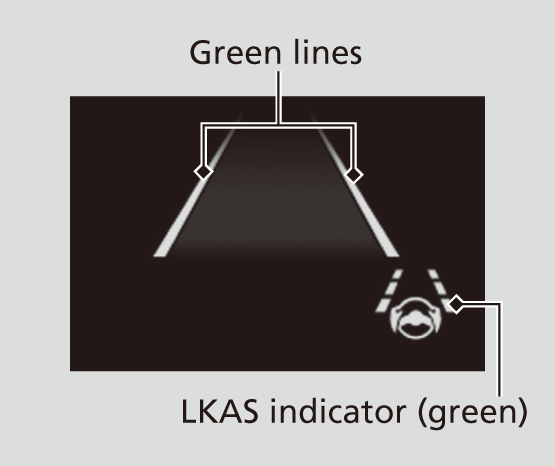
-
- Keep your vehicle near the center of the lane while driving.
- The LKAS indicator changes from white to green, and white lines change to green once the system starts operating after detecting the left and right lane markings.
- Keep your vehicle near the center of the lane while driving.
To Cancel
-
Press the LKAS button.
The LKAS is turned off every time you stop the engine, even if you turned it on the last time you drove the vehicle.
-
The system operation is suspended if you:
- Decrease the vehicle speed to about 40 mph (64 km/h) or less.
- Increasing the vehicle speed to about 45 mph (72 km/h) or more resumes the LKAS.
- Depress the brake pedal.
- The LKAS resumes and starts detecting the lane lines again once you release the brake pedal.
- Your vehicle is driving to the right or the left of the lane.
- Decrease the vehicle speed to about 40 mph (64 km/h) or less.
LKAS suspended beep on and off can be selected.
Settings*
Customized Features Defaulting All the Settings
- Detail
The LKAS may be automatically suspended when:
- The system fails to detect lane lines.
- The steering wheel is turned quickly.
- You fail to steer the vehicle.
- Driving through a sharp curve.
- Driving at a speed in excess of approximately 94 mph (150 km/h).
Once these conditions no longer exist, the LKAS automatically resumes.
The LKAS may be automatically canceled when:
In the following cases, traffic lane lines may disappear on the gauge, the beeper may sound, and the LKAS may automatically be canceled:
- The camera temperature gets extremely high.
- The camera behind the rearview mirror, or the area around the camera, including the windshield, gets dirty.
- The ABS or VSA® system engages.
LKAS Conditions and Limitations
The system may not detect lane markings and therefore may not keep the vehicle in the middle of the lane under certain conditions, including the following:
Environmental conditions
- There is little contrast between lane lines and the roadway surface.
- Driving in bad weather (rain, fog, snow, etc.).
- Driving on a snowy or wet roadway.
- Driving into low sunlight (e.g., at dawn or dusk).
- Shadows of adjacent objects (trees, buildings, guard rails, vehicles, etc.) are parallel to white (or yellow) lines.
- Sudden changes between light and dark, such as the entrance or exit of a tunnel or the shadows of trees, buildings, etc.
- Driving at night or in a dark place such as a tunnel (due to low-light conditions, lane lines or the road surface may not be illuminated).
- The distance between your vehicle and the vehicle ahead of you is too short, and lane lines and the road surface are not visible.
- Strong light is reflected onto the roadway.
Roadway conditions
- Driving on a road with temporary lane markings.
- Faint, multiple, or varied lane markings are visible on the roadway due to road repairs or old lane markings.

- The roadway has merging, split, or crossing lines, such as at an intersection or crosswalk.
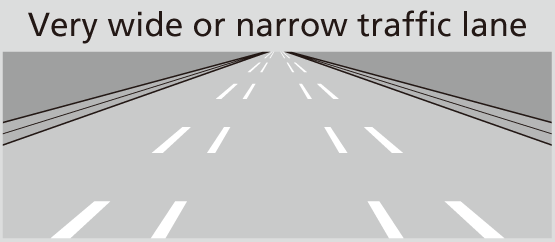
- The lane markings are extremely narrow, wide, or changing.
- Part of the lane markings are hidden by an object, such as a vehicle.
- The road is hilly or the vehicle is approaching the crest of a hill.
- Your vehicle is strongly shaken on uneven road surfaces.
- When objects on the road (curb, guard rail, pylons, etc.) are recognized as white (or yellow) lines.
- Driving on rough or unpaved roads, or over bumpy surfaces.
- Driving on roads with double lane lines.
- Driving on snowy or slippery roads.
- The pavement is only partially visible due to snow or puddles on the road.
- There is a film of water or puddles on the road surface.
- White (or yellow) lines are not recognized correctly due to road conditions such as curves, twists, or hills.
- Driving on unpaved or rutted roads.
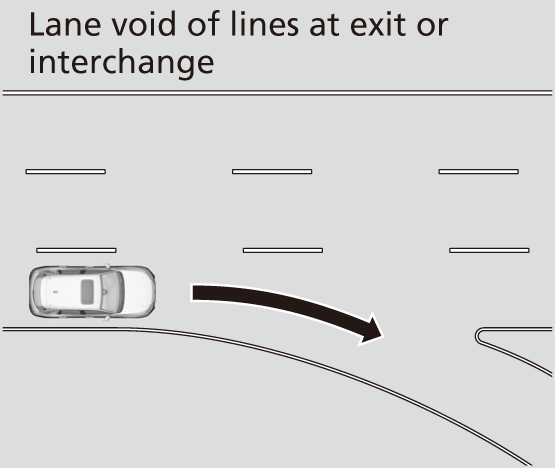
- Passing through an exit or an interchange.
Vehicle conditions
- When lighting is weak due to dirt covering the headlight lenses, or there is poor visibility in a dark place due to the headlights being improperly adjusted.
- The front of the camera is covered by dirt, fog, rain, mud, wet snow, seals, accessories, stickers, or film on the windshield.
- Driving at night or in a dark place (e.g., a tunnel) with the headlights off.
- There is residue on the windshield from the windshield wipers.
- An abnormal tire or wheel condition (incorrect sizes, varied sizes or construction, improperly inflated, compact spare tire, etc.).
- The vehicle is tilted due to a heavy load in the cargo area or rear seats.
- The suspension has been modified.
- Tire chains are installed.
* Not available on all models
Traffic Jam Assist*
The Traffic Jam Assist system uses a camera mounted to the upper portion of the windshield to detect and monitor left and right white (or yellow) traffic lane lines. Based on inputs from the camera, the system can apply steering torque to keep your vehicle in the center of the detected lane.
Traffic Jam Assist is convenient when it is used on expressways or freeways.
Front Wide View Camera
It is always your responsibility to safely operate the vehicle and avoid collisions.
Traffic Jam Assist Conditions and Limitations
- Detail
How Traffic Jam Assist works
When you are in heavy traffic and Lane Keeping Assist System (LKAS) is active, the Traffic Jam Assist system, upon detecting the traffic lane lines, will apply steering torque to help keep your vehicle in the center of the lane.

When you use the turn signal to indicate a lane change, Traffic Jam Assist is temporarily deactivated. It is reactivated once the vehicle is traveling in the center of the lane and the system has detected the traffic lane lines.
When the driver takes full control of the steering, the steering assist function is temporarily canceled.
The torque applied to the steering may not be noticeable when the driver has full control of the steering, or when the surface of the road is rough or uneven.
Lane Departure Warning Function
When the vehicle enters the warning area, Traffic Jam Assist alerts you with an audible alert as well as a warning display.

Traffic Jam Assist Activation
Traffic Jam Assist is activated when all of the following conditions exist:
- LKAS is activated.
- The lane in which you are driving has detectable lane markers on both sides, and your vehicle is in the center of the lane.
- The vehicle is traveling between about 0 and 45 mph (0 and 72 km/h).
- You are driving on a straight or slightly curved road.
- The driver is gripping the steering wheel.
- The shift position is in D, S or L.
Do not use Traffic Jam Assist in any of the following situations:
- You are traveling on a road with sharp curves.
- The system may not allow your vehicle to respond in a manner best suited for the road conditions.
- You are entering a toll booth, interchange, service area, or parking area.
- You are driving in adverse weather (rain, fog, snow, etc.).
- The surface of the road is slippery; for example, it is icy or covered with snow.
- The tires may slip, causing you to lose control of the vehicle.
Lane Keeping Assist System (LKAS)
Operation Switches for the Adaptive Cruise Control (ACC) with Low Speed Follow/Lane Keeping Assist System (LKAS)/Traffic Jam Assist*
- Detail
How Traffic Jam Assist Works

-
Keep your vehicle near the center of the lane while driving.
- The LKAS indicator changes from white to green, and white lines change to green once the system starts operating after detecting the left and right lane markings.
Traffic Jam Assist Conditions and Limitations

- Detail
Canceling Traffic Jam Assist
Press the LKAS button to cancel Traffic Jam Assist.
Traffic Jam Assist may be automatically suspended when:
The system is automatically temporarily canceled under the following circumstances.
- The system fails to detect lane lines.
- The steering wheel is turned sharply.
- You fail to steer the vehicle.
- You are driving through a sharp curve.
- The brake pedal is depressed.
Once these conditions no longer exist, Traffic Jam Assist automatically resumes.
- When the speed of the vehicle reaches 45 mph (72 km/h), Traffic Jam Assist is deactivated and LKAS is activated instead. Once the speed of the vehicle drops to under 40 mph (64 km/h), Traffic Jam Assist is reactivated.
- Detail
Traffic Jam Assist may be automatically canceled when:
The traffic lane lines will disappear from the screen, the beeper may sound, and Traffic Jam Assist will be canceled under the following circumstances:
- The temperature of the camera is too high.
- The camera behind the rearview mirror, or the area around the camera, including the windshield, is dirty.
Traffic Jam Assist Conditions and Limitations
The system may not detect lane markings and therefore may not keep the vehicle in the middle of the lane under certain conditions, including the following:
Environmental conditions
- There is little contrast between lane lines and the roadway surface.
- Driving in bad weather (rain, fog, snow, etc.).
- Driving on a snowy or wet roadway.
- Driving into low sunlight (e.g., at dawn or dusk).
- Shadows of adjacent objects (trees, buildings, guard rails, vehicles, etc.) are parallel to white (or yellow) lines.
- Sudden changes between light and dark, such as the entrance or exit of a tunnel or the shadows of trees, buildings, etc.
- Driving at night or in a dark place such as a tunnel (due to low-light conditions, lane lines or the road surface may not be illuminated).
- When the lane lines or road surface are not visible, such as when the distance to the vehicle in front of you is extremely short or when at an intersection.
- Strong light is reflected onto the roadway.
Roadway conditions
- Driving on a road with temporary lane markings.
- Faint, multiple, or varied lane markings are visible on the roadway due to road repairs or old lane markings.

- The roadway has merging, split, or crossing lines, such as at an intersection or crosswalk.
- The lane markings are extremely narrow, wide, or changing.

- Part of the lane markings are hidden by an object, such as a vehicle.
- The road is hilly or the vehicle is approaching the crest of a hill.
- Your vehicle is strongly shaken on uneven road surfaces.
- When objects on the road (curb, guard rail, pylons, etc.) are recognized as white (or yellow) lines.
- Driving on rough or unpaved roads, or over bumpy surfaces.
- Driving on roads with double lane lines.
- Driving on snowy or slippery roads.
- The pavement is only partially visible due to snow or puddles on the road.
- There is a film of water or puddles on the road surface.
- White (or yellow) lines are not recognized correctly due to road conditions such as curves, twists, or hills.
- Driving on unpaved or rutted roads.
- Passing through an exit or an interchange.

Vehicle conditions
- When lighting is weak due to dirt covering the headlight lenses, or there is poor visibility in a dark place due to the headlights being improperly adjusted.
- The front of the camera is covered by dirt, fog, rain, mud, wet snow, seals, accessories, stickers, or film on the windshield.
- Driving at night or in a dark place (e.g., a tunnel) with the headlights off.
- There is residue on the windshield from the windshield wipers.
- An abnormal tire or wheel condition (incorrect sizes, varied sizes or construction, improperly inflated, compact spare tire, etc.).
- The vehicle is tilted due to a heavy load in the cargo area or rear seats.
- The suspension has been modified.
- Tire chains are installed.
* Not available on all models
Road Departure Mitigation System
Alerts and helps assist you when the system detects a possibility of your vehicle crossing over detected lane markings, or approaching the outer edge of the pavement (into grass or gravel border) or a detected oncoming vehicle.
Overreliance on the Road Departure Mitigation system may result in a collision. It is always your responsibility to keep the vehicle within your driving lane.
The Road Departure Mitigation system may not detect all lane markings or every instance of lane drift.
The Road Departure Mitigation system may not detect that you are approaching the outer edge of the pavement (bordered by grass or gravel) or an oncoming vehicle.
The Road Departure Mitigation system may not be able to assist you depending on weather, speed or road conditions.
Front Wide View Camera
Road Departure Mitigation system Conditions and Limitations
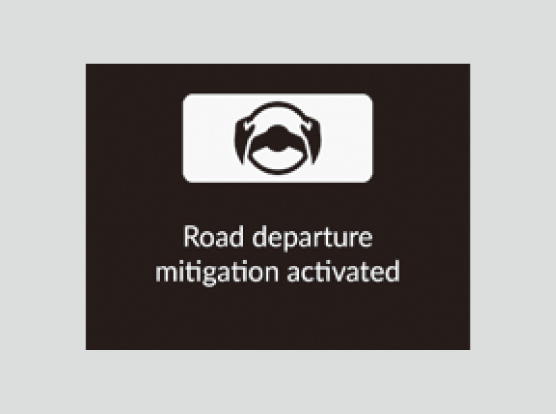
If LKAS is off, the message below may appear if the system has determined that there is a possibility of your vehicle crossing over detected lane markings, the outer edge of the pavement (into a grass or gravel border) or oncoming vehicle.
Settings*
Customized Features Defaulting All the Settings
- Detail
How the System Works
-
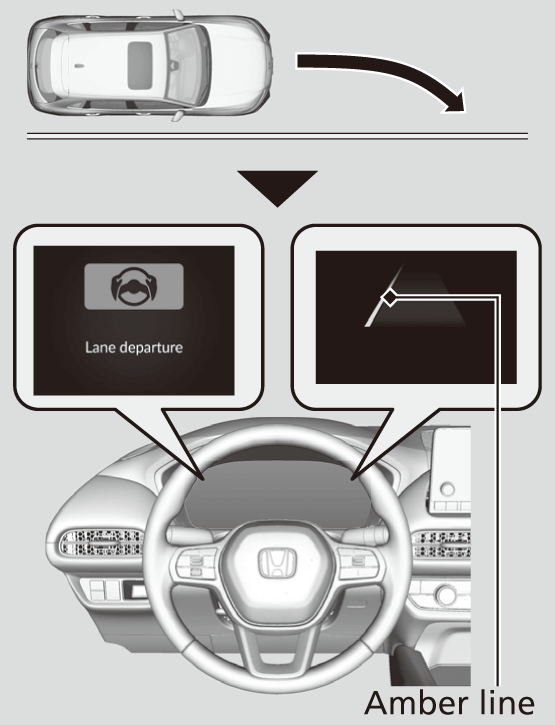
The front wide view camera behind the rearview mirror monitors left and right lane markings in white or yellow, the outer edge of the pavement (bordered by grass or gravel) or a detected oncoming vehicles.
If your vehicle approaches any detected lane markings, the outer edge of the pavement (bordered by grass or gravel) or a detected oncoming vehicles when the turn signals have not been engaged, the system activates.- If the system cannot detect lane markings (in white or yellow), no assistance will be provided to avoid approaching oncoming vehicles. In addition to a visual alert, the system assists with steering and alerts you with rapid steering wheel vibrations to help you remain within the detected lane.
Settings*
Customized Features Defaulting All the Settings
As a visual alert, the Lane departure message appears on the driver information interface.
- If the system cannot detect lane markings (in white or yellow), no assistance will be provided to avoid approaching oncoming vehicles. In addition to a visual alert, the system assists with steering and alerts you with rapid steering wheel vibrations to help you remain within the detected lane.
The system cancels assisting operations when you turn the steering wheel to avoid crossing over detected lane markings or approaching the outer edge of the pavement (into grass or gravel border) or an oncoming vehicle.
If the system operates several times without detecting driver response, the system beeps to alert you.
How the System Activates
The system activates when all of the following conditions are met:
- The vehicle is traveling between about 45 and 90 mph (72 and 145 km/h).
- The vehicle is on a straight or slightly curved road.
- The turn signals are off.
- The system makes a determination that the driver is not actively accelerating, braking, or steering.
Indicators
- Driven on the inside edge of a curve, or outside of a lane.
- Driven in a narrow lane.
- Detail
Road Departure Mitigation system On and Off
You can turn the system on and off using the driver information interface.
Switching the Display Safety Support
The Road Departure Mitigation system is in the previously selected on (checked) or off (unchecked) setting each time you start the engine.
Settings*
Customized Features Defaulting All the Settings
Drive a short distance at more than 12 mph (20 km/h).
Each indicator should go off. If any do not, have your vehicle checked by a dealer.
- Detail
Road Departure Mitigation system Conditions and Limitations
The system may not properly detect lane markings (in white or yellow), the outer edge of the pavement (into grass or gravel border) or an oncoming vehicle under certain conditions. Some examples of these conditions are listed below.
Environmental conditions
- There is little contrast between lane lines and the roadway surface.
- Driving in bad weather (rain, fog, snow, etc.).
- Driving on a snowy or wet roadway.
- Driving into low sunlight (e.g., at dawn or dusk).
- Shadows of adjacent objects (trees, buildings, guard rails, vehicles, etc.) are parallel to white (or yellow) lines.
- Sudden changes between light and dark, such as the entrance or exit of a tunnel or the shadows of trees, buildings, etc.
- Strong light is reflected onto the roadway.
- Driving at night or in a dark place such as a tunnel (due to low-light conditions, lane lines, the road surface, or oncoming vehicles may not be illuminated).
- The distance between your vehicle and the vehicle ahead of you is too short, and lane lines and the road surface are not visible.
- The outer edge of the road is bordered by objects, materials, etc. other than grass or gravel.
Roadway conditions
- Driving on a road with temporary lane markings.
- Faint, multiple, or varied lane markings are visible on the roadway due to road repairs or old lane markings.
- The roadway has merging, split, or crossing lines, such as at an intersection or crosswalk.
- The lane markings are extremely narrow, wide, or changing.
- Part of the lane markings are hidden by an object, such as a vehicle.
- The road is hilly or the vehicle is approaching the crest of a hill.
- Your vehicle is strongly shaken on uneven road surfaces.
- When objects on the road (curb, guard rail, pylons, etc.) are recognized as white (or yellow) lines.
- Driving on rough or unpaved roads, or over bumpy surfaces.
- Driving on roads with double lane lines.
- Driving on snowy or slippery roads.
- Passing through an exit or an interchange.
- The pavement is only partially visible due to snow or puddles on the road.
- Driving on unpaved or rutted roads.
- White (or yellow) lines are not recognized correctly due to road conditions such as curves, twists, or hills.
Vehicle conditions
- When lighting is weak due to dirt covering the headlight lenses, or there is poor visibility in a dark place due to the headlights being improperly adjusted.
- The front of the camera is covered by dirt, fog, rain, mud, wet snow, seals, accessories, stickers, or film on the windshield.
- Driving at night or in a dark place (e.g., a tunnel) with the headlights off.
- When the driver operates the brake pedal and steering wheel.
- There is residue on the windshield from the windshield wipers.
- An abnormal tire or wheel condition (incorrect sizes, varied sizes or construction, improperly inflated, compact spare tire, etc.).
- The vehicle is tilted due to heavy load in the cargo area or rear seats.
- Tire chains are installed.
- The suspension has been modified.
Examples of limitations on detection due to the condition of oncoming vehicles
- The oncoming vehicle or vehicle ahead of you is sideways.
- The oncoming vehicle jumps out in front of you.
- When the oncoming vehicle blends in with the background, preventing the system from recognizing it.
- The headlights of an oncoming vehicle are lit on one side or not lit on either side in a dark place.
- The distance between your vehicle and the oncoming vehicle is too short.
- Part of the oncoming vehicle is not visible due to the vehicle ahead of you.
- There are multiple oncoming lanes or turning lanes.
- The vehicle in the adjacent lane is parked or moving at an extremely slow speed.
Examples of other limitations on detection or system operation
- When the oncoming vehicle is specially-shaped.
- When the camera cannot correctly identify the shape of the oncoming vehicle.
With Little Chance of a Collision
The Road Departure Mitigation system may activate in the below conditions.
- When driving through curves, your vehicle comes to a point where an oncoming vehicle is right in front of you.
* Not available on all models
Traffic Sign Recognition System
Reminds you of road sign information, such as the current speed limit your vehicle has just passed through, showing it on the gauge.
Do not rely too much on the system. Always drive at speeds appropriate for the road conditions.
Scratches, nicks, and other damage to the windshield within the camera’s field of vision can cause the system to operate abnormally. If this occurs, we recommend that you replace the windshield with a genuine Honda replacement windshield. Making even minor repairs within the camera’s field of vision or installing an aftermarket replacement windshield may also cause the system to operate abnormally. After replacing the windshield, have a dealer recalibrate the camera. Proper calibration of the camera is necessary for the system to operate properly.
Front Wide View Camera
Settings*
Customized Features Defaulting All the Settings
Covering the camera can concentrate heat on it.
Settings*
Customized Features Defaulting All the Settings
Traffic Sign Recognition System Conditions and Limitations
Settings*
Speed/Distance Units
Customized Features Defaulting All the Settings
- Detail
How the System Works
When the camera located behind the rearview mirror captures traffic signs while driving, the system displays the ones that are recognized as designated for your vehicle. The sign icon will be displayed until the vehicle reaches a predetermined time and distance.
If the system does not detect any traffic signs while you are driving, the sign icon will not be displayed.

The sign icon also may switch to another one, or disappear when:
- The end of speed limit or other designated limit is detected.
- You make a turn with a turn signal at an intersection.
Traffic Sign Recognition System Conditions and Limitations
The traffic sign recognition system may not be able to recognize a traffic sign in the following cases.
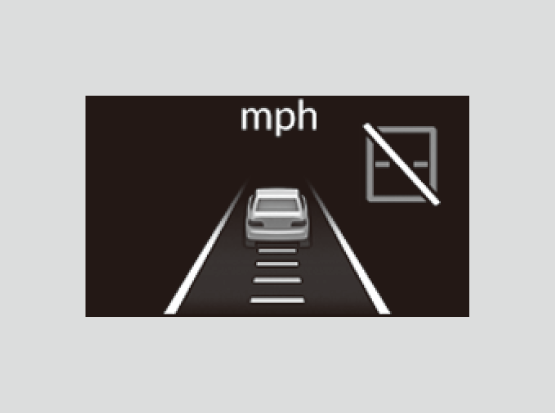
 appears on the gauge. If this message does not disappear, have your vehicle checked by a dealer.
- Detail
Environmental conditions
- Driving into low sunlight (e.g., at dawn or dusk).
- Strong light is reflected onto the roadway.
- Driving at night, in dark areas such as long tunnels.
- Driving in bad weather (rain, fog, snow, etc.).
- Sudden changes between light and dark, such as the entrance or exit of a tunnel or the shadows of trees, buildings, etc.
- Water is sprayed by or snow blown from a vehicle ahead.
Roadway conditions
- Your vehicle is strongly shaken on uneven road surfaces.
Vehicle conditions
- When lighting is weak due to dirt covering the headlight lenses, or there is poor visibility in a dark place due to the headlights being improperly adjusted.
- The front of the camera is covered by dirt, fog, rain, mud, wet snow, seals, accessories, stickers, or film on the windshield.
- There is residue on the windshield from the windshield wipers.
- An abnormal tire or wheel condition (incorrect sizes, varied sizes or construction, improperly inflated, compact spare tire, etc.).
- The vehicle is tilted due to heavy load in the cargo area or rear seats.
- The suspension has been modified.
- Tire chains are installed.
- Driving at night or in a dark place (e.g., a tunnel) with the headlights off.
The position or the condition of the traffic sign
- The sign is in a place that makes it hard to find.
- The sign is located far away from your vehicle.
- The sign is located where it is hard for headlight beams to reach.
- The sign is on a corner or bend in the road.
- The sign is faded or bent.
- The sign is rotated or damaged signs.
- The sign is covered with mud, snow, or frost.
- Part of the sign is hidden by the trees, or is in the shadow of a vehicle or other object.
- Light (such as a streetlight) is reflected on the surface of the sign, or it is hidden in shadow.
- The sign is too bright or too dark (electric signs).
- Small signs (auxiliary signs, etc.).
Other conditions
- When you are driving at a high speed.
The traffic sign recognition system may not operate correctly, such as displaying signs that do not adhere to the actual regulations for the roadway or do not exist at all in the following cases.
- A speed limit sign may display at a higher or lower speed than the actual speed limit.
- There is a supplementary sign with further information such as weather, time, vehicle type, school zone, etc.
- Figures on the sign are hard to read (electric signs, numbers on the sign are blurred, etc.).
- The sign is in the vicinity of the lane you are driving in, even though it is not for the lane, such as a speed limit sign situated at an exit or an intersection between the side road and the main road.
- There are things that look similar in color or shape to recognized objects (similar sign, electric sign, signboard, structure, etc.).
Signs Displayed on the Gauge
The speed limit sign icon is displayed on the screen.

* Not available on all models
Front Wide View Camera
The camera, used in systems such as Lane Keeping Assist System (LKAS), Road Departure Mitigation system, Adaptive Cruise Control (ACC) with Low Speed Follow, Traffic Sign Recognition system, CMBSTM, and Traffic Jam Assist*, is designed to detect an object that triggers any of the systems to operate their functions.
Scratches, nicks, and other damage to the windshield within the camera’s field of vision can cause the system to operate abnormally. If this occurs, we recommend that you replace the windshield with a genuine Honda replacement windshield. Making even minor repairs within the camera’s field of vision or installing an aftermarket replacement windshield may also cause the system to operate abnormally.
After replacing the windshield, have a dealer recalibrate the camera. Proper calibration of the camera is necessary for the system to operate properly.
 Some driver assist systems cannot operate: Camera temperature too high message appears:
- Use the climate control system to cool down the interior and, if necessary, also use defroster mode with the airflow directed towards the camera.
- Start driving the vehicle to lower the windshield temperature, which cools down the area around the camera.
 Some driver assist systems cannot operate: Clean front windshield or poor viewing condition. message appears:
- Park your vehicle in a safe place, and make sure the windshield is clean.
Clean the windshield if it is dirty. If the message does not disappear after driven for a while, have your vehicle checked by a dealer.
- Detail
Camera Location and Handling Tips

-
This camera is located behind the rearview mirror.
To help reduce the likelihood that high interior temperatures will cause the camera’s sensing system to shut off, when parking, find a shady area or face the front of the vehicle away from the sun. If you use a reflective sun shade, do not allow it to cover the camera housing. Covering the camera can concentrate heat on it.
* Not available on all models
Sonar Sensors*
- Place stickers or other objects on or around the sensors.
- Hit the area around the sensors.
- Attempt to take apart any sensor.
- Put any accessories on or around the sensors.
- A sensor has been subjected to shock.
- Work needs to be done to the area around a sensor.
- The front or rear bumper has made contact with a hill, parking block, curb, embankment, etc.
- The vehicle has been involved in frontal or rear collision.
- The vehicle has been driven through a deep puddle.
- Detail
Location and range of sensors
The sonar sensors are situated in the front and rear bumpers, and the front grille.


* Not available on all models
Download Manual