Load Carrying
Cargo Management System (If Equipped)
The system is located in the floor of the cargo area. Lift the handle to open.
Make sure that the posts are properly latched in the mounting features.
 The luggage cover may cause injury in a sudden stop or crash if it is not securely installed.
 Do not place any objects on the luggage cover. They may obstruct your vision or strike occupants of
your vehicle in the case of a sudden stop or crash.
You can remove the luggage cover to load tall items in the cargo area.
Note: You must repeat the steps on both sides of your vehicle.
Reverse the steps to install the luggage cover.
Vehicle Loading - with and without a Trailer
Before you load your vehicle, become familiar with the
176
 Payload
PAYLOAD
E143816
E198719
177
When towing, trailer tongue weight or king pin weight is also part of payload.
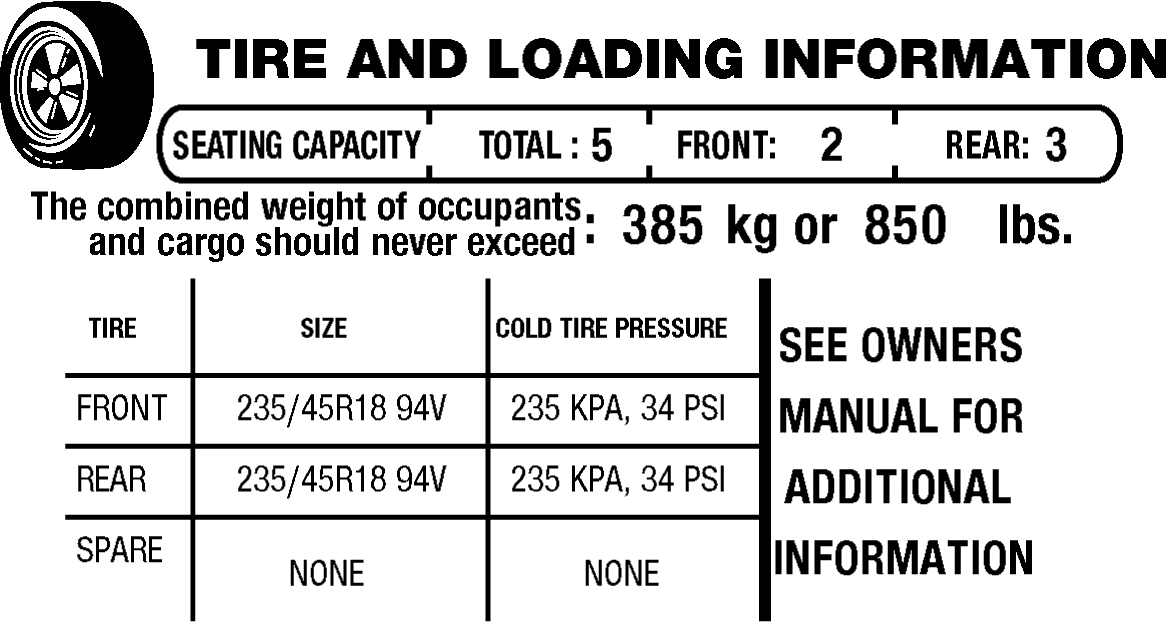
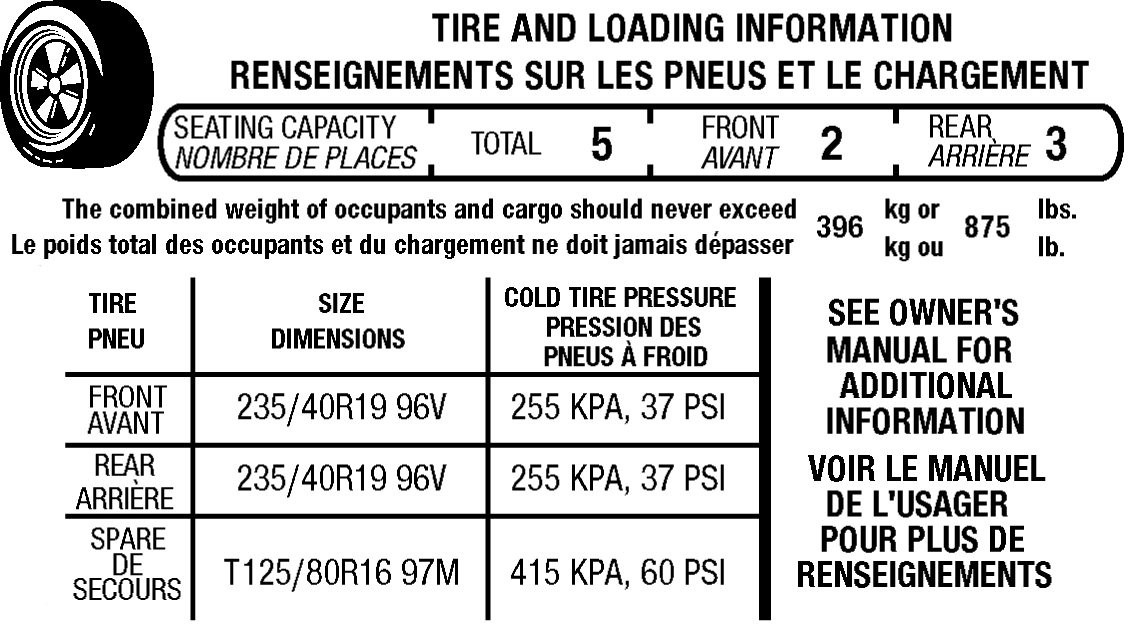
 The appropriate loading capacity of your vehicle can
be limited either by volume capacity (how much space is available) or by payload capacity (how much weight the vehicle should carry). Once you have reached the maximum payload of your vehicle, do not add more cargo, even if there is space available. Overloading or improperly loading your vehicle can contribute to loss of vehicle control and vehicle rollover.
GAWR (Gross Axle Weight Rating)
GAWR is the maximum allowable weight that a single axle (front or rear) can carry. These numbers are on the Safety Compliance Certification label. The label is located on the door hinge pillar, door-latch post, or the door edge that meets the door-latch post, next to the driver seating position.
The total load on each axle must never exceed its Gross Axle Weight Rating.
GVWR (Gross Vehicle Weight Rating)
GVWR is the maximum allowable weight of the fully loaded vehicle. This includes all options, equipment, passengers and cargo. It appears on the Safety Compliance Certification label.
The label is located on the door hinge pillar, door-latch post, or the door edge that meets the
door-latch post, next to the driver seating position.
The gross vehicle weight must never exceed the Gross Vehicle Weight Rating.
178
E198828
label vehicle weight limits can adversely affect the performance and handling of your vehicle, cause vehicle damage and can result in the loss of control of your vehicle, serious personal injury or death.
Maximum Loaded Trailer Weight
Maximum loaded trailer weight is the highest possible weight of a fully loaded trailer the vehicle can tow. Consult an authorized dealer (or the RV and Trailer Towing Guide available at an authorized dealer) for more detailed information.
GCWR (Gross Combined Weight Rating)
GCWR is the maximum allowable weight of the vehicle and the loaded trailer, including all cargo and passengers, that the vehicle can handle without risking damage. (Important: The towing
vehicle’s braking system is rated for operation at Gross Vehicle Weight Rating, not at Gross Combined Weight Rating.) Separate functional brakes should be used for safe control of towed vehicles and for trailers where the Gross Combined Weight of the towing vehicle plus the trailer exceed the Gross Vehicle Weight Rating of the towing vehicle.
The gross combined weight must never exceed the Gross Combined Weight Rating.
Note: For trailer towing information refer to the RV and Trailer Towing Guide available at an authorized dealer.
 Do not exceed the GVWR or the GAWR specified on the
certification label.
 Do not use replacement tires with lower load carrying
capacities than the original tires because they may lower your vehicle's GVWR and GAWR limitations. Replacement tires with a higher limit than the original tires do not increase the GVWR and GAWR limitations.
 Exceeding any vehicle weight rating can adversely affect
the performance and handling of your vehicle, cause vehicle damage and can result in the loss of control of your vehicle, serious personal injury or death.
179
(1400-750 (5 x 150) = 650 lb.)
Helpful examples for calculating the available amount of cargo and luggage load capacity
1400-pound (635-kilogram) cargo and luggage capacity. You decide to go golfing. Is there enough load capacity to carry you, four of your friends and all the golf bags? You and four friends average 220 pounds (99 kilograms) each and the golf bags weigh approximately 30 pounds (13.5 kilograms) each. The calculation would be: 1400 - (5 x 220) - (5 x 30) = 1400 - 1100
67.5 = 72.5 kilograms.
Suppose your vehicle has a
1400-pound (635-kilogram) cargo and luggage capacity. You and one of your friends decide to pick up cement from the local home improvement store to finish that patio you have been planning for the past two years. Measuring the inside of the vehicle with the rear seat folded down, you have room for twelve 100-pound
(45-kilogram) bags of cement. Do you have enough load capacity to transport the cement to your home? If you and your friend each weigh 220 pounds (99 kilograms), the calculation would be: 1400 - (2 x 220) - (12 x 100) = 1400 - 440
180
900 = 60 pounds. Now you have the load capacity to transport the
Special Loading Instructions for Owners of Pick-up Trucks and Utility-type Vehicles
WARNING
 When loading the roof racks, we recommend you evenly
distribute the load, as well as maintain a low center of gravity. Loaded vehicles, with higher centers of gravity, may handle differently than unloaded vehicles. Take extra precautions, such as slower speeds and increased stopping distance, when driving a heavily loaded vehicle.
cement and your friend home. In
metric units, the calculation would be: 635 kilograms - (2 x 99 kilograms) - (9 x 45 kilograms) = 635 - 198 - 405 = 32 kilograms.
The above calculations also assume that the loads are positioned in your vehicle in a manner that does not overload the front or the rear gross axle weight rating specified for your vehicle on the Safety Compliance Certification label.
181
Download Manual