PARKSENSE REAR PARK ASSIST — IF EQUIPPED
The ParkSense Rear Park Assist system provides visual and audible indications of the distance between the rear fascia and a detected obstacle when backing up, e.g. during a parking maneuver.
Refer to “ParkSense System Usage Precautions” in this section for limitations of this system and recommendations.
ParkSense will retain the last system state (enabled or disabled) from the last ignition cycle when the ignition is changed to the ON/RUN position.
ParkSense can be active only when the gear selector is in REVERSE. If ParkSense is enabled at this gear selector position, the system will remain active until the vehicle speed is increased to approximately 7 mph (11 km/h) or above. The system will become active again if the vehicle speed is decreased to speeds less than approximately 6 mph (9 km/h).
ParkSense Sensors
The four ParkSense sensors, located in the rear fascia/ bumper, monitor the area behind the vehicle that is within the sensors’ field of view. The sensors can detect obstacles from approximately 12 inches (30 cm) up to 79 inches (200 cm) from the rear fascia/bumper in the horizontal direction, depending on the location, type and orientation of the obstacle.
ParkSense Warning Display
The ParkSense Warning screen will only be displayed if “Sound and Display” is selected from the Customer - Programmable Features section of the Uconnect System. Refer to "Uconnect Settings” in “Multimedia” for further information.
The ParkSense Warning screen is located within the instru- ment cluster display. It provides visual warnings to indi- cate the distance between the rear fascia/bumper and the detected obstacle. Refer to “Instrument Cluster Display” in “Getting To Know Your Instrument Panel” for further information.
ParkSense Display
When the vehicle is in REVERSE, the warning display will turn on indicating the system status.
The system will indicate a detected obstacle by showing a single arc in one or more regions based on the obstacle’s distance and location relative to the vehicle.
If an obstacle is detected in the center rear region, the display will show a single solid arc in the center rear region
and will produce a one-half second tone. As the vehicle moves closer to the obstacle, the display will show the single arc moving closer to the vehicle and the sound tone will change from slow, to fast, to continuous.
If an obstacle is detected in the left and/or right rear region, the display will show a single flashing arc in the left and/or right rear region and will produce a fast sound tone. As the vehicle moves closer to the obstacle, the display will show the single arc moving closer to the vehicle and the sound tone will change from fast to continuous.
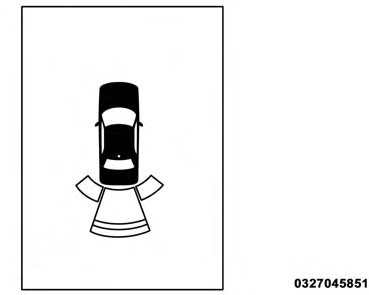
Single 1/2 Second Tone/Solid Arc
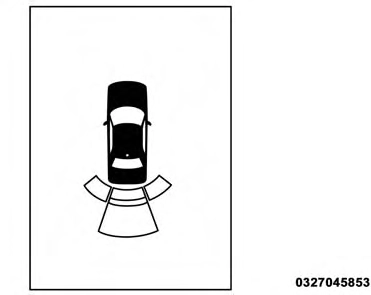
Slow Tone/Solid Arc Fast Tone/Flashing Arc
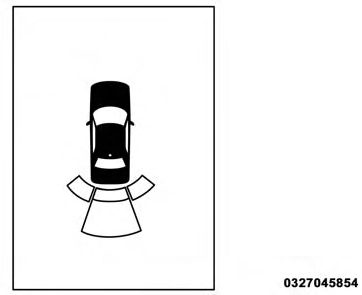
Continuous Tone/Flashing Arc
The vehicle is close to the obstacle when the warning display shows one flashing arc and sounds a continuous tone. The following chart shows the warning alert opera- tion when the system is detecting an obstacle:
|
WARNING ALERTS |
|||||||
|
Rear Distance (in/cm) |
Greater than 79 inches (200 cm) |
79-59 inches (200-150 cm) |
59-47 inches (150-120 cm) |
47-39 inches (120-100 cm) |
39-25 inches (100-65 cm) |
25-12 inches (65-30 cm) |
Less than 12 inches (30 cm) |
|
Audible Alert Chime |
None |
Single 1/2- Second Tone (for rear center only) |
Slow (for rear center only) |
Slow (for rear center only) |
Fast (for rear center only) |
Fast |
Continuous |
|
WARNING ALERTS |
|||||||
|
Rear Distance (in/cm) |
Greater than 79 inches (200 cm) |
79-59 inches (200-150 cm) |
59-47 inches (150-120 cm) |
47-39 inches (120-100 cm) |
39-25 inches (100-65 cm) |
25-12 inches (65-30 cm) |
Less than 12 inches (30 cm) |
|
Arc — Left Rear |
None |
None |
None |
None |
None |
2nd Flash- ing |
1st Flashing |
|
Arc — Center Rear |
None |
6th Solid |
5th Solid |
4th Solid |
3rd Flash- ing |
2nd Flash- ing |
1st Flashing |
|
Arc — Right Rear |
None |
None |
None |
None |
None |
2nd Flash- ing |
1st Flashing |
|
Radio Volume Reduced |
No |
Yes |
Yes |
Yes |
Yes |
Yes |
Yes |
Enabling And Disabling ParkSense
ParkSense can be enabled and disabled with the ParkSense switch, located on the switch panel below the Uconnect display.
 When the ParkSense switch is pushed to disable the system, the instrument cluster will display the “ParkSense Off” message for approximately five seconds. When the gear selector is moved to REVERSE and the system is disabled, the instrument cluster display will display the “ParkSense Off” message for as long as the vehicle is in REVERSE.
Refer to “Instrument Cluster Display” in “Getting To Know Your Instrument Panel” for further information.
The ParkSense switch LED will be on when ParkSense is disabled or defective. The ParkSense switch LED will be off when the system is enabled. If the ParkSense switch is pushed and the system is disabled or requires service, the ParkSense switch LED will blink momentarily and then the LED will be on.
Service The ParkSense Rear Park Assist System
During vehicle start up, when the ParkSense Rear Park Assist System has detected a faulted condition, the instru- ment cluster display will actuate a single chime, once per ignition cycle, and it will display the “PARKSENSE UNAVAILABLE WIPE REAR SENSORS” or the “PARKSENSE UNAVAILABLE SERVICE REQUIRED” message. Refer to “Instrument Cluster Display”. When the gear selector is moved to REVERSE and the system has detected a faulted condition, the instrument cluster display will show the "PARKSENSE UNAVAILABLE WIPE REAR SENSORS" or "PARKSENSE UNAVAILABLE SERVICE REQUIRED" message for as long as the vehicle is in REVERSE. Under this condition, ParkSense will not operate.
If “PARKSENSE UNAVAILABLE WIPE REAR SENSORS” appears in the instrument cluster display, make sure the outer surface and the underside of the rear fascia/bumper is clean and clear of snow, ice, mud, dirt or other obstruc- tion and then cycle the ignition. If the message continues to appear, see an authorized dealer.
If “PARKSENSE UNAVAILABLE SERVICE REQUIRED” appears in the instrument cluster display, see an authorized dealer.
Cleaning The ParkSense System
Clean the Rear Park Assist sensors with water, car wash soap and a soft cloth. Do not use rough or hard cloths. In washing stations, clean sensors quickly keeping the vapor jet/high pressure washing nozzles at least 4 inches (10 cm) from the sensors. Do not scratch or poke the sensors. Otherwise, you could damage the sensors.
ParkSense System Usage Precautions
NOTE:
- Ensure that the rear bumper is free of snow, ice, mud, dirt and debris to keep the ParkSense system operating properly.
- Jackhammers, large trucks, and other vibrations could affect the performance of ParkSense or render the sys- tem temporarily unavailable.
- When you turn ParkSense off in DRIVE, the instrument cluster will display "PARKSENSE OFF" for five seconds. Furthermore, once you turn ParkSense off, it remains off until you turn it on again, even if you cycle the ignition.
- When you move the gear selector to the REVERSE position and ParkSense is turned off, the instrument cluster display will show the “PARKSENSE OFF” mes- sage for as long as the vehicle is in REVERSE.
- ParkSense will reduce the volume of the radio when it is sounding an audio tone.
- Clean the ParkSense sensors regularly, taking care not to scratch or damage them. The sensors must not be covered with ice, snow, slush, mud, dirt or debris. Failure to do so can result in the system not working properly. The ParkSense system might not detect an obstacle behind the fascia/bumper
- Ensure the ParkSense system is off if objects such as bicycle carriers, trailer hitches, etc., are placed within 12 inches (30 cm) from the rear fascia/bumper. Failure to do so can result in the system misinterpreting a close object as a sensor problem, causing the “PARKSENSE UNAVAILABLE SERVICE REQUIRED” message to be shown in the instrument cluster display.
Download Manual