Trailer Towing
General Towing Information
Only use towing equipment that has been designed for the vehicle.
Contact your dealer or trailering dealer for assistance with preparing the vehicle for towing a trailer. Read the entire section before towing a trailer.
For towing a disabled vehicle, see Towing the Vehicle 0 425. For towing the vehicle behind another vehicle such as a motor home, see Recreational Vehicle Towing 0 425.
When towing a trailer:
Trailer braking equipment conforming to Canadian Standards Association (CSA) requirement CAN3-D313, or its equivalent, is recommended.
or other parts.
0 290.
Towing a trailer requires a certain amount of experience. The combination you are driving is longer and not as responsive as the vehicle itself. Get acquainted with the handling and braking of the rig before setting out for the open road.
The structure, tires, and brakes of the trailer must be rated to carry the load. Inadequate trailer equipment can cause the combination to operate in an unexpected or unsafe manner.
Before starting, check all trailer hitch parts and attachments, safety chains, electrical connectors, lamps, tires, and mirrors. Get familiar with the handling and braking of the rig. If the trailer has electric brakes, start the combination moving and then apply the trailer brake controller by hand to be sure the brakes work.
During the trip, check occasionally to be sure that the load is secure and the lamps and any trailer brakes still work.
Stay at least twice as far behind the vehicle ahead as you would when driving the vehicle without a trailer. This can help to avoid heavy braking and sudden turns.
More passing distance is needed when towing a trailer. The combination will not accelerate as quickly and is longer so it is necessary to go much farther beyond the passed vehicle before returning to the lane.
Hold the bottom of the steering wheel with one hand. To move the trailer to the left, move that hand to the left. To move the trailer to the right, move your hand to the right. Always back up slowly and,
if possible, have someone guide you.
When turning with a trailer, make wider turns than normal. Do this so the trailer will not strike soft shoulders, curbs, road signs, trees, or other objects. Avoid jerky or sudden maneuvers. Signal well in advance.
If the trailer turn signal bulbs burn out, the arrows on the instrument cluster will still flash for turns. It is important to check occasionally to be sure the trailer bulbs are still working.
The turn signal indicators on the instrument cluster flash whenever signaling a turn or lane change. Properly hooked up, the trailer lamps also flash, telling other drivers the vehicle is turning, changing lanes, or stopping. When towing a trailer, the arrows on the instrument cluster flash for turns even if the bulbs on the trailer are burned out.
When towing a trailer, the arrows on the instrument cluster flash for turns even if the bulbs on the trailer are burned out.
Check occasionally to be sure the trailer bulbs are still working.
Reduce speed and shift to a lower gear before starting down a long or steep downgrade. If the transmission is not shifted down, the brakes might get hot and no longer work well.
Vehicles can tow in D (Drive). Shift the transmission to a lower gear if the transmission shifts too often under heavy loads and/or hilly conditions.
The Tow/Haul Mode may be used if the transmission shifts too often.
See Tow/Haul Mode 0 262.
When towing at high altitude on steep uphill grades, consider the following: Engine coolant will boil at a lower temperature than at normal altitudes. If the engine is turned off immediately after towing at high
altitude on steep uphill grades, the vehicle may show signs similar to engine overheating. To avoid this, let the engine run while parked, preferably on level ground, with the transmission in P (Park) for a few minutes before turning the engine off. If the overheat warning comes on, see Engine Overheating 0 356.
If parking the rig on a hill:
For vehicles with a manual transmission, move the shift lever into R (Reverse) if parking on a downhill slope, use 1 (First) gear if parking on an uphill slope.
The vehicle needs service more often when pulling a trailer. See Maintenance Schedule 0 443. Things that are especially important in trailer operation are automatic transmission fluid, engine oil, axle lubricant, belts, cooling system, and brake system. It is a good idea to inspect these before and during
the trip.
Check periodically to see that all hitch nuts and bolts are tight.
The cooling system may temporarily overheat during severe operating conditions. See Engine Overheating 0 356.
If the vehicle has a diesel engine, see the Duramax diesel supplement.
Do not tow a trailer during break-in. See New Vehicle Break-In 0 247.
See Vehicle Load Limits 0 239 for more information about the vehicle's maximum load capacity.
To identify the trailering capacity of the vehicle, read the information in “Weight of the Trailer” later in this section.
Trailering is different than just driving the vehicle by itself. Trailering means changes in handling, acceleration, braking, durability, and fuel economy.
Successful, safe trailering takes correct equipment, and it has to be used properly.
The following information has many time-tested, important trailering tips and safety rules. Many of these are important for your safety and that of your passengers. Read this section carefully before pulling a trailer.
Safe trailering requires monitoring the weight, speed, altitude, road grades, outside temperature, and how frequently the vehicle is used to pull a trailer. Take into consideration any special equipment on the vehicle, and the amount of tongue weight the vehicle can carry. See “Weight of the Trailer Tongue” later in this section for more information.
Trailer weight rating (TWR) for pickup models is calculated assuming the tow vehicle has the driver, a front seat passenger, and all required trailering equipment. Weight of additional optional equipment, passengers, and cargo in the tow vehicle must be subtracted from the trailer weight rating.
Ask your dealer for trailering information or advice.
A step-bumper trailer hitch is limited to 2,271 kg (5,000 lb) total trailer weight. If a trailer hitch ball is added to the step-bumper, ensure that the ball is rated to pull the trailer's weight.
For kingpin weight and trailer tongue weight information, see “Weight of the Trailer Tongue” later in this section.
Use the following chart to determine how much the vehicle can weigh, based upon the vehicle model and options.
Weights listed apply for conventional trailers and gooseneck/fifth-wheel trailers unless otherwise noted.
|
1500/2500/3500 Series Pickups – SAE J2807 Compliant |
|||
|
Vehicle |
Axle Ratio |
Maximum Trailer Weight (c) |
GCWR (a) |
|
1500 Series 2WD Regular Cab Standard Box |
|||
|
4.3L V6 |
3.23 |
2 722 kg (6,000 lb) |
4 990 kg (11,000 lb) |
|
4.3L V6 |
4.10 |
2 087 kg (4,600 lb) |
4 309 kg (9,500 lb) |
|
5.3L V8 |
3.08 |
3 130 kg (6,900 lb) |
5 443 kg (12,000 lb) |
|
5.3L V8 |
3.42 |
4 037 kg (8,900 lb) |
6 350 kg (14,000 lb) |
|
1500 Series 2WD Double Cab Standard Box |
|||
|
4.3L V6 |
3.23 |
2 540 kg (5,600 lb) |
4 990 kg (11,000 lb) |
|
5.3L V8 |
3.08 |
2 903 kg (6,400 lb) |
5 443 kg (12,000 lb) |
|
5.3L V8, 6-speed automatic transmission |
3.42 |
4 264 kg (9,400 lb) |
6 804 kg (15,000 lb) |
|
5.3L V8, 8-speed automatic transmission – Conventional Trailer |
3.42 |
4 264 kg (9,400 lb) |
6 804 kg (15,000 lb) |
|
5.3L V8, 8-speed automatic transmission – Gooseneck/ Fifth-Wheel Trailer |
3.42 |
4 128 kg (9,100 lb) |
6 804 kg (15,000 lb) |
|
1500/2500/3500 Series Pickups – SAE J2807 Compliant |
|||
|
Vehicle |
Axle Ratio |
Maximum Trailer Weight (c) |
GCWR (a) |
|
5.3L V8, 8-speed automatic transmission with Enhanced Towing Package – Conventional Trailer |
3.42 |
5 035 kg (11,100 lb) |
7 575 kg (16,700 lb) |
|
5.3L V8, 8-speed automatic transmission with Enhanced Towing Package – Gooseneck/ Fifth-Wheel Trailer |
3.42 |
4 990 kg (11,000 lb) |
7 575 kg (16,700 lb) |
|
5.3L V8 – Conventional Trailer |
3.73 |
5 035 kg (11,100 lb) |
7 575 kg (16,700 lb) |
|
5.3L V8 – Gooseneck/Fifth-Wheel Trailer |
3.73 |
4 990 kg (11,000 lb) |
7 575 kg (16,700 lb) |
|
6.2L V8 – Conventional Trailer |
3.23 |
4 264 kg (9,400 lb) |
6 804 kg (15,000 lb) |
|
6.2L V8 – Gooseneck/Fifth-Wheel Trailer |
3.23 |
4 082 kg (9,000 lb) |
6 804 kg (15,000 lb) |
|
6.2L V8 – Conventional Trailer |
3.42 |
5 670 kg (12,500 lb) |
8 255 kg (18,200 lb) |
|
6.2L V8 – Gooseneck/Fifth-Wheel Trailer |
3.42 |
5 262 kg (11,600 lb) |
8 255 kg (18,200 lb) |
|
1500 Series 2WD Crew Cab Standard Box |
|||
|
5.3L V8 |
3.08 |
2 858 kg (6,300 lb) |
5 443 kg (12,000 lb) |
|
1500/2500/3500 Series Pickups – SAE J2807 Compliant |
|||
|
Vehicle |
Axle Ratio |
Maximum Trailer Weight (c) |
GCWR (a) |
|
5.3L V8 – Conventional Trailer |
3.42 |
4 218 kg (9,300 lb) |
6 804 kg (15,000 lb) |
|
5.3L V8, 6-speed automatic transmission – Gooseneck/ Fifth-Wheel Trailer |
3.42 |
3 856 kg (8,500 lb) |
6 804 kg (15,000 lb) |
|
5.3L V8, 8-speed automatic transmission – Gooseneck/ Fifth-Wheel Trailer |
3.42 |
3 674 kg (8,100 lb) |
6 804 kg (15,000 lb) |
|
5.3L V8, 8-speed automatic transmission with Enhanced Towing Package – Conventional Trailer |
3.42 |
4 944 kg (10,900 lb) |
7 575 kg (16,700 lb) |
|
5.3L V8, 8-speed automatic transmission with Enhanced Towing Package – Gooseneck/ Fifth-Wheel Trailer |
3.42 |
4 808 kg (10,600 lb) |
7 575 kg (16,700 lb) |
|
5.3L V8 – Conventional Trailer |
3.73 |
4 990 kg (11,000 lb) |
7 575 kg (16,700 lb) |
|
5.3L V8 – Gooseneck/Fifth-Wheel Trailer |
3.73 |
4 853 kg (10,700 lb) |
7 575 kg (16,700 lb) |
|
6.2L V8 – Conventional Trailer |
3.23 |
4 218 kg (9,300 lb) |
6 804 kg (15,000 lb) |
|
1500/2500/3500 Series Pickups – SAE J2807 Compliant |
|||
|
Vehicle |
Axle Ratio |
Maximum Trailer Weight (c) |
GCWR (a) |
|
6.2L V8 – Gooseneck/Fifth-Wheel Trailer |
3.23 |
3 765 kg (8,300 lb) |
6 804 kg (15,000 lb) |
|
6.2L V8 – Conventional Trailer |
3.42 |
5 398 kg (11,900 lb) |
8 029 kg (17,700 lb) |
|
6.2L V8 – Gooseneck/Fifth-Wheel Trailer |
3.42 |
4 763 kg (10,500 lb) |
8 029 kg (17,700 lb) |
|
1500 Series 2WD Crew Cab Short Box (b) |
|||
|
4.3L V6 |
3.23 |
2 495 kg (5,500 lb) |
4 990 kg (11,000 lb) |
|
5.3L V8 |
3.08 |
2 903 kg (6,400 lb) |
5 443 kg (12,000 lb) |
|
5.3L V8, 6-speed automatic transmission |
3.42 |
4 264 kg (9,400 lb) |
6 804 kg (15,000 lb) |
|
5.3L V8, 8-speed automatic transmission |
3.42 |
4 218 kg (9,300 lb) |
6 804 kg (15,000 lb) |
|
5.3L V8, 8-speed automatic transmission with Enhanced Towing Package |
3.42 |
4 990 kg (11,000 lb) |
7 575 kg (16,700 lb) |
|
5.3L V8 |
3.73 |
4 990 kg (11,000 lb) |
7 575 kg (16,700 lb) |
|
6.2L V8 |
3.23 |
4 218 kg (9,300 lb) |
6 804 kg (15,000 lb) |
|
6.2L V8 |
3.42 |
5 670 kg (12,500 lb) |
8 255 kg (18,200 lb) |
|
1500/2500/3500 Series Pickups – SAE J2807 Compliant |
|||
|
Vehicle |
Axle Ratio |
Maximum Trailer Weight (c) |
GCWR (a) |
|
1500 Series 2WD Regular Cab Long Box |
|||
|
4.3L V6 |
3.23 |
2 676 kg (5,900 lb) |
4 990 kg (11,000 lb) |
|
5.3L V8 – Conventional Trailer |
3.08 |
3 084 kg (6,800 lb) |
5 443 kg (12,000 lb) |
|
5.3L V8 – Gooseneck/Fifth-Wheel Trailer |
3.08 |
3 039 kg (6,700 lb) |
5 443 kg (12,000 lb) |
|
5.3L V8 – Conventional Trailer |
3.42 |
4 445 kg (9,800 lb) |
6 804 kg (15,000 lb) |
|
5.3L V8 – Gooseneck/Fifth-Wheel Trailer |
3.42 |
4 400 kg (9,700 lb) |
6 804 kg (15,000 lb) |
|
1500 Series 4WD Regular Cab Standard Box |
|||
|
4.3L V6 – Conventional Trailer |
3.42 |
3 447 kg (7,600 lb) |
5 806 kg (12,800 lb) |
|
4.3L V6 – Gooseneck/Fifth-Wheel Trailer |
3.42 |
3 402 kg (7,500 lb) |
5 806 kg (12,800 lb) |
|
5.3L V8 |
3.08 |
2 994 kg (6,600 lb) |
5 443 kg (12,000 lb) |
|
5.3L V8 |
3.42 |
3 901 kg (8,600 lb) |
6 350 kg (14,000 lb) |
|
1500 Series 4WD Double Cab Standard Box |
|||
|
4.3L V6 – Conventional Trailer |
3.42 |
3 221 kg (7,100 lb) |
5 806 kg (12,800 lb) |
|
4.3L V6 – Gooseneck/Fifth Wheel |
3.42 |
3 175 kg (7,000 lb) |
5 806 kg (12,800 lb) |
|
1500/2500/3500 Series Pickups – SAE J2807 Compliant |
|||
|
Vehicle |
Axle Ratio |
Maximum Trailer Weight (c) |
GCWR (a) |
|
5.3L V8 |
3.08 |
2 812 kg (6,200 lb) |
5 443 kg (12,000 lb) |
|
5.3L V8 – Gooseneck/Fifth Wheel |
3.08 |
2 767 kg (6,100 lb) |
5 443 kg (12,000 lb) |
|
5.3L V8 – Conventional Trailer |
3.42 |
4 173 kg (9,200 lb) |
6 804 kg (15,000 lb) |
|
5.3L V8 – Gooseneck/Fifth Wheel |
3.42 |
4 082 kg (9,000 lb) |
6 804 kg (15,000 lb) |
|
5.3L V8, 8-speed automatic transmission with Enhanced Towing Package |
3.42 |
4 899 kg (10,800 lb) |
7 575 kg (16,700 lb) |
|
5.3L V8 |
3.73 |
4 899 kg (10,800 lb) |
7 575 kg (16,700 lb) |
|
6.2L V8 – Conventional Trailer |
3.23 |
4 128 kg (9,100 lb) |
6 804 kg (15,000 lb) |
|
6.2L V8 – Gooseneck/Fifth-Wheel Trailer |
3.23 |
3 901 kg (8,600 lb) |
6 804 kg (15,000 lb) |
|
6.2L V8 – Conventional Trailer |
3.42 |
5 352 kg (11,800 lb) |
8 029 kg (17,700 lb) |
|
6.2L V8 – Gooseneck/Fifth-Wheel Trailer |
3.42 |
4 990 kg (11,000 lb) |
8 029 kg (17,700 lb) |
|
1500 Series 4WD Crew Cab Standard Box |
|||
|
5.3L V8 – Conventional Trailer |
3.08 |
2 767 kg (6,100 lb) |
5 443 kg (12,000 lb) |
|
5.3L V8 – Gooseneck/Fifth-Wheel Trailer |
3.08 |
2 722 kg (6,000 lb) |
5 443 kg (12,000 lb) |
|
1500/2500/3500 Series Pickups – SAE J2807 Compliant |
|||
|
Vehicle |
Axle Ratio |
Maximum Trailer Weight (c) |
GCWR (a) |
|
5.3L V8 – Conventional Trailer |
3.42 |
4 128 kg (9,100 lb) |
6 804 kg (15,000 lb) |
|
5.3L V8 – Gooseneck/Fifth-Wheel Trailer |
3.42 |
3 674 kg (8,100 lb) |
6 804 kg (15,000 lb) |
|
5.3L V8 – 8-speed automatic transmission with Enhanced Towing Package - Conventional Trailer |
3.42 |
4 853 kg (10,700 lb) |
7 575 kg (16,700 lb) |
|
5.3L V8, 8-speed automatic transmission with Enhanced Towing Package – Gooseneck/ Fifth Wheel Trailer |
3.42 |
4 627 kg (10,200 lb) |
7 575 kg (16,700 lb) |
|
5.3L V8 – Conventional Trailer |
3.73 |
4 853 kg (10,700 lb) |
7 575 kg (16,700 lb) |
|
5.3L V8 – Gooseneck/Fifth-Wheel Trailer |
3.73 |
4 627 kg (10,200 lb) |
7 575 kg (16,700 lb) |
|
6.2L V8 – Conventional Trailer |
3.23 |
4 082 kg (9,000 lb) |
6 804 kg (15,000 lb) |
|
6.2L V8 – Gooseneck/Fifth-Wheel Trailer |
3.23 |
3 629 kg (8,000 lb) |
6 804 kg (15,000 lb) |
|
6.2L V8 – Conventional Trailer |
3.42 |
5 307 kg (11,700 lb) |
8 029 kg (17,700 lb) |
|
1500/2500/3500 Series Pickups – SAE J2807 Compliant |
|||
|
Vehicle |
Axle Ratio |
Maximum Trailer Weight (c) |
GCWR (a) |
|
6.2L V8 – Gooseneck/Fifth-Wheel Trailer |
3.42 |
4 627 kg (10,200 lb) |
8 029 kg (17,700 lb) |
|
1500 Series 4WD Crew Cab Short Box (b) |
|||
|
4.3L V6 |
3.42 |
3 175 kg (7,000 lb) |
5 806 kg (12,800 lb) |
|
5.3L V8 |
3.08 |
2 767 kg (6,100 lb) |
5 443 kg (12,000 lb) |
|
5.3L V8 |
3.42 |
4 128 kg (9,100 lb) |
6 804 kg (15,000 lb) |
|
5.3L V8, 8-speed automatic transmission with Enhanced Towing Package |
3.42 |
4 853 kg (10,700 lb) |
7 575 kg (16,700 lb) |
|
5.3L V8 |
3.73 |
4 853 kg (10,700 lb) |
7 575 kg (16,700 lb) |
|
6.2L V8 |
3.23 |
4 128 kg (9,100 lb) |
6 804 kg (15,000 lb) |
|
6.2L V8 |
3.42 |
5 307 kg (11,700 lb) |
8 029 kg (17,700 lb) |
|
1500 Series 4WD Regular Cab Long Box |
|||
|
4.3L V6 – Conventional Trailer |
3.42 |
3 357 kg (7,400 lb) |
5 806 kg (12,800 lb) |
|
4.3L V6 – Gooseneck/Fifth Wheel |
3.42 |
3 311 kg (7,300 lb) |
5 806 kg (12,800 lb) |
|
5.3L V8 – Conventional Trailer |
3.08 |
2 948 kg (6,500 lb) |
5 443 kg (12,000 lb) |
|
5.3L V8 – Gooseneck/Fifth Wheel |
3.08 |
2 903 kg (6,400 lb) |
5 443 kg (12,000 lb) |
|
1500/2500/3500 Series Pickups – SAE J2807 Compliant |
|||
|
Vehicle |
Axle Ratio |
Maximum Trailer Weight (c) |
GCWR (a) |
|
5.3L V8 – Conventional Trailer |
3.42 |
4 309 kg (9,500 lb) |
6 804 kg (15,000 lb) |
|
5.3L V8 – Gooseneck/Fifth Wheel |
3.42 |
4 264 kg (9,400 lb) |
6 804 kg (15,000 lb) |
|
2500 Series 2WD Double Cab Standard Box |
|||
|
6.0L V8 |
3.73 |
4 536 kg (10,000 lb) |
7 530 kg (16,600 lb) |
|
6.0L V8 – Conventional Trailer |
4.10 |
5 897 kg (13,000 lb) |
9 571 kg (21,100 lb) |
|
6.0L V8 – Fifth-Wheel Trailer |
4.10 |
6 577 kg (14,500 lb) |
9 571 kg (21,100 lb) |
|
2500 Series 2WD Crew Cab Standard Box |
|||
|
6.0L V8 |
3.73 |
4 445 kg (9,800 lb) |
7 530 kg (16,600 lb) |
|
6.0L V8 – Conventional Trailer |
4.10 |
5 897 kg (13,000 lb) |
9 571 kg (21,100 lb) |
|
6.0L V8 – Fifth-Wheel Trailer |
4.10 |
6 486 kg (14,300 lb) |
9 571 kg (21,100 lb) |
|
2500 Series 2WD Regular Cab Long Box |
|||
|
6.0L V8 |
3.73 |
4 672 kg (10,300 lb) |
7 530 kg (16,600 lb) |
|
6.0L V8 (RPO UB7) |
3.73 |
4 627 kg (10,200 lb) |
7 530 kg (16,600 lb) |
|
6.0L V8 – Conventional Trailer |
4.10 |
6 577 kg (14,500 lb) |
9 571 kg (21,100 lb) |
|
6.0L V8 – Fifth-Wheel Trailer |
4.10 |
6 713 kg (14,800 lb) |
9 571 kg (21,100 lb) |
|
1500/2500/3500 Series Pickups – SAE J2807 Compliant |
|||
|
Vehicle |
Axle Ratio |
Maximum Trailer Weight (c) |
GCWR (a) |
|
2500 Series 2WD Double Cab Long Box |
|||
|
6.0L V8 |
3.73 |
4 491 kg (9,900 lb) |
7 530 kg (16,600 lb) |
|
6.0L V8 – Conventional Trailer |
4.10 |
6 532 kg (14,400 lb) |
9 571 kg (21,100 lb) |
|
6.0L V8 – Fifth-Wheel Trailer |
4.10 |
6 532 kg (14,400 lb) |
9 571 kg (21,100 lb) |
|
2500 Series 2WD Crew Cab Long Box |
|||
|
6.0L V8 |
3.73 |
4 400 kg (9,700 lb) |
7 530 kg (16,600 lb) |
|
6.0L V8 – Conventional Trailer |
4.10 |
6 486 kg (14,300 lb) |
9 571 kg (21,100 lb) |
|
6.0L V8 – Fifth-Wheel Trailer |
4.10 |
6 441 kg (14,200 lb) |
9 571 kg (21,100 lb) |
|
2500 Series 4WD Double Cab Standard Box |
|||
|
6.0L V8 |
3.73 |
4 400 kg (9,700 lb) |
7 530 kg (16,600 lb) |
|
6.0L V8 – Conventional Trailer |
4.10 |
5 897 kg (13,000 lb) |
9 571 kg (21,100 lb) |
|
6.0L V8 – Fifth-Wheel Trailer |
4.10 |
6 441 kg (14,200 lb) |
9 571 kg (21,100 lb) |
|
2500 Series 4WD Crew Cab Standard Box |
|||
|
6.0L V8 |
3.73 |
4 309 kg (9,500 lb) |
7 530 kg (16,600 lb) |
|
6.0L V8 – Conventional Trailer |
4.10 |
5 897 kg (13,000 lb) |
9 571 kg (21,100 lb) |
|
6.0L V8 – Fifth-Wheel Trailer |
4.10 |
6 350 kg (14,000 lb) |
9 571 kg (21,100 lb) |
|
1500/2500/3500 Series Pickups – SAE J2807 Compliant |
|||
|
Vehicle |
Axle Ratio |
Maximum Trailer Weight (c) |
GCWR (a) |
|
2500 Series 4WD Regular Cab Long Box |
|||
|
6.0L V8 |
3.73 |
4 536 kg (10,000 lb) |
7 530 kg (16,600 lb) |
|
6.0L V8 – Conventional Trailer |
4.10 |
6 577 kg (14,500 lb) |
9 571 kg (21,100 lb) |
|
6.0L V8 – Fifth-Wheel Trailer |
4.10 |
6 577 kg (14,500 lb) |
9 571 kg (21,100 lb) |
|
2500 Series 4WD Double Cab Long Box |
|||
|
6.0L V8 |
3.73 |
4 354 kg (9,600 lb) |
7 530 kg (16,600 lb) |
|
6.0L V8 – Conventional Trailer |
4.10 |
6 396 kg (14,100 lb) |
9 571 kg (21,100 lb) |
|
6.0L V8 – Fifth-Wheel Trailer |
4.10 |
6 396 kg (14,100 lb) |
9 571 kg (21,100 lb) |
|
2500 Series 4WD Crew Cab Long Box |
|||
|
6.0L V8 |
3.73 |
4 264 kg (9,400 lb) |
7 530 kg (16,600 lb) |
|
6.0L V8 – Conventional Trailer |
4.10 |
6 305 kg (13,900 lb) |
9 571 kg (21,100 lb) |
|
6.0L V8 – Fifth-Wheel Trailer |
4.10 |
6 305 kg (13,900 lb) |
9 571 kg (21,100 lb) |
|
3500 Series 2WD Regular Cab Long Box |
|||
|
6.0L V8 (Single Rear Wheels) |
3.73 |
4 581 kg (10,100 lb) |
7 530 kg (16,600 lb) |
|
6.0L V8 (Single Rear Wheels) |
4.10 |
6 577 kg (14,500 lb) |
9 571 kg (21,100 lb) |
|
6.0L V8 (Dual Rear Wheels) |
3.73 |
4 445 kg (9,800 lb) |
7 530 kg (16,600 lb) |
|
1500/2500/3500 Series Pickups – SAE J2807 Compliant |
|||
|
Vehicle |
Axle Ratio |
Maximum Trailer Weight (c) |
GCWR (a) |
|
6.0L V8 (Dual Rear Wheels) |
4.10 |
6 486 kg (14,300 lb) |
9 571 kg (21,100 lb) |
|
3500 Series 2WD Crew Cab Standard Box |
|||
|
6.0L V8 |
3.73 |
4 400 kg (9,700 lb) |
7 530 kg (16,600 lb) |
|
6.0L V8 – Conventional Trailer |
4.10 |
5 897 kg (13,000 lb) |
9 571 kg (21,100 lb) |
|
6.0L V8 Fifth-Wheel Trailer |
4.10 |
6 441 kg (14,200 lb) |
9 571 kg (21,100 lb) |
|
3500 Series 2WD Double Cab Long Box |
|||
|
6.0L V8 (Single Rear Wheels) |
3.73 |
4 400 kg (9,700 lb) |
7 530 kg (16,600 lb) |
|
6.0L V8 (Single Rear Wheels) |
4.10 |
6 441 kg (14,200 lb) |
9 571 kg (21,100 lb) |
|
6.0L V8 (Dual Rear Wheels) Fifth-Wheel Trailer |
3.73 |
4 218 kg (9,300 lb) |
7 530 kg (16,600 lb) |
|
6.0L V8 (Dual Rear Wheels) |
4.10 |
6 260 kg (13,800 lb) |
9 571 kg (21,100 lb) |
|
3500 Series 2WD Crew Cab Long Box |
|||
|
6.0L V8 (Single Rear Wheels) |
3.73 |
4 354 kg (9,600 lb) |
7 530 kg (16,600 lb) |
|
6.0L V8 (Single Rear Wheels) Conventional Trailer |
4.10 |
6 396 kg (14,100 lb) |
9 571 kg (21,100 lb) |
|
6.0L V8 (Dual Rear Wheels) |
3.73 |
4 173 kg (9,200 lb) |
7 530 kg (16,600 lb) |
|
6.0L V8 (Dual Rear Wheels) |
4.10 |
6 214 kg (13,700 lb) |
9 571 kg (21,100 lb) |
|
1500/2500/3500 Series Pickups – SAE J2807 Compliant |
|||
|
Vehicle |
Axle Ratio |
Maximum Trailer Weight (c) |
GCWR (a) |
|
3500 Series 4WD Regular Cab Long Box |
|||
|
6.0L V8 (Single Rear Wheels) |
3.73 |
4 445 kg (9,800 lb) |
7 530 kg (16,600 lb) |
|
6.0L V8 (Single Rear Wheels) Conventional Trailer |
4.10 |
6 486 kg (14,300 lb) |
9 571 kg (21,100 lb) |
|
6.0L V8 (Dual Rear Wheels) |
3.73 |
4 264 kg (9,400 lb) |
7 530 kg (16,600 lb) |
|
6.0L V8 (Dual Rear Wheels) |
4.10 |
6 305 kg (13,900 lb) |
9 571 kg (21,100 lb) |
|
3500 Series 4WD Crew Cab Standard Box |
|||
|
6.0L V8 |
3.73 |
4 264 kg (9,400 lb) |
7 530 kg (16,600 lb) |
|
6.0L V8 – Conventional Trailer |
4.10 |
5 897 kg (13,000 lb) |
9 571 kg (21,100 lb) |
|
6.0L V8 – Fifth-Wheel Trailer |
4.10 |
6 305 kg (13,900 lb) |
9 571 kg (21,100 lb) |
|
3500 Series 4WD Double Cab Long Box |
|||
|
6.0L V8 (Single Rear Wheels) |
3.73 |
4 264 kg (9,400 lb) |
7 530 kg (16,600 lb) |
|
6.0L V8 (Single Rear Wheels) |
4.10 |
6 305 kg (13,900 lb) |
9 571 kg (21,100 lb) |
|
6.0L V8 (Dual Rear Wheels) |
3.73 |
4 082 kg (9,000 lb) |
7 530 kg (16,600 lb) |
|
6.0L V8 (Dual Rear Wheels) |
4.10 |
6 123 kg (13,500 lb) |
9 571 kg (21,100 lb) |
|
1500/2500/3500 Series Pickups – SAE J2807 Compliant |
|||
|
Vehicle |
Axle Ratio |
Maximum Trailer Weight (c) |
GCWR (a) |
|
3500 Series 4WD Crew Cab Long Box |
|||
|
6.0L V8 (Single Rear Wheels) |
3.73 |
4 173 kg (9,200 lb) |
7 530 kg (16,600 lb) |
|
6.0L V8 (Single Rear Wheels) Conventional Trailer |
4.10 |
6 214 kg (13,700 lb) |
9 571 kg (21,100 lb) |
|
6.0L V8 (Dual Rear Wheels) |
3.73 |
3 992 kg (8,800 lb) |
7 530 kg (16,600 lb) |
|
6.0L V8 (Dual Rear Wheels) |
4.10 |
6 033 kg (13,300 lb) |
9 571 kg (21,100 lb) |
|
3600 Series Chassis Cab 2WD/4WD |
|||
|
6.0L V8 |
3.73 |
(d) |
7 530 kg (16,600 lb) |
|
6.0L V8 |
4.10 |
(d) |
9 571 kg (21,100 lb) |
|
The Gross Combination Weight Rating (GCWR) is the total allowable weight of the completely loaded vehicle and trailer including any passengers, cargo, equipment, and conversions. The GCWR for the vehicle should not be exceeded.
This model is neither designed nor intended to tow fifth-wheel or gooseneck trailers.
For pickup box delete vehicles, choose an appropriate hitch and load the truck and trailer within the limits of GCWR, GVWR, and RGAWR.
Maximum Trailer Weight cannot be provided because total vehicle weight is unknown.
|
Ask your dealer for trailering information or advice.
The tongue weight load (1) of any trailer is very important because it is also part of the vehicle weight. The Gross Vehicle Weight (GVW) includes the curb weight of the vehicle, any cargo carried in it, and the people who will be riding in the vehicle as well as trailer tongue weight. Vehicle options, equipment, passengers, and cargo in the vehicle reduce the amount of tongue weight the vehicle can carry, which will also reduce the trailer weight the vehicle can tow.
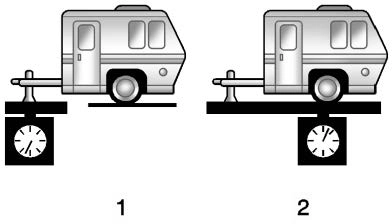
In general, trailer tongue weight (1) should be 10–15% and fifth-wheel or gooseneck kingpin weight should
be 15–25% of the loaded trailer weight (2). Some specific trailer types, such as boat trailers, fall outside of this range. Refer to the trailer owner’s manual for the recommended trailer tongue weight. In all cases, do not exceed the maximum loads for the vehicle series and hitch type.
Do not exceed the maximum allowable tongue weight for the vehicle. Choose the shortest hitch extension that will position the hitch ball closest to the vehicle. This will help reduce the effect of trailer tongue weight on the rear axle.
Trailer rating may be limited by the vehicle's ability to carry tongue weight. Tongue or kingpin weight cannot cause the vehicle to exceed
the GVWR (Gross Vehicle Weight Rating) or the RGAWR (Rear Gross Axle Weight Rating). See “Total Weight on the Vehicle's Tires” later in this section.
After loading the trailer, weigh the trailer and then the tongue, separately, to see if the weights are proper. If they are not, adjustments might be made by moving some items around in the trailer.
If a cargo carrier is used in the trailer hitch receiver, choose a carrier that positions the load as close to the vehicle as possible. Make sure the total weight, including the carrier, is no more than half of the maximum allowable tongue weight for the vehicle or 227 kg (500 lb), whichever is less.
Be sure the vehicle's tires are inflated to the inflation pressures found on the Certification/Tire label on the center pillar or see Vehicle Load Limits 0 239. Make sure not to exceed the GVWR limit for the vehicle, or the RGAWR, with the tow vehicle and trailer fully loaded for the trip including the weight of the trailer tongue. If using a
weight-distributing hitch, make sure not to exceed the RGAWR before applying the weight distribution spring bars.
It is important that the combination of the tow vehicle and trailer
does not exceed any of its weight ratings — GCWR, GVWR, RGAWR,
Trailer Weight Rating, or Tongue Weight. The only way to be sure it is not exceeding any of these ratings is to weigh the tow vehicle and trailer combination, fully loaded for the trip, getting individual weights for each of these items.
The correct hitch equipment helps maintain combination control. Many trailers can be towed with a
weight-carrying hitch which simply features a coupler latched to the hitch ball, or a tow eye latched to a pintle hook. Other trailers may require a weight-distributing hitch that uses spring bars to distribute the trailer tongue weight among the tow vehicle and trailer axles.
Fifth-wheel and gooseneck hitches may also be used. See “Weight of the Trailer Tongue” under Trailer Towing 0 300 for rating limits with various hitch types.
If a step-bumper hitch will be used, the bumper could be damaged in sharp turns. Make sure there
is ample room when turning to avoid contact between the trailer and the bumper.
Consider using sway controls with any trailer. Ask a trailering professional about sway controls or refer to the trailer manufacturer's recommendations and instructions.
A weight-distributing hitch may be useful with some trailers. Use the following guidelines to determine if a weight-distributing hitch should
be used.
|
Vehicle Series |
Trailer Weight |
Weight-Distributing Hitch Usage |
Hitch Distribution |
|
1500 |
Up to 3 175 kg (7,000 lb) |
Optional |
Refer to trailer manufacturer’s recommendation |
|
1500 |
Over 3 175 kg (7,000 lb) |
Required |
50% |
|
2500/3500 |
Up to 9 080 kg (20,000 lb) |
Optional |
Refer to trailer manufacturer’s recommendation |
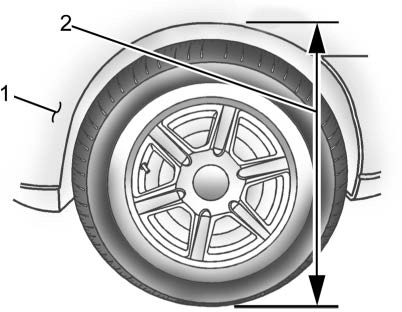
When using a weight-distributing hitch, measure distance (2) before coupling the trailer to the hitch ball. Measure the height again after the trailer is coupled and adjust the spring bars so the distance (2) is as close as possible to halfway between the two measurements.
Fifth-wheel and gooseneck trailers can be used with many pickup models. These trailers place a larger percentage of the weight (kingpin weight) on the tow vehicle
than conventional trailers. Make sure this weight does not cause the vehicle to exceed GAWR or GVWR.
Fifth-wheel or gooseneck kingpin weight should be 15 to 25% of the trailer weight up to the maximum amount specified in the trailering chart for the vehicle. See “Weight of the Trailer” under Trailer Towing
0 300.
The hitch should be located in the pickup bed so that its centerline is over or slightly in front of the rear axle. Take care that it is not so far forward that it will contact the back of the cab in sharp turns. This is
especially important for short box pickups. Trailer pin box extensions and sliding fifth-wheel hitch assemblies can help this condition. There should be at least 15 cm (6 in) of clearance between the top of the pickup box and the bottom of the trailer shelf that extends over
the box.
Always attach chains between the vehicle and the trailer. Cross the safety chains under the tongue of the trailer to help prevent the tongue from contacting the road if it becomes separated from the hitch. Instructions about safety chains may be provided by the hitch manufacturer or by the trailer manufacturer. If the trailer is being towed with a factory-installed step bumper, safety chains may be attached to the attaching points on the bumper; otherwise, safety chains should be attached to holes on the trailer hitch platform. Always leave just enough slack so the
combination can turn. Never allow safety chains to drag on the ground.
A loaded trailer that weighs more than 900 kg (2,000 lb) must be equipped with its own brake system, with brakes working on all axles.
Trailer braking equipment conforming to Canadian Standards Association (CSA) requirement CAN3-D313, or its equivalent, is recommended.
State and local regulations may also require the trailer to have its own braking system if loaded above a certain threshold. These requirements vary from state to state.
Read and follow the instructions for the trailer brakes so they are installed, adjusted, and maintained properly.
Do not tap into the vehicle's hydraulic brake system.
The auxiliary battery provision can be used to supply electrical power to additional equipment that may be added, such as a slide-in camper.
If equipped, this relay will be on the driver side of the vehicle, next to the underhood electrical center.
Be sure to follow the proper installation instructions included with any electrical equipment that is installed.
The vehicle is equipped with one of the following wiring harnesses for towing a trailer or hauling a slide-in camper.
Basic Trailer Wiring
All regular, double cab, and crew cab pickups have a seven-wire trailer towing harness.
For vehicles not equipped with heavy-duty trailering, the harness is secured to the vehicle's frame behind the spare tire mount. The harness requires the installation of a trailer connector, which is available through your dealer.
Use only a round, seven-wire connector with flat blade terminals meeting SAE J2863 specifications for proper electrical connectivity.
The seven-wire harness contains the following trailer circuits:
The fuse for the electric trailer brake circuit is installed in the underhood electrical center, but the wires may not be connected. They should be connected by your dealer or a qualified service center. To control electric trailer brakes, a trailer brake controller needs to be installed on the vehicle by your dealer or a qualified service center, see “Electric Brake Control Wiring Provisions” later in this section.
Heavy-Duty Trailer Wiring Harness Package
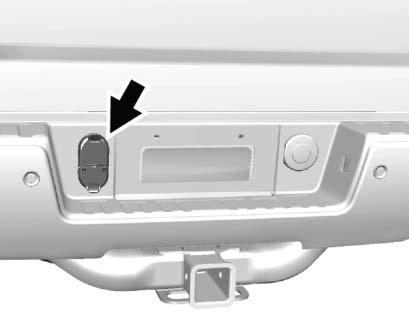
For vehicles equipped with heavy-duty trailering, the harness
connector is mounted in the bumper.
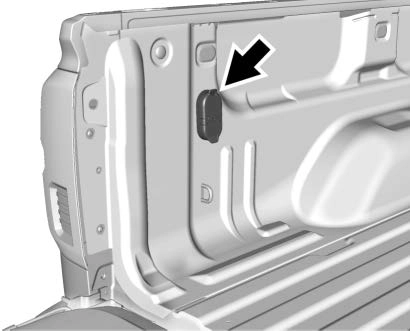
For vehicles with the fifth wheel/ gooseneck trailer package, the harness connector is mounted on the inside of the pickup bed behind the rear wheel.
The seven-wire harness contains the following trailer circuits:
(non-vehicle) battery, press the Tow/
Haul Mode button at the end of the shift lever. If the trailer is too light for Tow/Haul Mode, turn on the headlamps to help charge the battery.
Camper/Fifth-Wheel Trailer Wiring Package
For vehicles without the fifth wheel/ gooseneck trailer package,
seven-wire camper harness is under the rear bumper, attached to the frame near the rear crossmember.
A connector must be added to the wiring harness that connects to the camper.
The harness contains the following camper/trailer circuits:
If the vehicle is equipped with the heavy-duty trailering option, see “Heavy-Duty Trailer Wiring Harness Package” earlier in this section.
Wiring provisions for an electric trailer brake controller are included with the vehicle as part of the trailer wiring package. The instrument panel contains blunt cut wires above the parking brake assembly for the electric trailer brake controller.
The harness contains the following circuits:
. Black: Ground
Be sure to consult the aftermarket electric brake controller owner’s manual to determine wire color coding of the electric trailer brake controller. The wire colors on the brake controller may be different from the vehicle.
The electric trailer brake controller should be installed by your dealer or a qualified service center.
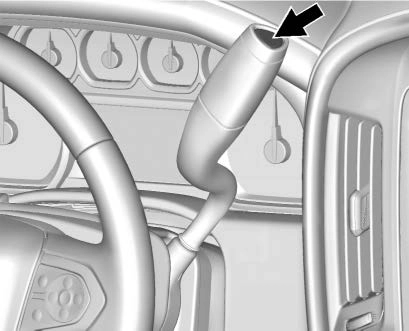
Pressing this button at the end of the shift lever turns on and off the Tow/Haul Mode.

This indicator light on the instrument cluster comes on when the Tow/ Haul Mode is on.
Tow/Haul is a feature that assists when pulling a heavy trailer or a large or heavy load. See Tow/Haul Mode 0 262.
Tow/Haul is designed to be most effective when the vehicle and trailer combined weight is at least 75% of the vehicle's Gross Combined Weight Rating (GCWR). See “Weight of the Trailer” under Trailer Towing 0 300. Tow/Haul is most useful under the following driving conditions:
stop-and-go traffic.
Operating the vehicle in Tow/Haul when lightly loaded or with no trailer at all will not cause damage.
However, there is no benefit to the selection of Tow/Haul when the vehicle is unloaded. Such a selection when unloaded may result in unpleasant engine and transmission driving characteristics and reduced fuel economy. Tow/ Haul is recommended only when pulling a heavy trailer or a large or heavy load.
The vehicle may have an Integrated Trailer Brake Control (ITBC) system for use with electric trailer brakes or most electric over hydraulic trailer brakes.

This symbol is on the Trailer Brake Control Panel on vehicles with an ITBC system. The power output to the trailer brakes is based on the amount of brake pressure being applied by the vehicle’s brake system, and on the type of trailer brakes detected. This available power output to the trailer brakes can be adjusted to a wide range of trailering situations.
The ITBC system is integrated with the vehicle’s brake, antilock brake, and StabiliTrak systems. In trailering conditions that cause the vehicle’s antilock brake or StabiliTrak systems to activate, power sent to the trailer's brakes will be automatically adjusted to minimize trailer wheel lock-up. This does not imply that the trailer has StabiliTrak.
If the vehicle’s brake, antilock brake, or StabiliTrak systems are not functioning properly, the ITBC system may not be fully functional or may not function at all. Make sure all of these systems are fully operational to ensure full functionality of the ITBC system.
The ITBC system is powered through the vehicle's electrical system. Turning the ignition off will also turn off the ITBC system. The ITBC system is fully functional only when the ignition is in ON/RUN.
Trailer Brake Control Panel
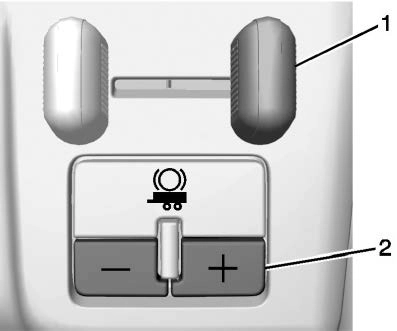
The ITBC system has a control panel on the instrument panel to the left of the steering column. See Instrument Panel 0 6. The control
panel allows adjustment to the amount of output, referred to as Trailer Gain, available to the trailer brakes and allows manual application of the trailer brakes. The Trailer Brake Control Panel is used along with the Trailer Brake Display Page on the Driver Information Center (DIC) to adjust and display power output to the trailer brakes.
Trailer Brake DIC Display Page
The ITBC system displays messages in the DIC.
The display page indicates Trailer Gain setting, power output to the trailer brakes, trailer connection, and system operational status.
To display the Trailer Brake Display Page, do any of the following:
If the Trailer Brake Display Page is not currently displayed, press a Trailer Gain button to recall the current Trailer Gain setting.
Each press and release of the gain buttons will then change the Trailer Gain setting.
TRAILER GAIN: This setting can be adjusted from 0.0 to 10.0 with either a trailer connected or disconnected. To adjust the Trailer Gain, press one of the Trailer Gain Adjustment buttons. Press and hold a gain button to continuously adjust the Trailer Gain. To turn the output to the trailer off, adjust the Trailer Gain setting to 0.0 (zero).
TRAILER OUTPUT: This displays anytime a trailer with electric brakes is connected. Output to the trailer brakes is based on the amount of vehicle braking present and relative to the Trailer Gain setting. Output is displayed from 0 to 100% for each gain setting.
The Trailer Output will indicate
“ ” on the Trailer Brake Display Page whenever the following occur:
message will also display on the DIC).
message will also display on the DIC).
message will also display in the DIC).
Manual Trailer Brake Apply
The Manual Trailer Brake Apply Lever is used to apply the trailer’s electric brakes independent of the vehicle’s brakes. Sliding the lever to the left will apply only the trailer brakes. Use this lever to adjust Trailer Gain to properly adjust the power output to the trailer brakes.
The trailer's and the vehicle's brake lamps will come on when either vehicle brakes or manual trailer brakes are applied.
Trailer Gain Adjustment Procedure
Trailer Gain should be set for a specific trailering condition and must be adjusted anytime vehicle loading, trailer loading, or road surface conditions change.
Use the following to adjust Trailer Gain for each towing condition:
traffic at about 32 to 40 km/h (20 to 25 mph) and fully apply the Manual Trailer Brake Apply Lever.
Adjusting Trailer Gain at speeds lower than 32 to 40 km/h (20 to 25 mph) may result in an incorrect gain setting.
Trailer wheel lock-up may not occur if towing a heavily loaded trailer. In this case, adjust the Trailer Gain to the highest allowable setting for the towing condition.
lock-up is noticed at any time while towing.
Other ITBC-Related DIC Messages
In addition to displaying TRAILER GAIN and OUTPUT through the DIC, trailer connection and ITBC system status are displayed on the DIC.
TRAILER CONNECTED: This
message will briefly display when a trailer with electric brakes is first connected to the vehicle. This message will automatically turn off in about 10 seconds. This message can be acknowledged before it automatically turns off.
CHECK TRAILER WIRING: This
message will display if:
. The ITBC system first determines connection to a trailer with electric brakes and then the trailer harness becomes disconnected from the vehicle.
If the disconnect occurs while the vehicle is stationary, this message will automatically turn off in about 30 seconds. This message will also turn off if it is acknowledged or if the trailer harness is reconnected.
If the disconnect occurs while the vehicle is moving, this message will continue until the ignition is turned off. This message will also turn off if it is acknowledged or if the trailer harness is reconnected.
. There is an electrical fault in the wiring to the trailer brakes. This message will continue as long as there is an electrical fault in the trailer wiring. This message will also turn off if it is acknowledged.
To determine if the electrical fault is on the vehicle side or trailer side of the trailer wiring harness connection:
If the CHECK TRAILER
WIRING message only reappears when connecting the trailer wiring harness to the vehicle, the electrical fault is on the trailer side.
SERVICE TRAILER BRAKE
SYSTEM: This message will display when there is a problem with the ITBC system. If this message continues over multiple ignition cycles, there is a problem with the ITBC system. Have the vehicle serviced.
If either the CHECK TRAILER WIRING or SERVICE TRAILER
BRAKE SYSTEM message displays while driving, the ITBC system may not be fully functional or may not function at all. When traffic conditions allow, carefully pull the vehicle over to the side of the road and turn the ignition off. Check the wiring connection to the trailer and turn the ignition back on. If either of these messages continues, either the vehicle or trailer needs service.
A GM dealer may be able to diagnose and repair problems with the trailer. However, any diagnosis and repair of the trailer is not covered under the vehicle warranty. Contact your trailer dealer for assistance with trailer repairs and trailer warranty information.
Vehicles with StabiliTrak have a Trailer Sway Control (TSC) feature.
Trailer sway is unintended
side-to-side motion of a trailer while being towed. If the vehicle is towing a trailer and the TSC detects that sway is increasing, the vehicle brakes are selectively applied at each wheel, to help reduce excessive trailer sway. If the vehicle is equipped with the Integrated Trailer Brake Control (ITBC) system, and the trailer has the electric actuated brake system, StabiliTrak may also apply the trailer brakes.
If TSC is enabled, the Traction Control System (TCS)/StabiliTrak warning light will flash on the
instrument cluster. Vehicle speed must be reduced. If trailer sway continues, StabiliTrak can reduce engine torque to help slow the vehicle. See Traction Control/ Electronic Stability Control 0 276.
Adding non-dealer accessories can affect the vehicle performance. See Accessories and Modifications
0 336.
Some trailers may come equipped with an electronic device designed to reduce or control trailer sway. Aftermarket equipment manufacturers also offer similar devices that connect to the wiring between the trailer and the vehicle. These devices may interfere with the vehicle’s trailer brake or other systems, including integrated
anti-sway systems, if equipped. Messages related to trailer connections or trailer brakes could appear on the Driver Information Center (DIC). The effect that these devices may have on vehicle handling or trailer brake performance is unknown.
Download Manual