Electrical System
Add-On Electrical Equipment
Notice: Do not add anything electrical to the vehicle unless you check with your dealer/retailer first. Some electrical equipment can damage the vehicle and the damage would not be covered by the vehicle’s warranty. Some add-on electrical equipment can keep other components from working as they should.
Add-on equipment can drain the vehicle battery, even if the vehicle is not operating.
The vehicle has an airbag system. Before attempting to add anything electrical to the vehicle, see Servicing Your Airbag-Equipped Vehicle and Adding Equipment to Your Airbag-Equipped Vehicle.
Power Windows and Other Power Options
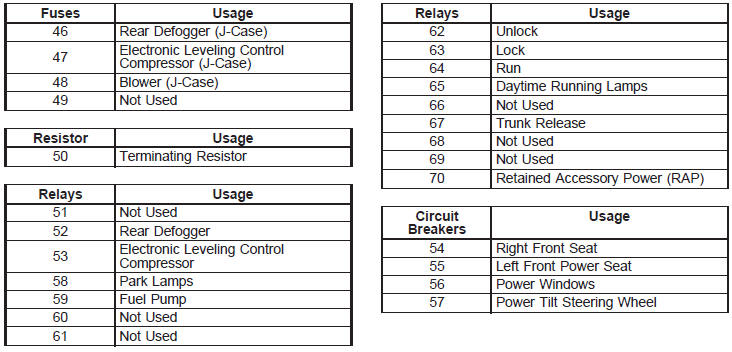
Circuit breakers in the rear fuse block protect the power windows and other power accessories. When the current load is too heavy, the circuit breaker opens and closes, protecting the circuit until the problem is fixed or goes away.
Fuses and Circuit Breakers
The wiring circuits in your vehicle are protected from short circuits by a combination of fuses and circuit breakers. This greatly reduces the chance of fires caused by electrical problems.
Look at the silver-colored band inside the fuse. If the band is broken or melted, replace the fuse. Be sure you replace a bad fuse with a new one of the identical size and rating.
You will find a fuse puller clipped in both of the fuse blocks. Snap the wide end of the fuse puller at the side indentations and pull the fuse out.
The MaxiFuses are located in two fuse blocks, one located in the engine compartment on the passenger’s side and the other under the rear seat on the driver’s side. If a MaxiFuse should blow, have your vehicle serviced by your dealer/retailer immediately.
Underhood Fuse Block
The underhood fuse block is located on the passenger side of the engine compartment. Remove the fuse cover and secondary service cover to access the fuse block.
Notice: Spilling liquid on any electrical components on the vehicle may damage it. Always keep the covers on any electrical component.
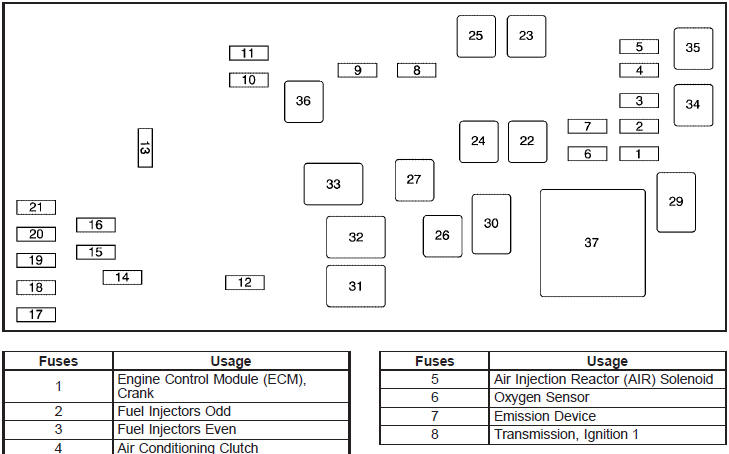
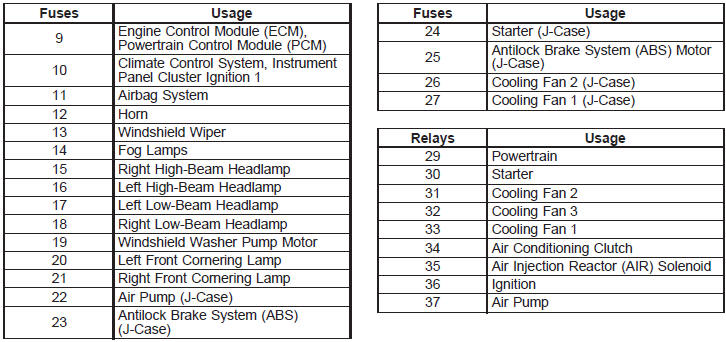
Rear Underseat Fuse Block
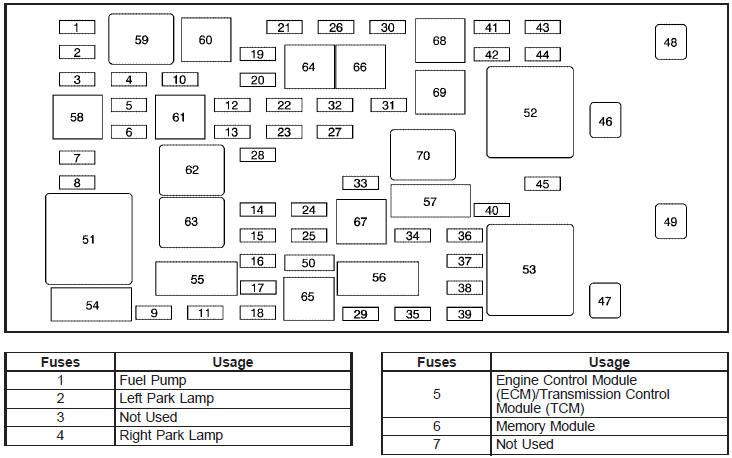
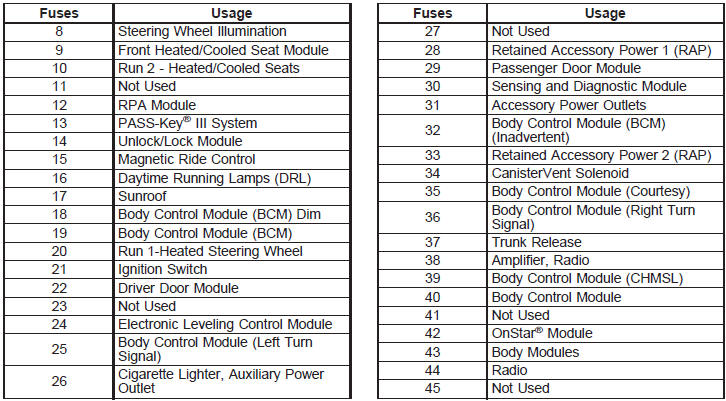
The rear fuse block is located under the rear seat on the driver side. The rear seat cushion must be removed to access the rear fuse block.
Removing the Rear Seat Cushion
Notice: If you touch the exposed wires with the metal on the seat cushion, you could cause a short that could damage the battery and or wires. Avoid contact between the rear seat and the fuse center whenever you remove or reinstall the rear seat. Do not remove covers from any of the covered parts, and do not store anything under the seats.
To remove the rear seat cushion, do the following:
1. Pull up on the front of the cushion to release the front hooks.
2. Pull the cushion up and out toward the front of the vehicle.
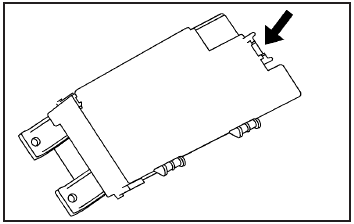
To access the fuse block, pull out and lift up on the cover latch, located at the end of the fuse block, near the battery cable.
To reinstall the rear seat cushion, do the following:
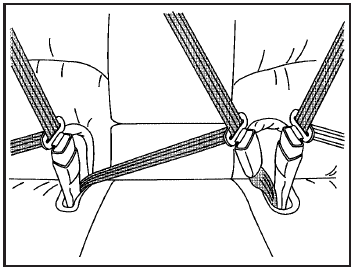
WARNING:
A safety belt that is not properly routed through the seat cushion or is twisted will not provide the protection needed in a crash. If the safety belt has not been routed through the seat cushion at all, it will not be there to work for the next passenger.
The person sitting in that position could be badly injured. After reinstalling the seat cushion, always check to be sure that the safety belts are properly routed and are not twisted.
1. Buckle the center passenger position safety belt, then route the safety belts through the proper slots in the seat cushion. Do not let the safety belts get twisted.
2. Slide the rear of the cushion up and under the seatback so the rear-locating guides hook into the wire loops on the back frame.
3. With the seat cushion lowered, push rearward and then press down on the seat cushion until the spring locks on both ends engage.
4. Check to make sure the safety belts are properly routed and that no portion of any safety belt is trapped under the seat. Also make sure the seat cushion is secured.
Download Manual