Towing a Trailer
Your vehicle can tow a trailer if you carefully observe the load limits, use the proper equipment, and follow the towing guidelines. See the Owner's Manual at Open Web Page for more information.
Towing Load Limits
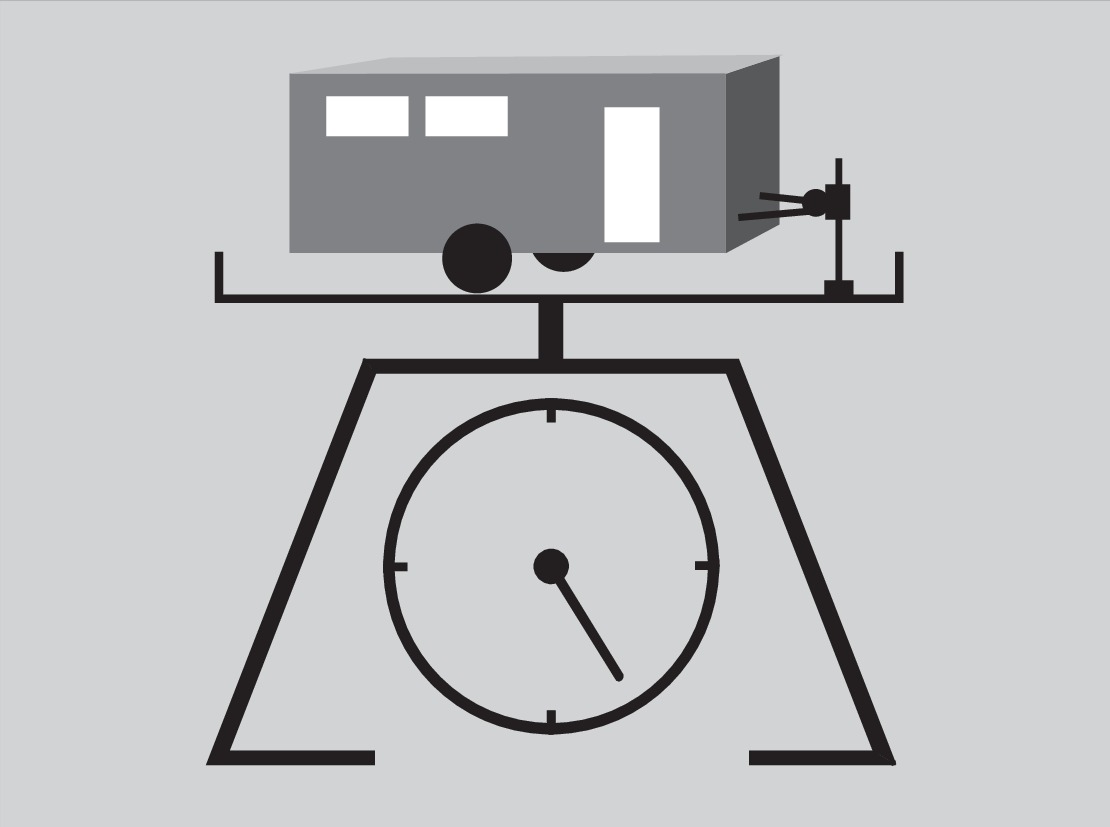
Total trailer weight
Do not exceed the maximum allowable weight of the trailer, cargo, and everything in or on it shown in the table below.
Towing loads in excess of this can seriously affect vehicle handling and performance and can damage the engine and drivetrain.
Total load
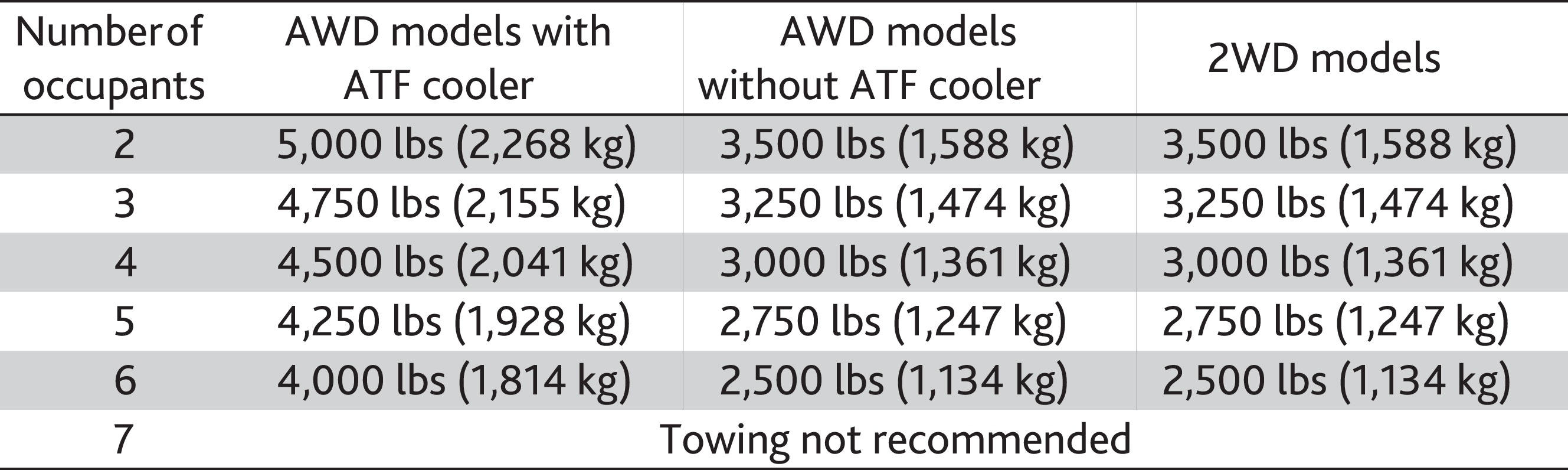
Each weight limit is calculated based on the following conditions:
- Occupants fill seats from the front of the vehicle to the back.
- Each occupant weights 150 lbs (68 kg).
- Each occupant has 15 lbs (7 kg) of cargo in the cargo area.
Any additional weight, cargo or accessories reduce the maximum trailer weight and maximum tongue load.
Exceeding any load limit or improperly loading your vehicle and trailer can cause a crash in which you can be seriously hurt or killed.
Check the loading of your vehicle and trailer carefully before starting to drive.
Tongue load
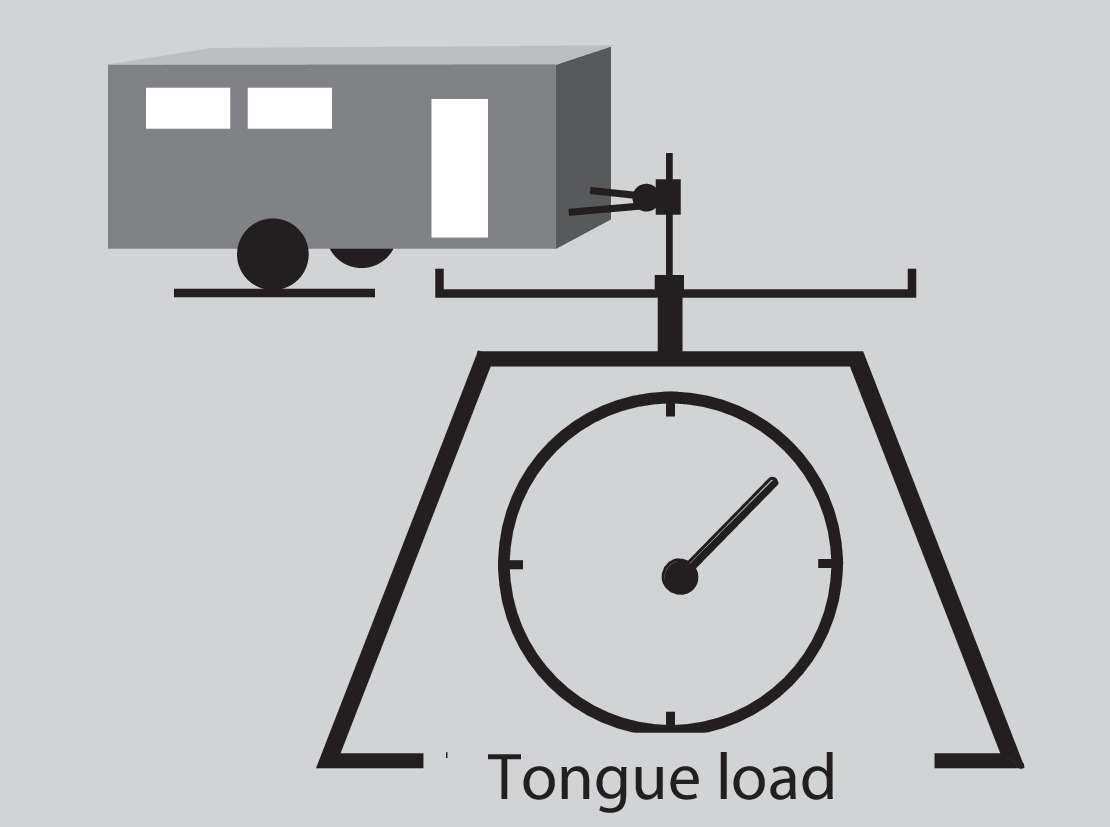
The weight of the tongue with a fully loaded trailer on the hitch should be approximately:
Boat trailers: 5-15% of the total trailer weight.
Other trailers: 10-15% of total trailer weight.
Estimate tongue load
Excessive tongue load reduces front tire traction and steering control. Too little tongue load can make the trailer unstable and cause it to sway.
You can estimate the tongue load by measuring the trailer hitch height from the ground in the following steps:
- Park the vehicle on level ground.
- Measure the distance between the ground and the bottom of the trailer hitch.
- Connect the fully loaded trailer to the hitch.
- Measure the distance between the ground and the bottom of the trailer hitch again.
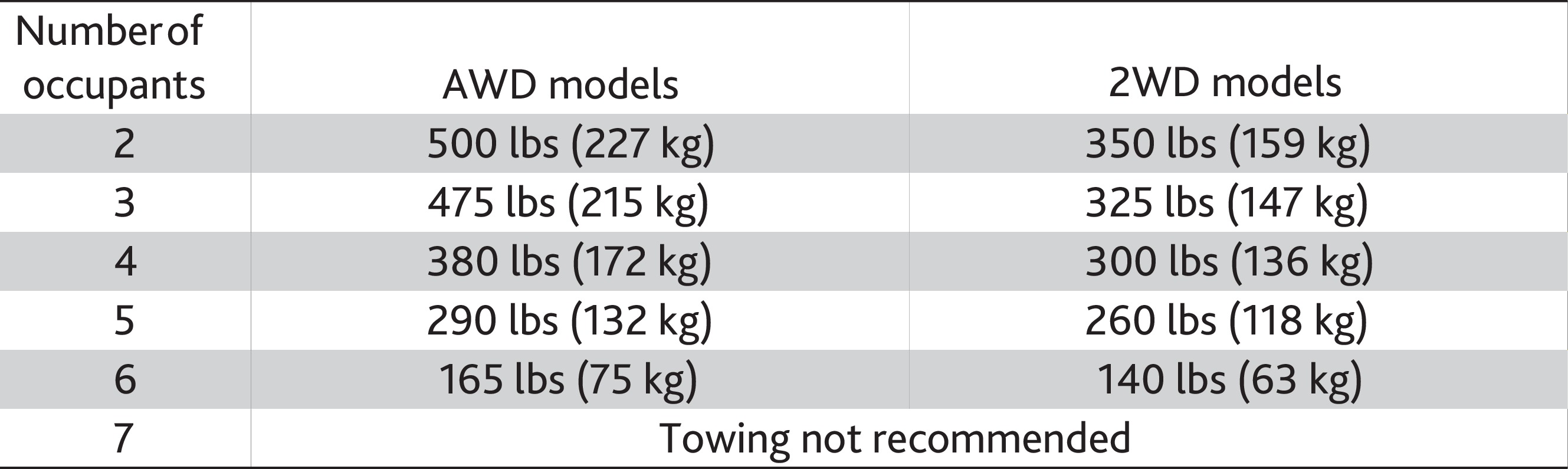
- Subtract the second measurement from the first measurement, then refer to the following table.
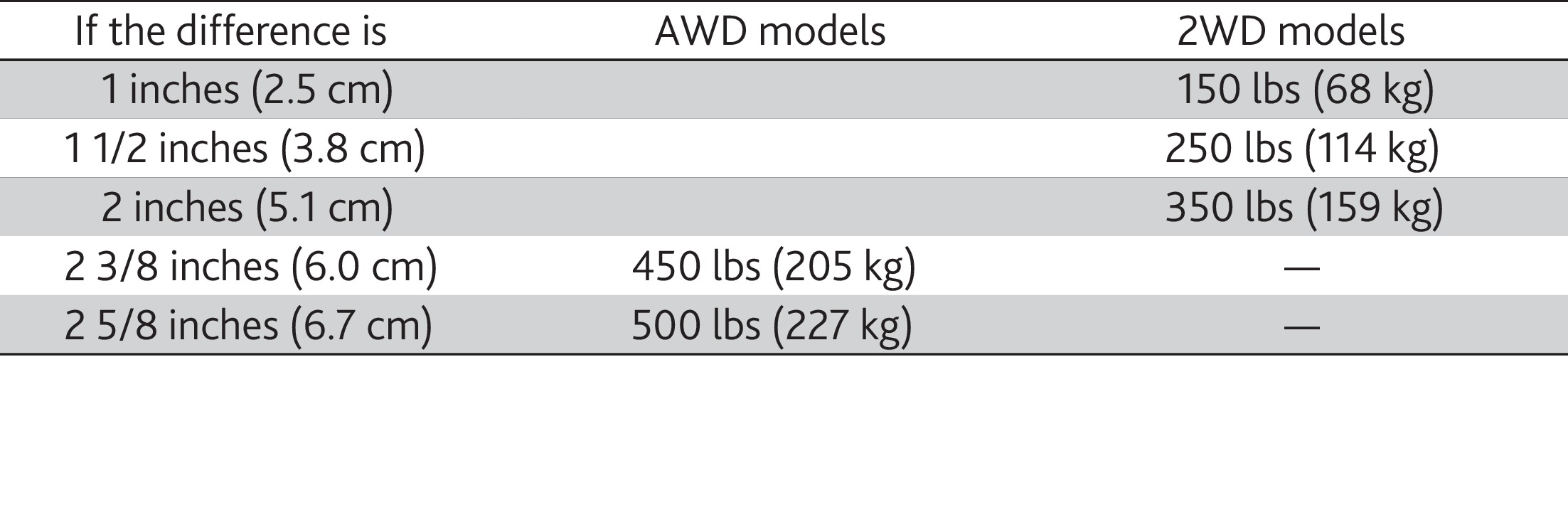
If the difference becomes more than indicated in the table, distribute the load or remove cargo as needed.
Weigh trailer loads using a public scale
Check each weight in the order indicated as shown.
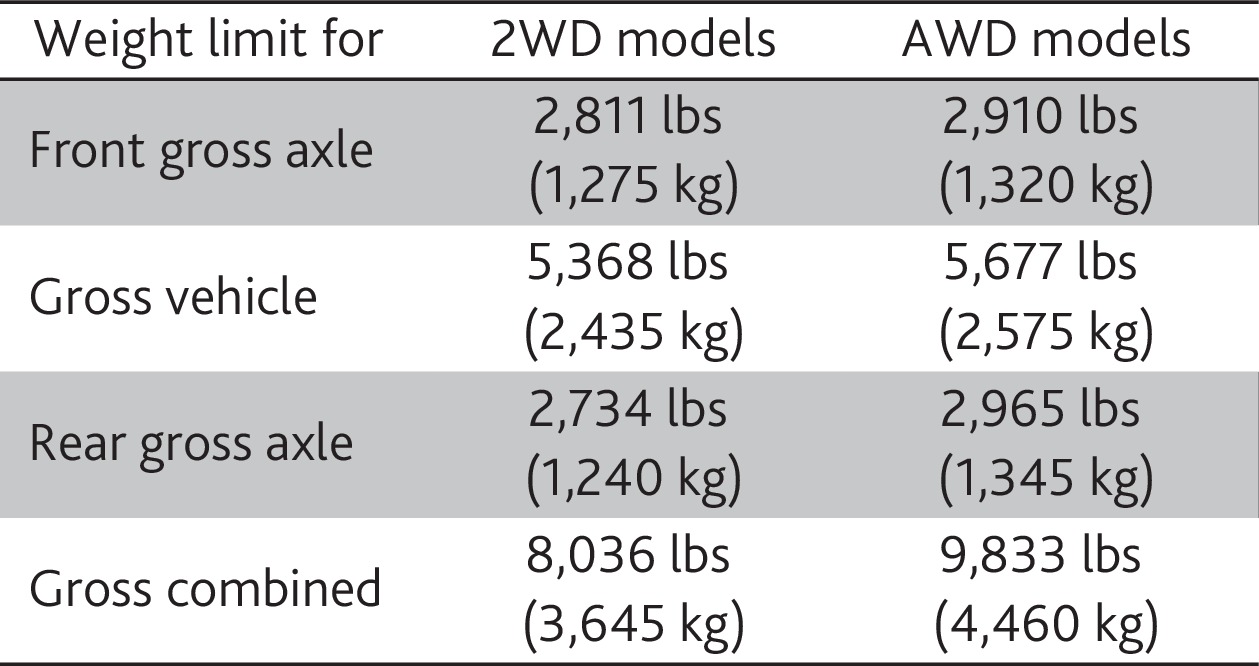
Refer to the table below for each weight's limit except for the tongue load.
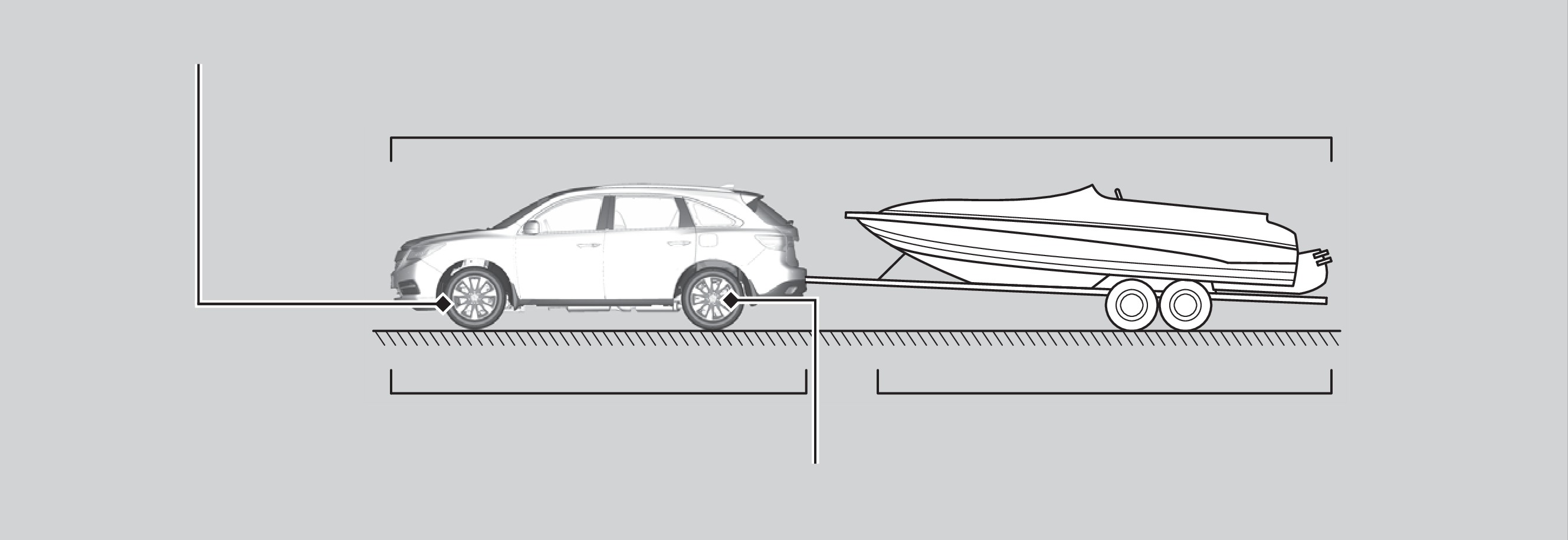
1. Front gross axle weight
2. Gross vehicle weight
3. Rear gross axle weight
4. Gross combined weight
5. Hitched trailer weight
6. Unhitched trailer weight
- If you cannot weigh the rear axle, subtract 1 from 2.
- The maximum gross combined weight (4) decreases by 2% for every 1,000 feet (305 meters) of elevation.
- To calculate the tongue load, subtract 5 from 6.
- Refer to the trailer owner's manual for additional information.
Pre-Tow Checklist
When preparing to tow, and before driving away, be sure to check the following:
- Avoid towing a trailer during your vehicle's first 600 miles (1,000 km).
- The vehicle and trailer have been properly serviced and are in good condition. Lights and brakes work properly, and the tires are properly inflated.
- All weights and loads are within limits. Never exceed the gross weight ratings.
- When towing more than 3,500 lbs (1,590 kg), use of gasoline with an octane rating of 91 or higher is recommended.
- Check if all loads are within limits at a public scale (see "Towing a Trailer"). If a public scale is not available, add the estimated weight of your cargo load to the weight of the trailer (as quoted by the manufacturer) and the tongue load.
- The hitch, safety chains, and any other attachments are secure.
- All items in or on the trailer are properly secured and cannot shift while you drive.
Exceeding any load limit or improperly loading your vehicle and trailer can cause a crash in which you can be seriously hurt or killed.
Check the loading of your vehicle and trailer carefully before starting to drive.
- Maximum Load Limit
Download Manual