Occupant restraint systems
Seats
While the vehicle is being driven, all vehicleoccupants should have the seatbackupright, sit well back in the seat and properlywear the seat belts provided.
CAUTION
- Do not drive the vehicle unless theoccupants are properly seated. Donot allow any passengers to sit ontop of a folded−down seatback, orin the luggage compartment or cargoarea. Persons not properlyseated and/or not properly restrainedby seat belts can be killedor severely injured in the event ofemergency braking or a collision.
- During driving, do not allow anypassengers to stand up or movearound between seats. Otherwise,death or severe injuries can occurin the event of emergency brakingor a collision.
Front seats
Front seat precautions
Driver seat
CAUTION
The SRS driver airbag deploys withconsiderable force, and can causedeath or serious injury especially ifthe driver is very close to the airbag.The National Highway Traffic SafetyAdministration (“NHTSA”) advises:
Since the risk zone for driver airbagis the first 50−75 mm (2−3 in.) ofinflation, placing yourself 250 mm (10in.) from your diver airbag providesyou with a clear margin of safety.This distance is measured from thecenter of the steering wheel to yourbreastbone. If you sit less than 250mm (10 in.) away now, you canchange your driving position in severalways:
- Move your seat to the rear as faras you can while still reaching thepedals comfortably.
- Slightly recline the back of theseat. Although vehicle designs vary,many drivers can achieve the 250mm (10 in.) distance, even with thedriver seat all the way forward, simplyby reclining the back of theseat somewhat. If reclining the backof your seat makes it hard to seethe road, raise yourself by using afirm, non−slippery cushion, or raisethe seat if your vehicle has thatfeature.
- If your steering wheel is adjustable,tilt it downward. This points the airbagtoward your chest instead ofyour head and neck.
The seat should be adjusted as recommendedby NHTSA above, whilestill maintaining control of the footpedals, steering wheel, and your viewof the instrument panel controls.
Front passenger seat
CAUTION
The SRS front passenger airbag alsodeploys with considerable force, andcan cause death or serious injury especiallyif the front passenger is veryclose to the airbag. The front passengerseat should be as far from theairbag as possible with the seatbackadjusted, so the front passenger sitsupright.
Front seats (with SRS side airbags)
CAUTION
The SRS side airbags are installed inthe driver and front passenger seats.Observe the following precautions.
- Do not lean against the front doorwhen the vehicle is in use, sincethe side airbag inflates with considerablespeed and force. Otherwise,you may be killed or seriously injured.
- Do not use seat accessories whichcover the area where the side airbagsinflate. Such accessories mayprevent the side airbags from activatingcorrectly, causing death orserious injury.
- Do not modify or replace the seatsor upholstery of the seats with sideairbags. Such change may preventthe side airbag system from activatingcorrectly, disable the system orcause the side airbags to inflate accidentally,resulting in death or seriousinjury.
Seat adjustment precautions
CAUTION
- Do not adjust the seat while thevehicle is moving as the seat mayunexpectedly move and cause thedriver to lose control of the vehicle.
- Be careful that the seat does nothit a passenger or luggage.
- After adjusting the seat position, releasethe lever and try sliding theseat forward and backward to makesure it is locked in position.
- After adjusting the seatback, pushyour body back against the seat tomake sure the seat is locked inposition.
- Do not put objects under the seats.Otherwise, the objects may interferewith the seat−lock mechanism orunexpectedly push up the seat positionadjusting lever and the seatmay suddenly move, causing thedriver to lose control of the vehicle.
- While adjusting the seat, do not putyour hands under the seat or nearthe moving parts. Otherwise, yourhands or fingers may be caughtand injured.
Adjusting front seats

1. SEAT POSITION ADJUSTING LEVER
Hold the center of the lever and pull itup. Then slide the seat to the desiredposition with slight body pressure andrelease the lever.
2. SEATBACK ANGLE ADJUSTINGLEVER
Lean forward and pull the lever up.Then lean back to the desired angleand release the lever.
CAUTION
Avoid reclining the seatback anymore than needed. The seat belts providemaximum protection in a frontalor rear collision when the driver andthe front passenger are sitting upstraight and well back in the seats. Ifyou are reclined, the lap belt mayslide past your hips and apply restraintforces directly to the abdomenor your neck may contact the shoulderbelt. In the event of a frontalcollision, the more the seat is reclined,the greater the risk of deathor serious injury.
Flattening seatbacks

1. Remove the head restraint. Hold thecenter of the lever and pull it up.Then slide the seat further forwardthan the front−most lock position.

2. Pull the seatback angle adjusting leverto unlock and push down theseatback.
When returning the seatback upright, becareful not to make yourself hit by theseatback which will bound with considerablespring force.
After returning the seat to its originalposition, be certain to replace the headrestraint.
CAUTION
Do not allow passengers to ride onthe flattened seat while driving; usethe seat in the normal position.
After putting back the seat, trypushing the seat and seatback forwardand rearward to make sure itis secured in place. Be certain toreplace head restraint.
Fold−down rear seat

Lower the head restraints to the lowestposition. Push down the lock releasebutton and fold the seatback down.
Each seatback can be folded separately.
This will enlarge the luggage compartmentas far as the seatbacks. See “Cargo andluggage” on page 344 for precautionswhen loading luggage.
CAUTION
When only rear left seat is foldeddown, rear seat alone can be used.Never sit on the center seat becausethe rear center seat belt cannot befastened correctly when the rear leftseat is folded down.

BEFORE RETURNING REAR SEAT
Make sure the shoulder belt passthrough the guide when returning theseatback up.
If the shoulder belt on the rear right seatis off the guide, the air vent for coolingthe hybrid battery may be blocked by thebelt. If the hybrid battery cannot becooled, the output performance is limited,reducing the driving performance.
CAUTION
When returning the seatback to theupright position, observe the followingprecautions in order to preventdeath or serious injury in a collisionor sudden stop:
- Make sure seatback is securelylocked by pushing forward and rearwardon the top of the seatback.Failure to do so will prevent theseat belt from operating properly.
- Make sure the seat belts are nottwisted or caught in the seatbackand are arranged in the properposition and are ready to use.
Head restraints

Front

Rear
For your safety and comfort, adjust thehead restraint before driving,
To raise: Pull it up.
To lower: Push it down while pressing thelock release button.
Rear center head restraint—When an occupantsits on the rear center seat, alwayspull up the rear center head restraintto the lock position.
The head restraint is most effective whenit is close to your head. Therefore, usinga cushion on the seatback is not recommended.
CAUTION
- Adjust the center of the head restraintso that it is closest to thetop of your ears.
- After adjusting the head restraint,make sure it is locked in position.
- Do not drive with the head restraintsremoved.
Armrest

To use the armrest, pull it down asshown in the illustration.
NOTICE
To prevent damage to the armrest,avoid putting heavy loads on it.
Seat belts
Seat belt precautions
Toyota strongly urges that the driver andpassengers in the vehicle be properly restrainedat all times with the seat beltsprovided. Failure to do so could increasethe chance of injury and/or the severity ofinjury in accidents.
The seat belts provided for your vehicleare designed for people of adult size,large enough to properly wear them.
Child. Use a child restraint system appropriatefor the child until the child becomeslarge enough to properly wear thevehicle’s seat belts. For details, see “Childrestraint” on page 86.
If a child is too large for a child restraintsystem, the child should sit in the rearseat and must be restrained using thevehicle’s seat belt. According to accidentstatistics, the child is safer when properlyrestrained in the rear seat than in thefront seat.
If a child must sit in the front seat, theseat belts should be worn properly. If anaccident occurs and the seat belts are notworn properly, the force of the rapid inflationof the airbag may cause death orserious injury to the child.
Do not allow any children to stand up orkneel on either rear or front seats. Anunrestrained child could suffer serious injuryor death during emergency braking ora collision. Also, do not let the child siton your lap. Holding a child in your armsdoes not provide sufficient restraint.Pregnant woman. Toyota recommends theuse of a seat belt. Ask your doctor forspecific recommendations. The lap beltshould be worn securely and as low aspossible over the hips and not on thewaist.
Injured person. Toyota recommends theuse of a seat belt. Depending on the injury,first check with your doctor for specificrecommendations.
CAUTION
Persons should ride in their seatsproperly wearing their seat beltswhenever the vehicle is moving.
Otherwise, they are much more likelyto suffer serious bodily injury ordeath in the event of sudden brakingor a collision.
When using the seat belts, observethe following:
- Use the belt for only one person ata time. Do not use a single belt fortwo or more people—even children.
- Avoid reclining the seatback anymore than needed. The seat beltsprovide maximum protection in afrontal or rear collision when thedriver and the front passenger aresitting up straight and well back inthe seats. If you are reclined, thelap belt may slide past your hipsand apply restraint forces directlyto the abdomen or your neck maycontact the shoulder belt. In theevent of a frontal collision, themore the seat is reclined, the greaterthe risk of death or personal injury.
- Be careful not to damage the beltwebbing or hardware. Take care thatthey do not get caught or pinchedin the seat or doors.
- Inspect the belt system periodically.Check for cuts, fraying, and looseparts. Damaged parts should be replaced.Do not disassemble ormodify the system.
- Keep the belts clean and dry. Ifthey need cleaning, use a mild soapsolution or lukewarm water. Neveruse bleach, dye or abrasive cleaners,or allow them to come intocontact with the belts—they mayseverely weaken the belts. (See“Cleaning the interior” on page385.)
- Replace the belt assembly (includingbolts) if it has been used in asevere impact. The entire assemblyshould be replaced even if damageis not obvious.
Fastening front and rearseat belts

Adjust the seat as needed and sit upstraight and well back in the seat. Tofasten your belt, pull it out of the retractorand insert the tab into thebuckle.
You will hear a click when the tab locksinto the buckle.
The seat belt length automatically adjuststo your size and the seat position.
The retractor will lock the belt during asudden stop or on impact. It also maylock if you lean forward too quickly. Aslow, easy motion will allow the belt toextend, and you can move around freely.
When a passenger’s shoulder belt is completelyextended and is then retractedeven slightly, the belt is locked in thatposition and cannot be extended. This featureis used to hold the child restraintsystem securely. (For details, see “Childrestraint” on page 86.) To free the beltagain, fully retract the belt and then pullthe belt out once more.
If the seat belt cannot be pulled out of theretractor, firmly pull the belt and releaseit. You will then be able to smoothly pullthe belt out of the retractor.
CAUTION
- After inserting the tab, make surethe tab and buckle are locked andthat the belt is not twisted.
- Do not insert coins, clips, etc. inthe buckle as this may prevent youfrom properly latching the tab andbuckle.
- If the seat belt does not functionnormally, immediately contact yourToyota dealer. Do not use the seatuntil the seat belt is fixed, becauseit cannot protect an adult occupantor your child from death or seriousinjury.

Adjust the position of the lap andshoulder belts.
Position the lap belt as low as possibleon your hips—not on your waist, then adjustit to a snug fit by pulling the shoulderportion upward through the latch plate.
CAUTION
- Both high−positioned lap belts andloose−fitting belts could causedeath or serious injuries due tosliding under the lap belt during acollision or other unintended event.Keep the lap belt positioned as lowon hips as possible.
- Do not place the shoulder belt underyour arm.

Seat belts with an adjustable shoulderanchor—
Adjust the shoulder anchor position toyour size.
To raise: Slide the anchor up.
To lower: Push in the lock release buttonand slide the anchor down.
After adjustment, make sure the anchor islocked in position.
CAUTION
Always make sure the shoulder beltis positioned across the center ofyour shoulder. The belt should bekept away from your neck, but notfalling off your shoulder. Failure todo so could reduce the amount ofprotection in an accident and causedeath or serious injuries in a collision.

To release the belt, press the bucklerelease button and allow the belt toretract.
If the belt does not retract smoothly, pullit out and check for kinks or twists. Thenmake sure it remains untwisted as it retracts.
Seat belt extender
If your seat belts cannot be fastened securelybecause they are not long enough,a personalized seat belt extender is availablefrom your Toyota dealer free ofcharge.
Please contact your local Toyota dealer sothat the dealer can order the proper requiredlength for the extender. Bring theheaviest coat you expect to wear for propermeasurement and selection of length.Additional ordering information is availableat your Toyota dealer.
CAUTION
When using the seat belt extender,observe the following precautions.Failure to follow these instructionscould reduce the effectiveness of theseat belt restraint system in case ofan accident, increasing the chance ofdeath or serious injury.
- Remember that the extender providedfor you may not be safe whenused on a different vehicle, foranother person, or at a differentseating position than the one originallyintended.

- If the seat belt extender has beenconnected to the driver’s seat beltbuckle without wearing the seat beltwhen using the extender in thedriver’s seat, the SRS driver’s airbagsystem will judge that the driverwears the seat belt even if notwearing it. In this case, the driver’sairbag may not activate correctly,causing death or serious injury inthe event of collision. Be sure towear the seat belt with the seat beltextender.
- Make sure the “AIRBAG ON”indicator light is illuminated whenusing the seat belt extender for thefront passenger seat. If the“AIRBAG OFF” indicator light isilluminated, disconnect the extendertongue from the seat belt buckle,then reconnect the seat belt.Reconnect the seat belt extenderafter making sure the “AIRBAG ON”indicator light is illuminated. If youuse the seat belt extender while the“AIRBAG OFF” indicator light isilluminated, the front passengerairbag and side airbag on the frontpassenger side may not activatecorrectly, causing death or seriousinjury in the event of collision.
- Be sure to wear the seat belt withoutthe seat belt extender if youcan fasten the seat belt without theextender.
- Do not use the seat belt extenderwhen installing a child restraintsystem on the front or rear passengerseat. If installing a child restraintsystem with the seat beltextender connected to the seat belt,the seat belt will not securely holdthe child restraint system, whichcould cause death or serious injuryto the child or other passengers inthe event of collision.
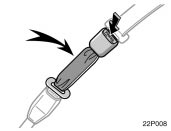
To connect the extender to the seatbelt, insert the tab into the seat beltbuckle so that the “PRESS” signs onthe buckle release buttons of the extenderand the seat belt are both facingoutward as shown.
You will hear a click when the tab locksinto the buckle.
When releasing the seat belt, press onthe buckle release button on the extender,not on the seat belt. This helps preventdamage to the vehicle interior and extenderitself.
As far as the seat belt extender on thefront passenger side is concerned, do notfail to disconnect the extender from theseat belt after the above operation in orderto activate the front passenger airbagcorrectly when getting into the vehiclenext time.
When not in use, remove the extenderand store in the vehicle for future use.
CAUTION
- After inserting the tab, make surethe tab and buckle are locked andthat the lap and shoulder portionsof the belt and the seat belt extenderare not twisted.
- Do not insert coins, clips, etc. inthe buckle as this may prevent youfrom properly latching the tab andbuckle.
- If the seat belt does not functionnormally, immediately contact yourToyota dealer. Do not use the seatuntil the seat belt is fixed, becauseit cannot protect an adult occupantor your child from death or seriousinjury.
Seat belt pretensioners

There are seat belt pretensioners forboth front seats. They are designed tobe activated in response to a severefrontal impact.
When the sensor detects a severe frontalimpact, the front seat belts are quicklydrawn back by the retractor so that thebelts snugly restrain the occupants.
The front passenger’s seat belt pretensionerwill not activate if no passenger isdetected in the front passenger seat bythe front passenger occupant classificationsystem. However, the front passenger’sseat belt pretensioner may activate if luggageis put on the seat, or the seat beltis buckled up regardless of the presenceof an occupant in the seat. (As for thefront passenger occupant classificationsystem, see “—Front passenger occupantclassification system” on page 81.)
The seat belt pretensioner and SRS airbagsmay not operate together in all collisions.

The seat belt pretensioner system consistsmainly of the following componentsand their locations are shown in the illustration.
1. Front airbag sensors
2. SRS warning light
3. “AIRBAG ON” and “AIRBAG OFF” indicatorlights
4. Front passenger’s seat belt buckleswitch
5. Front passenger occupant classificationsystem (ECU and sensors)
6. Seat belt pretensioner assemblies
7. Airbag sensor assembly
The seat belt pretensioners are controlledby the airbag sensor assembly. The airbagsensor assembly consists of a safing sensorand airbag sensor.
When the seat belt pretensioners are activated,an operating noise may be heardand a small amount of non−toxic gas maybe released. This does not indicate thata fire is occurring. This gas is normallyharmless.
Once the seat belt pretensioners havebeen activated, the seat belt retractorsremain locked.
CAUTION
Do not modify, remove, strike or openthe seat belt pretensioner assemblies,airbag sensor or surrounding area orwiring. Failure to follow these instructionsmay prevent the seat belt pretensionersfrom activating correctly,cause sudden operation of the systemor disable the system, which couldresult in death or serious injury. Consultyour Toyota dealer about any repairand modification.
NOTICE
Do not perform any of the followingchanges without consulting yourToyota dealer. Such changes can interferewith proper operation of theseat belt pretensioners in somecases.
- Installation of electronic devicessuch as a mobile two−way radio,cassette tape player or compactdisc player
- Repairs on or near the front seatbelt retractor assemblies
- Modification of the suspension system
- Modification of the front end structure
- Attachment of a grille guard (bullbar, kangaroo bar, etc.), snowplow,winches or any other equipment tothe front end
- Repairs made on or near the frontfenders, front end structure or console

This indicator comes on when the “IG−ON” mode is enabled. It goes off afterabout 6 seconds. This means the seatbelt pretensioners are operating properly.
The warning light system monitors the airbagsensor assembly, front airbag sensors,side and curtain shield airbag sensors,curtain shield airbag sensors,driver’s seat position sensor, driver’s seatbelt buckle switch, front passenger occupantclassification system, “AIRBAG ON”indicator light, “AIRBAG OFF” indicatorlight, front passenger’s seat belt buckleswitch, seat belt pretensioner assemblies,interconnecting wiring and power sources.(For details, see “Service reminder indicatorsand warning buzzers” on page 125.)
If any of the following conditions occurs,this indicates a malfunction of the airbagsor seat belt pretensioners. Contact yourToyota dealer as soon as possible.
- The light does not come on when the“IG−ON” mode is enabled or remainson for more than 6 seconds.
- The light comes on while driving.
- If either front seat belt does not retractor can not be pulled out due to amalfunction or activation of the relevantseat belt pretensioner.
- The seat belt pretensioner assembly orsurrounding area has been damaged.

In the following cases, contact your Toyotadealer as soon as possible:
- The front part of the vehicle (shadedin the illustration) was involved in anaccident that was not severe enough tocause the seat belt pretensioners tooperate.
- The seat belt pretensioner assembly orsurrounding area is scratched, cracked,or otherwise damaged.
SRS airbags
SRS driver and frontpassenger airbags

The SRS (Supplemental Restraint System)front airbags are designed to providefurther protection for the driverand front passenger in addition to theprimary safety protection provided bythe seat belts.
Your vehicle is equipped with “ADVANCEDAIRBAGS” designed based on US motorvehicle safety standards (FMVSS208). Theairbag system controls airbag deploymentpower for the driver and front passenger.The driver airbag system consists of thedriver’s seat position sensor, etc. Thefront passenger’s airbag system consistsof the front passenger occupant classificationsensor, etc.
In response to a severe frontal impact,the SRS front airbags work with the seatbelts to help reduce injury by inflating.The SRS front airbags help reduce injuriesmainly to the driver’s or front passenger’shead or chest caused by hitting the vehicleinterior.
The SRS front passenger airbag will notactivate if there is no passenger sitting inthe front passenger seat. However, thefront passenger airbag may deploy if luggageis put in the seat, or the seat beltis buckled up, regardless of the presenceof an occupant in the seat. (As for thefront passenger occupant classificationsystem, see “—Front passenger occupantclassification system” on page 81.)
Always wear your seat belt properly.
CAUTION
- The SRS front airbag system is designedonly as a supplement to theprimary protection of the driver andfront passenger seat belt systems.The driver and front passenger canbe killed or seriously injured by theinflating airbags if they do not wearthe available seat belts properly.During sudden braking just beforea collision, an unrestrained driveror front passenger can move forwardinto direct contact with orclose proximity to the airbag whichmay then deploy during the collision.To ensure maximum protectionin an accident, the driver and allpassengers in the vehicle mustwear their seat belts properly. Wearinga seat belt properly during anaccident reduces the chances ofdeath or serious injury or beingthrown out of the vehicle. For instructionsand precautions concerningthe seat belt system, see “Seatbelts” on page 58.
- Improperly seated and/or restrainedinfants and children can be killedor seriously injured by the deployingairbags. An infant or child whois too small to use a seat beltshould be properly secured using achild restraint system. Toyotastrongly recommends that all infantsand children be placed in therear seat of the vehicle and properlyrestrained. The rear seat is thesafest for infants and children. Forinstructions concerning the installationof a child restraint system, see“Child restraint” on page 86.
The SRS front airbags are designed todeploy in severe (usually frontal) collisionswhere the magnitude and durationof the forward deceleration of the vehicleexceeds the designed thresholdlevel.
The SRS front airbags will deploy if theseverity of the impact is above the designedthreshold level, comparable to anapproximate 25 km/h (15 mph) collisionwhen the vehicle has the impact straightinto a fixed barrier that does not move ordeform.
However, this threshold velocity will beconsiderably higher if the vehicle strikesan object, such as a parked vehicle orsign pole, which can move or deform onimpact, or if the vehicle is involved in anunderride collision (e.g. a collision inwhich the front of the vehicle “underrides”,or goes under, the bed of a truck, etc.).
It is possible that in some collisionswhere the forward deceleration of the vehicleis very close to the designed thresholdlevel, the SRS front airbags and theseat belt pretensioners may not activatetogether.
Always wear your seat belts properly.

The SRS front airbags are generally notdesigned to inflate if the vehicle is involvedin a side or rear collision, if itrolls over, or if it is involved in a low−speed frontal collision. But, whenever acollision of any type causes sufficientforward deceleration of the vehicle, deploymentof the SRS front airbags mayoccur.

The SRS front airbags may also deployif a serious impact occurs to the undersideof your vehicle. Some examplesare shown in the illustration.

The SRS front airbag system consistsmainly of the following components andtheir locations are shown in the illustration.
1. Front airbag sensors
2. SRS warning light
3. “AIRBAG ON” and “AIRBAG OFF” indicatorlights
4. Airbag module for front passenger (airbagand inflator)
5. Passenger’s seat belt buckle switch
6. Front passenger occupant classificationsystem (ECU and sensors)
7. Driver’s seat belt buckle switch
8. Driver’s seat position sensor
9. Airbag sensor assembly
10. Airbag module for driver(airbag and inflator)
The airbag sensor assembly consists of asafing sensor and airbag sensor.
The front airbag sensors constantly monitorthe forward deceleration of the vehicle.If an impact results in a forward decelerationbeyond the designed threshold level,the system triggers the airbag inflators. Atthis time a chemical reaction in the inflatorsvery quickly fills the airbags with non−toxic gas to help restrain the froward motionof the occupants. The front airbagsthen quickly deflate, so that there is noobstruction of the driver’s vision should itbe necessary to continue driving.
When the airbags inflate, they produce aloud noise and release some smoke andresidue along with non−toxic gas. Thisdoes not indicate a fire. This smoke mayremain inside the vehicle for some time,and may cause some minor irritation tothe eyes, skin or breathing. Be sure towash off any residue as soon as possibleto prevent any potential skin irritation withsoap and water. If you can safely exitfrom the vehicle, you should do so immediately.
Deployment of the airbags happens in afraction of a second, so the airbags mustinflate with considerable force. While thesystem is designed to reduce serious injuries,primarily to the head and chest, itmay also cause other, less severe injuriesto the face, chest, arms and hands. Theseare usually in the nature of minor burnsor abrasions and swelling, but the force ofa deploying airbag can cause more seriousinjuries, especially if an occupant’shands, arms, chest or head is in closeproximity to the airbag module at the timeof deployment. This is why it is importantfor the occupant to: avoid placing anyobject or part of the body between theoccupant and the airbag module; sitstraight and well back into the seat; wearthe available seat belt properly; and sit asfar as possible from the airbag module,while still maintaining control of the vehicle.
Parts of the airbag module (steering wheelhub, airbag cover and inflator) may be hotfor several minutes after deployment, sodo not touch! The airbags inflate onlyonce. The windshield may be damaged byabsorbing some of the force of the inflatingairbag.
CAUTION
The driver or front passenger who istoo close to the steering wheel ordashboard during airbag deploymentcan be killed or seriously injured.Toyota strongly recommends that:
- The driver sit as far back as possiblefrom the steering wheel whilestill maintaining control of the vehicle.
- The front passenger sit as far backas possible from the dashboard.
- All vehicle occupants be properlyrestrained using the available seatbelts.
- If the seat belt extender has beenconnected to the driver’s seat beltbuckle without wearing the seat beltwhen using the extender in thedriver’s seat, the SRS driver’s airbagsystem will judge that the driverwears the seat belt even if notwearing it. In this case, the driver’sairbag may not activate correctly,causing death or serious injury inthe event of collision. Be sure towear the seat belt with the seat beltextender.
For instructions and precautions concerningthe seating position, see“—Front seat precautions” on page52.

Do not sit on the edge of the seator lean against the dashboard whenthe vehicle is in use, since thefront passenger airbag could inflatewith considerable speed and force.Anyone who is up against, or veryclose to, an airbag when it inflates,can be killed or seriously injured.Sit up straight and well back in theseat, and always use your seat beltproperly.

Toyota strongly recommends thatall infants and children be placed inthe rear seat of the vehicle and beproperly restrained.
Do not hold a child on your lap orin your arms. Use a child restraintsystem in the rear seat. For instructionsconcerning the installation ofa child restraint system, see “Childrestraint” on page 86.

Do not put anything or any part ofyour body on or in front of thedashboard or steering wheel padthat houses the front airbag system.They might restrict inflation orcause death or serious injury asthey are projected rearward by theforce of the deploying airbags. Likewise,the driver and front passengershould not hold objects in theirarms or on their knees.
Do not modify or remove any wiring.Do not modify, remove, strikeor open any components, such asthe steering wheel pad, steeringwheel, column cover, dashboardnear the front passenger airbag,front passenger airbag cover, frontpassenger airbag or airbag sensorassembly. Doing so may prevent thefront airbag system from activatingcorrectly, cause sudden front airbagsactivation of the system ordisable the system, which could resultin death or serious injury.
Failure to follow these instructionscan result in death or serious injury.Consult your Toyota dealer about anyrepair and modification.
If you wish to modify your vehicle fora person with a physical disability,consult your Toyota dealer. It maydangerously interfere with the SRSfront airbags operation.
NOTICE
Do not perform any of the followingchanges without consulting yourToyota dealer. Such changes can interferewith proper operation of theSRS front airbag system in somecases.
- Installation of electronic devicessuch as a mobile two−way radio,cassette tape player or compactdisc player
- Modification of the suspension system
- Modification of the front end structure
- Attachment of a grille guard (bullbar, kangaroo bar, etc.), snowplow,winches or any other equipment tothe front end
- Repairs made on or near the frontfenders, front end structure, console,steering column, steeringwheel or dashboard near the frontpassenger airbag

This indicator comes on when the “IG−ON” mode is enabled. It goes off afterabout 6 seconds. This means the SRSfront airbags are operating properly.
The warning light system monitors the airbagsensor assembly, front airbag sensors,side and curtain shield airbag sensors,curtain shield airbag sensors,driver’s seat position sensor, driver’s seatbelt buckle switch, front passenger occupantclassification system, “AIRBAG ON”indicator light, “AIRBAG OFF” indicatorlight, front passenger’s seat belt buckleswitch, seat belt pretensioner assemblies,interconnecting wiring and power sources.(For details, see “Service reminder indicatorsand warning buzzers” on page 125.)
If any of the following conditions occurs,this indicates a malfunction of the airbagsor seat belt pretensioners. Contact yourToyota dealer as soon as possible.
- The light does not come on when the“IG−ON” mode is enabled or remainson for more than 6 seconds.
- The light comes on while driving.
The SRS warning light and “AIRBAG OFF”indicator light will come on if there is amalfunction in the front passenger occupantclassification system.

In the following cases, contact your Toyotadealer as soon as possible:
- The SRS front airbags have been inflated.
- The front of the vehicle (shaded in theillustration) was involved in an accidentthat was not severe enough to causethe SRS front airbags to inflate.
- The pad section of the steering wheelor front passenger airbag cover(shaded in the illustration) is scratched,cracked, or otherwise damaged.
NOTICE
Do not disconnect the 12 volt batterycables before contacting your Toyotadealer.
SRS side airbags andcurtain shield airbags

The SRS (Supplemental Restraint System)side airbags and curtain shield airbagsare designed to provide furtherprotection for the driver, front passengerand rear outboard passengers inaddition to the primary safety protectionprovided by the seat belts.
In response to a severe side impact, theSRS side airbags and curtain shield airbagswork with the seat belts to helpreduce injury by inflating. The SRS sideairbags help reduce injuries mainly to thedriver’s or front passenger’s chest and theSRS curtain shield airbags help reduceinjuries mainly to the driver’s, front passenger’sor rear outboard passenger’shead.
The SRS side airbag on the passengerseat will not activate if there is no passengersitting in the front passenger seat.However, the side airbag on the passengerseat may deploy if luggage is put inthe seat, or the seat belt is buckled upregardless of the presence of the occupantin the seat. (As for the front passengeroccupant classification system, see“—Front passenger occupant classificationsystem” on page 81.)
The SRS curtain shield airbags may activateeven when the side airbags are notactivated.
Always wear your seat belt properly.
CAUTION
- The SRS side airbag and curtainshield airbag system is designedonly as a supplement to the primaryprotection of the driver, frontpassenger and rear outside passengerseat belt systems. To ensuremaximum protection in an accident,the driver and all passengers in thevehicle must wear their seat beltsproperly. Wearing a seat belt properlyduring an accident reduces thechances of death or serious injuryor being thrown out of the vehicle.For instructions and precautionsconcerning the seat belt system,see “Seat belts” on page 58.
- Do not allow anyone to lean his/herhead or any part of his/her bodyagainst the door or the area of theseat, front pillar, rear pillar or roofside rail from which the SRS sideairbag and curtain shield airbagdeploy even if he/she is a childseated in the child restraint system.It is dangerous if the SRS side airbagand curtain shield airbag inflate,and the impact of the deployingairbag could cause death or seriousinjury to the occupant.
- Improperly seated and/or restrainedinfants and children can be killedor seriously injured by the deployingairbags. An infant or child whois too small to use a seat beltshould be properly secured using achild restraint system. Toyotastrongly recommends that all infantsand children be placed in therear seats of the vehicle and properlyrestrained. The rear seats arethe safest for infants and children.For instructions concerning theinstallation of a child restraint system,see “Child restraint” on page86.

The SRS side airbag and curtain shieldairbag system may not activate if thevehicle is subjected to a collision fromthe side at certain angles, or a collisionto the side of the vehicle body otherthan the passenger compartment asshown in the illustration.
The SRS side airbags and curtain shieldairbags are designed to inflate when thepassenger compartment area suffers a severeimpact from the side.
Always wear your seat belts properly.

The SRS side airbags and curtain shieldairbags are generally not designed toinflate if the vehicle is involved in afront or rear collision, if it rolls over,or if it is involved in a low−speed sidecollision.

The SRS side airbag and curtain shieldairbag system consists mainly of the followingcomponents, and their locations areshown in the illustration.
1. SRS warning light
2. “AIRBAG ON” and “AIRBAG OFF” indicatorlights
3. Curtain shield airbag modules(airbag and inflator)
4. Front passenger occupant classificationsystem (ECU and sensors)
5. Side airbag modules(airbag and inflator)
6. Curtain shield airbag sensors
7. Side and curtain shield airbag sensors
8. Passenger’s seat belt buckle switch
9. Airbag sensor assembly
The SRS side airbag and curtain shieldairbag system is controlled by the airbagsensor assembly. The airbag sensor assemblyconsists of a safing sensor andairbag sensor.
In a severe side impact, the side andcurtain shield airbag sensor and/or thecurtain shield airbag sensor trigger(s) theside airbag inflators and/or the curtainshield airbag inflators. At this time achemical reaction in the inflators quicklyfills the airbags with non−toxic gas to helprestrain the lateral motion of the occupants.
When the airbags inflate, they produce afairly loud noise and release some smokeand residue along with non−toxic gas. Thisdoes not indicate a fire. This smoke mayremain inside the vehicle for some time,and may cause some minor irritation tothe eyes, skin or breathing. Be sure towash off any residue as soon as possibleto prevent any potential skin irritation withsoap and water. If you can safely exitfrom the vehicle, you should do so immediately.
Deployment of the airbags happen in afraction of a second, so the airbags mustinflate with considerable force. While thesystem is designed to reduce serious injuries,it may also cause minor burns orabrasions and swelling.
Front seats as well as parts of the frontand rear pillars, and roof side rail may behot for several minutes, but the airbagsthemselves will not be hot. The airbagsare designed to inflate only once.
CAUTION
SRS side airbags and curtain shieldairbags inflate with considerableforce. To reduce the possibility ofdeath or serious injury when they inflate,the driver, front passenger andrear outside passengers must:
- Wear their seat belts properly.
- Remain properly seated with theirbacks upright and against the seatsat all times.

- Do not allow anyone to lean againstthe door when the vehicle is in use,since the side airbag and curtainshield airbag could inflate with considerablespeed and force. Otherwise,he/she may be killed or seriouslyinjured. Special care shouldbe taken especially when you havea small child in the vehicle.
- Sit up straight and well back in theseat, distributing your weight evenlyin the seat. Do not apply excessiveweight to the outer side of theseats with a side airbag, and to thefront pillar, rear pillar and roof siderail with a curtain shield airbag.

- Do not allow anyone to get his/herhead closer to the area where theside airbag and curtain shield airbaginflate, since these airbagscould inflate with considerablespeed and force. Otherwise, he/shemay be killed or seriously injured.Special care should be taken especiallywhen you have a small childin the vehicle.
- Do not allow anyone to kneel onthe passenger seat, facing the passenger’sside door, since the sideairbag and curtain shield airbagcould inflate with considerablespeed and force. Otherwise, he/shemay be killed or seriously injured.Special care should be taken especiallywhen you have a small childin the vehicle.

- Do not allow anyone to get his/herhead or hands out of windowssince the curtain shield airbagscould inflate with considerablespeed and force. Otherwise, he/shemay be killed or seriously injured.Special care should be taken especiallywhen you have a small childin the vehicle.

- Do not attach a cup holder or anyother device or object on or aroundthe door. When the side airbag inflates,the cup holder or any otherdevice or object will be thrown withgreat force or the side airbag maynot activate correctly, resulting indeath or serious injury. Likewise,the driver and front passengershould not hold objects in theirarms or on their knees.

- Do not attach a microphone or anyother device or object around thearea where the curtain shield airbagactivates such as on the windshieldglass, side door glass, front andrear pillars, roof side rail and assistgrips. When the curtain shield airbaginflates, the microphone or otherdevice or object will be thrownaway with great force or the curtainshield airbag may not activate correctly,resulting in death or seriousinjury.
- Do not hook a hanger, heavy orsharp pointed objects on the coathook. If the curtain shield airbaginflates, those items will be thrownaway with great force or the curtainshield airbag may not activate correctly,resulting in death or seriousinjury. When you hang clothes,hang them on the coat hook directly.
- Do not use seat accessories whichcover the parts where the side airbagsinflate. Such accessories mayprevent the side airbags from activatingcorrectly, causing death orserious injury.
- Do not modify or replace the seatsor upholstery of the seats with sideairbags. Such changes may preventthe side airbag system from activatingcorrectly, disable the system orcause the side airbags to inflate accidentally,resulting in death or seriousinjury.
- Do not disassemble or repair thefront and rear pillars and roof siderail containing the curtain shieldairbags. Such changes may disablethe system or cause the curtainshield airbags to inflate accidentally,resulting in death or serious injury.
Failure to follow these instructionscan result in death or serious injury.Consult your Toyota dealer about anyrepair and modification.
If you wish to modify your vehicle fora person with a physical disability,consult your Toyota dealer. It maydangerously interfere with the SRSside airbags and curtain shield airbagsoperation.
NOTICE
Do not perform any of the followingchanges without consulting yourToyota dealer. Such changes caninterfere with proper operation of theSRS side airbag and curtain shieldairbag system in some cases.
- Installation of electronic devicessuch as a mobile two−way radio,cassette tape player or compactdisc player
- Modification of the suspension system
- Modification of the side structure ofthe passenger compartment
- Repairs made on or near the consoleor front seat

This indicator comes on when the “IG−ON” mode is enabled. It goes off afterabout 6 seconds. This means the SRSside airbags and curtain shield airbagsare operating properly.
The warning light system monitors the airbagsensor assembly, front airbag sensors,side and curtain shield airbag sensors,curtain shield airbag sensors,driver’s seat position sensor, driver’s seatbelt buckle switch, front passenger occupantclassification system and indicatorlight, front passenger occupant classificationsystem, “AIRBAG ON” indicator light,“AIRBAG OFF” indicator light, front passenger’sseat belt buckle switch, seat beltpretensioner assemblies, interconnectingwiring and power sources. (For details,see “Service reminder indicators andwarning buzzers” on page 125.)
If any of the following conditions occurs,this indicates a malfunction of the airbagsor seat belt pretensioners. Contact yourToyota dealer as soon as possible.
- The light does not come on when the“IG−ON” mode is enabled or remainson for more than 6 seconds.
- The light comes on while driving.
The SRS warning light and “AIRBAG OFF”indicator light will come on if there is amalfunction in the front passenger occupantclassification system.
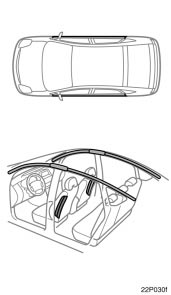
In the following cases, contact your Toyotadealer as soon as possible:
- Any of the SRS side airbags and curtainshield airbags have been inflated.
- The portion of the doors (shaded in theillustration) were involved in an accidentthat was not severe enough tocause the SRS side airbags and curtainshield airbags to inflate.
- The surface of the seats with the sideairbag (shaded in the illustration) isscratched, cracked, or otherwise damaged.
- The portion of the front pillars, rearpillars or roof side rail garnishes (padding)containing the curtain shield airbagsinside (shaded in the illustration)is scratched, cracked, or otherwisedamaged.
NOTICE
Do not disconnect the 12 volt batterycables before contacting your Toyotadealer.
Front passenger occupantclassification system
Your vehicle is equipped with a frontpassenger occupant classification system.This system detects the conditions1. through 4. in the table on page 84and based on these conditions activatesor deactivates the following systems;
- Front passenger airbag
- Side airbag on the front passengerseat
- Front passenger’s seat belt pretensioner
The system monitors the weight andload on the front passenger seat, andthe seat belt buckle switch to determineconditions 1. through 4.
In order for the system to detect theconditions correctly, do not do any ofthe following:
- Apply a heavy load to the front passengerseat.
- Attach a commercial seatback table,etc. to the front passenger seat seatback.
- Put weight on the front passenger seatby putting your hands or feet on theseatback from the rear passenger seat.

The “AIRBAG ON” and “AIRBAG OFF”indicator lights indicate the actuation ofthe front passenger airbag, side airbagon the front passenger seat and frontpassenger’s seat belt pretensioner.
The “AIRBAG OFF” indicator light will beilluminated when the “IG−ON” mode is enabledwith the condition 2 in the tableshown below.
If the front passenger occupant classificationsystem determines that a person ofadult size sits in the front passenger seatbut the “AIRBAG OFF” indicator light isilluminated, one of the following is likelyto have occurred:
- A rear passenger lifts the front passengerseat cushion with their legs.
- Objects are placed under the front passengerseat.
- The front passenger seatback is incontact with the rear seat.
To ensure the system correctly detects anadult sitting in the front passenger seat,make sure the above do not occur.
Make sure that the “AIRBAG ON” indicatorlight is illuminated when an adult isseated in the front passenger seat. If the“AIRBAG OFF” indicator light is illuminated,ask the passenger to sit up straight,well back in the seat, and with the seatbelt worn correctly. If the “AIRBAG OFF”indicator light still remains illuminated, eitherask the passenger to move to therear seat, or if that is not possible, movethe front passenger seat fully rearward.
The “AIRBAG ON” and “AIRBAG OFF”indicator lights will be illuminated initiallywhen the “IG−ON” mode is enabled.After about 4 seconds, they willgo off. After that, the front passengeroccupant classification system operatesand judges which indicator light be illuminated.

The SRS warning light and “AIRBAGOFF” indicator light will come on ifthere is a malfunction in the front passengeroccupant classification system.
Condition and operation in the front passenger occupant classification system

*1: The system judges a person of adult size as an adult. When a smaller adult sits in the front passenger seat, the system mayrecognize him/her as a child depending on his/her physique and posture.
*2: When a larger child who has outgrown a child restraint system sits in the front passenger seat, the system may recognize him/heras an adult depending on his/her physique or posture.
*3: Never install a rear−facing child restraint system on the front passenger seat. A forward−facing child restraint system should onlybe installed on the front passenger seat when it is unavoidable. (See “Child restraint” on page 86 as for installing the child restraintsystem.)
*4: When the front passenger does not wear a seat belt.
*5: In case the indicator is not illuminated, see “Child restraint” on page 86 as for installing the child restraint system properly.
CAUTION
To avoid potential death or seriousinjury when the front passenger occupantclassification system does notdetect the conditions correctly, observethe following:
- Make sure the “AIRBAG ON”indicator light is illuminated whenusing the seat belt extender for thefront passenger seat. If the“AIRBAG OFF” indicator light isilluminated, disconnect the extendertongue from the seat belt buckle,then reconnect the seat belt.Reconnect the seat belt extenderafter making sure the “AIRBAG ON”indicator light is illuminated. If youuse the seat belt extender while the“AIRBAG OFF” indicator light isilluminated, the front passengerairbag and side airbag on the frontpassenger side may not activatecorrectly, which could cause deathor serious injury in the event ofcollision.
- Do not recline the front passengerseat seatback so that it interfereswith a rear seat as it may cause the“AIRBAG OFF” indicator light be illuminated.If the seatback interfereswith the rear seat, return the seatbackto a position where it doesnot interfere with the rear seat.Keep the front passenger seatbackas upright as possible when the vehicleis moving. Reclining the seatbackexcessively may lessen the effectivenessof the seat belt system.
- If an adult sits in the frontpassenger seat, the “AIRBAG ON”indicator light should be illuminated.If the “AIRBAG OFF”indicator light is illuminated, askthe passenger to sit up straight,well back in the seat, feet on thefloor, and with the seat belt worncorrectly. If the “AIRBAG OFF”indicator light still remains illuminated,either ask the passenger tomove to the rear seat, or if that isnot possible, move the frontpassenger seat fully rearward.
- Wear the seat belt properly.
- Make sure the front passenger’sseat belt tab has not been left insertedinto the buckle before someonesits in the front passengerseat.
- Do not apply a heavy load to thefront passenger seat.
- Do not put weight on the front passengerseat by putting your handsor feet on the front passenger seatbackfrom the rear passenger seat.
- Do not let a rear passenger lift thefront passenger seat with their feetor press on the seatback with theirlegs.
- Do not put objects under the frontpassenger seat.
- Child restraint systems installed onthe rear seat should not contact thefront seatbacks.
- When it is unavoidable to install theforward−facing child restraint systemon the front passenger seat,install the child restraint system onthe front passenger seat in theproper order. (As for the installationorder, see “—Installation with3−point type seat belt” on page 89.)
- Do not remove the front seats.
- Do not kick the front passengerseat or subject it to severe impact.Otherwise, the SRS warning lightmay come on to indicate a malfunctionof the detection system. In thiscase, contact your Toyota dealer immediately.
The “AIRBAG ON” indicator light may beilluminated (the front passenger airbag andside airbag on the front passenger seatmay deploy) even if observing the abovecautions, when a child sits in, or a forward−facing child restraint system isinstalled on the front passenger seat. Referto all the cautions in “SRS airbags” onpage 66 and “Child restraint” describedbelow.
Child restraint
Child restraint precautions
Toyota strongly urges the use of appropriatechild restraint systems forchildren.
The laws of all 50 states in the U.S.A.and Canada now require the use of achild restraint system.
Your vehicle conforms to SAEJ1819.
If a child is too large for a child restraintsystem, the child should sit in the rearseat and must be restrained using thevehicle’s seat belt. See “Seat belts” onpage 58 for details.
CAUTION
- For effective protection in automobileaccidents and sudden stops, achild must be properly restrained,using a seat belt or child restraintsystem depending on the age andsize of the child. Holding a child inyour arms is not a substitute for achild restraint system. In an accident,the child can be crushedagainst the windshield, or betweenyou and the vehicle’s interior.
- Toyota strongly urges use of aproper child restraint system whichconforms to the size of the child,installed on the rear seat. Accordingto accident statistics, the childis safer when properly restrained inthe rear seat than in the front seat.
- Never install a rear−facing child restraintsystem on the front passengerseat even if the “AIRBAG OFF”indicator light is illuminated. In theevent of an accident, the force ofthe rapid inflation of the front passengerairbag can cause death orserious injury to the child if therear−facing child restraint system isinstalled on the front passengerseat.
- A forward−facing child restraint systemshould be allowed to beinstalled on the front passengerseat only when it is unavoidable.Always move the seat as far backas possible even if the “AIRBAGOFF” indicator light is illuminated,because the front passenger airbagcould inflate with considerablespeed and force. Otherwise, thechild may be killed or seriously injured.
- On vehicles with side airbags andcurtain shield airbags, do not allowthe child to lean his/her head orany part of his/her body against thedoor or the area of the seat, frontor rear pillar or roof side rail fromwhich the side airbags or curtainshield airbags deploy even if thechild is seated in the child restraintsystem. It is dangerous if the sideairbag and curtain shield airbag inflate,and the impact could causedeath or serious injury to the child.
- Do not use the seat belt extenderwhen installing a child restraintsystem on the front or rear passengerseat. If installing a child restraintsystem with the seat beltextender connected to the seat belt,the seat belt will not securely holdthe child restraint system, whichcould cause death or serious injuryto the child or other passengers inthe event of collision.
- Make sure you have complied withall installation instructions providedby the child restraint manufacturerand that the system is properly secured.If it is not secured properly,it may cause death or serious injuryto the child in the event of asudden stop or accident.
Child restraint system
A child restraint system for a smallchild or baby must itself be properlyrestrained on the seat with the lap portionof the lap/shoulder belt. You mustcarefully consult the manufacturer’s instructionswhich accompany child restraintsystem.
To provide proper restraint, use a childrestraint system following the manufacturer’sinstructions about the appropriate ageand size of the child for the child restraintsystem.
Install the child restraint system correctlyfollowing the instructions provided by itsmanufacturer. General directions are alsoprovided under the following instructions.
The child restraint system should beinstalled on the rear seat. According toaccident statistics, the child is safer whenproperly restrained in the rear seat thanin the front seat.
When not using the child restraint system,keep it secured with the seat belt or placeit somewhere other than the passengercompartment. This will prevent it from injuringpassengers in the event of a suddenstop or accident.
Types of child restraintsystem
Child restraint systems are classified intothe following 3 types depending on thechild’s age and size.
(A) Infant seat
(B) Convertible seat
(C) Booster seat
Install the child restraint system followingthe instructions provided by its manufacturer.
Your vehicle has anchor brackets for securingthe top strap of a child restraintsystem.
For instructions about how to use the anchorbracket, see “—Using a top strap” onpage 99.
The child restraint lower anchorages approvedfor your vehicle may also be used.
See “—Installation with child restraint loweranchorages” on page 101.

(A) Infant seat

(B) Convertible seat

(C) Booster seat
Installation with 3−pointtype seat belt. (A) INFANT SEAT INSTALLATION

An infant seat must be used in rear−facing position only.

CAUTION
Never install a rear−facing child restraintsystem on the front passengerseat even if the “AIRBAG OFF”indicator light is illuminated. In theevent of an accident, the impact ofthe rapid inflation of the front passengerairbag could cause death orserious injury to the child if therear−facing child restraint system isinstalled on the front passengerseat.

Do not install a child restraint systemon the rear seat if it interfereswith the lock mechanism of thefront seats. Otherwise, the child orfront seat occupant(s) may be killedor seriously injured in case of suddenbraking or a collision.
If the driver’s seat position doesnot allow sufficient space for safeinstallation, install the child restraintsystem on the rear rightseat.

Run the lap and shoulder belt throughor around the infant seat following theinstructions provided by its manufacturerand insert the tab into the buckletaking care not to twist the belt. Keepthe lap portion of the belt tight.
CAUTION
After inserting the tab, make surethe tab and buckle are locked andthat the lap and shoulder portionsof the belt are not twisted.
Do not insert coins, clips, etc. inthe buckle as this may prevent youfrom properly latching the tab andbuckle.
If the seat belt does not functionnormally, it cannot protect yourchild from death or serious injury.Contact your Toyota dealer immediately.Do not install the child restraintsystem on the seat until theseat belt is fixed.

2. Fully extend the shoulder belt to put itin the lock mode. When the belt isthen retracted even slightly, it cannotbe extended.
To hold the infant seat securely, makesure the belt is in the lock mode beforeletting the belt retract.

3. While pressing the infant seat firmlyagainst the seat cushion and seatback,let the shoulder belt retract as far asit will go to hold the infant seat securely.

CAUTION
Push and pull the child restraint systemin different directions to be sureit is secure. Follow all the installationinstructions provided by its manufacturer.

4. To remove the infant seat, press thebuckle release button and allow thebelt to retract completely. The belt willmove freely again and be ready towork for an adult or older child passenger.
(B) CONVERTIBLE SEAT INSTALLATION

A convertible seat must be used in forward−facing or rear−facing position dependingon the age and size of thechild. When installing, follow themanufacturer’s instructions about theapplicable age and size of the child aswell as directions for installing thechild restraint system.
Install the child restraint system on thefront passenger seat only when it is unavoidable.Your vehicle is equipped with afront passenger occupant classificationsystem. In order to activate the occupantclassification system correctly, install theforward−facing child restraint system onthe front passenger seat in the followingorder:
1. Turn the hybrid system to “IG−ON”.
2. Move the front passenger seat to therearward position.
3. Put the child restraint system on thefront passenger seat without puttingyour weight on the front passengerseat.
4. Insert the seat belt tab into the seatbelt buckle.
5. Fully extend the shoulder belt to put itin the lock mode. When the belt isthen retracted even slightly, it cannotbe extended. To hold the seat securely,make sure the belt is in the lock modebefore letting the belt retract.
6. While pressing the convertible seatfirmly against the seat cushion andseatback, let the shoulder belt retractas far as it will go to hold the convertibleseat securely.
CAUTION
Push and pull the child restraint systemin different directions to be sureit is secure. Follow all the installationinstructions provided by its manufacturer.
7. Put a child on the child restraint systemand secure the child, complyingwith the instructions provided by thechild restraint system manufacturer.
The “AIRBAG OFF” indicator light shouldbe illuminated when the “IG−ON” mode isenabled and the child is in the child restraintsystem after following these procedures.The “AIRBAG OFF” indicator lightindicates the SRS front passenger airbagand side airbag on the passenger side willnot deploy. If the “AIRBAG ON” indicatorlight is illuminated, remove the child restraintsystem and reinstall it with the hybridsystem in the “ACC” or “OFF” mode.If the “AIRBAG ON” indicator light is illuminatedwhen the “IG−ON” mode is enabled,then the SRS front passenger airbagand side airbag on the passengerside may deploy in an accident. Do notdrive the vehicle in this condition. Removethe child restraint system and contact yourToyota dealer.
CAUTION
Never install a rear−facing child restraintsystem on the front passengerseat. A forward−facing child restraintsystem should only beinstalled on the front passengerseat when unavoidable. If you mustinstall the child restraint system onthe front passenger seat, put theseat in its most rearward position,and install the forward−facing childrestraint system in the proper order.Otherwise, the front passengeroccupant classification system cannotdetect the presence of the childrestraint system and the front passengerairbag and side airbag onthe front passenger seat coulddeploy, and the impact could causedeath or serious injury to the child.

Never install a rear−facing child restraintsystem on the front passengerseat even if the “AIRBAG OFF”indicator light is illuminated. In theevent of an accident, the impact ofthe rapid inflation of the front passengerairbag could cause death orserious injury to the child if therear−facing child restraint system isinstalled on the front passengerseat.

A forward−facing child restraint systemshould be allowed to beinstalled on the front passengerseat only when it is unavoidable.Always move the seat as far backas possible even if the “AIRBAGOFF” indicator light is illuminated,because the front passenger airbagcould inflate with considerablespeed and force. Otherwise, thechild may be killed or seriously injured.
On vehicles with side airbags andcurtain shield airbags, do not allowthe child to lean his/her head orany part of his/her body against thedoor or the area of the seat, frontor rear pillar or roof side rail fromwhich the side airbags or curtainshield airbags deploy even if thechild is seated in the child restraintsystem. It is dangerous if the sideairbag and curtain shield airbag inflate,and the impact could causedeath or serious injury to the child.

Do not install a child restraint systemon the rear seat if it interfereswith the lock mechanism of thefront seats. Otherwise, the child orfront seat occupant(s) may be killedor seriously injured in case of suddenbraking or a collision.
If the driver’s seat position doesnot allow sufficient space for safeinstallation, install the child restraintsystem on the rear rightseat.

1. Run the lap and shoulder belt throughor around the convertible seat followingthe instructions provided by itsmanufacturer and insert the tab intothe buckle taking care not to twist thebelt. Keep the lap portion of the belttight.
CAUTION
- After inserting the tab, make surethe tab and buckle are locked andthat the lap and shoulder portionsof the belt are not twisted.
- Do not insert coins, clips, etc. inthe buckle as this may prevent youfrom properly latching the tab andbuckle.
- If the seat belt does not functionnormally, it cannot protect yourchild from death or serious injury.Contact your Toyota dealer immediately.Do not install the child restraintsystem on the seat until theseat belt is fixed.

2. Fully extend the shoulder belt to put itin the lock mode. When the belt isthen retracted even slightly, it cannotbe extended.
To hold the convertible seat securely,make sure the belt is in the lock modebefore letting the belt retract.

3. While pressing the convertible seatfirmly against the seat cushion andseatback, let the shoulder belt retractas far as it will go to hold the convertibleseat securely.

CAUTION
Push and pull the child restraint systemin different directions to be sureit is secure. Follow all the installationinstructions provided by its manufacturer.

4. To remove the convertible seat, pressthe buckle release button and allow thebelt to retract completely. The belt willmove freely again and be ready towork for an adult or older child passenger.
(C) BOOSTER SEAT INSTALLATION

A booster seat must be used in forward−facing position only.

CAUTION
- A forward−facing child restraint systemshould be allowed to beinstalled on the front passengerseat only when it is unavoidable.Always move the seat as far backas possible even if the “AIRBAGOFF” indicator light is illuminated,because the front passenger airbagcould inflate with considerablespeed and force. Otherwise, thechild may be killed or seriously injured.
- On vehicles with side airbags andcurtain shield airbags, do not allowthe child to lean his/her head orany part of his/her body against thedoor or the area of the seat, frontor rear pillar or roof side rail fromwhich the side airbags or curtainshield airbags deploy even if thechild is seated in the child restraintsystem. It is dangerous if the sideairbag and curtain shield airbag inflate,and the impact could causedeath or serious injury to the child.

1. Sit the child on a booster seat. Runthe lap and shoulder belt through oraround the booster seat and across thechild following the instructions providedby its manufacturer and insert the tabinto the buckle taking care not to twistthe belt.
Make sure the shoulder belt is correctlyacross the child’s shoulder and that thelap belt is positioned as low as possibleon the child’s hips. See “Seat belts” onpage 58 for details.
CAUTION
- Always make sure the shoulder beltis positioned across the center ofchild’s shoulder. The belt should bekept away from child’s neck, butnot falling off child’s shoulder.Otherwise, the child may be killedor seriously injured in case of suddenbraking or a collision.
- Both high−positioned lap belts andloose−fitting belts could causedeath or serious injuries due tosliding under the lap belt during acollision or other unintended event.Keep the lap belt positioned as lowon a child’s hips as possible.
- For child’s safety, do not place theshoulder belt under child’s arm.
- After inserting the tab, make surethe tab and buckle are locked andthat the lap and shoulder portionsof the belt are not twisted.
- Do not insert coins, clips, etc. inthe buckle as this may prevent youfrom properly latching the tab andbuckle.
- If the seat belt does not functionnormally, it cannot protect yourchild from death or serious injury.Contact your Toyota dealer immediately.Do not install the child restraintsystem on the seat until theseat belt is fixed.

2. To remove the booster seat, press thebuckle release button and allow thebelt to retract.
Using a top strap

Follow the procedure below for a childrestraint system that requires the useof a top strap.

Use the anchor brackets on the back ofthe rear seatback to attach the top strap.
Anchor brackets are installed for eachrear seating position.
This symbol indicates the location of theanchor brackets.

TO USE THE ANCHOR BRACKET:
1. Remove the luggage cover (See“Luggage cover” on page 316.) andraise the head restraint to the uppermostlock position.

2. Open the cover of the anchor bracket.

3. Fix the child restraint system withthe seat belt.
Latch the hook onto the anchorbracket and tighten the top strap.
For instructions to install the child restraintsystem, see “Child restraint” onpage 86.
CAUTION
Make sure the top strap is securelylatched, and check that the child restraintsystem is secure by pushingand pulling it in different directions.Follow all the installation instructionsprovided by its manufacturer.
Installation with childrestraint lower anchorages

The lower anchorages for the child restraintsystem interfaced with theFMVSS225 or CMVSS210.2 specificationare installed in the rear seat.
The anchorages are installed in the clearancebetween the seat cushion and seatbackof both outside rear seats.
Child restraint system interfaced with theFMVSS213 or CMVSS213 specificationcan be fixed with these anchorages. Inthis case, it is not necessary to fix thechild restraint system with a seat belt onthe vehicle.

Type A

Type B
CHILD RESTRAINT SYSTEM INSTALLATION
1. Widen the gap between the seatcushion and seatback slightly andconfirm the position of the lower anchoragesbelow the symbol in theseatback.
2. Type A—Latch the hooks of lowerstraps onto the anchorages andtighten the lower straps.
Type B—Latch the buckles onto theanchorages.
For owners in Canada
The symbol on a child restraint systemindicates the presence of a lower connectorsystem.
If your child restraint system has a topstrap, it should be anchored. (For theinstallation of the top strap, see “—Usinga top strap” on page 99.)
For installation details, refer to the instructionmanual equipped with each product.
CAUTION
- When using the lower anchoragesfor the child restraint system, besure that there are no irregular objectsaround the anchorages or thatthe seat belt is not caught.
- Push and pull the child restraintsystem in different directions to besure it is secure. Follow all theinstallation instructions provided byits manufacturer.
- Do not install a child restraint systemon the rear seat if it interfereswith the lock mechanism of thefront seats. Otherwise, the child orfront seat occupant(s) may be killedor seriously injured in case of suddenbraking or a collision.
Download Manual