Vehicle load limit – how to determine
The load capacity of your vehicle is determined by weight, not by avail- able cargo space. The load limit of your vehicle is shown on the vehicle placard attached to the driver’s side door pillar. Locate the statement “The combined weight of occupants and cargo should never exceed XXX kg or XXX lbs” on your vehicle’s placard.
The vehicle placard also shows seating capacity of your vehicle.
The total load capacity includes the total weight of driver and all pas- sengers and their belongings, any cargo, any optional equipment such as a trailer hitch, roof rack or bike carrier, etc., and the tongue load of a trailer. Therefore cargo capacity can be calculated by the following method.
Cargo capacity = Load limit − (total weight of occupants + total weight
530 Vehicle load limit – how to determine
For information about vehicle load- ing, refer to “Loading your vehicle”
P408.
& Calculating total and load capacities varying seating configurations
Calculate the available load capa- city as shown in the following examples:
Example 1A
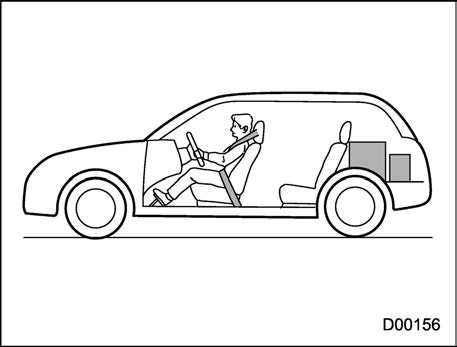
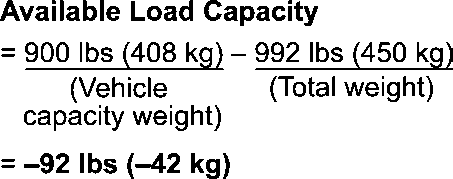
Vehicle capacity weight of the ve- hicle is 900 lbs (408 kg), which is
indicated on the vehicle placard with the statement “The combined weight of occupants and cargo should never exceed 900 lbs or 408 kg”.
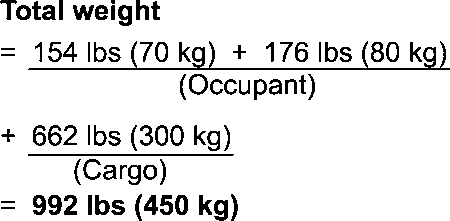
For example, if the vehicle has one occupant weighing 154 lbs (70 kg)
plus cargo weighing 662 lbs (300 kg).
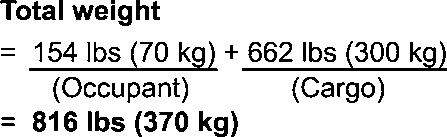
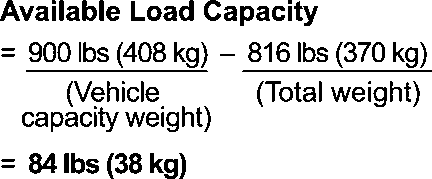
further 84 lbs (38 kg) of cargo can be carried.
Example 1B
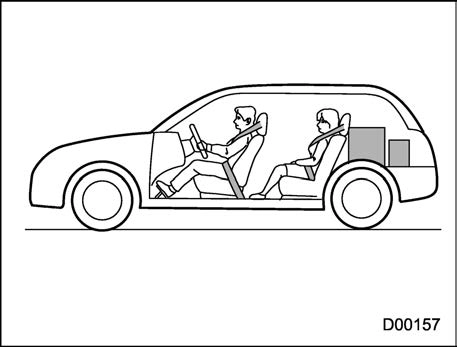
For example, if a person weighing 176 lbs (80 kg) now enters the same vehicle (bringing the number of occupants to two), the calculations are as follows.
Example 2A
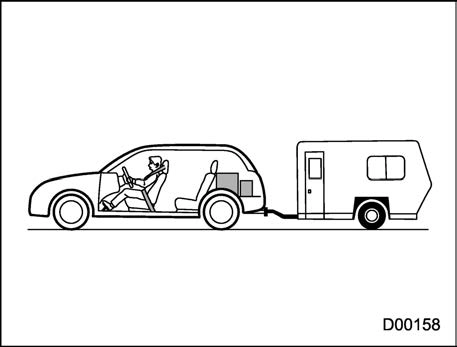
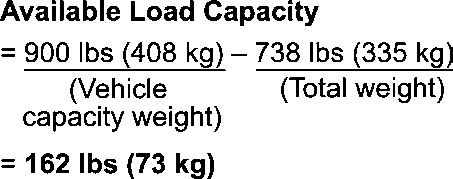
Vehicle capacity weight of the ve- hicle is 900 lbs (408 kg), which is indicated on the vehicle placard with the statement “The combined weight of occupants and cargo should never exceed 408 kg or 900 lbs”.
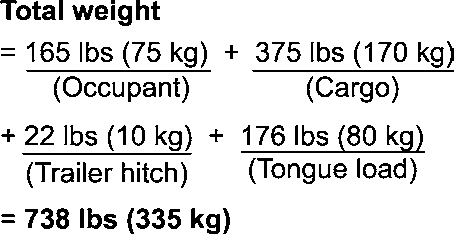
For example, the vehicle has one occupant weighing 165 lbs (75 kg)
plus cargo weighing 375 lbs (170 kg). In addition, the vehicle is fitted with a trailer hitch weighing 22 lbs (10 kg), to which is attached a trailer weighing 1,764 lbs (800 kg). 10% of the trailer weight is applied to the
trailer tongue (i.e. Tongue load = 176 lbs (80 kg)).
532 Uniform tire quality grading standards
Example 2B
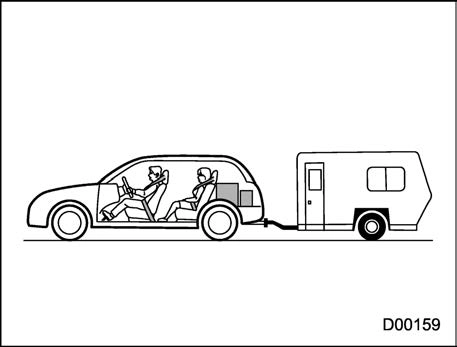
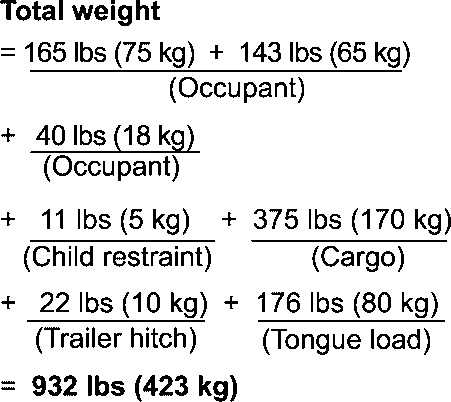
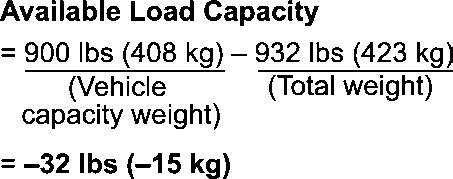
For example, if a person weighing 143 lbs (65 kg) and a child weighing 40 lbs (18 kg) now enter the same vehicle (bringing the number of occupants to three), and a child restraint system weighing 11 lbs (5 kg) is installed in the vehicle for the child to use, the calculations are as follows.
Download Manual