Disclaimer: Not affiliated with or endorsed by Ford Motor Company. For informational purposes only. Full Disclaimer
How To Upgrade Sound System of Ford Mustang
Updated:
There's a certain thrill every Ford Mustang owner feels when hearing the roar of that iconic engine, especially as you zip down the open road with the wind rushing by. But let's be honest, there are those moments when you just want to chill out and listen to some good tunes on the road, right?
It becomes crucial when you're planning that epic road trip. I mean, a drive isn't complete without your favourite tunes, right? And if you've got a family tagging along, keeping the kiddos entertained with some shows on the Mustang's multimedia system can be a lifesaver.
But sometimes, the stock audio system in the Mustang might not live up to the pony's legend. Maybe it's not loud enough to drown out that V8, or perhaps the sound quality is more "hoof" than "horsepower." If you're thinking, "My Mustang deserves better," then you're in luck. Keep reading.
Thinking about an upgrade? Consider professional hands.
Upgrading your Mustang's audio isn't just a simple swap-out. There's a bit of technical know-how required, especially when dealing with wiring. After all, you don't want to end up with a silent stallion because of some crossed wires, do you?
So, if you're a tad unsure about your techie skills, maybe it's best to hand over the reins to a professional. It'll save you time, and you can ride off into the sunset, knowing your music's in good hands.
Going DIY? Remember to disconnect!

Alright, DIYers. If you're going to tinker with your Mustang's system, first things first - disconnect that battery. It's safer for you and the car. No unexpected shocks or fried circuits, okay?
Tools of the trade
Depending on the specifics of your upgrade, you'll need a few tools to get started. Let's break it down.
Shop From Amazon


Essentials include:
- A set of wrenches;
- Insulating tape;
- Screwdrivers (both Phillips and flathead, of course);
- Pliers;
- Soldering iron;
- A batch of wires (specific to your system);
- Electrical schematic of the Mustang or Ford Mustang Owner's Manual;
- Multimeter.
Speaker Speak
Most of your sound quality - about 70% I reckon - comes from your speakers. So if you're hearing more of a whinny than a roar, it might be time for an upgrade. Good speakers aren't about breaking the bank, but more about smart shopping. A decent pair will set you back around $100-$200 each. But if you're feeling a bit flush, you can splurge for that concert hall experience.

Picking the right speakers for your Mustang
Beyond the sound quality, you've got to ensure the speakers fit your Mustang. Each model year might have a bit of a tweak, so you need the right size. Too big, and they won't fit. Too small, and you'll have them rattling about. Not ideal.
Want to double-check your Mustang's specs? Find your model's speaker dimensions here.
How to install speakers in your Ford Mustang?
Right, so you've snagged yourself a fantastic pair of speakers and now you're wondering how to give your Mustang that extra oomph. Not to worry! The process is pretty straightforward, especially if you're used to tinkering under the bonnet. So, here's a step-by-step guide:
1. Figure out where the old speakers are (I mean, it's a Mustang – every detail counts!);
2. Get those interior panels off to access the speakers – careful now, wouldn't want to scratch anything;
3. Unbolt or unscrew the speakers from their perch;
4. Keep track of the wires, preferably with colourful little markers. Don't want to mix them up, do we?;
5. Pop out the old speakers and replace them with your shiny new ones. If they're a smidge off size-wise, you might need to get creative;
6. Wires back on, making sure they're connected correctly. Give 'em a good look-over;
7. Make sure those new speakers are sitting snug and tight;
8. Re-attach all the panels you removed, and voila! You've got yourself a revamped Mustang audio experience.

Remember, these new speakers aren't confined to traditional spots – go mad! Install them in the doors, the trunk, or even by the dashboard. It's your Mustang after all!
Try to keep all speakers from the same brand. Mixing and matching might not give you the sound clarity you're aiming for. Plus, an abundance of speakers can make those doors a tad heavier, potentially leading to more vibrations. So, consider that before going speaker-crazy!
Getting that Bass with a Subwoofer Setup
Okay, let's talk bass. We're in a Mustang, so why not shake the ground a bit, right? A subwoofer is like adding a bit of spice to your dish – it elevates the overall sound experience. For those epic, chest-thumping tunes, a subwoofer is what you need.
They bring in the deep notes, which your typical car speakers might struggle with. And who doesn't want to feel the beat of their favourite track while cruising down the highway?
Quality does come at a price, though. Expect to shell out a couple of hundred bucks for a decent subwoofer. It's a small price for a richer soundtrack to your drives!
Finding the Perfect Subwoofer for Your Ford Mustang

Alright, choosing a subwoofer isn't just about picking the shiniest one. You've got to consider active vs passive and other factors that come into play.
Benefits of an Active Subwoofer
Built-in Amplifier. One major plus? They've got an amplifier built right in! That means less fiddling about for you. It also saves space, which is great for the streamlined interiors of a Mustang.
Compact Design. Most of these are designed with size in mind, perfect for fitting into smaller spaces.
Easy Installation. Plug, play, and you're away! The built-in amplifier means fewer wires to worry about.
Control & Adjustability. These subwoofers give you more control, ensuring the bass notes harmonise with the Mustang's acoustics and other speakers. Perfect!
Active subwoofer downsides
Bit pricier. With that handy built-in amplifier, active car subwoofers tend to be a touch more expensive than their passive mates.
Bit of a placement bother. Active subwoofers like to be near a power source, which could cramp your style when deciding where to stash it in your Mustang.
Passive subwoofer - no built-in amplifier here! You'll have to pick one up separately for these chaps.
Perks of a passive subwoofer
Pick your own amp. With a passive Mustang subwoofer, you get to choose the amplifier that suits your whims and wallet. A chance to go top-shelf on the power for the best sound imaginable!
Friendlier on the pocket. Generally, passive subwoofers are a bit kinder to your bank account because they skip the built-in amplifier bit.
Play with placement. Since they don't come with an integrated amplifier, these subs give you a playground of positioning options. You can optimize every nook and cranny of your Mustang's boot.
The not-so-great bits about passive subwoofers
Extra kit required. A passive Mustang subwoofer means you'll need an external amp. That might mean more wiring and gubbins to deal with, potentially upping the headache and cost of installation.
Fiddlier controls. Passive subwoofers don't come with as many knobs and dials. You might have to do a jig with the external amp to get the bass sounding just so.
A touch more room needed. You'll need a tad more room in your Mustang when you factor in that external amplifier, especially compared to those neat-and-tidy active systems.
Now, you can't just pick any old subwoofer. Power's a big deal. Here are some power pointers:
- Nominal (that's RMS - Rated Maximum Sinusoidal to the techies) power - this tells you how well the speaker can keep belting out tunes over time without sounding like a cat's choir;
- Maximum (or peak) power - how well the sub can handle short, punchy bursts without losing its cool or falling apart.
Sensitivity. It's not about the subwoofer's feelings, but its output. While power is about what it gulps down, sensitivity is about what it belts out. Think of it as the balance between the speaker cone's size and its movement dynamics (the whole "big" versus "small" subwoofer debate).
For every 3 decibels you increase in sensitivity, you're doubling the volume. Now that's a party!
Resistance (or impedance if you're feeling fancy) - measured in those twisty ohms symbols. It's a bit about how hard the amplifier has to work. Lower resistance means more bang from the amp but at the risk of a bit of distortion. 4 ohms seems to be the sweet spot for most Mustang subwoofers.
And, don't forget about size! Bigger might mean more powerful, but remember you've got to fit this beast in your Mustang. Make sure it won't be like trying to squeeze a grand piano into a phone booth. Measure twice, buy once!
Getting that bass right in your Ford Mustang

So, you've got a spot picked out and you've had a look-see at the subwoofer, ready to bring the house down in your Mustang? Well, strap in; let's get to work!
This method's more or less a one-size-fits-all, designed for the mighty Mustang. But, as always, the odd hiccup might appear - just a heads up!
If you hit a speed bump (or any installation issue, for that matter), give us a shout. We're here to help!
First up, let's talk amplifier. Best spots? Under the seat or in the boot, keeping it close to the battery but away from pesky heat or dampness.
Once you've found the sweet spot, fasten the amp down. Stretch the power wire from the battery's positive end straight to the amplifier. And for Pete's sake, fuse-protect the wire near the battery – safety first!
If you've snagged an active subwoofer, you can sidestep this and plug straight into the speakers, thanks to the built-in amplifier.
Now, tether a ground wire from the amp to a shiny, metal part on your Mustang’s skeleton. Keep it short and sweet.
Stretch out those RCA cables from your stereo to the amplifier; they'll send over the tunes. Quick tip: keep 'em away from the power wire – don't want any interference ruining the party!
Connect speaker wire from the amp to the subwoofer, matching positives to positives and negatives to negatives. Simple, right?
Pop the subwoofer into a purpose-built enclosure. Your choice here will play a big role in the kind of thump you get, so choose wisely.
Now, nestle that box snugly into the Mustang. The trunk's a solid bet, but it might vary based on your Mustang version and personal taste.
Power up the Mustang, kick on the stereo, and get that subwoofer and Mustang's speakers to play nice by tweaking the amp’s settings. Maybe fine-tune the stereo settings for that extra edge.
Last but not least, double-check everything. A loose wire can be the difference between musical nirvana and a fizzle.
Picking the right amplifier for your Ford Mustang

Thinking about amplifiers for the Mustang? Keep an eye on these pointers.
Ensure the amp vibes with your speaker. Mismatched power and resistance can spell disaster for your amp and the sound quality.
Quick note: Your speakers' input impedance shouldn't be below what your amplifier can handle.
Class categories – A, B, C, D, AB – are your friends. AB might give you crisp sound but may lack efficiency. D amps, on the other hand, pack a punch in a small package, sometimes hitting 95% efficiency!
Monoblocks are top-notch for hitching a subwoofer to an existing system, while two-channel amps offer a bit more flexibility. Need to connect 2 speakers and a sub? Go for three-channel. Building an audio temple? Four-channel's your mate. For 4 speakers and a sub, it's five-channel all the way.
Remember, as speaker resistance rises, power takes a dive.
Frequency reproduction typically sits between 20 - 20000 Hz, but for single-channel amps, you don't really need beyond 250-300 Hz.
If you're chasing perfection, the distortion factor and signal-to-noise ratio are worth a look.
How to fit that beastly amplifier in a Ford Mustang?
First thing's first. You're about to soup up one of the world's most iconic muscle cars with an amplifier. Choose a perfect spot in your Mustang, ensuring it's shielded, and gets a good flow of air. Dodge any places with a risk of dampness or intense heat.
Pin down the amplifier with screws or brackets. Keep it sturdy; you wouldn't want it flying around during a spirited drive down the coast, would you?
Run a power wire straight from your battery to the amplifier. Safeguard it as you sneak it through the Mustang's firewall. And don't forget the fuse holder near the battery. Safety first, even with the horses under the bonnet!
Ground wire time. Find a pristine metal point close by. Strip it, connect it, and make sure it's pure metal-to-metal for the grounding. Essential for the full-throttle sound you're after.
Connect the remote start wire, usually found lurking behind the radio or amidst the fuses. This little wire tells your amplifier to kick into gear when you rev up that Mustang stereo.
Now, for the RCA cables. If your Mustang's stereo boasts RCA outputs, connect them to your amplifier. No RCA? No problem! Use a converter to mesh the speaker wires to the amplifier's RCA inputs.
Then, run the speaker wires from the amplifier straight to your roaring speakers or subwoofers. Be attentive to your positives and negatives. A mistake here and you might end up with a whimper instead of a roar!
Double, no, triple check all your connections. Shield any exposed bits with electrical tape or, if you're feeling particularly fancy, heat shrink tubing. Fire up the engine and feel the sound!
Head Unit - The Brain Behind the Brawn
Every Mustang model, from the classics to the freshest off the production line, comes with a distinct audio system. It's where you select that perfect track as you cruise down the highway with the top down.
But let's be honest, sometimes stock just doesn't cut it. Upgrading your Mustang's head unit can turn every drive into a concert experience.
Picking the Ideal Head Unit for Your Ford Mustang

Look beyond the basic price and brand. Consider:
1. The size of your current radio (Single din? Double din?). Keep it simple and match the size, or be adventurous and modify for something grander.
2. Wiring and compatibility. Know your wires, and make sure you've got all the connectors and adapters you need.
Slotting in a New Head Unit in Your Ford Mustang
Chosen your unit? Excellent! Follow the steps, and soon you'll have the sound to match the power of your Mustang.
Remove the old unit with care, keep track of wires, and connect them properly to your new head unit. Don't forget, some units might need an adapter for that perfect fit. Slot in the new unit, ensure everything's snug and secure, and then blast your favourite track. You've earned it!
Cranking Up the Horses... and the Bass!
Now, the Ford Mustang, that glorious embodiment of power and style, was engineered to rumble roads, turn heads, and of course, to belt out your favourite tunes. Naturally, this stallion has an electrical system built for purpose, balancing between giving you those goosebumps when you rev the engine and the chills from your favourite tracks.
That battery under the hood? It’s a workhorse, looking after your engine, lights, air-con, and much more. But remember, even in the world of horsepower, there's a limit.
If you start bolting on a sound system that would make a rock concert jealous, you might just push the Mustang’s electricals too far. Overdo it, and you could see some, well, unexpected ‘features’ like dimming headlights or a flickering dashboard.
So how do you know you've pushed your beloved Mustang a tad too much? Watch out for:
- Power going poof!
- The engine having a moody day;
- Headlights that seem to have had a few too many;
- That dashboard disco;
- Bass notes that make your sound system sound like it's had a hiccup;
- And any other onboard tech acting a bit, well, quirky.
If you’ve supercharged your audio and you're seeing these signs, try this:
- Fire up that Mustang;
- Switch on everything that uses power: lights, air-con, heated seats (if you've got 'em), and your epic playlist;
- Pop the hood and find that battery;
- Grab a multimeter. Positive to positive, negative to negative, and check the reading;
- You’re aiming for a sweet spot around 14.2-15 volts. Below 13.5? Well, you might have a little problem.
If you're a bit short on juice, you've got two choices:
Supercharge that Alternator! If your standard alternator isn't giving you the boost you need, it might be time for an upgrade. Think of it like swapping a V6 for a V8!
For instance, if you've got an 80 A alternator, why not aim for something a bit beefier, say 120 A?
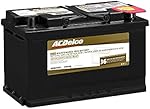
Extra Battery Power! If changing the alternator feels too much, then simply get a wingman for your battery. Link them in parallel and watch the magic happen.
Important bit! Ensure they're connected in parallel. We don't want any unexpected fireworks, do we?
Shop From Amazon


Because Why Stop There?
Beyond that thunderous audio, there's more tech fun to be had. How about a swanky touchscreen or a nifty navigation system for your Mustang?
Touchscreen Delight
Upgrading your audio? Let's take it up a notch! Gift your rear passengers with screens. Perfect for movies, music, and the occasional game of 'Are we there yet?' on long journeys.
Never Get Lost Again (Well, maybe)
Love exploring new roads with your Mustang? A navigation system is just the thing you need to ensure your adventures don't turn into unintended detours.
Shop From Amazon


In Conclusion...
Upgrading your Mustang's sound system is like fitting it with a new set of shoes. It enhances the experience, makes every journey a joy, and trust me, there's nothing like cruising down a highway with your favourite tunes blasting.
And remember, if you’re not too sure about which wire goes where, always reach out to a pro. After all, your Mustang deserves the best!

Nick Marchenko, PhD
Industrial Engineer & Automotive Content Specialist
Nick writes in-depth guides on car clubs, engine specs, vehicle ownership, and modifications, combining engineering knowledge with automotive passion.
Full profile → LinkedIn →You May Also Like
How To Find A Coolant Leak In Ford Mustang - You Don't Need A Pressure Tester
2 years agoEver wondered what keeps that roaring engine of your Ford Mustang from turning into a fire-breathing dragon? It's coolant, my friend. Just like a refreshing drink on a hot summer day, it courses t...
How To Choose Tires For Ford Mustang
2 years agoTires, right, they're sort of like the comfy trainers you wear to the gym. But instead of keeping your feet comfy, they're looking after something a bit...heftier. Say, for example, when you b...
What Does p0420 Code Ford Mustang Mean?
2 years agoIf you're a Ford Mustang enthusiast like me, it's essential to know the ins and outs of your car's engine. When you get the p0420 code on your Ford Mustang, it often points to an issue...
How To Install Roof Racks on Ford Mustang?
2 years agoWhen setting out for a long drive or perhaps a weekend escape, you might think, "Where am I going to put all this stuff?" Even if your Ford Mustang is a sleek beast of power and beauty, some...
How To Change the Coolant in Ford Mustang?
2 years agoFrom the seasoned road-tripper to the newbie, oil changes and brake checks are etched in the schedule, but what about your coolant? This trusty liquid keeps your engine cool, vital for your Ford Musta...
How To Sell Your Junk Ford Mustang?
2 years agoLook after it and the Ford Mustang will be the gift that keeps on giving. But let's not kid ourselves, even the best of cars have a shelf life. Eventually, a car begins to feel its years. A Mus...