Disclaimer: Not affiliated with or endorsed by Ford Motor Company. For informational purposes only. Full Disclaimer
How To Upgrade Sound System of Ford Fusion
Updated:
Any Ford Fusion enthusiast knows the thrill of hearing the roar of its engine and feeling the wind whip by as you push the speedometer. Yet, there are times when you just want some good tunes to accompany your drive.
This becomes vital especially during those extended road trips. A well-curated playlist can make all the difference. For those traveling with family, especially kids, an engaging movie or show on the Fusion's entertainment system can be a lifesaver.
However, it's a common grievance that the default audio system in the Fusion might not always hit the right note. Whether it’s not loud enough or struggles with certain frequencies, there’s always room for improvement. If you find yourself nodding along, then you might be interested in upgrading your Fusion's sound system. This article will steer you in the right direction.
Understand the stakes - Maybe let the pros handle it?
Optimizing the Ford Fusion's audio system isn’t a walk in the park. It requires a fair understanding of electrical systems. Being familiar with the Fusion's wiring diagram is a must.
An improper connection can cause not just glitches in your audio but could also lead to electrical mishaps with the car itself.
If you're not sure about DIY-ing this, it's probably best to leave it to the experts. Not only will this save you time, but you'll also have peace of mind knowing that your Fusion's sound system has been upgraded with precision.
Always disconnect the negative battery terminal first

Before diving into any modifications on the Ford Fusion, it's crucial to disconnect the negative battery terminal. This ensures both your safety and the vehicle's, guarding against potential electrical hazards.
Essential tools for your Fusion stereo upgrade
While the exact tools can vary based on what you intend to install, here’s a general toolkit you should have on hand:
Shop From Amazon


These include:
- A set of wrenches;
- Insulating tape;
- Screwdrivers (Phillips and flathead);
- Pliers;
- Soldering iron;
- Appropriate wiring for your sound system;
- Ford Fusion's electrical system diagram / Ford Fusion Owner's Manual;
- Multimeter.
Speaker Considerations
When it comes to sound, your speakers are paramount. Investing in quality ones can truly elevate your audio experience. It's often seen that low-end speakers deteriorate over time, compromising the sound.
If you're looking to upgrade, always go for reputable brands and check out user reviews. Good speakers generally range between $100-$200 each, but for a top-notch experience, be ready to spend a bit more.

Picking the right speakers for your Ford Fusion
While quality is key, compatibility is just as important. Ensure the speakers you pick fit perfectly in the allocated space in your Fusion model.
Compatibility isn’t just about size; the design matters too. You wouldn’t want speakers that are too large or ones that don’t secure properly due to being too small. For detailed specs and sizes compatible with your Fusion model, check here.
How to Revamp the Sound System: Installing Speakers in Your Ford Fusion
Alright folks, if you've got the right gear in hand, sliding those speakers into your Ford Fusion should be smooth as drifting around a bend. Here's a step-by-step to get you jamming in no time:
1. First off, identify where your speakers are. Fusion models might differ a bit, so ensure you're looking in the right spot.
2. Next, you'll want to peel away any interior paneling shielding your speakers. This could mean popping off door panels or other interior sections.
3. Once you have a clear path, remove the speakers. They might be held down by some screws or bolts – just keep track of these, you'll need them later.
4. Carefully disconnect the wires. Tip from the track: mark the positive and negative cables to avoid a mix-up during reassembly.
5. Slide out the old speaker and fit the new one in its spot. If your measurements were on point, it's a cinch. Otherwise, you might need some slight adjustments.
6. Time to connect the wires to your brand new speaker. Always double-check the wiring before firing it up. We want sweet sound, not sparks!
7. Secure your speakers, ensure they're snug, and aren't bouncing around like they're on a rally track.
8. Re-fit any paneling you removed.
9. And repeat for any other speakers you’re looking to upgrade.

Wanna get creative? The Fusion has plenty of spots where you can fit in some additional sound. Doors, trunk, under the seats, maybe even stash one in the glove compartment. But, remember, any change means a bit of re-wiring and adjustments, so be prepared.
One word of advice, stick to a single brand for consistency in sound quality. Also, while more speakers mean more sound, be wary of adding too much weight or causing excessive vibrations, especially at those booming bass notes.
Turbocharge Your Sound: Setting Up a Subwoofer in the Fusion
If you're chasing that spine-tingling bass in your Ford Fusion, a subwoofer is the ticket. It's the key to hitting those low-frequency notes that make the ground shake and mirrors vibrate.
Subs handle the low end, we're talking between 20 Hz and 200 Hz, which most car speakers struggle with. The result? An immersive sound experience that's got as much depth as a tight corner on the track.
If you're all in for that audio adrenaline, be ready to invest a bit. Quality subs usually range from $250-$300.
Picking the Perfect Subwoofer for Your Ford Fusion

Now, this isn't a simple lap around the track. You've got to consider active versus passive subs and other specs. Let's break it down:
Benefits of an Active Subwoofer
Integrated Amp: Active subs come with a built-in amplifier. So, no additional gear needed, and it fits like a glove in your Fusion.
Sleek and Compact: Generally, they're designed to be space-savers, making them a prime choice for the Fusion.
Simple Setup: With the amp already in place, it's a straightforward install. Just power it up, connect the audio, and let the Fusion's sound soar.
Full Control: Active subs allow for precision tuning. Adjust to perfection, matching your Fusion's unique acoustic vibe and ensuring harmony with other speakers.
Active Subwoofer Downsides
Higher Price Tag. Thanks to the built-in amplifier, active subwoofers generally come at a heftier price than their passive counterparts.
Positioning Challenges. Active subwoofers need to be situated close to a power source, like your Fusion's battery. This can restrict where you place them inside the vehicle.
Passive Subwoofer - This is a subwoofer without a built-in amplifier. You'd need to get an amplifier separately for it to function.
Pros of Passive Subwoofers
Freedom in Amplification. With the Ford Fusion, a passive subwoofer setup gives you the liberty to pick an external amplifier that aligns with your audio preferences and budget. This can potentially enhance the overall sound experience in your ride.
Budget-Friendly. Without a built-in amplifier, passive subwoofers tend to be easier on the wallet compared to the active versions.
More Placement Options. The lack of a built-in amplifier in passive subwoofers provides a broader array of positioning choices. This means you can optimize your Fusion's space by situating the subwoofer separately from the amplifier.
Cons of Passive Subwoofers
Need for Extra Gear. When using a passive subwoofer in your Ford Fusion, an external power source or amplifier is essential. This might call for additional equipment and wiring, complicating and possibly increasing the installation costs.
Limited Control Options. Typically, passive subwoofers come with fewer tuning and control features compared to their active counterparts. Adjustments to the external amplifier might be required for the perfect bass notes.
Requires More Room. Given the need for an external amplifier, your Ford Fusion might need some additional space allocations compared to sleek active setups.
Now, when diving into the world of subwoofers, power shouldn't be overlooked. Keep in mind these power pointers:
- Nominal (RMS - Rated Maximum Sinusoidal) power - a measure of the speaker's endurance and its ability to produce quality sound consistently;
- Peak Power - indicates the subwoofer's short bursts (around 2 seconds) of performance without any significant distortions or damages.
Sensitivity. This is a metric that highlights the subwoofer's output, independent of its power. It essentially shows the balance between the speaker cone's size and its movement dynamics. A 3-decibel increase in sensitivity can effectively double your volume.
Impedance (Resistance) - measured in ohms. It provides insights on the power levels the amplifier will work with. Typically, a 4-ohm resistance is pretty standard for subwoofers in cars like the Ford Fusion and is seen as an ideal benchmark.
Finally, don't forget about size. Bigger subwoofers often bring more power and superior sound quality. But remember, it's all about making it fit seamlessly in your Ford Fusion. Take measurements, visualize the setup, and then make your pick!
Rev Up Your Ford Fusion with the Perfect Subwoofer
Ready to dial up the beats in your Fusion? Let’s dive into the installation process. Before you begin, get your hands on the right subwoofer and let the rhythm flow.
Now, this guide can work for many Ford Fusion models, but keep in mind, each car's interior can throw a curveball or two. If you drift into any trouble, just hit me up – I’m always here to lend a hand.
First, decide where your amplifier's gonna sit. Whether it's in the trunk or under the seat, ensure it's within reach of the battery, but distant from any potential heat or moisture threats.
Once the amplifier's locked down, run that power wire from the battery to the amp, ensuring there’s a fuse near the battery for safety. If you've got an active subwoofer, simply hook it straight to the speakers; it's got its own built-in amp.
Ground the amp using a wire connected to a clean metal point on the Fusion’s frame. Keep it short and sweet.
Time for the RCA cables – they go from your stereo to the amp. Run these guys on the opposite side of your Fusion from the power wire to keep things interference-free.
Get those speaker wires connected; one end to the amp and the other to the subwoofer. Match up those positive and negative terminals, and you’re golden.
Set the subwoofer in its box or enclosure. This box is the magic that'll influence how your subwoofer sounds. So choose wisely!
Once you’re good to go, secure the box inside your Fusion. While the trunk's a classic spot, find what works for you and your model.
Get that battery connected, fire up the Fusion’s stereo, and tweak those amplifier settings. Balance your new sub with your car's speakers and maybe play with your stereo's equalizer a bit. Once you're jamming, ensure all connections are rock solid. Loose wires? Not on my watch!
Amp Up Your Ford Fusion's Sound: How to Pick the Right Amplifier

Want the best beats for your Fusion? Let's talk amplifiers.
The amp and speaker need to be in sync. Mismatched power and resistance? That’s a recipe for a fried amp and sad tunes.
Remember, your speakers' input impedance shouldn't dip below the amp's support range.
Amplifier classes? They’re important. While Class AB amps boast high-quality output, Class D amps pack power in a smaller size, with efficiency rates soaring up to 95%.
Monoblocks? They’re perfect for adding that subwoofer to your existing audio setup. Two-channel amps are more versatile, while three-channel ones are perfect for 2 speakers plus a subwoofer. Looking for a comprehensive sound setup? Four-channel amps are your best bet, and five-channel ones are perfect for a quartet of speakers and a booming sub.
Power plays a role too. With increased speaker resistance, power takes a hit. And while most amps handle frequencies between 20 - 20,000 Hz, single-channel ones usually cap around 250-300 Hz.
For those chasing pristine sound quality, keep an ear out for the distortion factor and signal-to-noise ratio.
Ramping Up Your Ford Fusion with a Killer Amplifier Installation
So, you've got your eye on amplifying your Ford Fusion's sound game? Fantastic choice! Here's the rundown on how to plant that amplifier right where it belongs.
First things first, scout out the prime spot in your Fusion. Ensure it's shielded, gets good airflow, and is a no-go zone for moisture or excessive heat.
Lock that amplifier down. Screws, brackets, whatever it takes to make it sit tight and right.
Route the power line from your battery straight to the amp. Guide it seamlessly through the Fusion's firewall to avoid any unexpected snags. And hey, don't forget that fuse holder near the battery – safety first!
Now, the grounding game – pinpoint a metal ground close to your amplifier. Strip the wire's end, make that solid connection, and ensure it's metal to the core for the best ground game.
Remote start wire's next on the list. Dive behind the stereo or hit the fuse box, find it, strip, and connect. This little guy gets your amp humming when the Fusion's tunes are on.
If your Fusion's deck's got those RCA outputs, bridge them with the RCA cables straight to your amp. No RCA outputs? No worries. A line-out converter will do the trick.
Speakers up next! Get those acoustic wires from the amplifier to each of those thumping speakers. And remember, positive to positive, negative to negative – that's the mantra.
Once everything's looking sharp, double-check every connection. Seal any exposed ends. A short circuit? Not on our watch.
Head Unit Game Strong
Most Ford Fusions come decked out with a standard audio setup. But if you're looking to up your audio game, the head unit's where the magic happens.
Picking the Right Head Unit for Your Ford Fusion
Beyond the basics like price and brand, consider these:
Identify your Fusion's current radio size: single din, 1.5 din, or double din. If you're just aiming for a seamless swap, grab one with the same dimensions as your current one.
Looking for an upgrade? You might need to make some minor tweaks to your Fusion's center console.
Installing a Brand New Head Unit in Your Ford Fusion

If you've gone with a matchy-matchy head unit, installation's a breeze.
If you're upping the size, ensure it'll sit snug. Read the manual, know your wires, and respect the electricity game – no shocking moments allowed!
Remove the old head unit with care, disconnect wires thoughtfully, and tag each one. Some units might need an adapter, so keep that in mind.
Slide in the new head unit, ensure it's steady, and fasten it up. Boot up, test it out, and get ready to enjoy those crisp tunes in your Ford Fusion.
Craving More Power?
Every Ford Fusion is engineered with an electrical system designed to handle a specific load, powering everything from the engine and lights to amenities like the AC and heaters. While these cars have some built-in electrical headroom, there’s a ceiling to what they can handle.
Adding a powerful audio system is a major draw on this capacity. Play your jams too loud and too often, and you might find that your Fusion's performance suffers because the system just can't keep up.
When beefing up your Fusion's audio, it’s crucial to be aware of the electrical system's capacity and limitations. Here are some signs that you're pushing your Fusion's limits:
- Loss of total power;
- Engine isn't as responsive;
- Dim headlights;
- Flickering dashboard lights;
- Inconsistent audio output, especially with heavy bass;
- Other systems behaving erratically.
If you've recently amped up your audio and started noticing these symptoms in your Fusion, here’s a quick diagnostic:
- Fire up your Fusion's engine;
- Switch on the usual power drains: headlights, climate control, etc. And of course, your tunes;
- Pop the hood and find the battery;
- Grab a multimeter, and measure the voltage: positive to positive, negative to negative. Look for a reading between 14.2-15 Volts;
- If your reading's under 13.5 Volts, your Fusion's struggling with the electrical load.
Here are a couple of solutions if you're coming up short on power:
Swap in a beefier alternator. Your stock Fusion alternator might not be generating enough juice. If so, upgrade to one with a higher voltage output that's compatible with your Fusion's specs.
For instance, if your Fusion's alternator is churning out 80 A, consider stepping up to something rated at 120 A or higher.
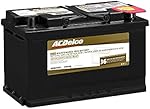
Add a second battery. Rather than swapping the alternator, you can add an auxiliary battery. Wired in parallel, this setup can give you the extra power you crave.
Remember, for this to work, those batteries need to be connected in parallel.
Shop From Amazon


Additional Tweaks and Enhancements
If you're jazzing up the Fusion's sound, why not consider other tech enhancements?
Touchscreen Multimedia System
Thinking about the rear passengers? Add some screens to let them enjoy movies, multimedia, and even some work on the go. And for those with little ones, it's an ideal distraction for those long drives.
On-Point Navigation
Traveling to unknown places in your Fusion? A state-of-the-art navigation system ensures you'll always be on the right path, without the guesswork.
Shop From Amazon


In Conclusion
Giving your Ford Fusion's sound system a boost can transform your road trips and daily commutes. Enjoy pristine sound clarity whether you're tuning into your favorite tracks, podcasts, or even an audiobook.
While searching for the perfect upgrade, remember to balance quality and your budget. And if you're ever in doubt about the technical side of things, don't hesitate to consult with a pro. Safety first, always!

Nick Marchenko, PhD
Industrial Engineer & Automotive Content Specialist
Nick writes in-depth guides on car clubs, engine specs, vehicle ownership, and modifications, combining engineering knowledge with automotive passion.
Full profile → LinkedIn →You May Also Like
How To Find A Coolant Leak In Ford Fusion - You Don't Need A Pressure Tester
2 years agoThe cooling system is the unsung hero of any performance vehicle, including your Ford Fusion. The coolant is essential, making sure that your Fusion's engine runs efficiently without getting too h...
How To Choose Tires For Ford Fusion
2 years agoJust like a perfectly fitted racing shoe can make all the difference on the track, the right set of tires is crucial for your vehicle. Think about it: when you compromise on shoe quality, your feet pa...
Ford Fusion P0300 Error Code - Meaning, Causes, Symptoms, & Fixes
2 years agoThe Ford Fusion P0300 error code, known as a "Random/Multiple Cylinder Misfire Detected," can be a matter of concern for Fusion owners. This code signifies that the Engine Control Module...
How To Install Roof Racks on Ford Fusion?
2 years agoPlanning a getaway or gearing up for a road trip adventure? Often, regardless of your ride, you find yourself needing extra storage space for your gear. Even if your Ford Fusion offers a spacious trun...
Ford Fusion Shift System Fault
2 years agoAre you growing frustrated with the constant appearance of the "shift system fault service required" notification on your vehicle's dashboard? It can be quite perplexing when you are uns...
Ford Fusion Starting System Fault
2 years agoPicture this scenario: you are in a hurry, ready to hop into your Ford vehicle to head to work or an important appointment. But to your dismay, your engine refuses to start, and a daunting "start...