Disclaimer: Not affiliated with or endorsed by Ford Motor Company. For informational purposes only. Full Disclaimer
How to Troubleshoot Common Problems with Your Ford Flex's Acceleration
Updated:
It can be frustrating to find that your Ford Flex won't accelerate, particularly if you're used to the smooth performance this adaptable car provides.
We set out on a quest to clarify common acceleration issues with the Ford Flex and offer helpful advice on how to fix them in this extensive guide.
We break down the complexity so you can get your Flex back on the road with its legendary acceleration power, whether it's a fuel supply issue, transmission trouble, or an electrical issue.
Fuel System Conundrums

Every acceleration problem stems from the complex dance of the fuel system. The ideal fuel flow to the engine can be disrupted by clogged fuel injectors, a broken fuel pump, or a filthy fuel filter, which can cause hesitation or no acceleration at all.
These problems may be resolved with routine maintenance, such as filter changes and fuel system cleanings. Maintaining a regular supply of clean gasoline serves as both a preventative and corrective step to ensure that the performance of your Ford Flex is always strong.
Tango Transmission

Your Ford Flex's transmission system is an intricate network of cogs and parts that operate as a unit. Acceleration can be hindered by problems such as a slipping clutch, low transmission fluid levels, or delayed shifts.
Maintaining a healthy clutch, checking the transmission fluid often, and swiftly fixing leaks are essential to keeping your Flex running smoothly.
Should acceleration problems continue, a qualified examination of the transmission system can find and fix underlying problems to keep your Flex's driving experience smooth.
Shop From Amazon


Devices in Disarray
Your Ford Flex is one of several modern cars that extensively rely on electronic technology to control many aspects of its operation. Acceleration anomalies may be caused by sensor issues, such as issues with the mass airflow sensor or throttle position sensor.
General hesitancy might also be caused by problems with the drive-by-wire system or the electronic control module (ECM). To identify electronic faults, it is advisable to conduct comprehensive diagnostics, which includes looking for error codes.
The electronic balance necessary for maximum acceleration can be restored by promptly replacing malfunctioning sensors or taking care of ECM problems.
Anomalies in Air Intake

One major factor affecting acceleration is the air intake system. The delicate balance of air and fuel required for combustion might be upset by clogged air filters or problems with the airflow sensor.
To ensure optimal acceleration, preventative actions include checking and changing air filters regularly and making sure the airflow sensor is operating properly.
In addition to fixing current problems, a clean, unobstructed air intake system improves your Ford Flex's long-term performance and health.
Slow-motion Body Tango

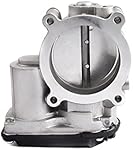
Trouble with acceleration might also arise from the throttle body, which acts as the entrance for air to enter the engine. Airflow regulation may be hampered by carbon deposits or a faulty throttle position sensor.
Reluctance to accelerate can be eliminated by periodically cleaning the throttle body and taking care of sensor problems. You can anticipate the driving experience you've been accustomed to when your Ford Flex responds quickly to your directions thanks to a well-maintained throttle body.
In conclusion, learn how to give your Ford Flex the confidence to accelerate
Cracking the code of why your Ford Flex won't accelerate is a trip to provide you with the information to handle and avoid future problems, not just troubleshooting.
By being aware of the subtleties of air intake efficiency, throttle body operation, electrical complexities, fuel system health, and gearbox dependability, you can arm yourself with a roadmap to maintain optimal performance in your Flex.
Imagine a dedication to enhancing your Ford Flex's acceleration capabilities as well as a solution to your present issues. This will guarantee that every trip is an exciting adventure on the open road.

Nick Marchenko, PhD
Industrial Engineer & Automotive Content Specialist
Nick writes in-depth guides on car clubs, engine specs, vehicle ownership, and modifications, combining engineering knowledge with automotive passion.
Full profile → LinkedIn →You May Also Like
Ford Display Screen Not Working
2 years agoIn order to make driving in a car more comfortable, Ford vehicles are renowned for their quality and integration of advanced technology. They literally try their best to provide their customers wit...
How to Fix Power Steering Assist Fault on Ford Flex
2 years agoToday, we're diving into a gremlin that can be a real headache for Ford Flex owners – the dreaded power steering assist fault. No need to fret, though; we're going to tackle this togethe...
How to Fix Ford Flex Brake Lamp Bulb Fault
2 years agoAre you getting a "brake lamp bulb fault" message flashing up on the dashboard of your trusty Ford Flex? Worry not, fellow driving enthusiast, because today we're going to walk through t...
Why Does Ford Flex Hesitate to Accelerate?
2 years agoLet's take a closer look at the fuel system. A blocked fuel filter can prevent enough fuel from reaching your Flex's engine, meaning it won't have sufficient power. Similarly, if the fu...
Ford Flex VIN Decoder: Exploring the Features Through VIN
2 years agoThe Ford Flex, a versatile and stylish vehicle, carries its own unique identifier known as a Vehicle Identification Number (VIN). This 17-character code is essential in providing vital information abo...