Disclaimer: Not affiliated with or endorsed by Ford Motor Company. For informational purposes only. Full Disclaimer
Is Ford 6.8L V10 a Good Engine? Problems, Life Expectancy & Specs
Updated:This powerful engine is commonly found in Ford trucks and is often mistaken for the larger 7.3L diesel engine. However, it's important to note that the 6.8L V10 engine is actually a gasoline engine.
One great thing about this engine is that it's pretty easy on your wallet when it comes to oil changes. The V10 engine holds around 6.5-7 quarts of oil, which means you won't have to spend too much money on oil changes.
Ford Triton V10 Engine Specs & Horsepower
Ford makes the Triton V10, and it has been in production for a number of years, so it's a well-established engine that's been tested and refined over time. The cylinder block and head are made of cast iron, which provides a solid foundation for the engine.
The Ford 6.8L V10 engine is fueled by gasoline and uses a multi-point fuel injection system to ensure that the fuel is distributed evenly and efficiently. It has a V10 configuration, which means that it has 10 cylinders arranged in a V-shape. This configuration is great for providing a lot of power, as it allows for more cylinders than a typical V8 engine.
Each cylinder has 2 valves, which are operated by an overhead camshaft. This layout is known as a single overhead cam (SOHC) valvetrain, which provides a good balance between performance and complexity. The bore of the cylinders is 90.2 mm, and the stroke is 105.8 mm, which gives a total displacement of 6,797 cc.
The Ford 6.8L V10 has a compression ratio of 9.2:1, which is fairly low for a gasoline engine. This helps to ensure that the engine runs smoothly and doesn't experience any knocking or pinging. The engine produces 362 horsepower and 457 lb-ft of torque, which is more than enough to tow heavy loads or haul large equipment.
It weighs in at around 600 pounds, which is fairly heavy for a gasoline engine. However, this weight is necessary to provide the necessary strength and durability for heavy-duty applications. The firing order of the engine is 1-6-5-10-2-7-3-8-4-9, which is a bit more complex than some other engines but is still easy to work with.
The engine requires 5W-20 engine oil and has an oil capacity of 6.5 liters. The oil should be changed every 7,500 miles to ensure that the engine remains in top condition. The Ford 6.8L V10 engine is a powerful and reliable engine that's perfect for heavy-duty applications. If you need an engine that can handle big loads and tough jobs, this engine is definitely worth considering.
Ford 6.8L 10V Engine Specifications
|
Specification |
Details |
|
Manufacturer |
Ford |
|
Cylinder block material |
Cast iron |
|
Cylinder head material |
Cast iron |
|
Fuel type |
Gasoline |
|
Fuel system |
Multi-point fuel injection |
|
Configuration |
V10 |
|
Number of cylinders |
10 |
|
Valves per cylinder |
2 |
|
Valvetrain layout |
Single overhead cam (SOHC) |
|
Bore, mm |
90.2 |
|
Stroke, mm |
105.8 |
|
Displacement, cc |
6,797 |
|
Type of engine |
Internal combustion engine |
|
Compression ratio |
9.2:1 |
|
Power, hp |
362 |
|
Torque, lb-ft |
457 |
|
Engine weight |
600 lbs |
|
Firing order |
1-6-5-10-2-7-3-8-4-9 |
|
Engine oil weight |
5W-20 |
|
Engine oil capacity |
6.5 liters |
|
Oil change interval |
7,500 miles |
Possible Problems with Ford 6.8 Triton Engine
The Ford 6.8 Triton engine is the power plant of choice for many Ford enthusiasts. This engine has been around for quite some time and has proven itself to be reliable, but there are a few issues that you need to be aware of.
Blowing Spark Plug

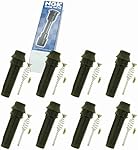
One of the main issues that people have with the Ford 6.8 Triton Engine is spark plug blowout. This occurs when the spark plugs are not held securely in place, which can cause them to pop out of the engine. This is because the V10 engine didn't have enough threads in the heads to hold the spark plugs in place, which caused the plugs to pop out.
To prevent spark plug blowout, use a thread-locking compound on the spark plug threads. This will help to keep the spark plugs in place and prevent them from popping out. You should also ensure the spark plugs are torqued to the correct specifications.
Shop From Amazon

Cracked PCV Hose

Another issue you might encounter with the Ford 6.8 Triton Engine is a cracked PCV hose. The PCV (Positive Crankcase Ventilation) system removes blow-by gases from the engine crankcase. Over time, the PCV hose can crack and cause a vacuum leak, leading to rough idling and reduced engine performance.
To prevent a cracked PCV hose, you should inspect it regularly and replace it if it shows any signs of wear and tear. You should also make sure that the PCV valve is working correctly and that the hose is properly connected.
Exhaust Manifold Failure

The exhaust manifold on the Ford 6.8 Triton Engine can fail over time. The exhaust manifold is responsible for collecting exhaust gases from the engine and routing them out of the vehicle. Over time, the manifold can develop cracks or leaks, which can cause a loss of engine performance and increased emissions.
To prevent exhaust manifold failure, you should regularly inspect it and replace it if it shows any signs of wear and tear. You should also make sure that the manifold bolts are properly torqued and that the manifold gasket is in good condition.
Ford 6.8L V10 Engine Life Expectancy
The Ford 6.8L V10 engine has a life expectancy of around 200,000 miles. This can vary depending on a few things, including maintenance, driving style and conditions. In addition to these factors, it's also important to note that some specific engine components may have a shorter lifespan than others. For example, the spark plugs on the V10 engine are known to have issues with blowouts, which can lead to engine damage. However, this can be prevented by using a thread-locking compound on the spark plug threads and making sure they are torqued to the correct specifications.
Shop From Amazon


Shop From Amazon

What Ford Models Use the Ford Triton V10 Engine?
First off, this is a V10 engine that's been used in a variety of Ford vehicles, including the F-250 and F-350 Super Duty trucks, the Excursion SUV, and the E-250 and E-350 Ecoline vans. It's also been used in medium-duty trucks like the F-450, F-550, F-650, and F-750.
Car Models Using Ford 6.8 Triton Engine
|
Year Range |
Make |
Model |
|
1999-2023 |
Ford |
|
|
1999-2023 |
Ford |
Is Ford 6.8L V10 a Good Engine?
The Ford 6.8L V10 engine has been around for over two decades, and it has proven to be a reliable and robust engine in various Ford vehicles. It has been used in a variety of Ford trucks and vans, including the F-250 and F-350 Super Duty, the Excursion SUV, and the E-250 and E-350 Ecoline vans.
Shop From Amazon

The Ford 6.8L V10 engine is a good engine that's well-suited for heavy-duty tasks. It has proven to be reliable and durable, and it's a popular choice among Ford truck and van owners. Depending on the year and model, it can produce up to 362 horsepower and 457 lb-ft of torque, which is more than enough to handle heavy-duty tasks. Additionally, it's equipped with advanced fuel injection and ignition systems, which helps to ensure smooth and efficient performance.
FAQ
1. What vehicles use the Ford 6.8L V10 engine?
The Ford 6.8L V10 engine is primarily found in F-250, F-350, F-450 Super Duty trucks, E-Series vans, and motorhomes from 1999 to 2019.
2. Is the Ford 6.8L V10 reliable?
Yes, the Ford 6.8L V10 is known for strong reliability and long lifespan when properly maintained, often exceeding 250,000 miles.
3. What is the horsepower of the Ford 6.8 V10 engine?
The power output ranges between 305 and 362 horsepower, depending on the model year and application.
4. What is the torque rating of the 6.8L V10?
Torque typically ranges between 420 and 457 lb-ft, giving the engine solid towing power.
5. Is the 6.8L V10 a gas or diesel engine?
The 6.8L V10 is a gasoline engine, not a diesel.
6. What is the oil capacity of the Ford 6.8 V10?
The engine holds about 6.5 to 7 quarts of oil depending on model and filter used.
7. How long does the Ford 6.8L V10 last?
With proper maintenance, the 6.8L V10 can last between 250,000 and 400,000 miles.
8. What are common problems with the 6.8L V10 engine?
Common issues include spark plug blowouts in early models, coil failures, and exhaust manifold stud rusting.
9. When did Ford start using the 6.8L V10?
Ford introduced the 6.8L V10 in 1997 for Super Duty trucks and E-Series vans.
10. What replaced the Ford 6.8L V10?
The 7.3L Godzilla V8 replaced the 6.8L V10 starting in 2020 for heavy-duty trucks.
11. How many spark plugs does the Ford 6.8 V10 have?
It has 10 spark plugs, one for each cylinder.
12. What type of fuel does the Ford V10 use?
The 6.8L V10 uses unleaded gasoline, typically 87 octane.
13. What’s the compression ratio of the 6.8L V10?
The compression ratio ranges from 9.0:1 to 9.2:1 depending on model year.
14. Does the Ford 6.8L V10 have spark plug issues?
Yes, early models (1997–2002) suffered from spark plug blowouts due to shallow threads, which Ford later fixed.
15. What is the towing capacity with the V10 engine?
Trucks equipped with the V10 can tow between 10,000 and 15,000 pounds, depending on configuration.
16. Is the Ford 6.8 V10 fuel-efficient?
Not particularly – average fuel economy is around 8–12 mpg depending on vehicle type and load.
17. Is the 6.8L V10 an overhead cam engine?
Yes, it’s a SOHC (Single Overhead Camshaft) engine design with 2 or 3 valves per cylinder depending on version.
18. How much does the Ford V10 engine weigh?
It weighs approximately 620–680 pounds depending on configuration.
19. Can the 6.8L V10 be turbocharged?
Yes, but it requires significant internal upgrades and custom tuning due to high compression and heat.
20. What transmission pairs with the Ford 6.8L V10?
It’s most often paired with the 4R100, 5R110, or TorqShift 6-speed automatic transmissions.
Shop From Amazon


21. Does the Ford 6.8L V10 use a timing chain or belt?
It uses a durable timing chain setup.
22. Is the 6.8L V10 a modular engine?
Yes, it belongs to Ford’s modular engine family along with the 4.6L and 5.4L V8s.
23. How much horsepower does a 2010 Ford 6.8L V10 have?
In 2010 models, it produces around 362 horsepower and 457 lb-ft of torque.
24. Is the Ford 6.8L V10 a good engine for towing RVs?
Yes, it’s very popular for RVs and motorhomes due to its torque and reliability.
25. What is the firing order of the Ford 6.8 V10?
The firing order is 1-6-5-10-2-7-3-8-4-9.
26. Are there performance upgrades available for the Ford V10?
Yes, performance chips, exhaust headers, and custom tuning can improve torque and throttle response.
27. How much does a rebuilt Ford 6.8L V10 engine cost?
Rebuilt engines range between $4,000 and $7,000 depending on source and warranty.
28. Is the 6.8L V10 used in the Ford F-650?
Yes, the V10 was used in Ford’s medium-duty trucks like the F-650 and F-750.
29. How often should oil be changed in the Ford V10?
Oil changes are recommended every 5,000 miles or 6 months for normal use.
30. What kind of oil should be used in the 6.8L V10?
Ford recommends 5W-20 or 5W-30 synthetic blend oil.
Shop From Amazon


31. What vehicles came with the 6.8L 3-valve version?
The 3-valve V10 was mainly in 2005–2019 Super Duty trucks and RV chassis.
32. How much torque does a 2008 Ford 6.8 V10 have?
The 2008 version delivers about 457 lb-ft of torque.
33. What’s the redline of the 6.8L V10 engine?
The redline is typically around 5,250 rpm.
34. Does the Ford V10 require premium fuel?
No, regular 87-octane gasoline works fine for most applications.
35. Can the Ford 6.8L V10 run on propane or natural gas?
Yes, factory versions and conversions exist for both CNG and LPG fuels.
36. How much does a Ford V10 engine rebuild kit cost?
Full rebuild kits typically cost between $1,000 and $1,800.
37. What’s the main difference between the 2-valve and 3-valve versions?
The 3-valve has higher airflow, better fuel efficiency, and more power than the 2-valve version.
38. What year did Ford fix the spark plug issue?
The issue was largely resolved by 2003 with redesigned heads and deeper threads.
39. How many quarts of transmission fluid does it take?
Most transmissions paired with the V10 require 17–20 quarts for a full fluid replacement.
40. Is the 6.8L V10 still in production?
No, Ford discontinued it after 2019 in favor of the 7.3L Godzilla V8.
Shop From Amazon

41. What is the MPG for an RV with a Ford 6.8 V10?
Fuel economy typically ranges from 6–10 mpg depending on load and driving style.
42. Can you supercharge the Ford V10?
Yes, aftermarket superchargers are available but require upgraded fueling and tuning.
43. How many cylinders does the Ford 6.8L engine have?
It has 10 cylinders arranged in a V configuration.
44. What is the displacement of the Ford V10 in cubic inches?
The displacement equals approximately 415 cubic inches.
45. Is the Ford 6.8 V10 good for off-road use?
Yes, its torque and durability make it suitable for heavy off-road trucks and conversions.
Shop From Amazon


![Auto Ventshade [AVS] In-Channel Ventvisor / Rain Guards | Smoke Color, 4 pc | 194381 | Fits 2017 - 2022 Ford F-250/F-350/F-450 Super Duty SuperCrew](https://m.media-amazon.com/images/I/41LJWNA2fbL._AC_UL150_.jpg)
46. Does the Ford 6.8L V10 have a turbo version?
No factory turbo versions exist, though custom builds can add forced induction.
47. What is the cylinder firing angle of the 6.8 V10?
The firing angle is 72 degrees between cylinders.
48. Can the 6.8L V10 be swapped into other vehicles?
Yes, but it requires custom mounts, wiring, and tuning – common in off-road builds.
49. How many valves per cylinder does the Ford 6.8L V10 have?
It comes with either 2 or 3 valves per cylinder depending on model year.
50. What makes the Ford 6.8L V10 unique?
Its balance of smoothness, power, and durability in a naturally aspirated setup made it a top heavy-duty choice for over two decades.

Nick Marchenko, PhD
Industrial Engineer & Automotive Content Specialist
Nick writes in-depth guides on car clubs, engine specs, vehicle ownership, and modifications, combining engineering knowledge with automotive passion.
Full profile → LinkedIn →You May Also Like
Is Ford F-250 6.2 Boss a Good Engine? Problems, Life Expectancy & Specs
3 years agoIf you're in the market for a powerful pickup truck, you've probably come across the Ford F-250 with the 6.2-liter Boss engine. This gasoline V8 engine has been used in various Ford models sin...
How to unlock Ford F-250 without keys?
3 years agoImagine this: You find yourself in the midst of chaos, multitasking like a pro, and just when you thought things couldn't get any more intense, bam! You absentmindedly seal your keys inside your F...
Here Are The 5 Ford F-250 Years to Avoid
3 years agoAre you in the market for a Ford F-250? While this work truck is known for its power and spacious interior, there are certain years that come with some serious safety concerns. From tire problems to i...
Ford Wire Harness Color Code Diagram Guide
3 years agoFord, the iconic American automaker, has devised a clever system to simplify our lives whenever we need to fix or replace some parts. Within their wire harnesses, you'll find six distinct colors t...
Phone Calls Not Working? Fixing Ford Sync Feature
2 years agoAs a proud owner of a Ford vehicle, and I must say, the SYNC system is one of my favorite features. It's like having a personal assistant right in my car. But, like any other technology, it has it...
What is the Ford v10 Coolant Capacity?
2 years agoCooling systems in vehicles are responsible for dissipating heat and maintaining optimal temperatures to safeguard engine components from thermal damage. The heart of these systems is the coolant. The...