Disclaimer: Not affiliated with or endorsed by Ford Motor Company. For informational purposes only. Full Disclaimer
What Does p0420 Code Ford F-150 Mean?
Updated:
If you find yourself with the p0420 code in your Ford F-150, odds are that your catalytic converter might be on its way out. The vehicle's PCM often picks up this code, a pretty solid indication of a troubled catalytic converter.
Keep in mind, the catalytic converter's job is to filter out those nasty pollutants from your exhaust. It's like the bouncer at the club but for pollutants – ensuring fewer contaminants escape during the combustion process. A p0420 detection in your F-150 isn't a sign you're in imminent danger, but you'd be wise to sort it out sooner rather than later.
Decoding the p0420 for the Ford F-150
Let's break down what this code really means. P0420 is basically shorthand for "catalytic system efficiency below par".
For the Ford F-150, this is a general OBD II trouble code pointing out some hiccups in the catalytic converter's operation. This little marvel in your truck helps in reducing harmful emissions by converting toxic gases into ones that are a bit friendlier to our dear planet. And if it's not up to snuff, you'll see this code popping up.
A Little Deep Dive into the Code
- "P" stands for PowerTrain – that's all about the Engine and Transmission.
- "0" means it's a Generic code.
- "4" tells you it's emission control related.
- "20" is a heads-up about issues with the catalytic converter's efficiency.
Potential Culprits behind the p0420 in the Ford F-150
Now, let's roll up our sleeves and look at what might be causing this p0420 in the F-150.
Problems with the Catalytic Converter
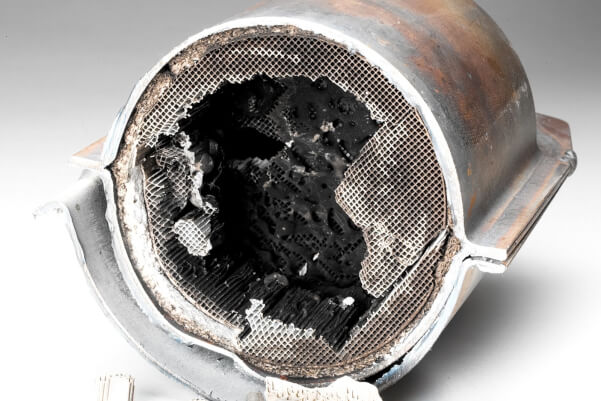
As we touched on, a worn-out catalytic converter is often the prime suspect. Over time, these things can clog or degrade, meaning they won't be working at peak efficiency.
Oxygen Sensor Shenanigans
The F-150 is kitted out with oxygen sensors in both the upstream and downstream regions. They're the unsung heroes, keeping tabs on exhaust gases and how the catalytic converter's performing. A dodgy sensor can certainly be a cause for the p0420 alert.

Exhaust System Hiccups
Leaks in your exhaust can throw off the oxygen sensor readings. It's like trying to sip a drink with a straw that's got holes – just doesn't work properly. And this can flag the p0420.
MAF Sensor Troubles
The MAF, or mass air flow sensor, is responsible for monitoring the amount of air entering the engine. A malfunction here can mess with the fuel-air mix, which in turn can influence the efficiency of the catalytic converter.

Glitches in the PCM/ECU
While it's a rarer occurrence, sometimes the issue isn't mechanical but digital. If there's a hiccup in the programming or software of the PCM module or the engine control unit, you might find yourself facing the p0420 code.
Common Symptoms of Ford F-150 P0420 Trouble Code
- The primary sign of the F-150 p0420 is that cheeky check engine light illuminating on your dashboard, hinting at some diagnostic system shenanigans.
- When this code pops up, it's often due to some mischief in the catalytic converter, which can lead to a dip in fuel efficiency.
- You might notice your engine becoming a bit sluggish and less responsive.
- In some cases, the engine might even come to a sudden halt, often because the air/fuel mix is out of whack.
- Should the catalytic converter be misbehaving, your truck may struggle to pass an emission test.
- You might also detect some rattling noises coming from underneath.
Sorting Out the Ford F-150 P0420
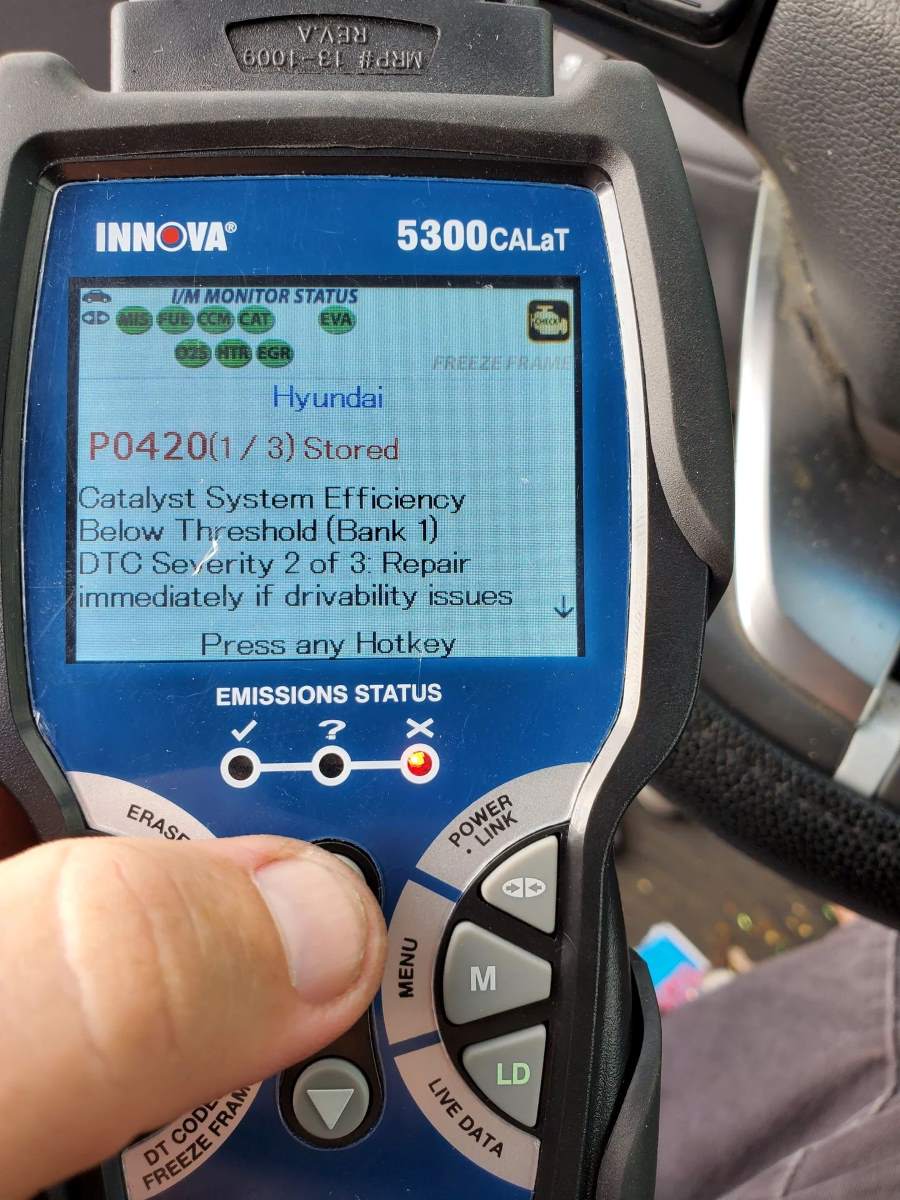
If your F-150's catalytic system is acting up, it's bound to impact the truck's performance. And over time, it could land you in a right pickle. So, when that code surfaces, what's the best course of action?
Time for a New Catalytic Converter?
Well, if something's gone south with your gear, the first port of call is usually to swap it out. Same goes for the catalytic converter.
If the p0420 code flashes up for your F-150, it might be time for a new catalytic converter. Sure, there are original equipment manufacturer (OEM) options, but ensure any replacement aligns with your F-150's emission standards.
Shop From Amazon


Mend Any Exhaust System Leaks
Occasionally, the culprit might be a leaky exhaust system. In such cases, you'll want to fix or replace any dodgy gaskets or pipes to get things shipshape again.
Check the Fuel System
Every so often, it's worth having a gander at potential fuel injector or pressure regulator issues. Ensuring the right air-fuel blend can often set things right.
What's the Damage for Fixing P0420?
Well, costs for fixing p0420 can vary. But ballpark figures? Replacing a dodgy catalytic converter might set you back anywhere from $500 to $1500.
Swapping out the oxygen sensor? That's more in the range of $150 to $300, with diagnostic costs being a bit of a wildcard.
Shop From Amazon


Driving Your Ford F-150 with the P0420 Code - Yay or Nay?
Well, if you're in a pinch, you can continue driving your F-150 with a p0420 diagnosis. But it's not something you'd want to do for the long haul. Best get it sorted sooner rather than later.
FAQs
How often should I replace the oxygen sensors on my F-150?
Typically, oxygen sensors can give you good service for 60,000 to 100,000 miles. But a regular check-up isn't a bad idea.
How can I tell if there's a problem with my exhaust after seeing the code?
A few telltale signs to watch out for are rattling noises and the unmistakable whiff of strong exhaust fumes.
Is fitting an aftermarket catalytic converter to my F-150 a good move?
It's doable, but always ensure that any aftermarket catalytic converter you're considering meets the emission standards of your F-150.

Nick Marchenko, PhD
Industrial Engineer & Automotive Content Specialist
Nick writes in-depth guides on car clubs, engine specs, vehicle ownership, and modifications, combining engineering knowledge with automotive passion.
Full profile → LinkedIn →You May Also Like
Understanding a 5.4 Ford Engine's Firing Order
2 years agoThe 5.4-liter Ford engine is a workhorse that reliably and effectively propels a variety of Ford cars. This engine's firing order, which establishes the timing of each cylinder's ignition, is...
How To Protect Ford F-150’s Catalytic Converter From Being Stolen?
2 years agoWhen it comes to the exhaust system of the mighty Ford F-150, the catalyst is crucial. It's the unsung hero that reduces the toxicity of exhaust gasses. All modern F-150s are kitted out with these...
How To Apply Ceramic Coating To Ford F-150?
2 years agoEvery Ford F-150 owner prides themselves on maintaining their vehicle to keep it clean, shiny, and as spectacular as it was on day one. However, nothing lasts forever - the gleaming finish gradually d...
What Size Camper Can an F-150 Pull
2 years agoThere are numerous ways to embrace the RV lifestyle without investing in a traditional motorhome. Many individuals view travel trailers and truck campers as excellent alternatives since they allow you...
How To Choose Tires For Ford F-150
2 years agoThink of tires as the ultimate footwear for your motor. Just as you wouldn't skimp on a decent pair of shoes, you shouldn't scrimp on tires. We all know the grief of a bad pair of shoes: sore...
How To Find A Coolant Leak In Ford F-150 - You Don't Need A Pressure Tester
2 years agoThe lifeblood of your Ford F-150's engine? That's the coolant, mate. This nifty fluid doesn’t just swish around in the cooling system; it plays an active role in ensuring your engine doe...