Automatic High Beam Control
What Is Automatic High Beam Control
The system turns on high beams if it is dark enough and no other traffic is present. If it detects an approaching vehicle’s headlamps or tail lamps, or street lighting ahead, the system turns the high beams off. Low beams remain on.
A camera sensor, centrally mounted behind the windshield of your vehicle, continuously monitors conditions to turn the high beams on and off.
Switching Automatic High Beam Control On and Off
 WARNING: In situations with poor visibility, such as fog, heavy rain or other inclement weather, you may need to override or completely switch off the system. WARNING: In situations with poor visibility, such as fog, heavy rain or other inclement weather, you may need to override or completely switch off the system. |
Use the touchscreen to select the following:
- Select Settings.
- Select Vehicle.
- Select Lighting.
Activating the Automatic High Beam Control

Note: The lighting control defaults to autolamps each time you switch your vehicle on.
When active, the high beams turn on if all the following conditions occur:
- The ambient light level is low enough.
- There is no traffic in front of your vehicle.
- The vehicle speed is greater than approximately 32 mph (51 km/h).
When active, the high beams turn off if at least one of the following conditions occur:
- The ambient light level is high enough that you do not require high beams.
- The system detects an approaching vehicle's headlamps or tail lamps.
- The system detects severe rain, snow or fog.
- A blocked vehicle camera.
- The vehicle speed falls below approximately 19 mph (30 km/h).
Note: The deactivation speed is lower on curves.
Note: Certain curvy road situations may delay high beam reactivation.
Note: If you have a blocked sensor, the system may not operate properly. Keep the windshield free from obstruction or damage.
Note: The system may not operate properly in cold or inclement conditions. You can switch on the high beams by overriding the system.
Note: If the system detects a blockage, for example bird droppings, bug splatter, snow or ice, the system goes into low beam mode until you clear the blockage. If you have a blocked camera, a message may appear in the information display.
Note: Using much larger tires or equipping vehicle accessories such as snowplows can modify your vehicle's ride height and degrade automatic high beam control performance.
Automatic High Beam Control Indicators
|
|
 The indicator illuminates to confirm when the system is ready to assist.
Overriding Automatic High Beam Control
| WARNING: The system does not relieve you of your responsibility to drive with due care and attention. You may need to override the system if it does not turn the high beams on or off. WARNING: You may need to override the system when approaching other road users. WARNING: The system may not switch the high beams off if the lights of oncoming vehicles are hidden by obstacles, for example guard rails. WARNING: In situations with poor visibility, such as fog, heavy rain or other inclement weather, you may need to override or completely switch off the system. |
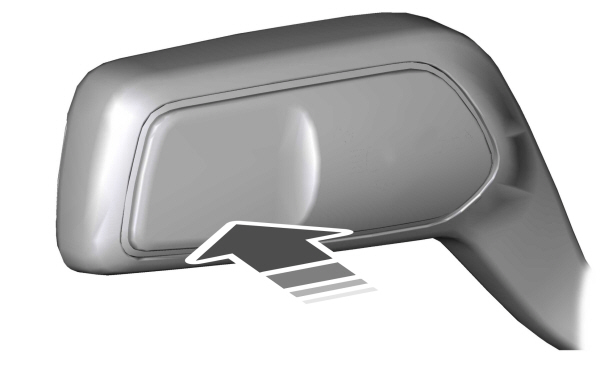
Push the lever away from you to switch between high beam and low beam.
Download Manual