Disclaimer: Not affiliated with or endorsed by Ford Motor Company. For informational purposes only. Full Disclaimer
How To Upgrade Sound System of Ford Escape
Updated:
For any Ford Escape driver, there is nothing more enjoyable than the purr of their trusty engine and the whoosh of the wind outside when cruising at high speeds. However, every now and then, you might just want to revel in some delightful tunes during your drives.
This becomes especially essential for those long journeys stretching hundreds or even thousands of kilometers. A cherished playlist is practically a must-have. If you're traveling with family, especially kids, it's a good idea to keep them entertained, perhaps by playing their favorite cartoons using the Escape's advanced multimedia system.
But, sometimes, the factory-fitted audio system in the Ford Escape doesn't meet every driver's expectations. Maybe it's not loud enough, gets drowned out by ambient noises, or the sound quality isn't up to the mark with disruptions and distortions. If you're not thrilled with your Escape’s sound system, there's no need for compromise. Enhance your audio system and make every journey even more musical. This article will help you navigate this subject.
Consider all the factors - maybe it's best left to the experts?
Upgrading the Ford Escape's audio system can be intricate, demanding a solid understanding of electronics. Not only should one be adept at connecting the system, but also familiar with the wiring schematics of the Ford Escape.
Improperly handled wires might not just result in system glitches but could also pose risks like short circuits and other car issues. So, if you're uncertain about doing this on your own, it might be prudent to hand it over to professionals. This way, you save time and ensure that the revamped sound in your Escape is music to your ears.
Always disconnect the negative battery terminal

Before tinkering with any part of the Ford Escape, always remember to disconnect the battery's negative terminal. This precaution safeguards you from potential electrical hazards and also protects your Escape from possible electrical mishaps.
What tools will you need to enhance the Ford Escape's stereo?
Depending on your specific upgrade plans, you might need certain tools. Here's a basic list of essentials.
Shop From Amazon


These include:
- A set of wrenches;
- Insulating tape;
- Screwdrivers (both Phillips and flathead);
- Pliers;
- Soldering iron;
- A set of wires (varies based on the system);
- Wiring diagram for the Ford Escape / Ford Escape Owner's Manual;
- Multimeter.
Speakers Setup
A whopping 70% of sound quality hinges on the speakers since that's where the sound emanates from. Bargain speakers often tend to produce distortions, and with wear, their output diminishes.
If this is a concern, it's wise to opt for superior sound. Seek out speakers from renowned brands and always go through user reviews. Quality speakers typically range from $100-$200 per piece. For over $200, you can secure top-tier options with pristine sound clarity.

Selecting the right speakers for your Ford Escape
Beyond just opting for quality speakers, it's paramount to find ones that are compatible with your Ford Escape's specific model year. Each vehicle comes with a designated space for speakers which varies in size.
So, always pick the right size – oversized speakers won't fit, and undersized ones might not be secure. To check the specs and count of speakers compatible with your Ford Escape, visit here.
How to install speakers in your Ford Escape?
Having selected the right product, the installation process should be smooth. The method typically follows a straightforward Plug and Play approach. Here's what you should do:
1. Identify the location of your speakers (This will differ based on your car's model and year);
2. Remove any paneling shielding the speakers (this might involve taking off door panels or other interior parts);
3. Extract the speakers (these might be attached with screws or bolts);
4. Detach the wires connected to the speakers. Ensure you label the positive and negative cables to avoid confusion during reassembly;
5. Once removed, place the new speaker. If you've made the right choice, this should be seamless. If there's a minor size discrepancy, you might need to adjust the setting slightly;
6. Reconnect the wires. Ensure you connect them to the right terminals. Double-check with the wiring diagram to be certain;
7. Place the speakers back ensuring they are stable and do not shift from their positions;
8. Refit any trim or panels you removed;
9. Repeat these steps for any other speakers you wish to replace.
Besides the standard speaker locations, you have the flexibility to place them anywhere: car doors, trunk, foot space, beneath the rear window, or even in the glove compartment. However, alterations to the design might be needed, such as carving out new spots or rerouting wires.

While customization offers endless possibilities, make sure all your speakers are from the same manufacturer for consistent sound quality. Also, note that adding many speakers, especially on doors, might increase the weight and lead to strong vibrations, which could eventually loosen the door panels.
Subwoofer Setup
Subwoofers in a Ford Escape audio system are there for reproducing low-frequency sounds, emphasizing on deep bass.
The aim of adding a subwoofer is to elevate the audio quality of your Escape. Subwoofers excel in reproducing deep, palpable bass, bringing depth and richness to your tunes. They can notably enhance the punch and authenticity of movie soundtracks or any content rich in low-frequency effects. Typically, a quality subwoofer will set you back between $250-$300.
How to pick a subwoofer for Ford Escape?
Selecting a subwoofer can be intricate as there are multiple elements to consider. Start by deciding on the type: active or passive.

Advantages of an Active subwoofer
Built-in Amplifier. Active subwoofers come with an integrated amplifier, saving you the hassle of purchasing one separately. This not only simplifies installation but also ensures efficient space utilization in your Ford Escape.
Compact Design. Most active car subwoofers are known for their compactness, making them a fit for smaller vehicles.
Easy Installation. Thanks to the in-built amplifier, setting up is straightforward. Once the power and audio connections are made, your subwoofer is ready to amplify your Escape's sound system.
Control & Adjustability. With an active subwoofer in your Ford Escape, you get more control over settings like gain, frequency, and phase. This allows you to fine-tune the bass output in sync with the acoustics of your vehicle and the performance of other speakers.
Active subwoofer downsides
Increased Expense. Given the integrated amplifier, active car subwoofers tend to have a heftier price tag compared to their passive counterparts.
Restrictions on Placement. It's crucial to position active subwoofers near a power source, like the car's battery, which can narrow down their ideal location within the confines of a Ford Escape.
Passive subwoofer - these lack an amplifier, meaning an external amplifier is a necessary purchase to make them functional.
Benefits of a Passive subwoofer
Flexibility in Amplification. For Ford Escape owners opting for passive subwoofers, the freedom to select an external amplifier tailored to individual tastes and budgets can be a boon. This offers the potential for a premium amplification solution that can enhance overall audio output.
More Cost-Effective. Given that they come without built-in amplifiers, passive car subwoofers are generally more wallet-friendly than their active counterparts.
Greater Placement Options. Since passive subwoofers don't come with built-in amplifiers, this provides a broader spectrum of placement options. In the spacious interior of a Ford Escape, you have the flexibility to position the subwoofer and amplifier in a way that maximizes available space.
Drawbacks of a Passive subwoofer
Additional Gear Required. For a passive subwoofer in a Ford Escape, an external amplifier is a must. This often means extra wiring and potentially more equipment, which could complicate the installation and drive up costs.
Reduced Control. Compared to active subwoofers, passive variants might offer fewer customization options. Adjustments to the external amplifier might be necessary to fine-tune and optimize bass output.
Space Concerns. Given the need for an external amplifier, a Ford Escape might require a bit more room when juxtaposed with more streamlined active setups.
Power considerations are pivotal when selecting a subwoofer. When delving into this type of sound system enhancement, focus on these power metrics:
- Nominal (RMS - Rated Maximum Sinusoidal) power - illustrates the speaker's prolonged performance capacity, maintaining quality without compromising sound integrity;
- Peak power - points to the subwoofer's short-term operational capacity (lasting up to 2 seconds) without major distortions or mechanical issues.
Sensitivity. This metric is indicative of the subwoofer's output, with power shedding light solely on consumption levels. The diffuser area relative to its movement characteristics is also vital (harkening back to the distinction between "large" and "small" subwoofers).
Boosting the sensitivity by 3 decibels effectively doubles the volume.
Impedance (or Resistance) - quantified in ohms. This metric offers insights into the amplifier's operational power - a lower value promises a higher output from the amplifier.
However, this often results in amplified sound distortions. The 4-ohm resistance is a common benchmark for Ford Escape subwoofers, striking a balance for optimal performance.
Consider the size of your potential subwoofer. While larger models might promise superior power and sound quality, remember that installation space is a factor. In the confines of a Ford Escape, it's crucial to strike a balance between size and performance.
Before settling on a model, it's prudent to identify and measure the designated installation space in your Ford Escape.
Installing a Subwoofer in a Ford Escape
Once you've earmarked the ideal location for your subwoofer within your Ford Escape, it's time to embark on the installation journey.
While this guide aims to cover a generic installation procedure suitable for most Ford Escape models, keep in mind that some unforeseen hitches might arise. In such cases, don't hesitate to seek expert assistance.
Let's start with the amplifier's location. Typically, either the trunk or underneath the seat works well. Ensure it's conveniently near the battery, yet sufficiently distant from potential heat or moisture sources.
Using the appropriate fasteners, fix the amplifier. From the battery's positive terminal, extend the power wire to the amplifier. For precautionary measures, always use a protective fuse near the battery.
If you've opted for an active subwoofer, you can bypass this step and directly link the subwoofer to the speakers, as it comes with an inbuilt amplifier.
Next, secure a ground wire from the amplifier to a clean, metal part of your Ford Escape's framework—ideally, keep this wire short.
Lay the RCA cables from your stereo system to the amplifier. This aids in audio signal transmission. To avert interference, ensure they run opposite to the power wire in your Ford Escape.
Join one end of the speaker wire to the amplifier, and the other to the subwoofer. Confirm the alignment of positive to positive and negative to negative terminals at both ends.
The subwoofer should then be placed in a tailored box or enclosure. Your choice of box can influence the subwoofer's sound output, so tread carefully.
After positioning the subwoofer, secure its box within your vehicle. Often, the trunk suffices, but this may vary with specific Ford models or personal inclinations.
Now, reconnect the Ford Escape's battery and power on your audio system. Fine-tune the amplifier's gain and crossover to harmonize your new subwoofer with the existing speakers. You might also want to tweak the equalizer settings of your sound system for optimal output.
In conclusion, conduct a thorough check on all connections, ensuring they're firm. Loose or shoddy connections might not only impair sound quality but could also jeopardize your equipment.
Selecting the Right Amplifier for Your Ford Escape

Selecting an amplifier for your Ford Escape? Ensure its specs align with your speaker's. Mismatched power and resistance could lead to amplifier malfunction and diminished sound quality.
Heed this: The speakers' input impedance should never undercut what the amplifier can handle.
Amplifiers are categorized by Class: A, B, C, D, AB. Predominantly, you'll come across classes AB and D.
Class AB boasts of stellar output quality but is marred by low efficiency, which translates to reduced power and larger dimensions. Class D amplifiers, however, circumvent the need for powerful transistors, offering superior power and compactness, with an efficiency that can soar up to 95%.
Monoblocks cater to subwoofer connections in a pre-installed audio setup, with a mandate for a low-pass filter. For potent subwoofers, an ultra-low-frequency filter proves indispensable.
Two-channel amplifiers, equipped with LF and HF filters, serve a dual purpose: connecting two speakers or a single subwoofer via a bridge circuit.
Three-channel versions can connect two speakers and a subwoofer, often with added functionalities. Meanwhile, four-channel variants can integrate an entire sound system, allowing connections to either four separate speakers or a mix of two speakers and a subwoofer.
For setups involving four speakers and a subwoofer, five-channel amplifiers are ideal. Here, power plays a pivotal role. Note that as speaker resistance surges, power correspondingly diminishes.
Typically, reproducible frequencies span from 20 - 20000 Hz. For single-channel amplifiers, this caps at 250-300 Hz. Beyond this, it becomes redundant as these frequencies are beyond the device's reproducing capabilities.
If pristine sound quality is a priority, then factors like distortion rate and the signal-to-noise ratio shouldn't be overlooked.
How to Install an Amplifier in Ford Escape?
Identify an ideal location in the Ford Escape to set up the amplifier. Ensure it's shielded and has proper ventilation, while steering clear from areas prone to moisture and high temperatures.
Steadily affix the amplifier using screws or specific brackets if necessary.
Establish a connection between the battery and the amplifier using the power wire. Strategically route this wire through the Ford Escape's firewall for protection and a clean installation. Integrate a fuse holder in proximity to the battery and insert the appropriate fuse.
Ground the amplifier by connecting a ground wire to a nearby metal point. Ensure a strong metal-to-metal bond to guarantee efficient grounding.
Connect the remote start wire found behind the car's radio or within the fuse box. This wire prompts the amplifier when the Ford Escape's audio system is engaged.
If your Escape's stereo has RCA outputs, link one end of the RCA cables to the stereo's outputs and the other end to the amplifier. If not, a line-out converter can bridge the connection between the vehicle's stereo speaker wires and the amplifier's RCA inputs.
For speaker connections, route speaker wires from the amplifier to each speaker or subwoofer, ensuring proper polarity.
Finally, double-check all connections for firmness and insulate any exposed segments to avert short circuits or potential mishaps.
Head Unit
Modern Ford Escape models come standard with a quality audio system. Typically, it's a centrally-mounted radio or receiver allowing you to navigate through radio channels, manage volume, and select your desired tracks. Should you wish for more advanced functionalities, consider upgrading your Escape's head unit.
Choosing the Right Head Unit for Ford Escape
Beyond the usual considerations of price, brand, and user feedback, keep these specific factors in mind:
Determine the existing radio size in your Escape: single din, 1.5 din, or double din. This size parameter will guide your selection process.
For a hassle-free installation, opt for a head unit that matches your current setup in terms of size. A change in size might necessitate alterations to the center panel and wire rearrangements.
Installing a New Head Unit in Ford Escape

Should your new radio model match the size of the old unit, installation should proceed without hitches. However, a larger unit may demand adjustments for a perfect fit.
Always consult the owner's manual to acquaint yourself with wire locations and their functions. Remember, mishandling electrical components can have undesirable outcomes.
Once the original unit is safely removed, systematically detach all connected wires. It's wise to label each wire to avoid confusion later on.
Connect the Ford Escape's wiring to the new radio. Ensure compatibility and correctness in all connections. Some head units might require adapters for seamless integration with the existing system.
Securely install the new unit, ensuring it sits flush and firm. With all components in place, power up the system and confirm all functionalities are operational.
Power Matters: Is Your System Equipped?
Like most vehicles, the Ford Escape is engineered with a specific electrical load in mind. From powering essentials like the engine management system, lights, and creature comforts like the AC and heater, the electrical system's balance is vital.
Every component draws power from the battery, which, although resilient, isn't limitless. Overburdening the electrical system, especially with high-demand systems like enhanced audio setups, can strain the system, potentially affecting the Ford Escape's optimal operation.
When augmenting your Ford Escape's audio or other electrical components, it's crucial to respect its electrical capacity. Ignoring this can lead to issues down the road.
Watch for these signs indicating your Ford Escape might be struggling with power:
- Complete power loss;
- Engine irregularities;
- Dimming headlights;
- Dashboard light flickering;
- Intermittent audio drop-outs, especially during heavy bass notes;
- Other system hiccups or malfunctions.
If after an audio system upgrade, you observe these issues in your Ford Escape, consider the following steps:
- Fire up your Ford Escape's engine;
- Engage power consumers like headlights, AC/heating, defrost, and wipers, and play some tunes;
- Locate the battery, typically under the hood;
- Using a multimeter, check the voltage at the battery terminals, matching positive to positive and negative to negative. Ensure you've set the multimeter to voltage (V) mode;
- A healthy reading will fall between 14.2 and 15 Volts. If you get a reading below this, especially under 13.5, it's a sign of a stressed system.
If the above tests confirm a power issue, you have a couple of solutions:
Upgrade the alternator. A standard Ford Escape alternator might not suffice for heavy electrical demands. Consider an upgrade, ensuring compatibility in terms of fit and voltage output. For instance, if your current unit offers 80 A, aim for something closer to 120 A.
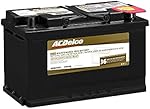
Consider an auxiliary battery. If an alternator swap isn't appealing, a secondary battery might be the answer. This increases overall capacity when connected in parallel.
Important: Remember, when adding batteries, a parallel connection is vital to ensure capacity enhancement.
Shop From Amazon


Potential Enhancements
Beyond sonic improvements, your Ford Escape can benefit from other tech upgrades, like multimedia touchscreens or advanced navigation systems.
Multimedia Touchscreen
Given you're boosting your Ford Escape's audio prowess, consider augmenting the experience with screens for rear passengers. It's not just about movies or shows; it's about enhanced connectivity, multimedia access, and of course, a tranquil journey if younger passengers can indulge in their favorite cartoons.
Advanced Navigation
Navigating unfamiliar terrains or cities? A state-of-the-art navigation system ensures you're always on track, making every journey in your Ford Escape as efficient as it is enjoyable.
Shop From Amazon


In Conclusion
Optimizing your Ford Escape's auditory experience can redefine your drives. Clear, well-tuned sound becomes the backdrop for memorable journeys, be it via music, radio, or spoken word.
Always prioritize quality, but be mindful of budgetary constraints. And if any installation or electrical challenges arise, don't hesitate to consult professionals. Safe, optimal upgrades are the goal.

Nick Marchenko, PhD
Industrial Engineer & Automotive Content Specialist
Nick writes in-depth guides on car clubs, engine specs, vehicle ownership, and modifications, combining engineering knowledge with automotive passion.
Full profile → LinkedIn →You May Also Like
What Does p0128 Ford Escape mean?
2 years agoThe basic meaning of p0128 is an issue related to the coolant thermostat temperature. When this diagnostic trouble code is triggered, it indicates that the coolant thermostat temperature is below its...
How To Change Motor Oil In Ford Escape?
2 years agoRegularly changing the motor oil is paramount for the smooth operation of the Ford Escape's engine. Oil facilitates the lubrication of all motor parts, as well as ensuring cooling and maintaining...
How To Choose Oil For Ford Escape?
2 years agoMotor oil is the lifeblood that ensures smooth operation of all Ford Escape engine components and also provides the essential cooling. A low or deteriorated motor oil condition could spell trouble for...
How To Install Roof Racks on Ford Escape?
2 years agoSetting off on a long adventure or a simple weekend getaway, especially with your loved ones, often means packing more. While the Ford Escape is both functional and spacious, there might be times when...
What Size Camper Can a Ford Escape Pull?
2 years agoAttention attention! Did you realize that towing a camper with your vehicle can open up a world of adventure and, what is more, allow you to study the incredible outdoors in complete comfort? We be...
How To Change the Coolant in Ford Escape?
2 years agoRegular maintenance tasks like refueling, changing the oil, and topping up brake fluid are routine for any diligent Ford Escape owner. However, less attention is often given to the cooling system, whe...