Disclaimer: Not affiliated with or endorsed by Ford Motor Company. For informational purposes only. Full Disclaimer
Fixing Ford Edge Tire Pressure Sensor Issue
Updated:
Your Ford Edge is more than just a car; it's a dependable traveling companion for both business and pleasure. On the other hand, you should be concerned if you receive a "Tire Pressure Sensor Fault" notification because it impacts both your car's safety and your comfort level.
This tutorial will delve into the reasons behind tire pressure sensor malfunctions in your Ford Edge and provide helpful advice on how to identify and address the issue.
By the end of this transcript, you will be more informed about how to maintain the optimal condition of your car's tire pressure sensors.
Finding the Typical Reasons

Your Ford Edge might display a "Tire Pressure Sensor Fault" alert for various reasons. The first step in resolving the issue is pinpointing the root causes. Here are some of the common culprits:
Low Tire Pressure
This is the most common cause of a tire pressure sensor malfunction. The alert might be triggered if the pressure in one or more tires falls below the recommended level.
Tire Pressure Sensor Battery Depletion
The batteries powering the tire pressure sensors have a limited lifespan. When these batteries deplete, the sensors might stop transmitting data, leading to a fault notification.
Shop From Amazon
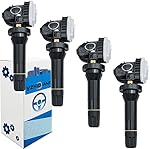


Tire Pressure Sensor Physical Damage
Collisions with curbs or other road debris can damage the tire pressure sensors, leading to malfunctions and alerts.
Signal Interference
External electronic interference can sometimes disrupt the communication between the sensor and the vehicle monitoring system, causing false notifications.
Problems with Calibration
If the sensors aren't accurately calibrated or initialized after tire maintenance or replacement, they might produce incorrect readings, leading to a fault alert.
Dealing with the Problem

Once you've identified the common causes of your Ford Edge tire pressure sensor malfunctions, consider these practical solutions:
For low tire pressure issues, simply check and inflate the tires to the recommended levels. Ensure this is done for all four tires. Consistently maintaining the recommended tire pressure can prevent future alerts.
Sensor Battery Replacement
If a sensor battery is depleting, consult a qualified mechanic to replace the batteries in the affected sensors. It's vital to use the correct replacement batteries and ensure they're installed correctly.
Sensor Inspection and Replacement
If a sensor is damaged, have a mechanic inspect it and recommend a replacement. Ensure the new sensor is of high quality and suitable for your vehicle.
Shop From Amazon


Resolution of Signal Interference
If signal interference is the culprit, identify and eliminate any potential sources, like nearby transmitters or electronic devices. Resolving interference might involve relocating the vehicle.
Calibration and Initialization
To address calibration issues, learn to correctly calibrate or initialize the tire pressure sensors by reaching out to a Ford dealership or referring to your car's manual. Following the proper procedure ensures accurate readings.
Preventing Future Problems

The safety of your Ford Edge and your peace of mind on the road hinge on preventing tire pressure sensor malfunctions. Here are some preventive measures:
Regular Tire Pressure Checks
Frequently check your tire pressure using a reliable gauge and ensure it aligns with the manufacturer's recommendations. Refill air as necessary to maintain the correct pressure.
Scheduled Maintenance

Adhere to the maintenance schedule provided by the manufacturer, which might include replacing the tire pressure sensor's battery if needed.
Safe Driving Practices
Avoid rough terrains and be careful not to collide with curbs or other road obstacles, as these can damage the sensors.
Signal Interference Awareness
Be mindful of potential interference sources or electronic devices that might affect the tire pressure sensors. Minimize their usage when checking tire pressure or conducting tire maintenance.
Correct Calibration
After any tire service or replacement, ensure that the tire pressure sensors are correctly calibrated or initialized for precise readings.
In summary
While the "Tire Pressure Sensor Fault" notification on your Ford Edge can be alarming, it need not be a stressful ordeal if you're equipped with the right knowledge and approach.
The key to effectively addressing the issue is understanding its potential origins and devising appropriate solutions.
By conducting regular maintenance, driving cautiously, and promptly addressing any warning lights or sensor anomalies, you can ensure that your Ford Edge's tire pressure sensors remain in peak condition and that road safety is always a top priority.

Nick Marchenko, PhD
Industrial Engineer & Automotive Content Specialist
Nick writes in-depth guides on car clubs, engine specs, vehicle ownership, and modifications, combining engineering knowledge with automotive passion.
Full profile → LinkedIn →You May Also Like
How To Upgrade Sound System of Ford Edge
2 years agoFor all those Ford Edge enthusiasts out there, there's nothing quite like the roar of that engine and the soothing sound of the wind when you're cruisin' down the highway. But hey, sometim...
What Size Camper Can a Ford Edge Pull
2 years agoIf you are considering the acquisition of a new Ford Edge and want to explore its capabilities for your journeys, you may be eager to discover its towing capacity. Let's delve into the specific...
What Does the Ford Edge p0456 Code Mean?
2 years agoHey, how you doin'? So, when you see that p0456 code on a Ford Edge, it usually means there's a hiccup with the car's evaporative emission system. There's like, a tiny leak somewhere....
Diagnostic and Fixing Your Ford Edge's Shift System Issues
2 years agoYour Ford Edge is more than just a car; it's a reliable travel companion for your outings and daily commutes. On the other hand, seeing a "Shift System Fault" alert can be concerning bec...
Examining and Fixing Ford Edge Starting System Issues
2 years agoNot only is your Ford Edge a car, but it's also a reliable travel companion for your road trips and everyday commutes. On the other hand, you should be concerned if you receive a "Starting Sy...
Examining and Resolving Ford Edge Transmission Issues
2 years agoYour Ford Edge is a dependable travel companion, suitable for everyday commuting and excursions. However, when you see a "Transmission Fault Service" notice, it's cause for concern as it...