Disclaimer: Not affiliated with or endorsed by Chevrolet Motor Company. For informational purposes only. Full Disclaimer
What is the Firing Order On a 5.3 Chevy Engine?
Updated:
Let's break it down, gearheads! The heart of any engine is its firing sequence, and that 5.3 Chevy engine is no different. It's what makes your Chevrolet TrailBlazer roar and purr. Here's why it's the real MVP:
Balanced Beast: 5.3 Chevy Engine
Get this – the right firing order keeps that 5.3 Chevy heart beating in perfect rhythm. It means the pistons are dancing in harmony, reducing those nasty internal vibrations. The result? A smooth-running engine, less wear, and less tear. It's all about that perfect coordination!
More Miles, Less Fuel
You feeling that rush every time you hit the gas? That's efficient combustion at work in your 5.3 Chevy. With each cylinder firing just right, you get to enjoy a solid fuel economy, translating to more miles and fewer stops to refuel. Oh, and less smog out the tailpipe!
Power On Demand
Every cylinder in that 5.3 Chevy engine of your TrailBlazer is pulling its weight, thanks to the firing order. What this means for you? A ride that's always ready to show off its power, whether you're speeding up, towing, or cruising down those highways!
Exhaust: Flowing Like a River
Your 5.3 Chevy's firing order isn't just about performance, it's also about keeping things clean. A smooth flow of exhaust gases means less backpressure and a quicker escape route for those emissions. This not only boosts performance but also keeps those exhaust parts purring for longer.
Breaking Down the 5.3 Chevy Engine's Beat

Here's the rhythm: 1-8-7-2-6-5-4-3. On the passenger side, you've got cylinders 1, 3, 5, and 7, and on the driver’s side, it's 2, 4, 6, and 8. The distributor? It's grooving counterclockwise.
Rides Rocking the 5.3 Chevy Engine
That 5.3 Chevy engine isn't exclusive to one ride. It's a popular choice across the board. But since we're on the subject of the TrailBlazer:
- Chevrolet Silverado 1500 (1999-present)
- Chevrolet Tahoe (2000-present)
- Chevrolet Suburban (2000-present)
- GMC Sierra 1500 (1999-present)
- GMC Yukon and Yukon XL (2000-present)
- Chevrolet Avalanche (2002-2013)
- Chevrolet Express (2003-present)
- Cadillac Escalade and Escalade ESV (2002-2006)
- Chevrolet Trailblazer EXT (2003-2006)
- Buick Rainier (2004-2007)
- Chevrolet SSR (2003-2004)
- GMC Envoy XL and Envoy XUV (2003-2005)
Trouble in Paradise? Decoding the Chevy 5.3 Firing Order Missteps
Alright, let's get to the nitty-gritty. If your Chevrolet TrailBlazer's heart, the Chevy 5.3 engine, isn’t purring like it should, here's what might be giving you grief:
Rough Around the Edges: Unstable Idling
Got that annoying inconsistent idle? That could mean your Chevy 5.3’s cylinders aren’t firing in the right sequence. Not just irritating, but makes it hard for your TrailBlazer to stay steady at a halt.
Stutters & Hiccups: Engine Misfires
If your engine's making more noise than a rattlesnake in a tumble dryer, you might have engine misfires. That's your spark plugs firing at the wrong beat or time, causing your engine to skip and jump. No bueno.
Guzzling More Juice: Excessive Fuel Consumption
Notice your TrailBlazer's drinking more fuel than usual? A messed-up firing order means combustion’s out of sync, making your engine work overtime and guzzle more gas.
Shake, Rattle, and Roll: Car Vibration
Feeling like you're on a rocky trail even on smooth asphalt? Offbeat cylinder firing can turn your ride into a makeshift massage chair. Beyond being a nuisance, it's your engine waving a red flag.
Roaring Beast: Loud Engine Noise
Unusual roars and rumbles under the hood? Wrong firing order can make your engine sound like it's auditioning for a metal band. It's a clear sign of bad combustion or wonky exhaust pulses.
Firecrackers in the Back: Exhaust Shots
Getting unexpected pops from your exhaust? Misfiring can send unburned fuel down the pipe. Ignite that in a hot exhaust, and you get a mini-fireworks show. Annoying and potentially harmful.
The Cold Shoulder: Vehicle Starting Issues
Finding it hard to get your TrailBlazer rolling, especially on chilly mornings? An out-of-tune firing order can make starting your ride feel like waking up on a Monday morning.
Dashboard Drama: "Check Engine" Light

If your dashboard’s lighting up like a Christmas tree, especially that “Check Engine” icon, your Chevy 5.3’s brain is telling you there’s trouble in paradise. Listen to it.
Checked the Firing Order But Still Running Rough? Here’s Why:
Alright, so you've double-checked everything, but your TrailBlazer's still acting up? Dive deeper and inspect these:
Distributor Drama
Older rides with the Chevy 5.3 might have distributor issues, crucial for passing the spark to the cylinders. Wear and tear, oxidation on contacts, or just good old aging could be the culprits. Regular check-ups and tune-ups might just save the day.
Got Spark? Check Those Ignition Coils

Newer rigs ditched those old-school distributors for ignition coils. They’re the real MVPs, sparking up that combustion party. Depending on your TrailBlazer setup, each cylinder might have its own ignition coil or they could be sharing the fun. Make sure these bad boys are in top shape to keep the good times rolling.
High Voltage Connection: Those Spark Plug Wires
High tension or spark plug wires are your lifeline from the ignition to those plugs. A bad connection can turn a smooth ride into a wild bronco, so keep 'em tight and right!
Light It Up: Keep an Eye on Those Spark Plugs

Spark plugs are the party starters in your cylinders. But, like all good things, they wear out. If they look more beat up than my old boots, swap 'em out to get that Chevy 5.3 engine of your TrailBlazer back in the groove.
Shop From Amazon


Timing is Everything
Want your TrailBlazer’s engine running like a dream? Get that timing on point. Double-check those camshafts and crankshafts and make sure they’re dancing to the same tune.
Get the Juice Flowing: Injectors Check
Your Chevy 5.3's got a thirst, and those fuel injectors are serving the drinks. But, if they're clogged or slacking, you're going to feel it. Give 'em a once-over and make sure they're pouring evenly.
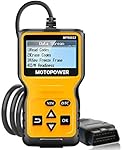
Modern Day Mechanics: Plug into that OBD-II
If you're scratching your head over persistent engine issues, whip out a diagnostic tool and jack into the OBD-II port. You'll get a deep dive into what’s going haywire.
Shop From Amazon


Under Pressure: Check that Cylinder Compression

Feeling a lack of power in your TrailBlazer? Check the compression. It can tell tales of worn piston rings, dinged valves, or head issues. Address it before you're left on the sidelines.
Ride and Shine, TrailBlazer Owners
Your Chevrolet TrailBlazer deserves the best, and that means understanding the ins and outs of that Chevy 5.3 engine. Nail down that firing order, keep things tuned and tight, and you'll be rewarded with smooth rides for miles to come. Keep it revved, keep it right!
FAQs
What is the firing order for a Chevy 5.3 engine?
The standard firing order for all 5.3L GM V8 engines is 1-8-7-2-6-5-4-3. This applies to both Vortec and LS-based versions from 1999–2025.
Are all 5.3L Chevy engines using the same firing order?
Yes, from Gen III to Gen V, the firing order remains 1-8-7-2-6-5-4-3. Only ignition timing and ECU control differ between generations.
What is the cylinder numbering for a Chevy 5.3?
The left bank (driver’s side) cylinders are 1, 3, 5, 7, and the right bank (passenger side) are 2, 4, 6, 8. Cylinder 1 is front-left.
Does the 5.3 Vortec have the same firing order as the LS?
Yes, both share the LS-based 1-8-7-2-6-5-4-3 firing pattern. Earlier small-block Chevys used 1-8-4-3-6-5-7-2, but 5.3 engines follow LS logic.
What years use the 5.3 Vortec engine?
The 5.3 Vortec was used from 1999 to 2013 in trucks and SUVs like Silverado, Tahoe, and Suburban. Later models switched to Gen V 5.3L L83/L84 engines.
Shop From Amazon


What’s the difference between L83 and L84 5.3 engines?
The L83 (2014–2018) uses Active Fuel Management (AFM), while the L84 (2019–2025) features Dynamic Fuel Management (DFM) with advanced deactivation.
Which cylinder deactivates on the 5.3 AFM engine?
In AFM systems, cylinders 1, 4, 6, and 7 deactivate under light load. This system was used on engines from 2007 to 2018.
What vehicles came with the 5.3L V8?
The 5.3L appeared in Chevy Silverado, GMC Sierra, Tahoe, Suburban, Yukon, and Avalanche, as well as some Cadillac Escalade models.
Does the 5.3 use coil packs or a distributor?
All 5.3L engines use coil-on-plug ignition. No distributor is used – each cylinder has an individual coil for precise spark control.
Can you swap a 5.3L from a 2005 Silverado into a 2010 model?
Yes, both are Gen IV Vortec engines. Use the donor’s ECU and harness to ensure proper sensor matching.
What’s the firing order for a 2014 Chevy Silverado 5.3?
It’s 1-8-7-2-6-5-4-3, same as all LS-based engines. The 2014 model introduced the L83 with AFM and direct injection.
What is the firing order on a 2019 Chevy 5.3?
Still 1-8-7-2-6-5-4-3. The 2019+ L84 engine added DFM, allowing up to 17 different firing combinations for efficiency.
Are Gen IV and Gen V 5.3 engines interchangeable?
Mechanically yes, but electronically no. The wiring, sensors, and ECUs differ significantly between Vortec (Gen IV) and L83/L84 (Gen V).
What type of spark plugs does a 5.3 use?
Most 5.3L engines use iridium plugs with a 0.040–0.043 inch gap. GM recommends AC Delco 41-110 or equivalent.
Where is cylinder 1 on a 5.3L engine?
Cylinder 1 is located on the front-left (driver’s side). It’s the first in the firing order and commonly used for timing reference.
What is the compression ratio of the 5.3L V8?
It ranges from 9.5:1 in early Vortec engines to 11.0:1 in modern L84 variants with direct injection.
Can I disable AFM on my 5.3?
Yes, AFM can be disabled via ECU tuning or mechanical delete kits. This often improves reliability but may reduce fuel economy.
What oil type does a 5.3 require?
Use 5W-30 for most Vortec engines and Dexos1 Gen2 0W-20 for Gen V L83/L84 engines. Always check the oil cap for confirmation.
Is the 5.3 considered an LS engine?
Yes, it’s part of the LS family. The 5.3L shares architecture with LS1/LS6 and later Gen IV/Gen V small-blocks.
Can a 5.3L engine run without AFM lifters?
Yes, if converted with standard non-AFM lifters and a proper camshaft. ECU tuning is required to remove AFM logic.
What’s the firing order for a 2008 Chevy Silverado 5.3?
It’s 1-8-7-2-6-5-4-3. The 2008 model used the LMG or LC9 Vortec engines with optional AFM and flex-fuel support.
Do 5.3 engines have timing belts?
No, all 5.3L engines use timing chains, designed to last the lifetime of the engine under proper maintenance.
Is the 5.3L engine reliable?
Yes, it’s considered one of GM’s most reliable V8s. Common issues involve AFM lifters and oil consumption in early AFM systems.
Can I swap a 5.3L from a Tahoe into a Silverado?
Yes, 5.3L engines between similar generations interchange easily. Match ECU, harness, and transmission for compatibility.
What’s the horsepower of the 5.3L engine?
Depending on generation, it ranges from 285 hp (early Vortec) to 355 hp (modern L84). Torque ranges 325–383 lb-ft.
Does the 5.3 have Active Fuel Management?
Yes, all Gen IV and some Gen V engines use AFM or DFM. It deactivates specific cylinders to improve efficiency.
How do I identify which 5.3 I have?
Check the engine code stamped on the block (rear near transmission). Common codes: LM7, L59, L33, LC9, LH6, LMG, L83, L84.
What is the torque spec for spark plugs on a 5.3?
Torque plugs to 18 ft-lbs with anti-seize only if recommended. Over-torquing can damage aluminum heads.
Are the heads interchangeable between 4.8 and 5.3?
Yes, Gen III and IV 4.8L and 5.3L share heads, though combustion chamber volume can affect compression slightly.
Can I install a 5.3 in place of a 6.0?
Yes, both engines share LS architecture. The 5.3 will bolt up, but tuning is needed for correct fueling and power output.
What’s the difference between LM7 and L59?
Both are Gen III 5.3L engines, but the L59 is flex-fuel capable. They share the same firing order and cylinder numbering.
Does the 5.3L have aluminum or iron block?
Early LM7/LMG blocks were iron; performance versions like L33 and Gen V L84 are aluminum. Both handle power upgrades well.
Can I use an LS6 intake on a 5.3?
Yes, it fits with minor EGR and MAP sensor adjustments. It can slightly improve high-RPM airflow on Gen III engines.
What year did the 5.3 switch to direct injection?
2014 marked the change with the L83 Gen V engine. It introduced direct injection and variable valve timing.
Is the 5.3L V8 good for towing?
Yes, it offers balanced power and efficiency. Modern 5.3s can tow between 9,000–11,000 lbs depending on configuration.
Can I run E85 fuel in my 5.3?
Yes, if your engine is flex-fuel compatible (marked with “FlexFuel” or “E85” on cap). Non-flex models should not use E85.
Shop From Amazon


What causes misfires on a 5.3 engine?
Common causes include bad coils, worn plugs, or stuck AFM lifters. A scan tool can pinpoint misfire counts per cylinder.
Is the 5.3L easy to rebuild?
Yes, parts are widely available. The design is simple, making it a favorite for DIY rebuilds and LS swap projects.
How often should I replace the spark plugs?
Every 100,000 miles for iridium plugs. Rough idle or poor fuel economy can signal earlier replacement needs.
What’s the oil capacity of a 5.3L?
Most models hold 6 quarts including the filter. Always verify with the dipstick after oil changes.
Shop From Amazon


Is the firing order for Gen V L83/L84 different?
No, it remains 1-8-7-2-6-5-4-3. However, the DFM system can change firing dynamically under light load.
Can a 5.3 engine run with a bad coil?
It can, but it will misfire and cause poor performance. Replace faulty coils immediately to prevent catalytic damage.
What’s the redline for a 5.3L?
Typically around 5,800 RPM for Vortec and 6,000–6,200 RPM for Gen V engines. Tuning can safely extend this range.
Are the exhaust manifolds interchangeable?
Yes, within the same generation. Gen V engines use redesigned manifolds with integrated catalytic converters.
Does the 5.3L have cylinder deactivation noise?
Some AFM engines produce a light ticking under transition. Upgraded lifters and ECU tunes can minimize this.
Shop From Amazon

Can I LS swap a car using a 5.3 truck engine?
Yes, the 5.3 is popular for LS swaps. Use car-style intake, accessories, and oil pan for clearance.
How long can a 5.3L engine last?
With regular maintenance, it can exceed 250,000 miles easily. Many engines surpass 300,000 with no internal rebuilds.
What’s the firing order for a 2021 Silverado 5.3?
It’s 1-8-7-2-6-5-4-3. The L84 version includes DFM for smooth transitions between 2, 4, 6, and 8-cylinder modes.

Nick Marchenko, PhD
Industrial Engineer & Automotive Content Specialist
Nick writes in-depth guides on car clubs, engine specs, vehicle ownership, and modifications, combining engineering knowledge with automotive passion.
Full profile → LinkedIn →You May Also Like
Here Are The 5 Chevrolet TrailBlazer Years to Avoid
3 years agoAre you considering buying a Chevrolet TrailBlazer? Before you make a decision, it's important to know the potential issues that come with this SUV. From transmission problems to electrical syste...
Why is Chevrolet TrailBlazer Shaking at Highway Speeds & How to Fix It?
3 years agoWhenever the Chevrolet TrailBlazer starts shaking at highway speeds, it can be a frustrating and unnerving experience for any driver. It can happen suddenly and without warning, causing the vehicle to...
How to Diagnose & Fix Bad Chevrolet TrailBlazer Coil Pack
3 years agoOver time, Chevrolet TrailBlazer ignition coils begin to suffer from wear and tear or become damaged, resulting in a range of issues that could affect the performance of your engine. When an Trail...
Understanding the 4.3 Vortec Firing Order: Breaking the Code
2 years agoEach vehicle engine has a distinct firing order, a rhythmic series of events that orchestrates the engine's performance and power. Let's explore the 4.3 Vortec engine, a popular option in GM a...
2008 Chevy 5.3 Fault Code P3400
2 years agoIf you have a 2008 Chevy 5.3 liter engine, it is actually possible that this P3400 error code will leave you confused. We will examine the causes of the P3400 code and provide detailed solutions to he...
P2500 Fault Code in Your Chevy Blazer
2 years agoIt is not a secret that various codes are often spoken of in automotive diagnostics, and one such code that can light up your Chevy Blazer's dashboard is P2500. We're going to embark on a q...