Disclaimer: Not affiliated with or endorsed by Chevrolet Motor Company. For informational purposes only. Full Disclaimer
What is the Firing Order On a 5.3 Chevy Engine?
Updated:
The firing order of the 5.3 Chevy engine is the particular sequence during which each cylinder acquires a spark. It is an essential component of the engine's construction. Its significance can't be exaggerated, and here are some of the main reasons why.
Balanced and Correct 5.3 Chevy Engine Operation
The correct firing order keeps the 5.3 Chevy engine's pistons moving, collaborating, and balanced. Internal vibrations and discrepancies are reduced thanks to this coordinated job, resulting in a uniform and more effective engine function.
It's like a flawless movement, with each cylinder playing its part in unison, lowering or even preventing engine element tear and wear.
Optimal Fuel Consumption
An efficient firing sequence favors efficient combustion on 5.3 Chevy. The engine may preserve optimum compression ratios, air-fuel mixtures, and ignition timing when each cylinder fires in the right order.
This effectiveness means improved fuel economy, saving you money at the pump and lowering emissions.
Work at Full Capacity
The firing order ensures that all cylinders of the 5.3 Chevy engine contribute their power evenly. When all cylinders fire in their proper sequence, the engine may produce its full power and torque capacity.
This means your vehicle has the necessary power for acceleration, towing, and maintaining speed even in challenging conditions.
Exhaust System Obstacles Are Reduced
A correct firing order of a 5.3 Chevy engine assists in controlling the circulation of exhaust gasses from every cylinder.
This smooth sequence reduces backpressure by minimizing intrusion in the exhaust system. Lowering backpressure enables the 5.3 Chevy engine to eliminate emission quicker, improving performance and less wear on exhaust parts.
5.3 Chevy Engine Firing Order & Cylinder Numbers
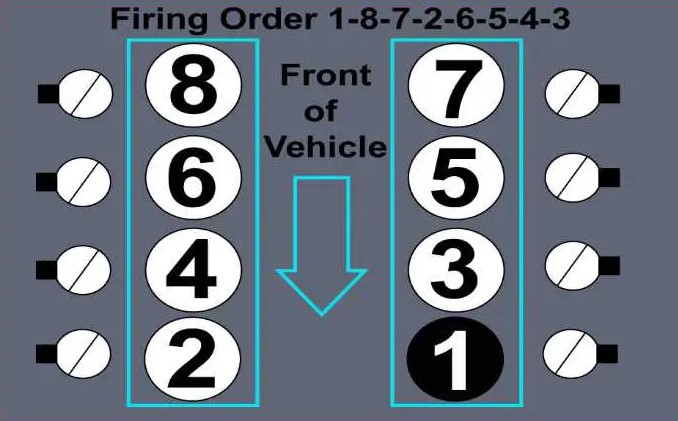
The firing order for the Chevy 5.3 is 1-8-7-2-6-5-4-3. Cylinders 1, 3, 5, and 7 are all situated on the passenger side; cylinders 2, 4, 6, and 8 are on the driver’s side. The distributor rotates counterclockwise.
Vehicles equipped with Chevy 5.3 engine
The same engine construction often appears in multiple car models from the same automaker's lineup. Because of this shared engine design, the firing order, an essential engine feature, will be consistent in these various vehicles.
Here is a list of cars equipped with the Chevy 5.3 engine:
- Chevrolet Silverado 1500 (1999-present)
- Chevrolet Tahoe (2000-present)
- Chevrolet Suburban (2000-present)
- GMC Sierra 1500 (1999-present)
- GMC Yukon and Yukon XL (2000-present)
- Chevrolet Avalanche (2002-2013)
- Chevrolet Express (2003-present)
- Cadillac Escalade and Escalade ESV (2002-2006)
- Chevrolet Trailblazer EXT (2003-2006)
- Buick Rainier (2004-2007)
- Chevrolet SSR (2003-2004)
- GMC Envoy XL and Envoy XUV (2003-2005)
How to understand that Chevy 5.3 firing order is adjusted incorrectly
The following factors can indicate that the order of operation of the cylinders on Chevy 5.3 engine is set incorrectly:
Unstable Idling
If the cylinder order on Chevy 5.3 is false, the engine might be unable to maintain a consistent idle speed. Inconsistent idling can cause the engine to rev inadequately when the vehicle stands still, making it difficult to keep the car running flawlessly.
Misfires Of The Engine
The wrong cylinder firing order can result in engine misfires, leading to the Chevy 5.3 engine to "thresh" or sputter. This can happen if the spark plugs ignite the air-fuel mixture in the wrong order or at the incorrect moment, jeopardizing the engine's efficient operation.
Excessive Fuel Consumption
When the Chevy 5.3 cylinder firing order is violated, the combustion operation of the engine loses its efficiency. As the engine fails to produce power efficiently, this failure may result in greater fuel consumption. As a consequence of this, the vehicle consumes more fuel than it has to.
Car Vibration
Improper cylinder firing order can cause major Chevy 5.3 engine work discrepancies. It can cause severe vibrations all over the vehicle, particularly during the acceleration. These noises are not only unpleasant, but they may also signal the potential engine damage if ignored.
Loud Engine Noise
Unusual and often louder noises can result from a wrong Chevy 5.3 firing order. These noises may be caused by inconsistent combustion in the cylinders, incorrect exhaust pulse timing, or other inappropriate engine behavior.
Exhaust Shots
Unburned fuel may reach the exhaust system due to a distorted Chevy 5.3 cylinder firing order. When fuel that has not been burned ignites in a hot exhaust system, it can cause loud popping or "exhaust shots." The issue is not only annoying, but it can also cause exhaust component damage.
Vehicle Starting Issues
With improper cylinder firing order, starting the car becomes difficult, especially in cold weather. The Chevy 5.3 engine might fail to ignite properly, resulting in longer cranking times or even the car not starting at all.
"Check Engine" Icon on the Dashboard
When the Chevy 5.3 engine's computer detects cylinder firing issues, such as misfires or incorrect firing order, it frequently illuminates the "Check Engine" light on the dashboard.
This warning alerts the driver that something is wrong with the engine's operation that requires attention.
I put the order of operation of the Chevy 5.3 cylinders correctly, but the engine still runs unstable - what is the reason?
If you are absolutely sure everything is set correctly, but the Chevy 5.3 engine doesn't work as it should - check the following parameters - perhaps the reason lies in them.
Check your vehicle`s distributor
In older cars with a contact ignition system, the distributor is important in distributing sparks to the Chevy 5.3 engine's cylinders.
This distributor may wear out over time, resulting in issues such as misfires or an unsteady engine operation. It is critical to examine the functionality of the distributor, such as its mechanical elements and contacts.
Contact oxidation is a usual issue that can interrupt spark distribution, and regular maintenance or replacement may be required to guarantee proper ignition.
Examine the Ignition Coils

In modern vehicles, ignition coils have mainly replaced common distributors. These coils are in charge of producing the high-voltage sparks needed for ignition.
Each Chevy 5.3 cylinder may have its own ignition or a shared coil for multiple cylinders, depending on the vehicle. Checking these coils' resistance and overall state is critical for diagnosing ignition-related problems.
A malfunctioning ignition coil can cause weak or inconsistent sparks, leading to engine misfires and poor performance.
Inspect the High Tension Wire Connection

High tension wires, also known as spark plug wires, provide electricity from the ignition system to the spark plugs inside every cylinder.
It is important that these wires are properly connected to their specific cylinders. A faulty wire connection can lead to a shaky engine by causing sparks to go off at the wrong time or in the incorrect cylinders.
Ensuring every wire is correctly routed to its respective cylinder is a simple but critical step for preserving the Chevy 5.3 engine durability and keeping misfires.
Check the Spark Plugs

Spark plugs ignite the air-fuel mixture in every cylinder. They may get fouled, worn, or damaged over time, resulting in misfires and poor engine performance.
Check if spark plugs have any indications of wear or carbon accumulation. If your spark plugs have them, it is highly recommended to replace them with new ones to bring back your Chevy 5.3 engine efficiency.
Shop From Amazon


Inspect the Timing

Correct engine timing provides effective combustion and engine operation. How to make sure that the Chevy 5.3 engine's timing is set properly?
You have to check if the camshaft(s) and crankshaft are in the proper relative positions to one another.
Misfires, rough idling, and poor power delivery can all result from incorrect timing. Adjusting the timing to factory specifications can help solve these issues.
Examine the injectors' serviceability

Fuel injectors give precisely the right quantity of fuel to every cylinder. If one or more injectors become clogged or fail to function properly, it can cause uneven fuel distribution among the cylinders, resulting in Chevy 5.3 misfires.
To determine the cause of this problem, check the injectors for clogs or leaks while verifying their electrical functionality. Cleaning or replacing malfunctioning injectors will bring back consistent fuel delivery, reduce gaps in engine operation, and eliminate misfires.
Connect the Diagnostic to the OBD-II Port
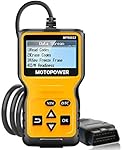
When dealing with persistent Chevy 5.3 engine misfires and performance issues, connect a diagnostic tool to the OBD-II (On-Board Diagnostics) port. After scanning error codes and real-time data, you`ll get all the necessary information about specific issues that may be causing misfires.
Shop From Amazon


Check Cylinder Compression
Cylinder compression is a sign of internal troubles with the Chevy 5.3 engine, such as worn piston rings, damaged valves, or cylinder head problems.
By measuring compression, you can determine whether one or more cylinders are underperforming. Additional research, including engine breakdown, may be required to identify and correct the underlying issue if compression imbalances are discovered.
Conclusion
The Chevy 5.3 firing order plays a crucial role in the stable work of the engine. A proper firing order keeps the vehicle's engine in balance simultaneously, ensuring that every cylinder fires when and as it has to prevent misfires and decrease vibrations.
It enhances the driver's comfort and prolongs the engine`s and its components' service life.

Nick Marchenko, PhD
Industrial Engineer & Automotive Content Specialist
Nick writes in-depth guides on car clubs, engine specs, vehicle ownership, and modifications, combining engineering knowledge with automotive passion.
Full profile → LinkedIn →You May Also Like
How To Prepare Chevrolet Silverado 1500 For Off Road
2 years agoFor some drivers, going off-road is a job; for others, it's a rest, adventure, and an opportunity to be in harmony with oneself and nature. Regardless of the reason, proper preparation is vital fo...
What Size Camper Can a Chevy Silverado 1500 Pull?
2 years agoChevy Silverado 1500 stands tall as a dependable and powerful workhorse cherished by many for its reliability, safety features, and impressive towing capacity. While it may not be a dedicated off-road...
How to Rent & Protect RV for Burning Man?
3 years agoAre you seeking new adventures to quench your thirst for travel? Burning Man, an enchanting festival in the heart of the Nevada desert, could be your next destination. While I've long yearned to p...
How To Replace 2004 Chevrolet Silverado 1500 Tail Light Bulb
2 years agoWell, strap yourselves in, petrolheads. We're diving deep into the intricacies of tail light bulb replacement on a 2004 Chevrolet Silverado 1500. I know, not as thrilling as a car chase in the sou...
What Does P0161 Chevy Silverado Mean
2 years agoIf you come here to read this article, you must have seen that your vehicle displays the code p0161 on the Chevy Silverado. Let's see what the code means and the causes, symptoms, and fixtures....
How To Fix Scratches On Chevrolet Silverado 1500?
2 years agoNo matter how conscientiously a driver treats their Chevy Silverado 1500, expressing care and affection, minor inconveniences are, unfortunately, unavoidable. With time, the Silverado 1500 might ex...