Disclaimer: Not affiliated with or endorsed by Audi Motor Company. For informational purposes only. Full Disclaimer
Audi Q5 Engine Problems - Common Issues And Malfunctions
Updated:
The first generation of the Audi Q5 (8R), produced between 2008 and 2017, is a compact SUV from the mid-range segment. It is positioned in the Audi lineup between the smaller Q3 and the larger Q7. A facelift occurred in September 2012.
Audi Q5 Problems - Petrol Engines
The Audi Q5 offered both four- and six-cylinder V-configured engines. The entry-level option was the 2.0 TFSI (EA888 series) with 180 horsepower, upgraded to 225 horsepower by the end of 2012 (and 230 horsepower by the end of 2015). Until April 2012, a 3.2-liter naturally aspirated 3.2 FSI was available, replaced by the turbocharged 3.0 TFSI in May of the same year.
Regarding reliability, the 2.0 TFSI had significant issues before the facelift, which should be considered before purchasing – blind buying is not advised here. The V6 seems more reliable but should also be acquired only with a complete and transparent service history.
Problems with the 2.0 TFSI

Before the facelift, the 2.0 TFSI engines suffered from extremely high oil consumption (about 1 quart per 1,240 miles), impacting the wallet due to constant refilling and affecting other components, like the catalytic converter.
Major engine damage due to a stretched timing chain is not uncommon in older 2.0 TFSI models.
The EA888 series, to which the 2.0 TFSI belongs, uses direct gasoline injection and is particularly prone to carbon deposits in the intake tract and on the injectors.
A significant service campaign (TPI 2) involved installing new pistons and piston rings in affected models, drastically reducing oil consumption. Those interested in an older 2.0 TFSI should inquire whether this service campaign has already been performed.
Problems with the 3.2 FSI, 3.0 TFSI
Similar to the 2.0 TFSI, the 3.2 FSI and 3.0 TFSI can experience coked injectors and carbon deposits in the intake tract due to direct gasoline injection. A service campaign involved replacing the thermostat in the 3.0 TFSI.
Issues with the timing chain also affect the two V6 engines, though less so than with the 2.0 TFSI. Older SQ5 models from 2013 and 2014 tend to have injector sealing rings burn out due to undersizing, usually resulting in uneven engine running.
Audi Q5 Problems - Diesel Engines
Those choosing economical driving over the costly fun of a three-liter V6 and not wanting to visit gas stations frequently might consider a Q5 8R with a diesel engine. The 2.0 TDI is fuel-efficient and great for long-distance driving. The 3.0 TDI, with a relaxed driving style, can be operated with about 1.8 to 2.1 gallons per 62 miles and offers significant power reserves for when needed.
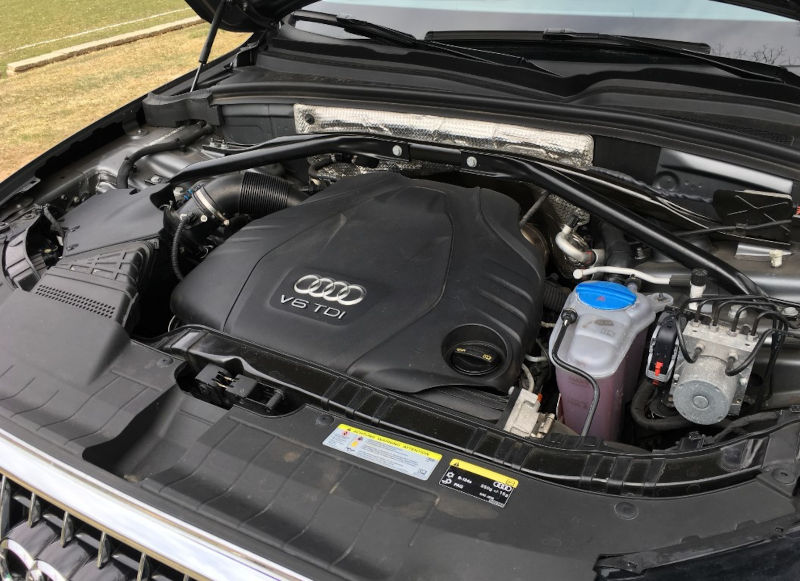
Compared to the gasoline engines, diesel reliability is more assured, with significant engine damages being rare in the 2.0 TDI. However, the 3.0 TDI might require costly repairs. Both the two-liter and three-liter diesels should be checked for common diesel weaknesses, especially at high mileages:
- Injectors;
- Diesel Particulate Filter (DPF);
- Dual Mass Flywheel (DMF);
- Turbocharger;
- EGR Valve;
- Automatic Transmission Issues.
Transmission Problems
In addition to a standard 6-speed manual transmission, two automatic transmissions were offered for the Audi Q5 8R: the Tiptronic, a classic automatic transmission with a torque converter, and the S-Tronic, a dual-clutch transmission.
Tiptronic Transmission Flaws
The eight-speed Tiptronic torque converter automatic, found mainly in gasoline models and only in diesel models in combination with the top SQ5 TDI variant, has been largely reliable across models for many years. There are no major failures known. Some owners reported a more pronounced jolt when downshifting, but this was addressed with a software update.
S-Tronic Transmission Flaws
The S-Tronic dual-clutch transmission, mainly available with diesel models, can be problematic, especially in older models: rough shifting (often in 1st and 2nd gear) and jerking when starting are common complaints. The transmission occasionally stalls the engine.
During a test drive, ensure the transmission shifts smoothly and does not stutter or jerk when starting. Additionally, a transmission flush should be performed approximately every 37,282 miles.
Other Weak Points
- Loud, clattering noises can occur when closing the panoramic roof.
- Cases of defective daytime running lights were more common before the facelift. Replacing the control unit can resolve this issue.
- Flickering cockpit lighting is usually due to faulty LED diodes.
Recalls
The Audi Q5 8R has been subject to several recalls, affecting many vehicles. More detailed information about these recalls can be found at the KBA or ADAC:
- Models produced between December 2008 and May 2009 were recalled due to issues with the head airbag trim.
- 2.0 TFSI models from Spring 2011 to the end of 2016 were recalled due to foreign particles in the auxiliary coolant pump potentially blocking coolant flow.
- Models from 2011 had issues with panoramic roof breakage.
- According to the KBA, contact corrosion on connectors of the auxiliary heater in models from March 15, 2011, onwards could lead to smoldering fires.
- Models from 2011 to 2016 had issues with the coolant pump blocking and overheating.
- 3.0 TDI models from March to December 2012 were recalled due to oil potentially entering the brake booster through vacuum lines and damaging the diaphragm, leading to reduced brake assistance.
- Rear wheel arch trim on models from 2015 onwards could come loose and fall off due to a manufacturing error.
To find out whether a specific model is affected by recalls and what actions have been taken, you can check with the KBA or ADAC using the Vehicle Identification Number (VIN).
Our Recommendation: 3.0 TDI Post-Facelift

The Audi Q5 8R is a fundamentally solid compact SUV, especially as a diesel. Prices for a first-generation Q5 start at around $8,800, with well-maintained facelift models with up to 93,205 miles costing at least $16,000.

Nick Marchenko, PhD
Industrial Engineer & Automotive Content Specialist
Nick writes in-depth guides on car clubs, engine specs, vehicle ownership, and modifications, combining engineering knowledge with automotive passion.
Full profile → LinkedIn →You May Also Like
Here Are The 5 Audi Q5 Years to Avoid
3 years agoAre you considering buying an Audi Q5? While it may seem like a luxurious and reliable SUV, there are certain years you should avoid due to multiple reported problems. From air bag malfunctions to eng...
Why is Audi Q5 Shaking at Highway Speeds & How to Fix It?
3 years agoWhenever the Audi Q5 starts shaking at highway speeds, it can be a frustrating and unnerving experience for any driver. It can happen suddenly and without warning, causing the vehicle to vibrate, shak...
How to Diagnose & Fix Bad Audi Q5 Coil Pack
3 years agoOver time, Audi Q5 ignition coils begin to suffer from wear and tear or become damaged, resulting in a range of issues that could affect the performance of your engine. When an Q5 ignition coil is...
How to Choose Tires for Your Audi Q5?
2 years agoSelecting the proper tires for your Audi Q5 is an important choice that affects the efficiency, security, and general driving experience of your car. In addition to fulfilling the requirements of t...
How Many Coolant Does an Audi Q5 Have?
2 years agoYour Audi Q5 is a very advanced car with the latest technology and a strong engine that makes driving it very exciting. Coolant is an important liquid in your car that keeps the engine from getting to...
How Much Coolant Does an Audi Q5 Have?
2 years agoYour Audi Q5 is a very advanced car with the latest technology and a strong engine that makes driving it very exciting. Coolant is an important liquid in your car that keeps the engine from getting to...